 Written by
 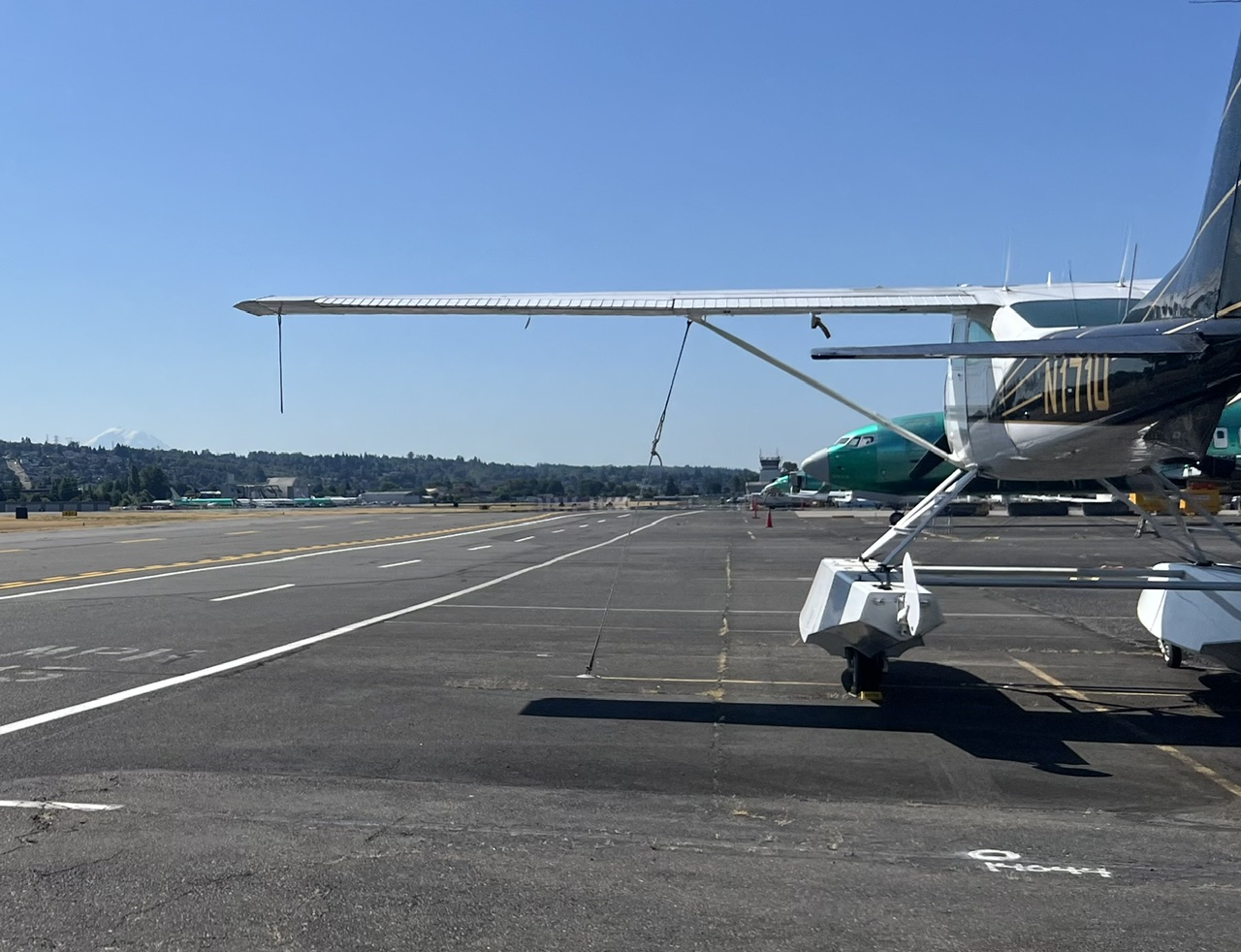 I was recently invited to a meeting of Renton airport users who have lost confidence in Renton’s airport management. They are considering forming an airport tenants union, to organize and push back on breath-taking rent increases. One airport business owner reports that the city has asked him to sign onto a 120 percent rent increase, 12 times bigger than what our state legislature said was the maximum a residential landlord could ever increase rent in a single year. Some tenants have said they have been given surprise retroactive rent increases, in which management said they forgot to raise the rent months earlier, and now demand tens of thousands in back rent– similarly to the billing failure that triggered the Landing Gear Works to ultimately move out.
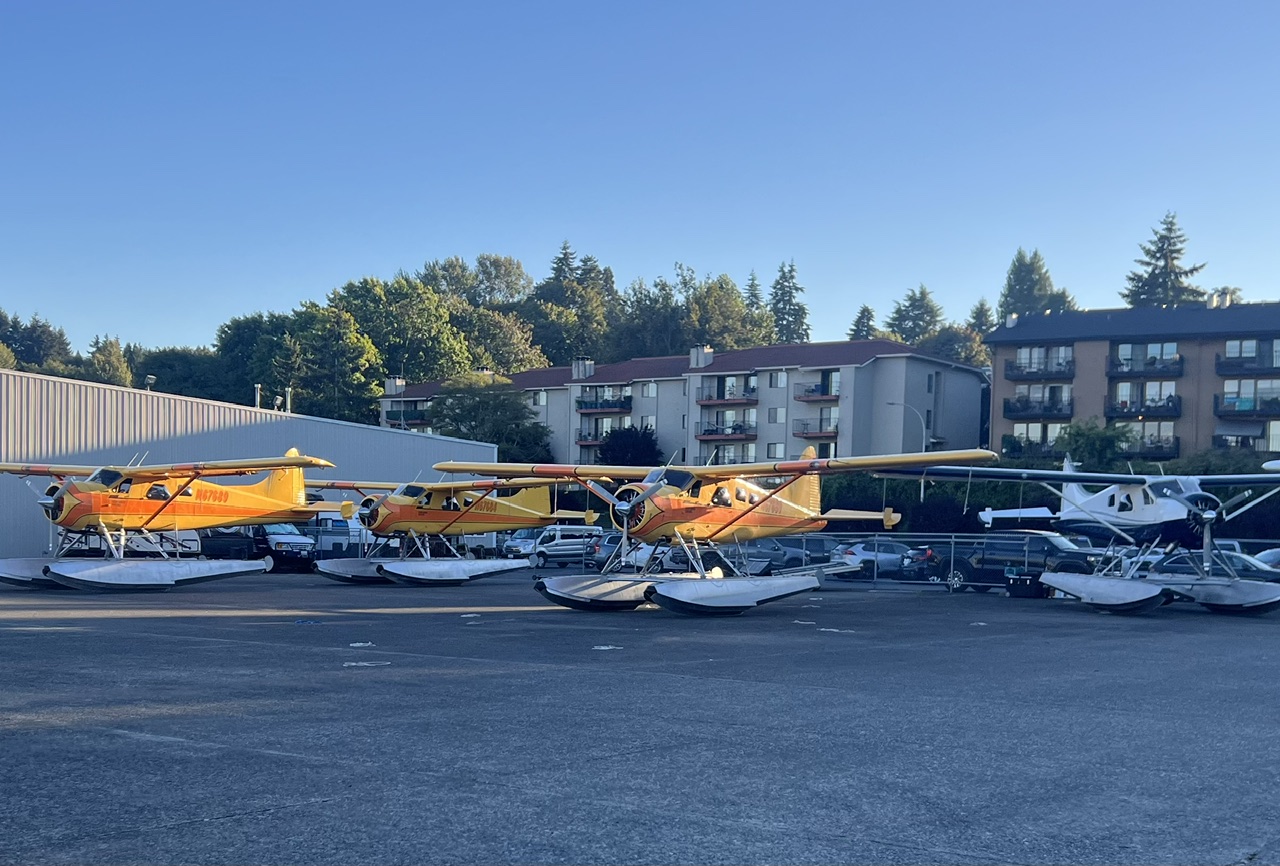
Two years ago many small plane owners in Renton were issued surprise rent increases of 42 – 74%, making their tie-downs and hangars more costly than those at Boeing Field (which has much more infrastructure including two runways).
It appears that many of the increases and tenant disputes have been exacerbated by Renton Public Works Director Martin Pastucha, who’s previous airport leadership experience left the Santa Monica airport in turmoil and on a controversial path toward closure. (Per the deed below, closure would not be an option for Renton; if attempted, the airport property would revert to federal ownership and control, and the federal government could keep the airport open with a new airport commission and management team to oversee it.)
When Renton purchased the airport from the federal government in 1947, the city promised that the rental terms for airport tenants would be “reasonable.” The Quit Claim Deed for the airport requires this. I asked the King County Archivist to get me a copy of the quit claim deed, and I have linked it here.
As shown below, the deed says the property “shall be used for public airport purposes, and only for such purposes, on reasonable terms and without unjust discrimination”
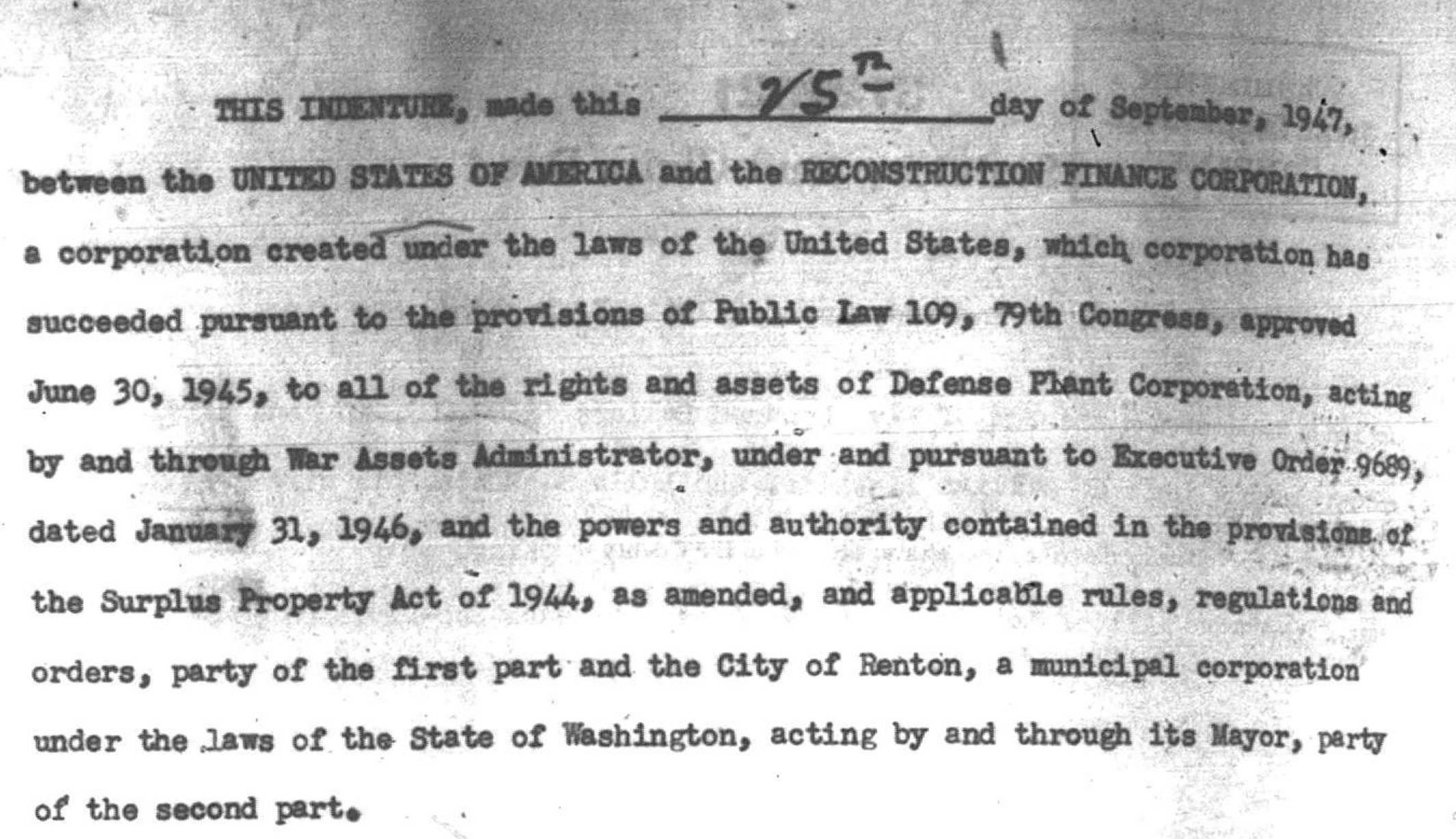
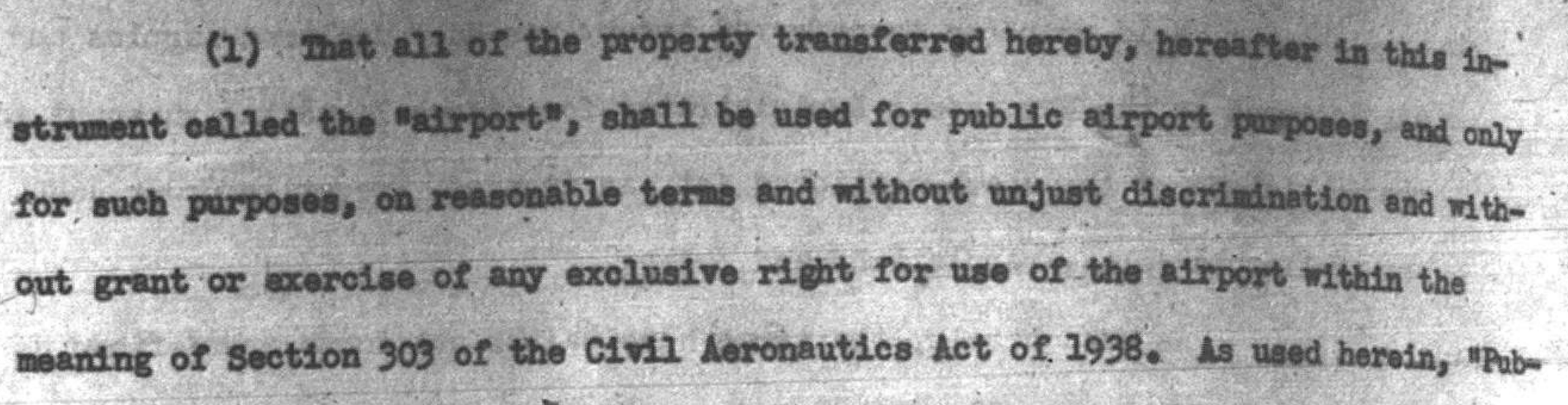
the property “shall be used for public airport purposes, and only for such purposes, on reasonable terms and without unjust discrimination”
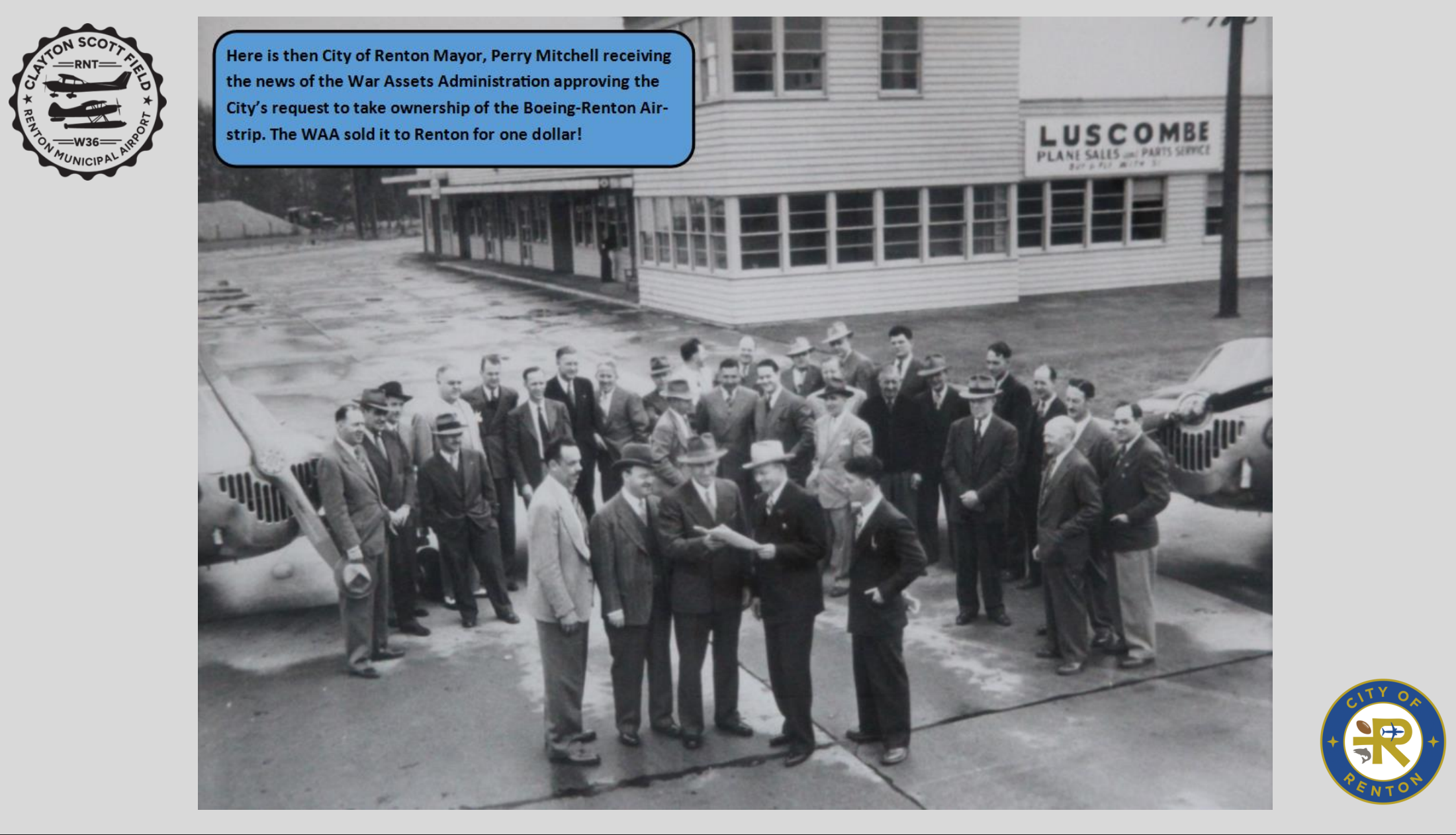
Photo from City of Renton, showing Mayor Mitchell purchasing airport for one dollar in exchange for making the property available to the public on “reasonable terms and without unjust discrimination”
This same language requiring reasonable rental terms appears in the grant assurances Renton signs when we accept FAA money, and in federal laws that apply to public airports.
While the airport manager can suggest what he thinks is reasonable, the ultimate decision is up to the Renton City Council.
Obviously what is “reasonable” can be a matter of opinion, and usually requires a discussion. The Aircraft Owners and Pilots Association (AOPA) recommends that airport users get organized to be sure their interests are given proper consideration by airport management. Many airports have seen the formation of tenants unions or other advocacy organizations for airport users. The Renton Airport Advisory Committee (comprised of neighborhood and airport representatives) used to do a good job of this, building consensus on rent rates as part of their process. But airport administration and Mayor Pavone have diminished RAAC participation in this and many other airport decisions in recent years.
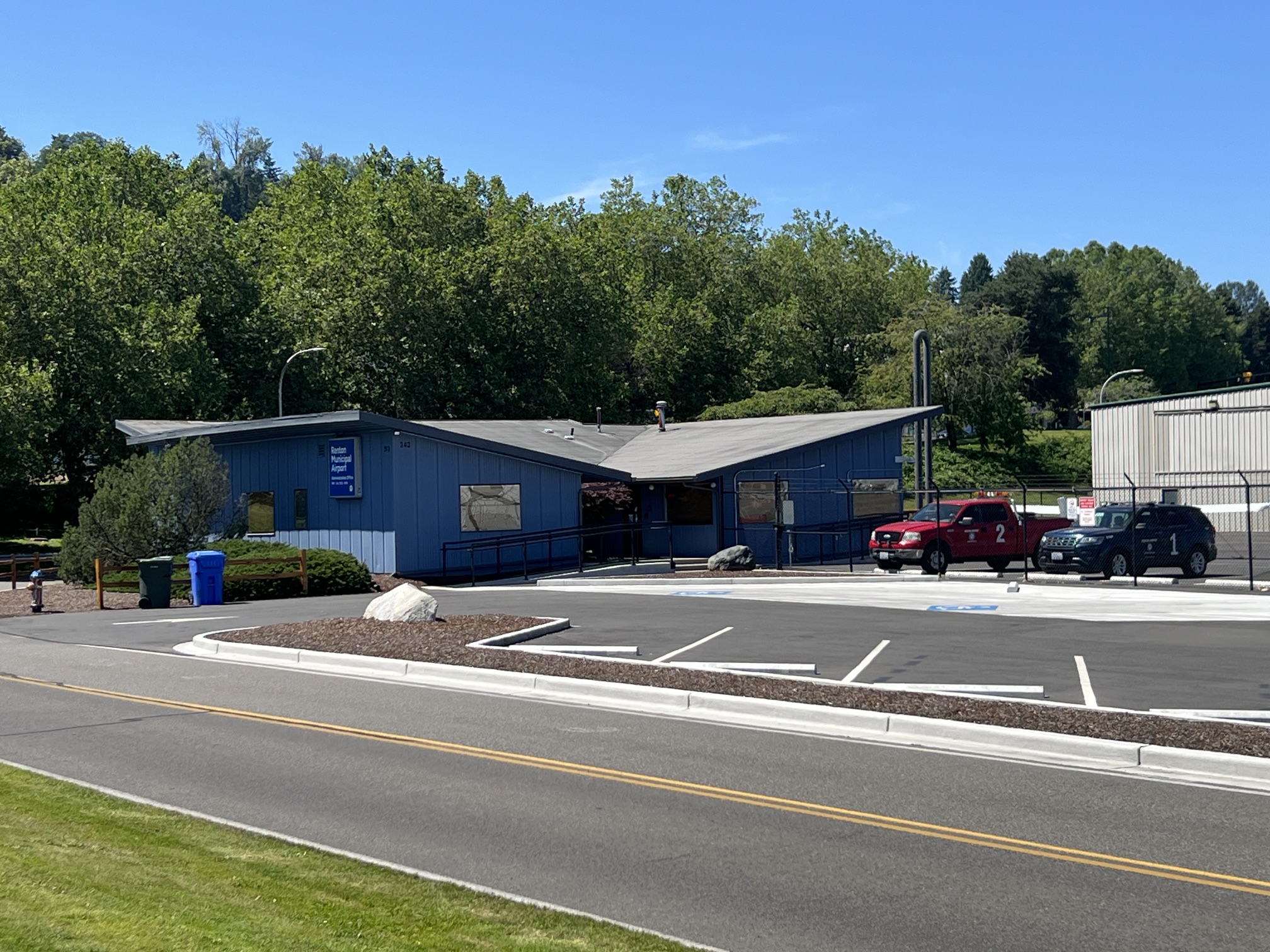
In the past ten years the staffing of Renton Airport management has grown from six to ten while several large tenants have left. Last year Airport Management remodeled this building for $3 million dollars to provide extra staffing space, which is a sore point for some of the tenants who feel their rent increases are excessive.
Renton’s Airport Management insists they are just trying to get tenants to pay “fair market value,” per the airport leasing policy. But this is an oversimplification of a complex disagreement, that fails for at least five reasons.
(1) Airport management hired an appraiseal firm to determine fair market value, and appraisals are rarely perfect– the appraisers might have over-estimated fair market value. Fair market value is defined as what a willing renter would pay a willing landlord. But in the recent cases of Aerodyne, Rainier Flight Services and the Landing Gear Works , all the “willing renters” turned down the rent hikes that the appraisers recommended, choosing to move their businesses instead. This suggests these rents are not fair market value. Some airport tenants suggest the appraisal could be high because it was completed before two recent events: the legislature recently implemented a 10% tax on aircraft and only repealed it at the last minute when too many airplanes were being reregistered out-of-state; and now the millionaire income tax is causing airplanes to be relocated to Idaho and elsewhere, Both these legislative actions could have abruptly lowered hangar fair market values in our area.
(2) When rents must rise, airport management should be aiming for negotiated solutions which gently step-up rents over time, to allow businesses to sustainably transition to higher rates over longer periods. This would allow airport businesses to reasonably adjust their customers prices and the rents they charge their subtenants, to eliminate complaints about outrageous 120% jumps
(3) Airport management appears to be negotiating with some airport tenants while drawing a hard line with others, appearing to make decisions based on how much they personally like various tenants and/or potentially punishing tenants who have asserted their rights on previous issues (by speaking to City Council, for instance). Discriminating like this could violate the 1947 agreement.
(4) Proposed rent increases for specific tenants are usually kept private, even though the approved leases are public documents. Airport management should be publicly sharing their reasoning and approach, and receiving broad input on rent rates. If more money is needed for widely desired maintenance or improvements, Airport Management should make the case to all the tenants, and build a consensus for the rent rates. It takes effort, but it’s worked in the past, and that is how the Airport Director and his staff earn their salaries.
(5) Airport management has become stuck on the concept of “fair market value.” They have never asked the Council to review this policy or clarify it. I was on Renton Council when we wrote the first airport leasing policy, and we put “fair market value” into our first draft– but that was not the only acceptable measure we could have used. If it’s not working, the Council should consider something else. If I were on Council today, I would be looking to change this language. The FAA allows other methods for establishing “reasonable terms”. Fair market value is one way the FAA allows, and not necessarily the FAA-preferred way. In general, FAA prefers lower fees, not higher fees, for aeronautical uses, as long as the airport can remain financially successful. If lower rents could result in fewer vacant buildings, and still sustain airport operations, this would be acceptable– possibly preferable– to FAA. (Aerodyne, Rainier Flight Services, and the Landing Gear Works buildings are all vacant now, reducing aviation activity and contributing nothing toward paying for airport upkeep).
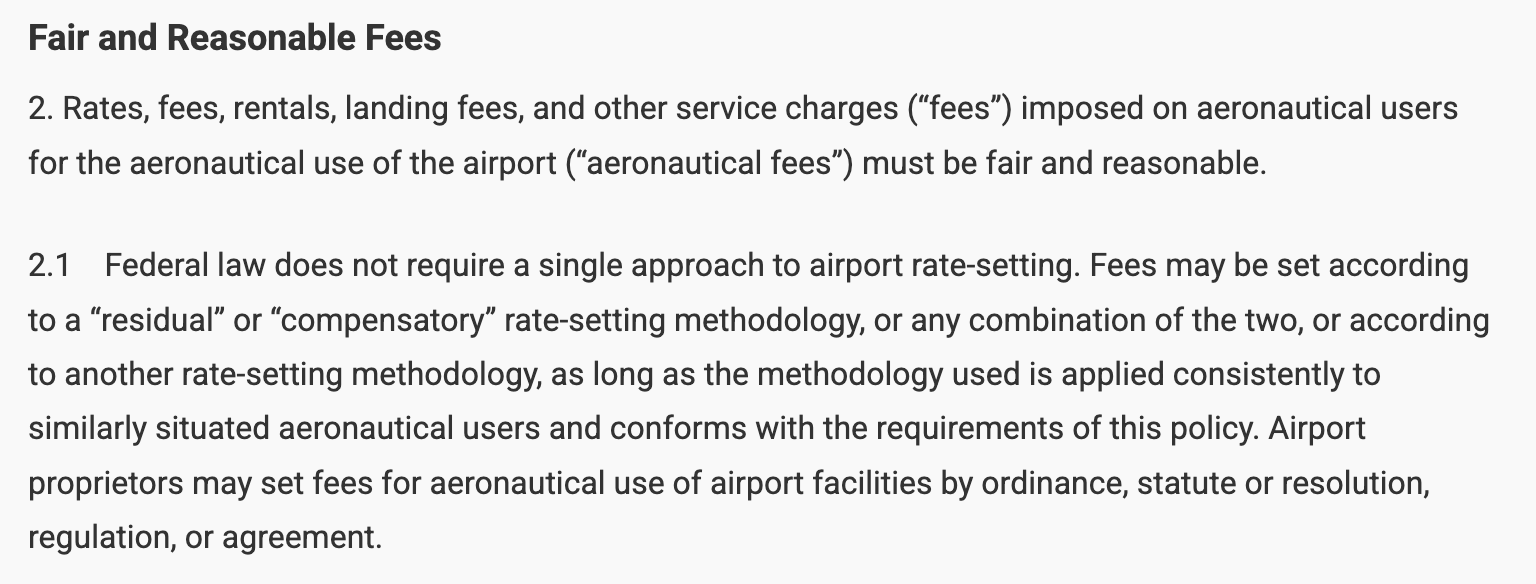

The two excerpts above are from FAA 2013 guidance regarding airport rate setting; fair market value, Renton’s approach, is not a required approach. This guidance was published ten years after Renton put “fair market value” into it’s leasing policy.
If Airport Management and Renton City Council studied these five points, took took them to heart, and implemented them, then the Airport tenants would not feel like they needed to form a union to get fair treatment.
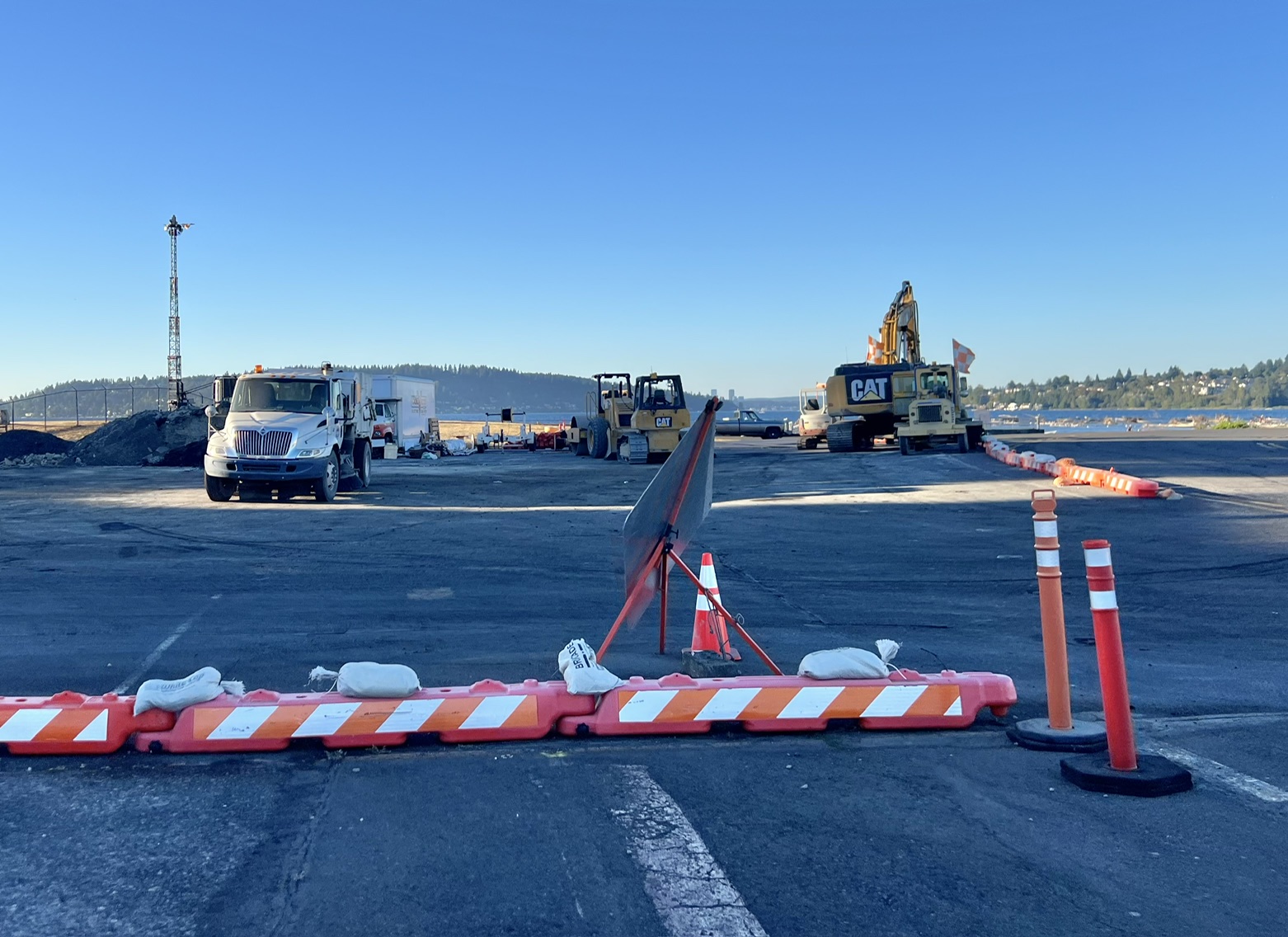
Infrastructure upgrades, like this taxiway repaving project, are 90% paid for with FAA grants. Renton recommits to making the airport available on “reasonable terms” every time it accepts one of these grants


Leave a Reply