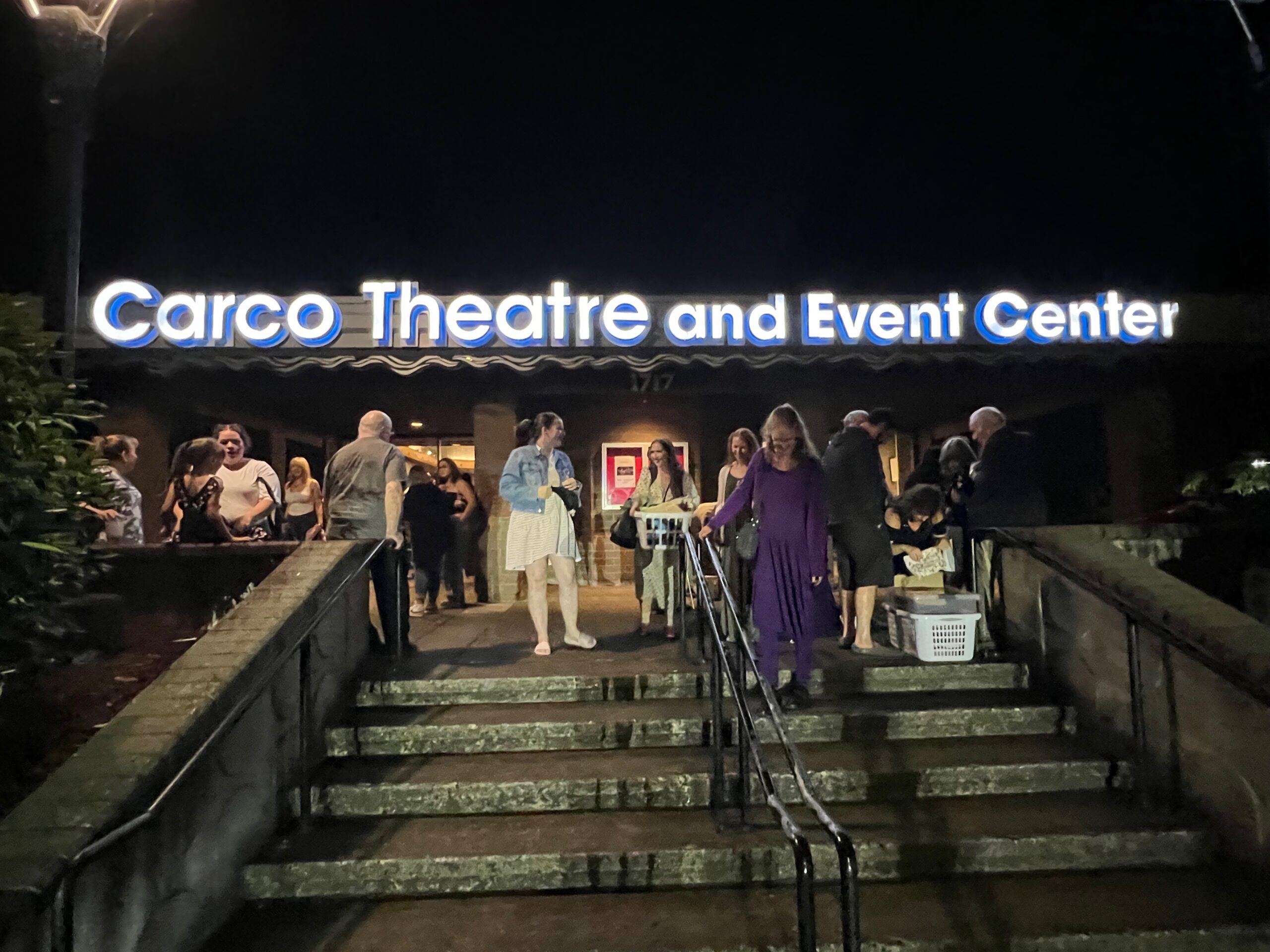
Crowds depart an evening dance recital at Carco Theatre in October last year. Seven weeks later the theater flooded from a storm the city said was unlikely to reach a flood stage.
Renton’s 300-seat Carco Theatre was flooded in December, after Renton leaders initially downplayed the NOAA forecast that predicted we could see the worst flooding ever (see screenshots below). Nearly a year after the flooding of Carco, nothing has been done to reopen the theater. A local non-profit that leased space from Renton and helped community groups prepare programs for public access TV, Puget Sound Access Television, has also been displaced by the flooding.
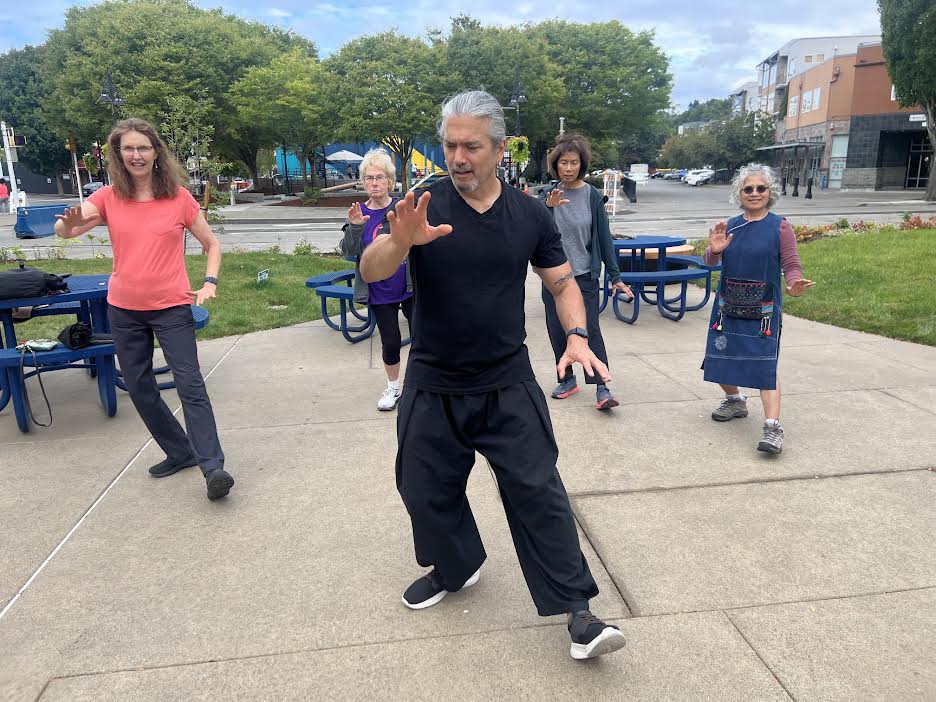
Scott Douwes, Tai Chi instructor and member of Renton Arts Commission, leads a Tai Chi walking exercise at the Piazza (next to Legacy Square) in downtown Renton this morning. He holds free one-hour group drop-in sessions every Sunday morning, from 9-10. No experience is necessary.
Renton residents that would like to try Tai Chi walking can enjoy doing so for free in the heart of downtown Renton. Art Commissioner and Tai Chi instructor Scott Douwes has been leading some fun and well-attended sessions every Sunday morning at 9:00. Everyone is welcome to join in, and no experience is necessary.
You can find more information and sign-in in advance at Scott’s website, thesanctuarycommons.org.
You are sure to enjoy Scott’s informative and entertaining teaching style. He brings impressive experience with Tai Chi and physical fitness to these exercises, complimented by his mastery of art, affection for teaching others, and outstanding sense of humor.
Scott’s been a very active member of our Renton community for many years, and has designed beautiful murals and other media for our city in the past. His wife Jennifer is a writer who also manages the office of Renton Historical Society.
Opening day at Renton Skate Park, April 24, 2001; Spirit of Washington Dinner Train in the background. Photo by Randy CormanPhoto from this Sunday’s 25th birthday celebration; Cynthia Burns was and is on Parks Commission and I was on City Council when we authorized and funded Renton Skate Park in the late 1990s.
On Sunday the City of Renton and Gravity Sports hosted a 25th birthday celebration for Renton Skate Park. It was a great skate party with a band and perfect weather, and I caught up with some old friends.
I vividly remember the opening of the skate park in 2001. We located it at the site of the former Henry Moses Pool after determining we would build the new Henry Moses Aquatic Center on the other side of the freeway. Residents had petitioned the Council to build a skate park, and I thought is was a great idea. In time, all of Renton’s officials were on board, and we created one of the best skate parks in the Northwest at that time. In 2000, when I was Council President, we held workshops using clay modeling to enlist public involvement in the design (see the document at the end of the photos). The Skate Park has received steady use ever since.
Residents are asking Council to consider expanding it and potentially building a second park in a covered area under the freeway, and I think these are great ideas.
I posted a few pictures from Sunday’s Skate Park birthday party, and some fun never-before-seen historic photos of the opening of the Skate Park
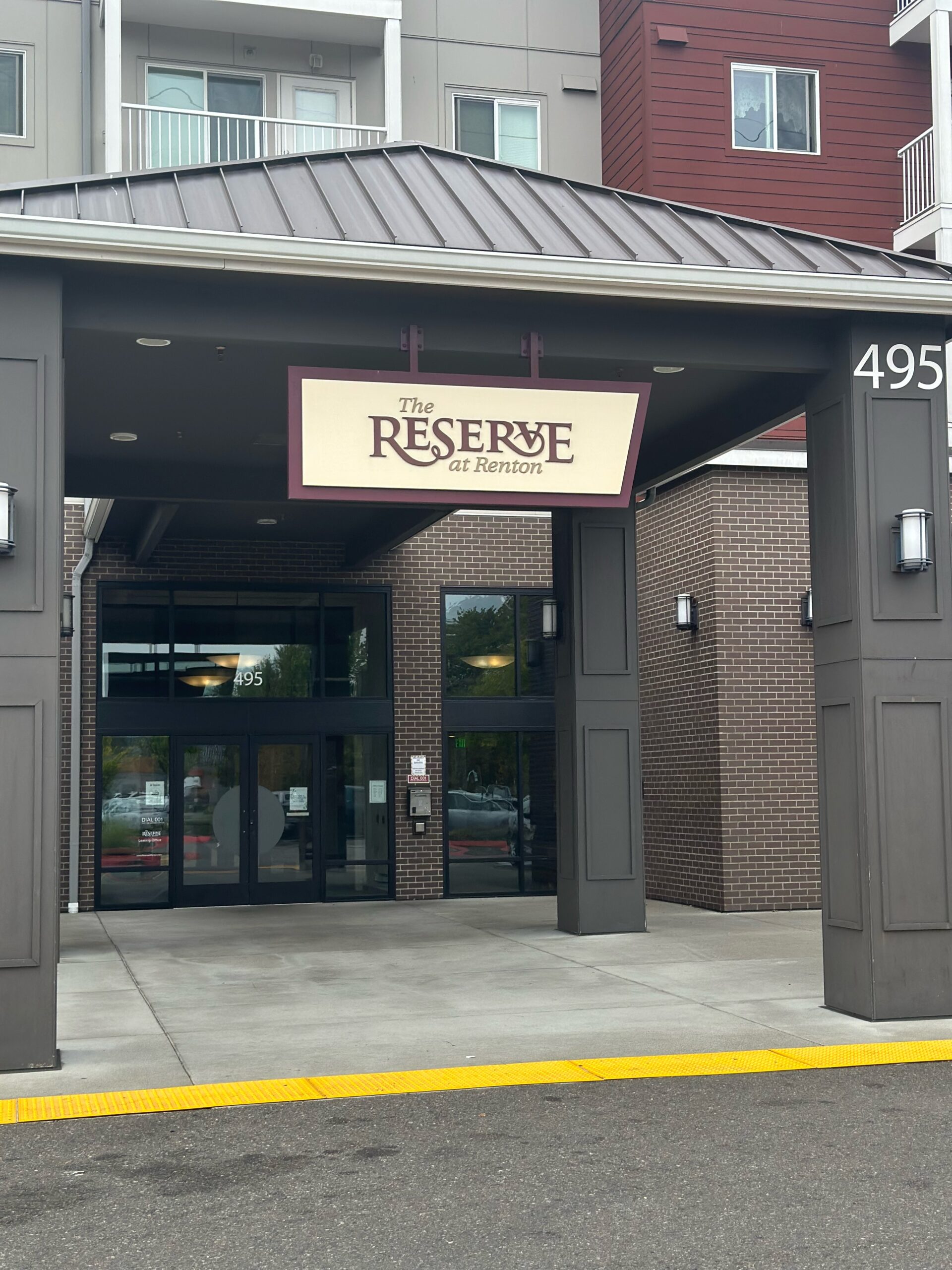
In my previous post, I described how “The Reserve at Renton” has been accused of being too quick to tow resident’s and customers vehicles away. This includes vehicles that are legally displaying the state disabled parking permit but do not also have a special “Reserve at Renton” issued parking permit. Disabled residents have reported paying between $500 – $900 to retrieve their towed vehicles.
A quick review of the State’s website says any person who meets the criteria for disabled parking must be allowed to use the parking free of charge, without time restrictions (except in the case of certain on-street parking). Hence, it’s not surprising that disabled motorists are taken by surprise when their cars are towed away by the “Reserve at Renton.” I’m not an attorney, so I’m not going to opine on the legality of this, but I think it is very confusing, and I think residents cars should not have been towed without warning if they had a valid ADA permit. Here is the wording in state law, which can be found here. (The exceptions mentioned are for on-street parking or fraudulent use of credentials, and don’t apply in this case).
RCW 46.61.582 Free parking for persons with disabilities—Exceptions. (1) Any person who meets the criteria for special parking privileges under RCW 46.19.010 must be allowed free of charge to park a vehicle being used to transport the holder of such special parking privileges for unlimited periods of time in parking zones or areas, including zones or areas with parking meters that are otherwise restricted as to the length of time parking is permitted, except zones in which parking is limited pursuant to RCW 46.19.050(5). The person must obtain and display a parking placard or special license plate under RCW 46.19.010 and 46.19.030 to be eligible for the privileges under this section. (2) This section does not apply to those zones or areas in which the stopping, parking, or standing of all vehicles is prohibited or that are reserved for special types of vehicles.
Screenshot from State Law
Cars transporting disabled residents and customers, in front of a storefront in the Reserve at Renton apartment building. Parking spots are marked per state law, but with an additional “Parking by Permit Only” towing sign on the bricks.“Parking by Permit Only” sign does not make it clear their permit is additional to State Disabled Permit; and I’m not sure if this is legal anyways for ADA parking required by the building permit
Double-permits hang in this car window as resident works to comply with apartment policy
Gerry Kingen, Renton High class of ’62, receiving a “Wall of Honor” recognition at a ceremony at Renton High in 2013. Photo courtesy of Renton History Museum
Note: I owe this blog post to Anon E. Mouse -probably not their real name 🙂 –, who left me a comment on this previous post about this restaurant at 423 Airport Way being demolished. I was not aware of the link between that restaurant and the founder of Red Robin, and I decided this information was worthy of a post of its own.
During his high school years, Gerry worked part-time with his parents and brother at Renton’s “Kingen’s Steak House”, one of their family’s popular restaurants. They served steaks, burgers, and other american-style food in a bright, inviting building that they had specially constructed at 423 Airport Way, across the street from Renton Municipal Airport.
An advertisement in a 1963 Catholic Newsletter shows Kingen’s serving dinner at 423 Airport Way in RentonA Red Robin prototype? The 76-year-old Kingen’s Steakhouse Restaurant building as it looked two months ago, after a forced purchase by Renton School District; this building was inspirational for modern Red Robin restaurantsInterior of building that was once Kingen’s Steak House
After getting his education and learning the family business, Gerry purchased a small tavern in the Seattle U-District. He remodeled the tavern, added an outdoor patio, and he changed the menu to one that more closely matched the Renton family business. He changed the name from “Sam’s Red Robin Tavern, to simply “Red Robin,” and it became an immediate success. The “Red Robin” chain was born, and Gerry was soon adding restaurants and selling franchises.
Renton School District recently used the threat of eminent domain to acquire the still-pristine restaurant building that the Kingen family built that was such important inspiration for Red Robin and Salty’s. The District spent six million dollars in taxpayer funds to acquire the restaurant. Then, without acknowledging the building’s distinguished alumni history, they bulldozed it along with many homes and other businesses with an intent to construct a baseball field on the site in five years, likely the nation’s most expensive high school baseball field ever. The Superintendent and the Board based their actions, ironically, on their flawed premise that Renton High is an inferior school that needs its own lighted baseball field in order for its students to achieve their potential (the school currently already has several unlit baseball fields).
Gerry Kingen and his mother are among many distinguished alumni from Renton High, including Sally Jewel, former US Secretary of the Interior and former CEO of REI, US Olympian Aretha (Hill) Thurmond, Hollywood music producer Ron Hicklin, and many others. In this previous blog post I discussed other well-known and less-well-known-but-equally-important successful alumni from Renton High School.
The still-pristine Kingen’s steakhouse building was demolished last month. It had been freshly remodeled and was ready to reopen as an Asian food restaurant.King County records show that the building was constructed in 1949, making it 76 years old when it was taken by school district (for $6,000,000) and then demolished.Historic photo of Seattle’s original Red Robin Restaurant. (The building has been replaced by the Robins Nest mixed use apartments and pizzeria.) Photo and history in this Seattle History Blog A typical modern Red Robin Restaurant; Photo from wiki commons
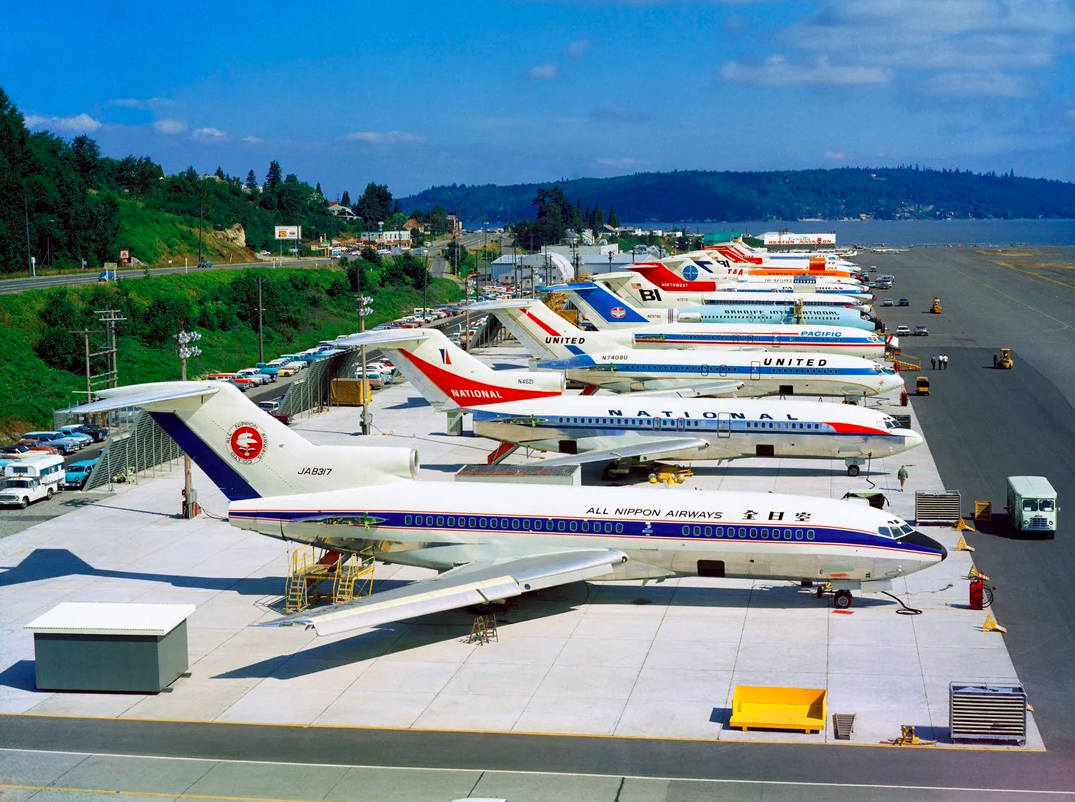
Renton airport in summer 1966. The Boeing Everett factory opened the following year.
This colorful picture of Boeing’s 727 flight line in the summer of 1966 has been shared at least a couple times on Reddit. The original poster three years ago also provided information on how long each of these individual airplanes performed in service. Several of them were flying until at least 2005, and one flying until 2014.
When I joined Boeing in summer of 1984 the company was still making 727 airplanes, but the last one was delivered to Federal Express a few months after I started work. Most customers looking for single-aisle airliners switched to ordering 757-200 airplanes (certified December 1982) and 737-300 airplanes (certified November 1984).
This photo serves as another reminder of Renton’s proud history in aircraft production. Renton is the birthplace of commercial jet aviation, and Boeing has played a major role in our city’s success for over 80 years. Renton should strive to keep Boeing building airplanes here for decades to come.
I’ve written more about Boeing’s significant contributions to Renton’s economy in a previous blog entry here.
The detailed information for these airplanes is below the break.
This graphic of the City’s future Cedar River Park Plans shows an outdoor amphitheater in the exact spot as Carco Theater, raising questions about whether Carco Theater is threatened.
Renton published a press release this week saying plans were underway to purchase the former Stoneway Concrete site, next to Cedar River Park, consistent with the “Tri-Park Master Plan” that was developed in 2006. The purchase would increase the size of Cedar River Park by about 12.5 acres.
An information display was set up in the Community Center for Renton River Days, giving ideas of what the expanded park system might look like under the Tri-Park Master Plan. As my wife Cathy and I reviewed the display, my wife asked me “Would they seriously consider tearing down Carco Theater?”
“No, of course not” I said. But then Cathy pointed to the poster, and I was not sure what it was depicting– it appears that Carco was to be replaced by an outdoor amphitheater. And then I noticed a sticky note someone else had left on the “Concerns” board asking the city NOT to get rid of Carco Theater, along with another commenter “Seconding” the comment.
Some concerns identified by public: “Strongly oppose getting rid of Carco Theater”; “I second that”
Getting rid of Carco Theater was most definitely NOT what the 2006 Tri-Park Master Plan envisioned. The approved plan called for an expanded lobby of Carco Theater, as well as other improvements to Cedar River Park:
Migrating salmon won’t need to pass an asphalt plant to reach the pristine upper spawning sites in the beautiful Cedar River Valley. And the aquifer that flows below the surface delivering Renton’s drinking water will be at less risk from contamination.
Lakeside Industries is withdrawing their permit requests for an Asphalt Plant on Highway 169, just upstream of Renton on the Cedar River. This is great news for so many: the surrounding residents; Renton and Maple Valley water customers who drink from the Cedar Valley Aquifer; Cedar River salmon and other wildlife; and Maple Valley Highway motorists who would have felt the traffic impacts.
Bob Baker, who has battled the proposed plant for 8 years, shared with me that the owners of Lakeside Industries didn’t wish to create so much controversy, and the owners have been seeking a solution that would satisfy community concerns.
I’ve written numerous articles about the long-term risks this plant could pose to drinking water systems in the Cedar River Valley, including Renton’s own municipal wells serving over 100,000 residents. These articles can be found here. By choosing to withdraw their Asphalt Plant permit application, the owners of Lakeside Industries are showing goodwill and stewardship toward all of these residents. I heartily thank them for it.
Here is the official press release:
King County Council Vice Chair Reagan Dunn and local community group ‘Save the Cedar River’ have struck an agreement with Lakeside Industries that would halt the building of a proposed asphalt plant along SR-169 and the Cedar River.
“Given the alternatives, this is a far better use of the property, and a big win for the community,” said Dunn, who represents this area on the King County Council. “Rather than rock crushers, truck traffic, noise, dust, and odors, this plan will provide benign warehouse space and avoid the impacts of an asphalt plant on the greater community.”
‘Save the Cedar River’ and other stakeholders have expressed concerns in the past about potential leaks to the nearby Cedar River and wetlands, noise and light pollution, truck traffic, and potential impacts on salmon from the plant. Typical asphalt plants require onsite crude, burners, storage silos, rock crushers, mixing drums, and machines for separating materials.
“This brings an eight-year-long, hotly contested battle to a great conclusion for all parties involved: there will be no asphalt plant, Lakeside Industries can finally utilize their property, and King County can put this chapter to rest,” said Bob Baker of Save the Cedar River. “I could not be prouder of the ‘Save the Cedar River’ organization and the long, hard hours that each member put in during this challenge. And to the citizens, HOA’s, businesses big and small, that supported us, thank you!”
‘Save the Cedar River’ was formed in response to a proposal to site the asphalt plant in 2017. After protests, environmental reviews, appeals, and a lawsuit, Lakeside Industries was issued a permit for the asphalt plant in April 2022. ‘Save the Cedar River’ sued in Superior Court but ultimately lost that legal battle in May 2024. This new deal puts all that in the past.
“We see this as a win-win for the community and Lakeside,” said Mike Lee, CEO of Lakeside Industries. “Lakeside is a third-generation, family-owned, local company. We want to be good neighbors in the communities in which we operate, and finding a creative solution balancing Lakeside’s needs, our obligations to our employees, and the concerns of the community, is a success that took all parties working together.”
Under the new agreement, Lakeside Industries would not move forward with construction of an asphalt plant under its approved permitting. Instead, they would reengage with King County to permit a warehouse as an alternative. ‘Save the Cedar River’ has agreed to support this alternative use and agreed not to oppose the permit application.
“I want to give credit to Mike Lee with Lakeside Industries for listening to the community and finding a solution that is a win-win for everyone,” continued Baker. “And a huge thank you to Reagan Dunn who stood by my side throughout this and for brokering this fantastic deal.”
This alternative use of the site would be a warehouse building for commercial use. The estimated trip traffic for a warehouse is substantially lower than what was estimated for the asphalt plant. The warehouse plan would protect all the critical areas as required by the County Code. However, the alternative use would still need to go through a new permit process by the King County Permitting Department.
Dunn and Baker will be available for interviews at the Lakeside site from 1:30 p.m. to 2:00 p.m. Dunn can also do interviews over phone or Zoom. 18825 Renton-Maple Vally Road, Renton, WA 98058.
A Renton reddit user recently posed a question on a Renton reddit page asking “could we please have light rail connectivity in Renton?”
Click here to see the complete Reddit thread on this topic.
One commenter says Renton Councils and residents of the past didn’t want light rail, some point to unfair lack of Renton representation on the Sound Transit board when key decisions were made, some point to Renton’s lower density than Seattle, some say our topography is to blame, and some say we’re not working hard enough to get it today. One made an interesting point that Boeing, our largest employer, has many workers with shifts starting too early in the morning for Sound Transit trains (although Everett has a similar workforce and it is scheduled to eventually get Link light rail).
I’ve covered Renton’s concerns regarding Sound Transit extensively in the past, and I don’t agree with some of the reddit comments. For instance, I always wanted Link light rail during the time I was on council (first writing about Renton’s struggles with the agency in 2007), and I don’t think our topography or density are less suited than other areas like Redmond or Issaquah. I also agree with many of the comments, and I’m happy to see our community discussing it. I’m impressed with the level of interest and engagement by our community.
As I’ve said in my previous blog entries, I would like to see Sound Transit complete the five million dollar study that voters agreed to as part of Sound Transit 3 to determine an alignment and layout for a future Link light rail station in Renton. This study should be completed soon, to make sure Renton is not left out of any future Sound Transit 4 planning.
Renton’s Piazza Fountain has delighted visitors for over 20 years with its three levels of rushing, splashing water. This picture was from a farmers market two years ago.
Renton’s Piazza Fountain has welcomed visitors to Renton’s downtown since the Piazza park was built 24 years ago. In addition to making downtown more inviting, The fountain and surrounding Piazza are a gateway to Renton for everyone arriving by bus through the adjacent transit center.
The beautiful fountain is dedicated to beloved Renton resident Marge Richtor, who served our community for decades in numerous roles including on Renton Parks Board. She was a friend and inspiration to all of us who knew her. A plaque on the fountain commemorates the dedication.
Three of my young relatives enjoying the Piazza fountain two years ago
In recent years, the fountain has not been maintained as well as in the past. And this year, even though temperatures are in the 80s and people are out and about, the fountain has been entirely neglected.
This should not be allowed to go on for long. It’s time to clean the fountain and get it flowing again. As in the case with our broken clock tower, the public notices when these community centerpieces are neglected.
This photo, taken a week ago, shows the fountain is currently neglected. It desperately needs to be cleaned and maintained. Even with the Farmers Market relocated, the fountain reflects on the health and vitality of downtown Renton.
Just as importantly, the city has been making plans to revise the Piazza landscape. If they do so, the fountain should remain the inviting centerpiece that it has been for the past two decades.
This photo, taken during the Farmers Market a week ago, shows the Piazza has been emptied of programmed activities in apparent preparation of a landscaping project. However, I don’t even think a contractor has been chosen yet for the landscape project, or a final design approved. The fountain should remain part of any redesign, and should be bubbling with clean water in the meantime.
If you share my view that this fountain should be cleaned, maintained, and preserved you can let the Mayor and Council know by emailing mayor@rentonwa.gov and council@rentonwa.gov.
Billy O’Neill, “Dale Chihuly’s right hand man,” (in white sneakers) selecting the large facility on Airport Way for his decorative glass making studio. The venue was going to teach youth and adults the art of Chihuly style glass making. The large open-bay building features the same old-growth historic bowstring-trusses that caused our city council to save the Pavilion building in the 1990s.
It was a dream come true for Renton’s Arts Community, our youth, and our Economic Development department. A world-class glass studio was relocating to Renton, headed up by the vice-president and operations manager of Chihuly’s workshop in Seattle. Billy O’Neill, who Seattle Times calls Dale Chihuly’s right hand man, was working on a gift for Renton that would have taught new generations of Rentonites how to create beautiful glass sculptures and containers. Mr. O’Neill has served on the Seattle Arts Commission, as secretary on the Executive Board of Directors of the Seattle International Film Festival (SIFF) and on advisory boards for the Seattle Sounders and other non-profits– a perfect fit in Renton. He was instrumental in creating Chihuly’s Garden of Glass at Seattle Center.
But the exciting glass art studio fell victim to a School District Eminent Domain taking, along with numerous other businesses and homes, with no acknowledgment by the School Board of the glass studio’s extraordinary significance.
The business, called “Glass Eye” already has a permanent sales location at Pike Place Market, which would have soon been selling the Made in Renton glassworks. We would have a new Made-in-Renton products we could share with visitors and far-away family, to replace our much-missed Uptown Glassworks.
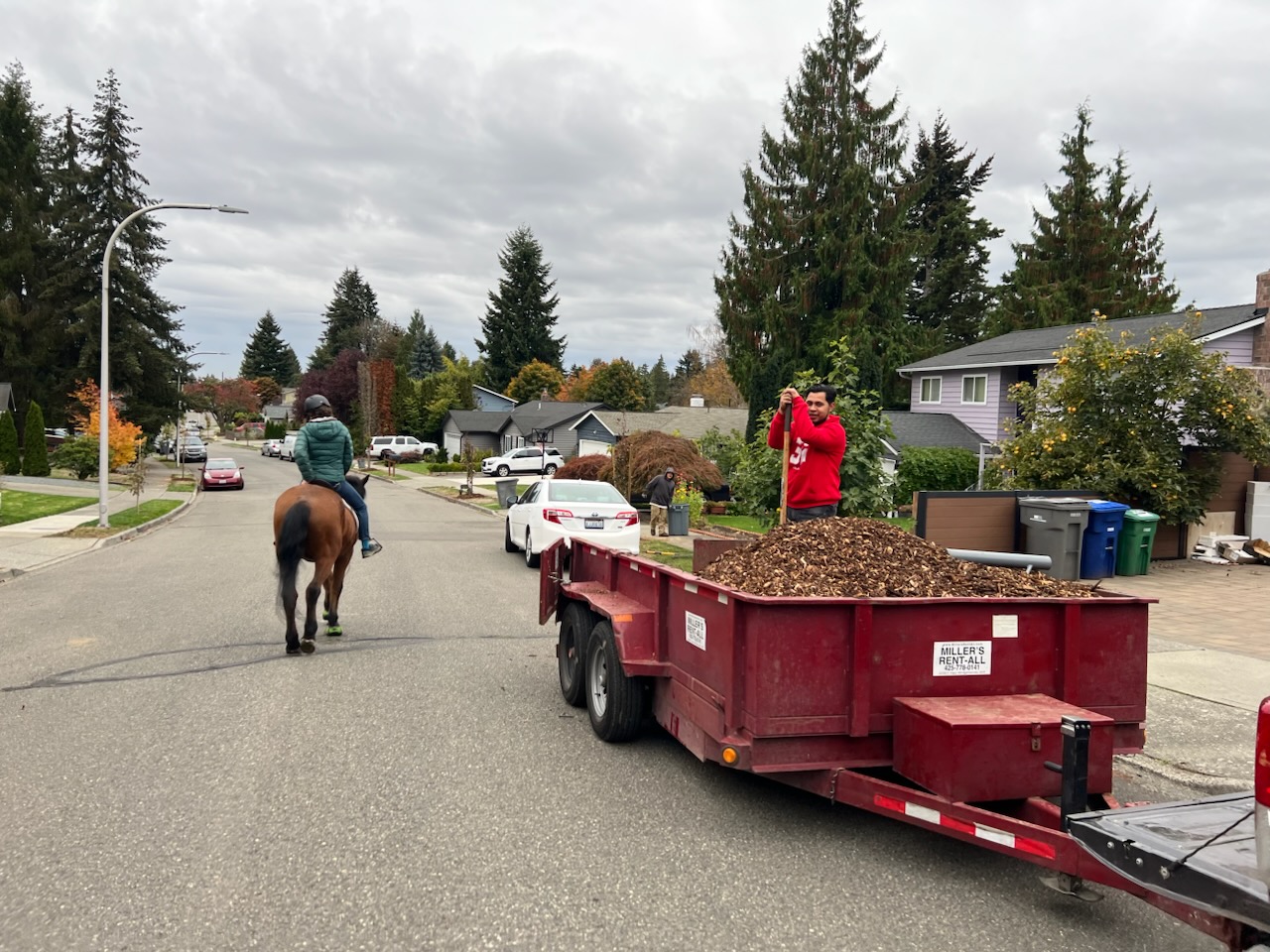
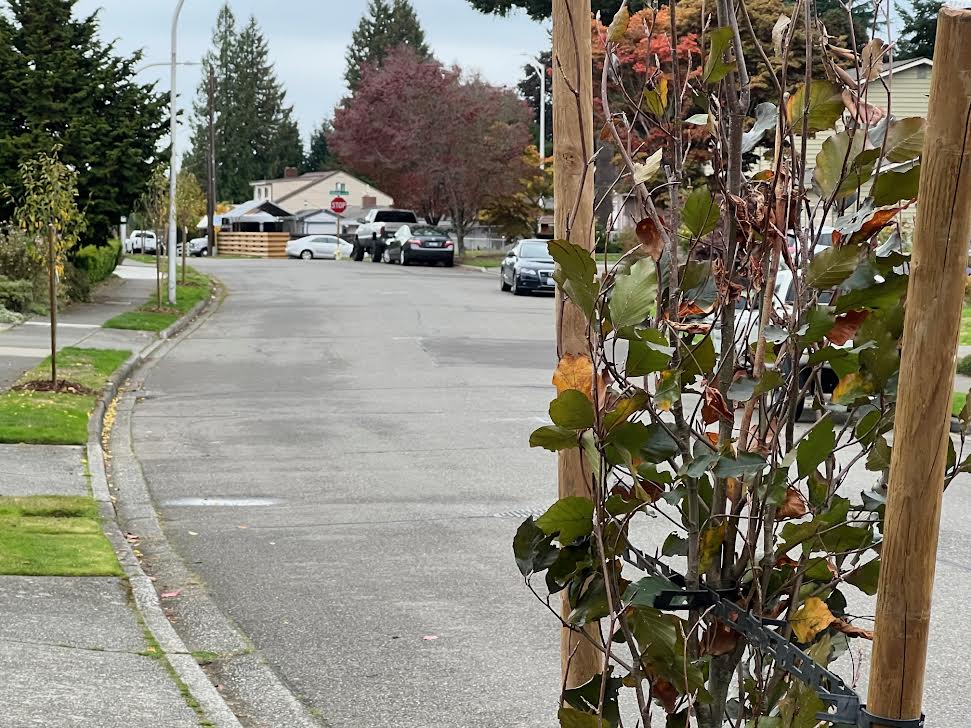
A landscape contractor working for Renton takes a break from mulching around his newly planted street trees to greet us and our horse Zeus, last October 17.
I’m way overdue to share a purely positive story on this blog, and there is no shortage of such stories to tell. Our City and our region are teeming with caring, beauty, hard work, and achievement.
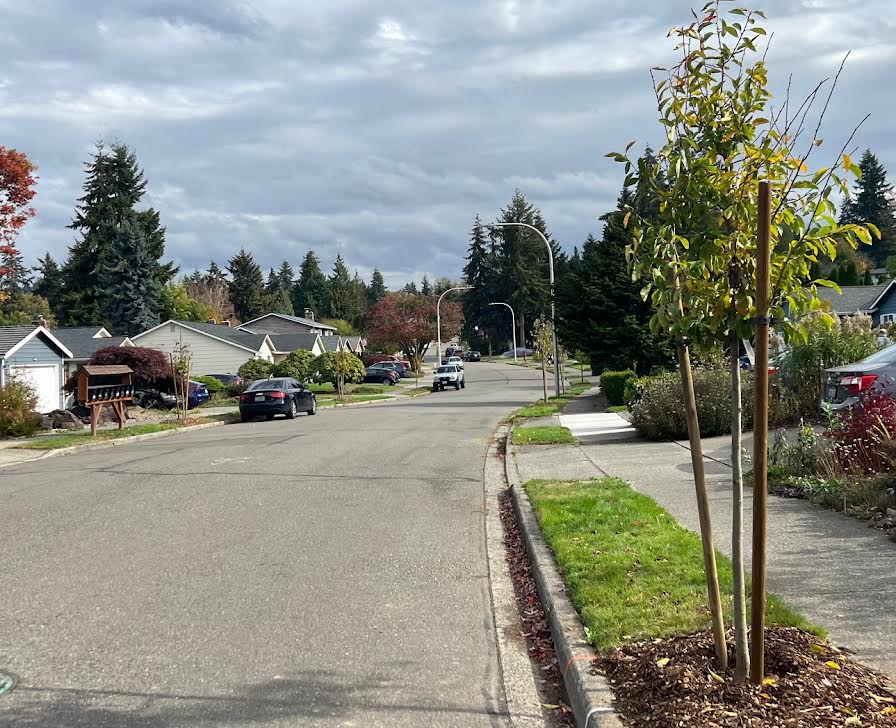
Last October our City’s arborist and street department planted some lovely new street trees along NE 23rd Place and NE 24th Street, not far from my home, in the North Renton Highlands. This was just one of their ongoing planting projects. I caught the work in progress when I was out on a walk.
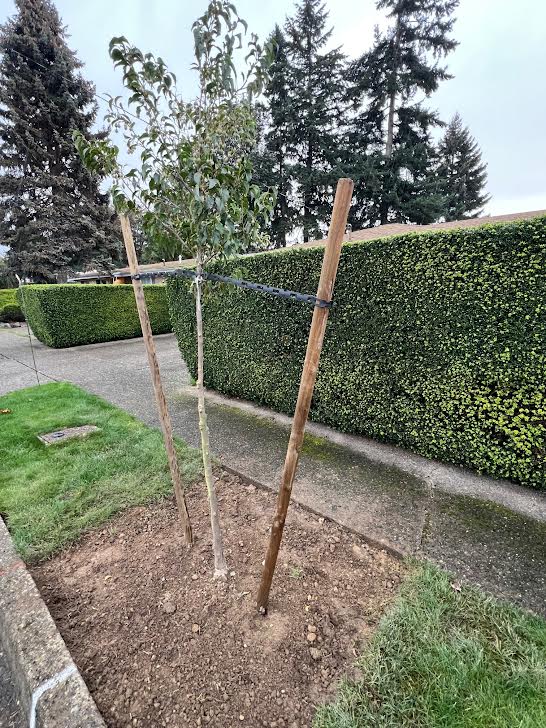
The trees consisted of Japanese Snowbell and Persian Parrotia, and they will noticeably add to the street canopy as they mature. Most of the neighbors were excited to see the trees, although there were a couple concerns from residents who had landscaped the planting strip just the way they liked it. Hopefully when the trees bloom this spring everyone will be as pleased as I was to see them.
These trees were planted as part of Renton’s Urban Forestry program, overseen by Urban Forester Ian Gray and Inspecting Arborist Gabriella Golzarian. This neighborhood was a good candidate for the new street trees, as it had city-owned planting strips on both sides of the street, and didn’t already have trees in these strips.
This spring they are planning to plant some trees near Redmond Avenue Northeast and Shelton Avenue Northeast between Northeast 10th Street and Northeast 12th Street on the Renton Highlands.
Renton’s Urban Forestry website reminds us that there are many advantages to maintaining a healthy tree canopy:
Improves air quality by filtering pollutants and producing oxygen
Helps fight climate change
Helps control flooding and soil erosion
Provides and improves wildlife habitat
Provides shade and decreases heating and cooling costs
Increases real estate values
Attracts shoppers and other business activities
Reduces crime rates
Improves mental and physical health
Enhances community spirit
To learn more about Renton’s Urban Forestry program you can click here
Newly planted trees line a block of NE 23rd Place, one tree per home, in Renton Highlands.
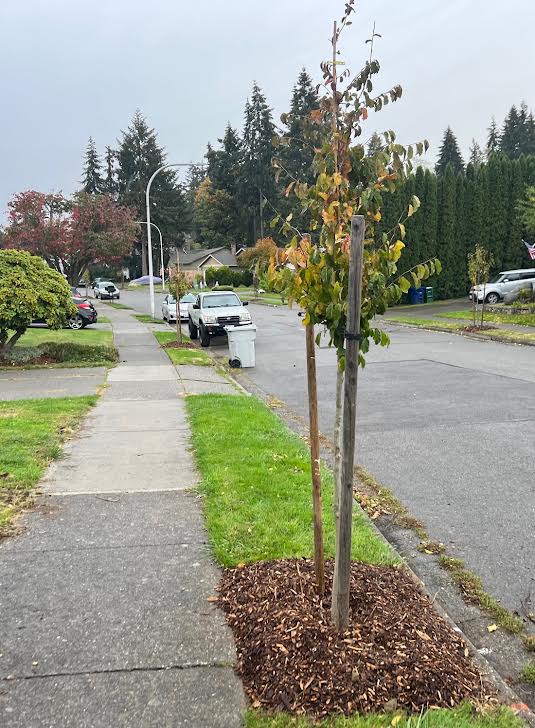
New street tree on NE 24th Street, prior to mulching.
A google image search of Rainier Flight Services in Renton looks like a college yearbook of happy graduates and their instructors, launching life-changing careers in aviation
Renton has suffered a very sad academic loss this week. Rainier Flight Services has been training our aspiring aviators in Renton for decades, launching many of our residents into lifetime careers as professional pilots. Their prices were affordable, and Renton’s youth could earn a pilot’s license for the price of a semester or two of college. Formerly (until last week) headquartered in Renton, they are the biggest and most successful flight school in the Northwest, with major satellite schools in Everett, Tacoma, and Auburn.
Their social media pages look like college yearbooks, replete with photos of happy graduates and their instructors at this key moment in their lives. They take pride in keeping their airplanes up-to-date and well maintained, and they fly them to low-population regions to get their time in, producing minimal negative impacts to Renton. The business added to our job and tax base along with training our youth; dozens of instructors and support staff were employed at their headquarters in Renton.
This flight trace shows the path of a jet pilot on final approach into Renton field on Monday. The 150 mile per hour loop, about 900 feet above homes, was not approved by Air Traffic Control.
Benson Hill residents got a preview of what’s to come with Renton’s new Jet refueling center.
A twin-engine Cessna Citation jet landing in Renton from out of state on Monday afternoon made an unauthorized 150 MPH circle about 900 feet above Renton’s Benson Hill neighborhood. The abrupt high speed loop, which interrupted Renton’s busy traffic pattern, earned the pilot an immediate rebuke from the controller in the tower.
The Citation jet pilot was first asked by the controller to slow down multiple times. “Where are you going?” the controller in the tower asks the pilot urgently, as he began his loop. To another pilot the controller says “I’m not sure what he is doing.” “WHAT are you doing?” she asks the jet pilot again. “Looking for spacing.” comes the pilot’s response. “OK that traffic is well out of your way, was well out of your way, turning out of your way You CANNOT do something like that on final without letting us know” she says firmly.
Both before and after the pilot’s unauthorized and risky donut in the sky, the busy controller can be heard directing at least two piston-powered aircraft into 360-degree turns in the pattern for spacing. As she states clearly, she had cleared the runway for the incoming jet, and certainly did not need him improvising a loop around South Renton while making a 150 MPH/130 Knots approach.
Just a few days ago the Mayor had issued a memo asuring residents the Jet Center would not create any issues, even though the Jet Center owner’s business plan says they intend to market fuel to jet aircraft flying through our state. This unapproved wayward loop over Benson Hill, while local piston-engine aircraft were in the Renton traffic pattern, shows we should expect local resident and pilot complaints from this change.
The Gweduck (pronounced “gooey duck” ) is a Renton-built, Renton-designed amphibious, highly-advanced composite plane that burns a fraction of the fuel and is much quieter than earlier generations of similar planes. Building such a plane in Renton fit perfectly in our FAA-sponsored Sustainability Management plan. But a few years ago Renton Airport Management rejected a proposal to manufacture the plane here, and today Airport Management is evicting the Gweduck/Landing Gear Works engineering offices. The space appears to be targeted to even more private jets, dramatically out of step with our Airport Sustainability Management plan. Council is enabling it.
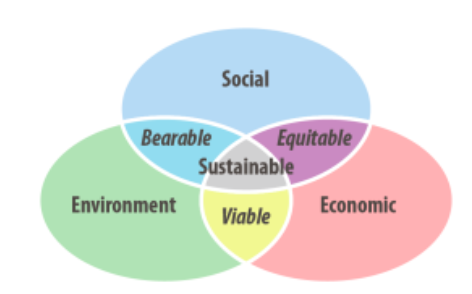
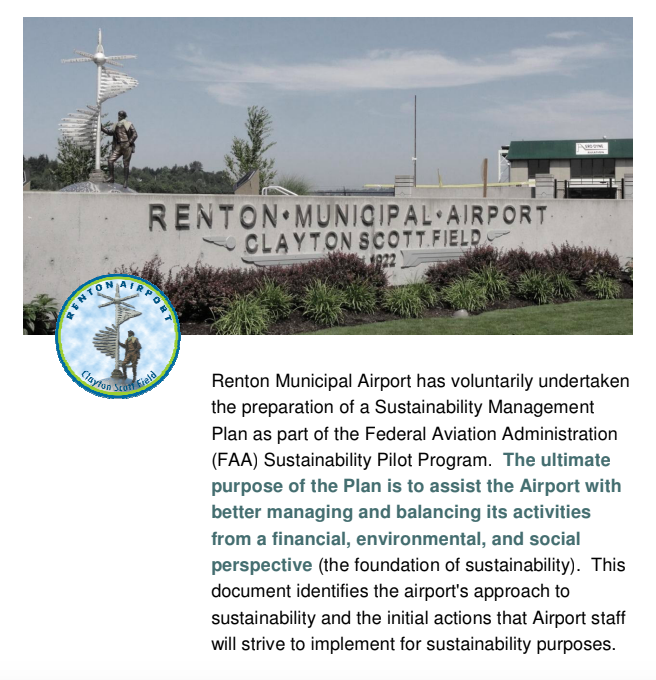
Twelve years ago Renton proudly stepped up to being one of the first airports in the country to create an FAA-sponsored Sustainability Management Plan. We were eager to demonstrate leadership in environmental sustainability, livability, and aviation innovation, and we requested and received a $150,000 FAA grant to create the sustainability plan– one of the first ten cities in the country to do so.
Creating the plan took hard work and coordination with many stakeholders. It’s a detailed and thoughtful 41-page plan, that shows Renton’s early and enduring commitment to protecting our climate, our natural environment, and our community’s livability– the issues our leaders claim they embrace right now.
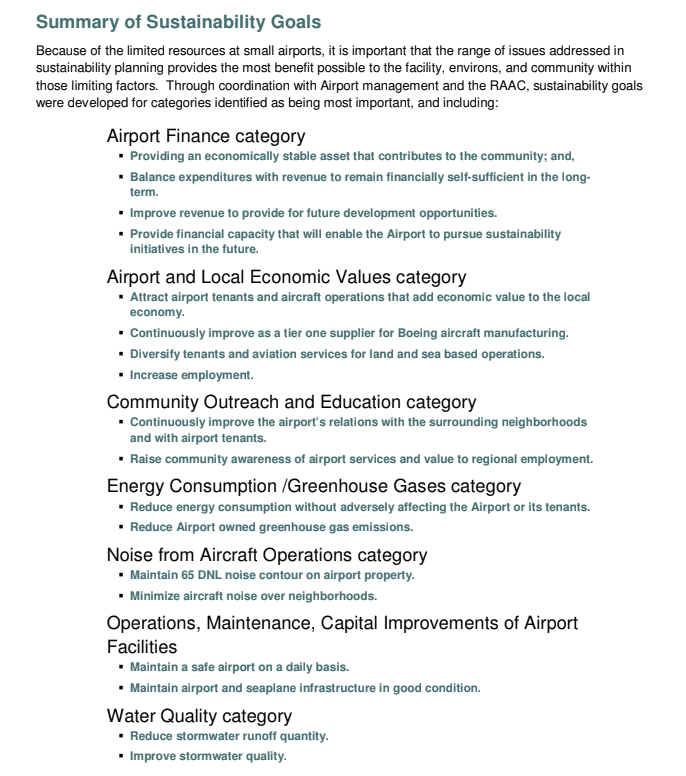
Graphic from Airport Sustainability Management Plan
The problem is, I’m left wondering if our current leaders even know the Airport Sustainability Plan exists. They should know, since long-standing airport tenants, residents, and RAAC members keep bringing it up. And Airport Management should be showing how their decisions fit within it. Committing to this plan was a promise to both the community and the FAA.
Our Airport Management Team is currently bringing private jets to Renton and ejecting companies that improve efficiency of small planes. They seem eager to demolish the historic tower building, possibly to clear enough space for large private jets on the south-east corner of the airport, after leasing to a jet center on the west side a couple months ago. Private jets create ten times as much carbon as airline seats and other forms of travel, pay 2% of FAA expenses while generating 16 % of the flights, and are noisier than propeller driven aircraft.
Our City Council has not publicly questioned this unexpected heading. The Council appears to be boarding a rudderless plane, piloted by a crew that doesn’t know the approved flight plan.
The Renton Airport Advisory Committee (RAAC), our FAA-supported Community Roundtable, is supposed to be meeting at least quarterly, and far more often when there are issues like these. But Airport Management is responsible for scheduling RAAC meetings, and they have held just a handful of RAAC meetings within the last few years; and these meetings have been hindered by zoom technical issues. By ignoring our sustainability plan and not regularly scheduling and supporting RAAC meetings, our leaders have rejected our best tools for ensuring we have a sustainable airport, and a livable environment, into the future.
I’m asking city leaders to study this plan, discuss it, and recommit to it. This will include reinstating regular RAAC meetings, as called for in the plan.
The Airport Sustainability Plan is available here in the most recent form I could obtain by publication of this article. The Plan is mentioned on the Renton City Website, but I could not find a link to the plan on the city’s website at the time of this writing. So I’ve uploaded the final version as approved by RAAC in 2012, and it is available here. If/when I acquire a different later version, I’ll add it to this blog entry.
Introductory page from Sustainability Management Plan
Goal summary from Airport Sustainability Management Plan









 If you share my view that this fountain should be cleaned, maintained, and preserved you can let the Mayor and Council know by emailing mayor@rentonwa.gov and council@rentonwa.gov.