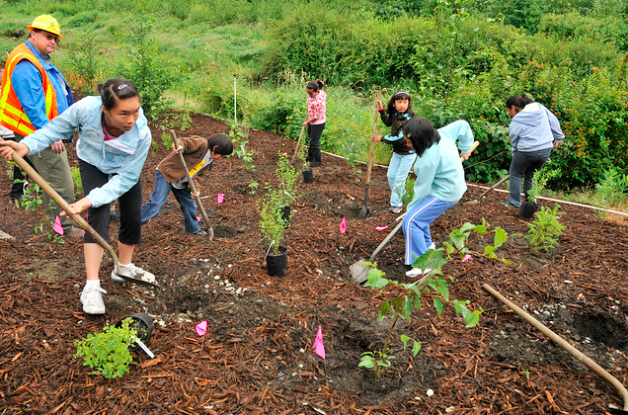
Renton School District groundskeepers work to re-open the street and sidewalk at 11:00 this morning where a large lower limb of a century-old tree fell down overnight.
Renton School District maintenance specialists were at Kennydale Elementary School this morning working to reopen the street and sidewalk after a landmark tree split and lost a large limb. There was no obvious precipitating cause reported for the tree failure (no extreme wind or impact); but the newly-exposed center of the tree appears rotted and hollow.
It was a sad sight, for the workers as well as the onlookers, since this tree has been part of Kennydale Elementary since the beginning of the school. One of the members of the school district staff said that the tree appears in aerial photos dating back to 1930. Kennydale School was first opened near the tree in 1970. As of this writing I’m not sure of the species of this tree. A friend of mine told me he thinks its a Northern Catalpa tree, and that seems likely to me.
Unfortunately, the open wound of the tree revealed a hollow core and significant rot. The tree is now unbalanced, and with the rotten center it is likely that it will have to come out entirely.
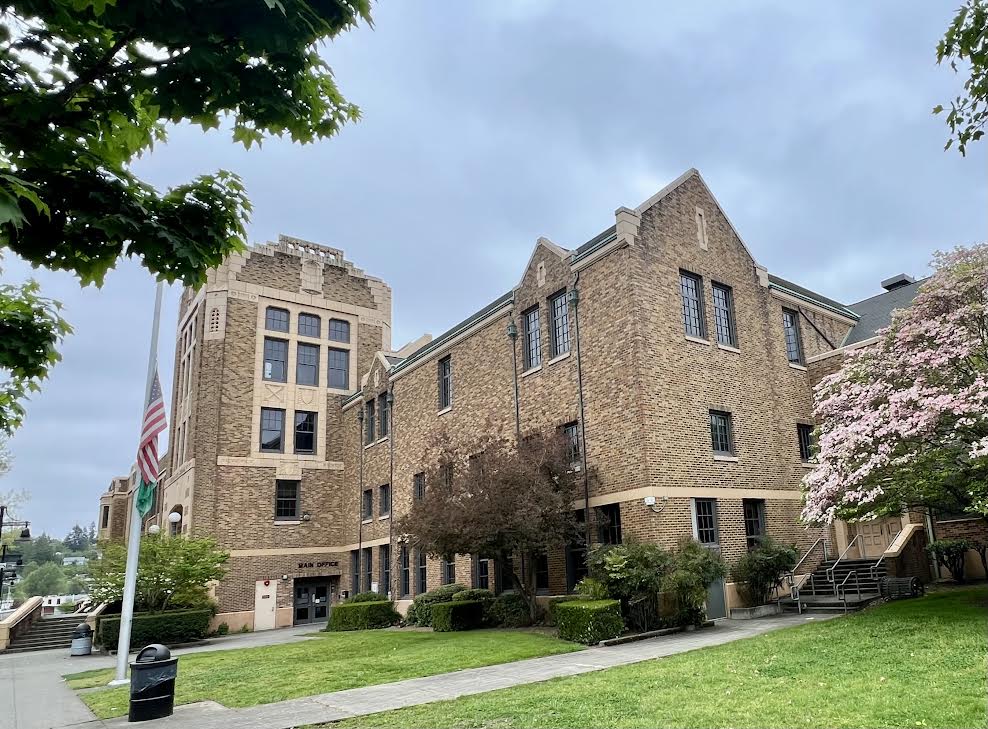
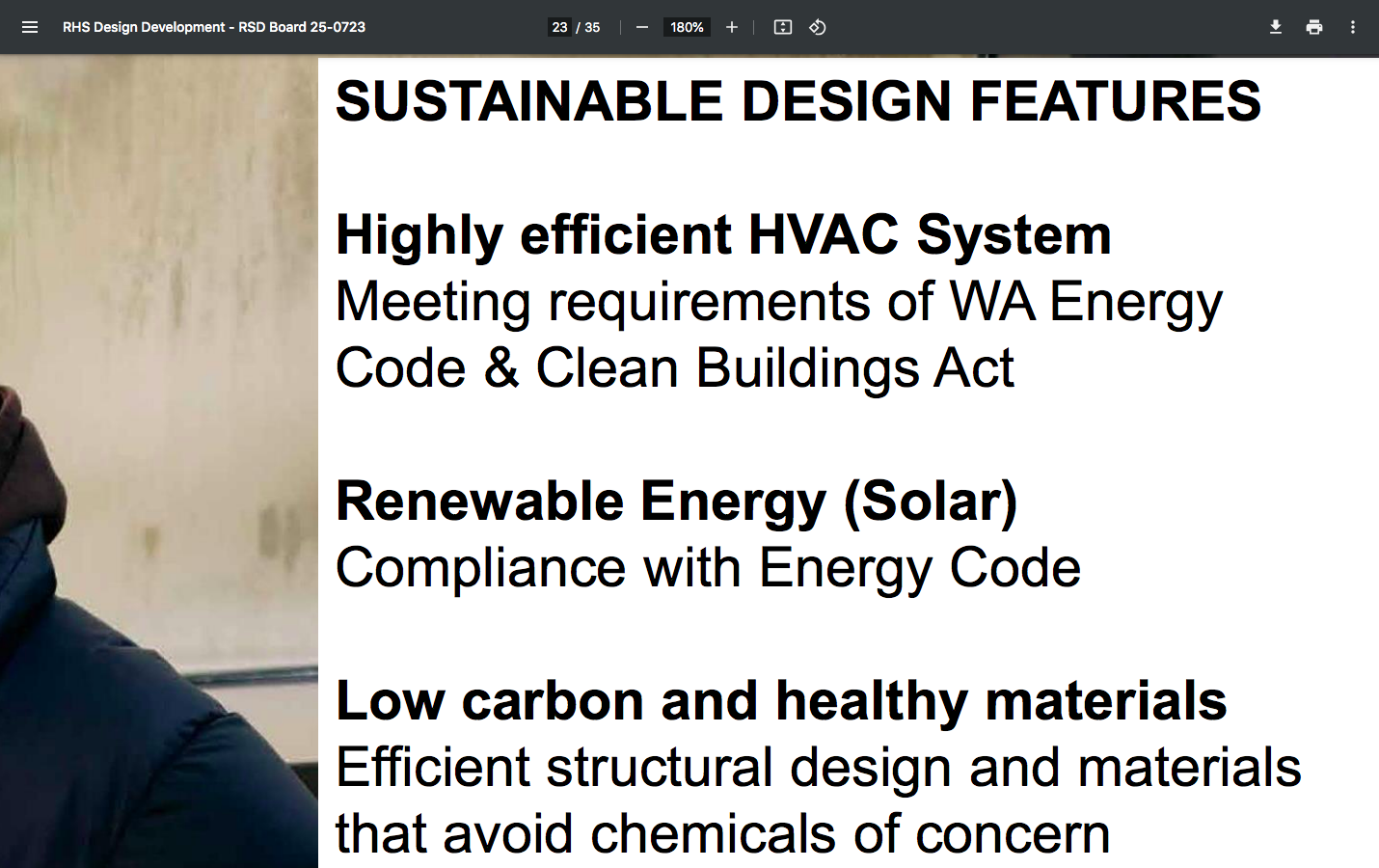
When Renton High School is torn down and replaced in the next four years, it won’t be a win for the environment. Yes, its replacement will have a “highly-efficient HVAC ” system and meet the “requirements of Washington Energy Code and Clean Building Act.” But constructing an all-new school instead of updating/expanding the existing one has a nearly insurmountable environmental cost. Millions of pounds of materials will be crushed and trucked to landfills, while millions of pounds of new materials will need to be mined, manufactured, and transported to replace them. It may take 80 years before an improved HVAC system overcomes this environmental impact, if it ever does.
In 2007 Carl Elefante, former president of the American Institute of Architects, summarized the new-vs-remodel dilema by pointing out that “the greenest building is the one that is already built.”
This link includes an excellent interview with Mr. Elefante, where he elaborates on this point. The argument that we should preserve buildings when possible extends far beyond Renton High School. We should be practicing it everywhere.
The Renton High replacement also involves tearing down 40 homes and businesses, which along with causing misery through unwanted takings and displacements, will also have to be replaced. And the new high school project will cut down hundreds of trees, more than the Renton code would typically allow for a site of this size. No amount of insulation in the new school will overcome the environmental cost of these impacts.
Our Renton students deserve the very best high schools we can give them, but no one should be arguing that this particular plan for Renton High was the most environmentally friendly one.
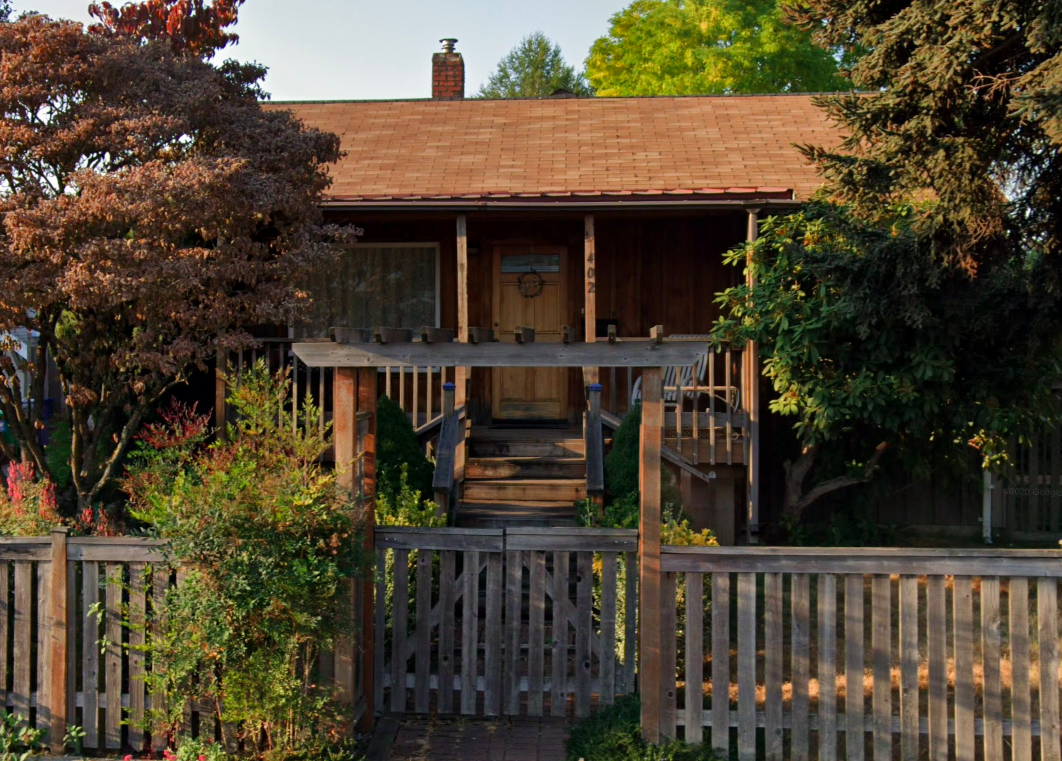
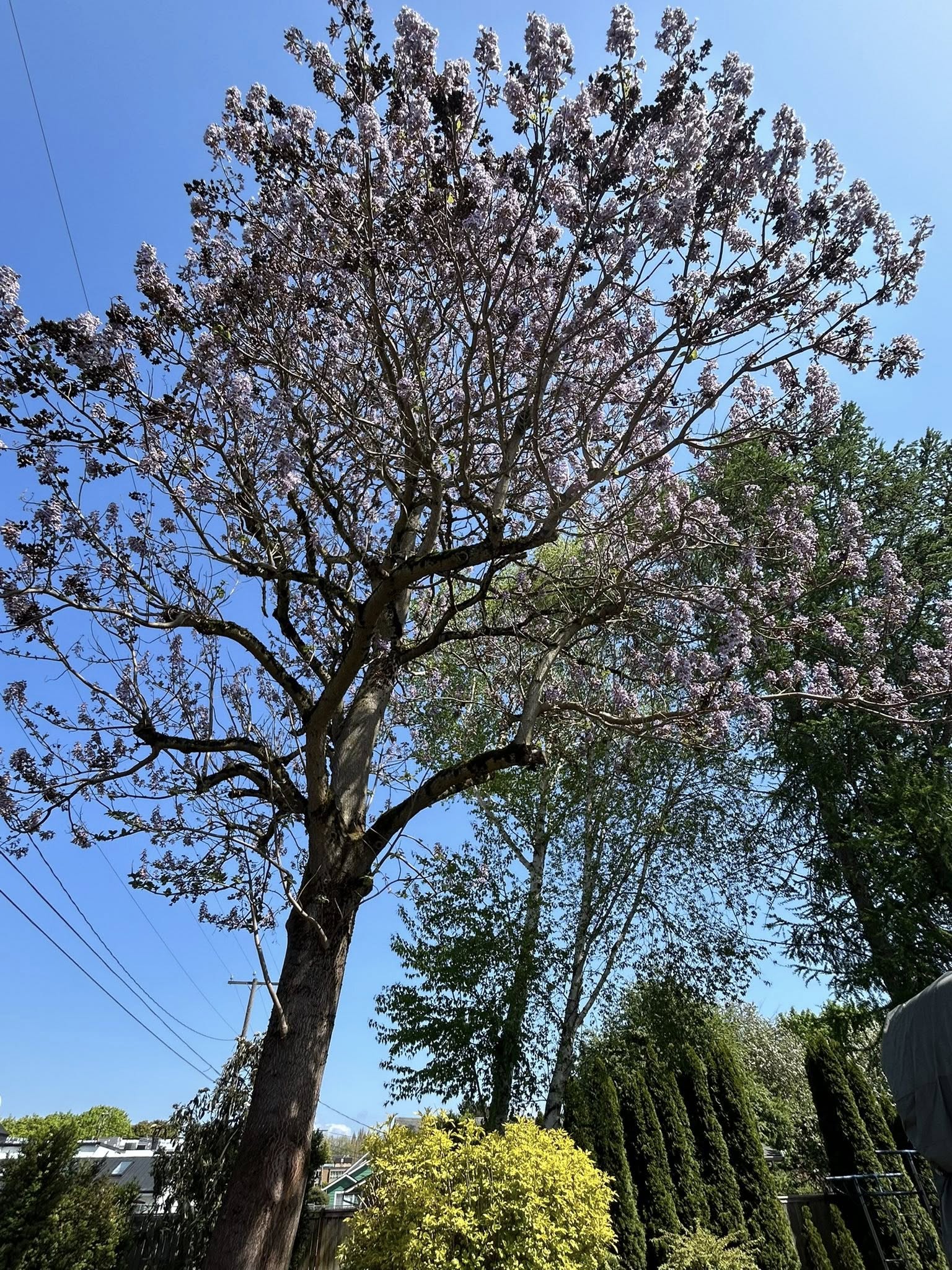
One of 32 houses being torn down for the new school. There are also eight businesses being bulldozed.Some of the trees being removed for the new baseball fields at the schoolThis page from the “New Renton High” presentation on the School District’s website implies that the new high school will be a win for the environment. (It won’t be)
A recent press release from the City discussed the impending purchase of the Stoneway Site for extension of Cedar River Park, but did not mention the environmental remediation challenges that will come with it.
A graphic in a Department of Ecology letter shows locations of petroleum and formaldehyde contamination on the Stoneway site
I support the city purchasing this site as long as Renton gets it for a fair price and we get assistance from the Department of Ecology, State Fisheries, and others to help fully clean it up.
According to the Department of Ecology, there is still formaldehyde, petroleum residue and potentially other industrial waste on the site that is acceptably capped and monitored so long as none of the soil, concrete, and buildings are disturbed. Any digging on the site requires Department of Ecology approval and likely a new environmental remediation plan. The site is also subject to continuous monitoring for chemical movement, and carries liability for whoever owns it.
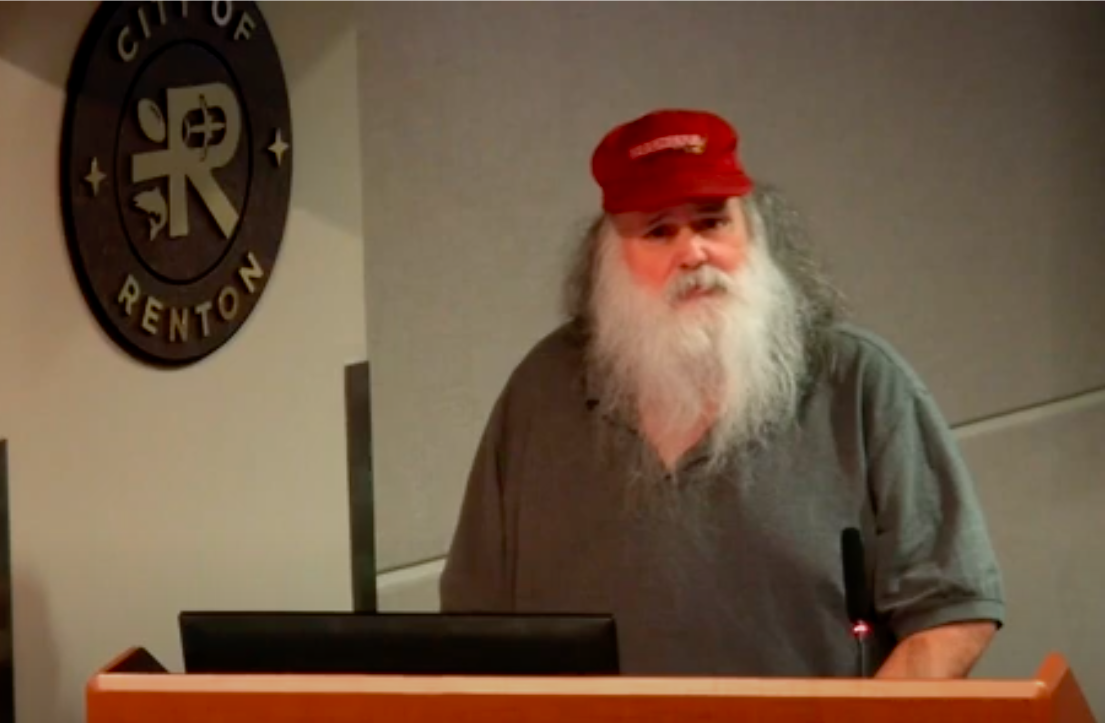
Bob Baker speaking to Renton City Council on March 3, 2025. His presentation can be found here.
In October 2017 a worried resident posted a social media warning for their community that a hot asphalt plant was proposed for Maple Valley Highway, just a couple hundred feet from the Cedar River. Bob Baker who lives nearby soon found himself joining a group of concerned citizens to stop the plant from being built at that location.
Mr. Baker is not an asphalt or soils expert by profession, but he is an avid reader and a quick study, and he soon began learning all he could about the potential impacts of the asphalt plant on the sensitive Cedar River Valley.
As he learned more through document searches and self-study, he began seeking out experts who specialize in the immediate and long-term effects of Asphalt Plants. He spoke with experts throughout the US, OSHA and even the UK to get the proper training on how these plants affect air, ground, water, human quality of life, fish and wildlife, plant life, and traffic. His ready-recall of these details is striking. Whether he’s telling you the specific carcinogenic contaminants in recycled asphalt or how much water is needed to extinguish an asphalt fire, he knows the names and numbers without looking at his notes.
Migrating salmon won’t need to pass an asphalt plant to reach the pristine upper spawning sites in the beautiful Cedar River Valley. And the aquifer that flows below the surface delivering Renton’s drinking water will be at less risk from contamination.
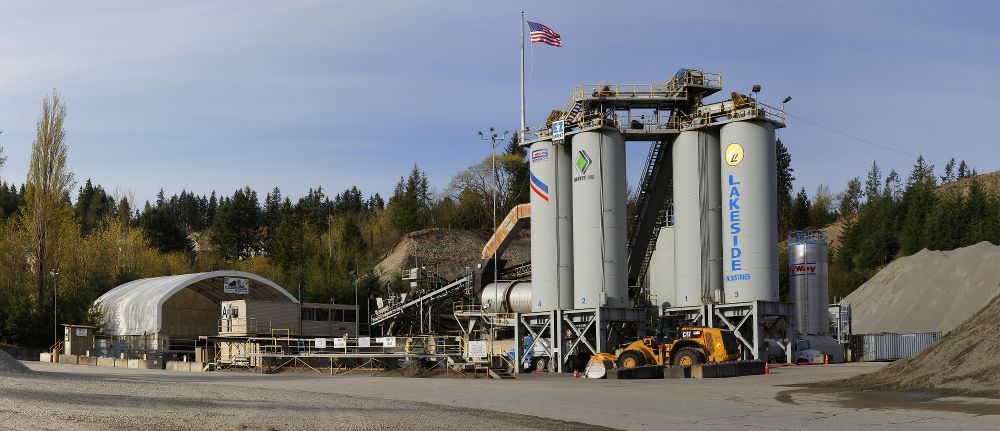
Lakeside Industries is withdrawing their permit requests for an Asphalt Plant on Highway 169, just upstream of Renton on the Cedar River. This is great news for so many: the surrounding residents; Renton and Maple Valley water customers who drink from the Cedar Valley Aquifer; Cedar River salmon and other wildlife; and Maple Valley Highway motorists who would have felt the traffic impacts.
Bob Baker, who has battled the proposed plant for 8 years, shared with me that the owners of Lakeside Industries didn’t wish to create so much controversy, and the owners have been seeking a solution that would satisfy community concerns.
I’ve written numerous articles about the long-term risks this plant could pose to drinking water systems in the Cedar River Valley, including Renton’s own municipal wells serving over 100,000 residents. These articles can be found here. By choosing to withdraw their Asphalt Plant permit application, the owners of Lakeside Industries are showing goodwill and stewardship toward all of these residents. I heartily thank them for it.
Here is the official press release:
King County Council Vice Chair Reagan Dunn and local community group ‘Save the Cedar River’ have struck an agreement with Lakeside Industries that would halt the building of a proposed asphalt plant along SR-169 and the Cedar River.
“Given the alternatives, this is a far better use of the property, and a big win for the community,” said Dunn, who represents this area on the King County Council. “Rather than rock crushers, truck traffic, noise, dust, and odors, this plan will provide benign warehouse space and avoid the impacts of an asphalt plant on the greater community.”
‘Save the Cedar River’ and other stakeholders have expressed concerns in the past about potential leaks to the nearby Cedar River and wetlands, noise and light pollution, truck traffic, and potential impacts on salmon from the plant. Typical asphalt plants require onsite crude, burners, storage silos, rock crushers, mixing drums, and machines for separating materials.
“This brings an eight-year-long, hotly contested battle to a great conclusion for all parties involved: there will be no asphalt plant, Lakeside Industries can finally utilize their property, and King County can put this chapter to rest,” said Bob Baker of Save the Cedar River. “I could not be prouder of the ‘Save the Cedar River’ organization and the long, hard hours that each member put in during this challenge. And to the citizens, HOA’s, businesses big and small, that supported us, thank you!”
‘Save the Cedar River’ was formed in response to a proposal to site the asphalt plant in 2017. After protests, environmental reviews, appeals, and a lawsuit, Lakeside Industries was issued a permit for the asphalt plant in April 2022. ‘Save the Cedar River’ sued in Superior Court but ultimately lost that legal battle in May 2024. This new deal puts all that in the past.
“We see this as a win-win for the community and Lakeside,” said Mike Lee, CEO of Lakeside Industries. “Lakeside is a third-generation, family-owned, local company. We want to be good neighbors in the communities in which we operate, and finding a creative solution balancing Lakeside’s needs, our obligations to our employees, and the concerns of the community, is a success that took all parties working together.”
Under the new agreement, Lakeside Industries would not move forward with construction of an asphalt plant under its approved permitting. Instead, they would reengage with King County to permit a warehouse as an alternative. ‘Save the Cedar River’ has agreed to support this alternative use and agreed not to oppose the permit application.
“I want to give credit to Mike Lee with Lakeside Industries for listening to the community and finding a solution that is a win-win for everyone,” continued Baker. “And a huge thank you to Reagan Dunn who stood by my side throughout this and for brokering this fantastic deal.”
This alternative use of the site would be a warehouse building for commercial use. The estimated trip traffic for a warehouse is substantially lower than what was estimated for the asphalt plant. The warehouse plan would protect all the critical areas as required by the County Code. However, the alternative use would still need to go through a new permit process by the King County Permitting Department.
Dunn and Baker will be available for interviews at the Lakeside site from 1:30 p.m. to 2:00 p.m. Dunn can also do interviews over phone or Zoom. 18825 Renton-Maple Vally Road, Renton, WA 98058.
“This account is subject to or in foreclosure.” This is the taxpayer information for the dilapidated Park Ave buildings, formally known as Garden Plaza
The deathtrap buildings on Park Avenue may potentially be falling into foreclosure according to the King County Taxpayer website. A foreclosure, whether for tax or lending reasons, would further complicate resolution of the dire safety issues that have gone on much too long with these buildings.
The website also shows that the owners, ION Renton, have been hit-and-miss with tax payments in recent years, although they appear to be caught up now.
The data can be found at the King County website here. When you access the site, the parcel number is 7564600055.
The King County assessor has updated their photo of the building. This can be found on the King County Parcel Viewer by navigating to Park and 6th in Renton.
In a post last week I described my hopes that we could preserve our beautiful Piazza fountain. But on Monday night, Renton Council announced plans to turn this fountain into a planter.
Renton’s Piazza fountain
The plans also eliminates the Piazza’s other water feature, the babbling brook featuring Renton’s “Summer Breeze” sculpture of a young girl stepping gently into the water.
No more water. Renton’s lovely “Summer Breeze” girl has been stepping into a 40-foot long babbling stream bed for over 20 years, but the water has been removed and the girl will soon follow.
Together, these two lovely water features have visually anchored the Piazza since the early 2000s. And the splashing water features incorporate generous bench seating which provide critical cool resting areas for scores of visitors on hot days.
While currently open as of this writing, Coulon Beach swim area was closed during the Memorial Day weekend and the first above 80-degree day of the season.
Coulon Beach Park swim area was closed on this sunny Memorial Day weekend because of high bacterial counts. It was one of only two beaches on Lake Washington closed for this reason. Unfortunately this has become more common in recent years, with Coulon’s swim area sometimes closed for weeks at a time.
Renton’s Coulon Park swim beach was closed while most local beaches were open during this warm holiday weekend.
While it’s clear that ducks and geese are contributing to the problem, it’s less obvious to Park visitors that storm drains in western Renton Highlands, the Landing and even I-405 are also contributing to the problem by adding pollution to “Johns Creek” which empties next to Coulon’s swim beach.
Renton has been working for decades to improve the water quality in Johns Creek, and a Stormwater Management Action Plan (SMAP) is in place to improve it. Renton Stormwater utility fees, along with grants when they can be obtained, pay for this work.
Johns Creek is not the only creek that carries Renton’s surface water into Coulon Park; Kennydale Creek deposits Kennydale’s surface water about a mile to the north. But in addition to emptying further away from the swim beach, Kennydale Creek flows mostly in a natural creek bed open to the sun and air, which helps reduce bacteria levels. Johns Creek flows through many pipes and culverts, only in open air as it nears Coulon Park.
So to keep our swim beach open, businesses and residents in Renton Highlands, the Landing, Paccar, Southport and parts of North Renton should help keep our street gutters clean and spread the word that whatever flows into storm drains can flow right into the Coulon Beach Swim area.
The following photos and maps give more information about this little-known creek and the plans in place to improve it.
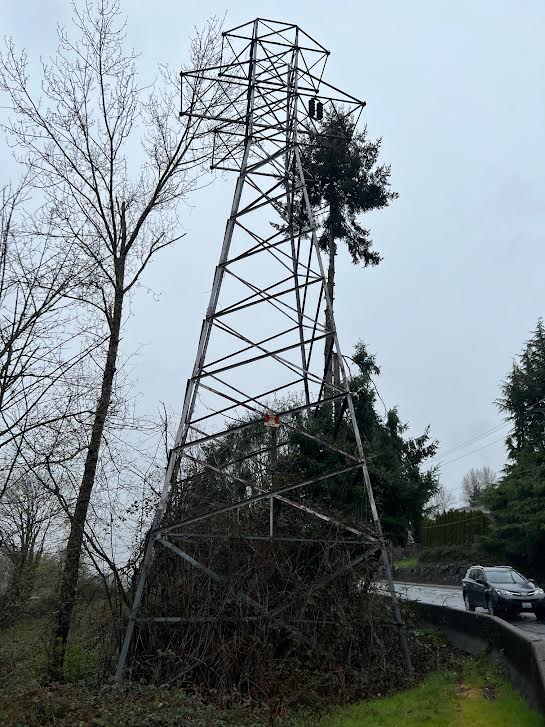
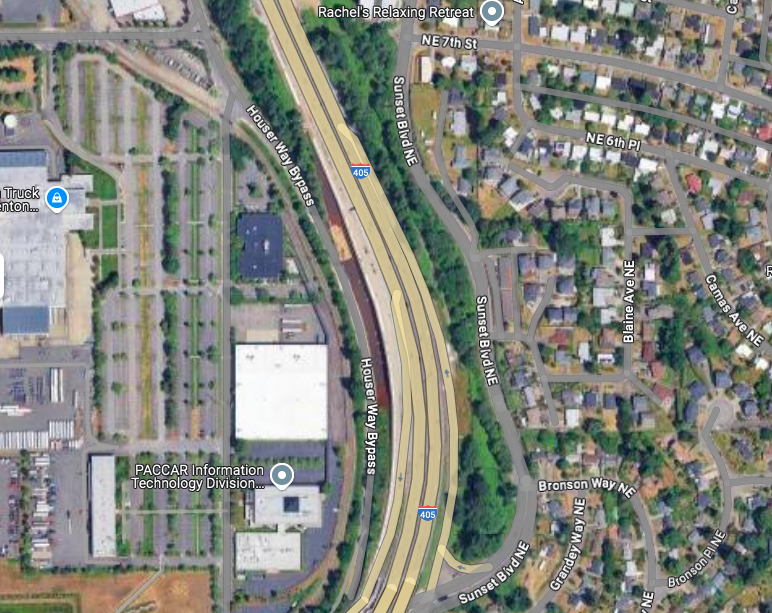
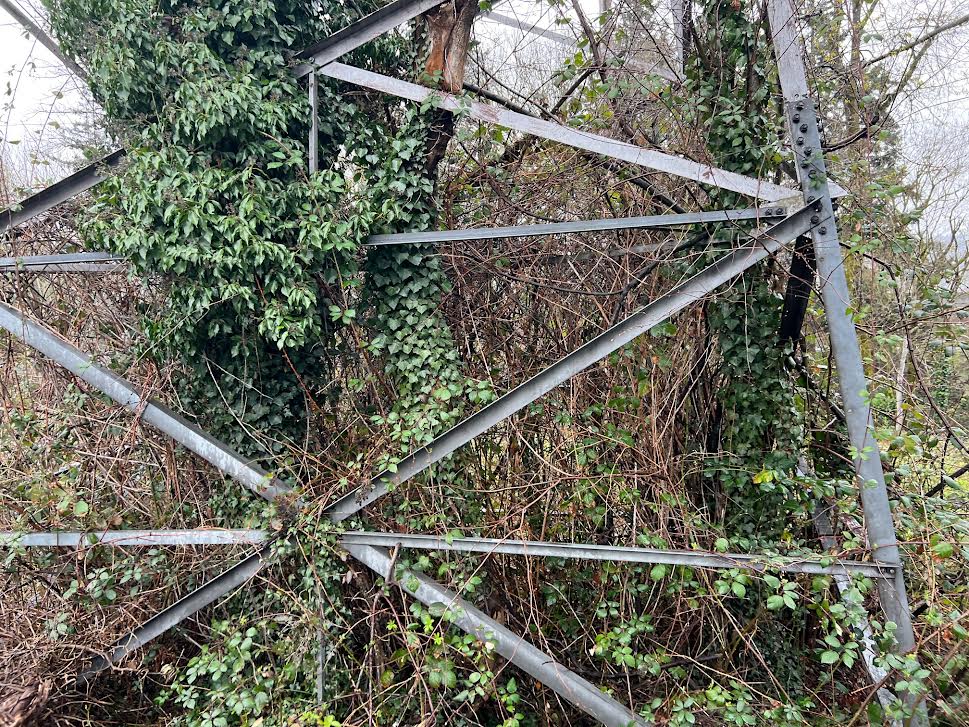
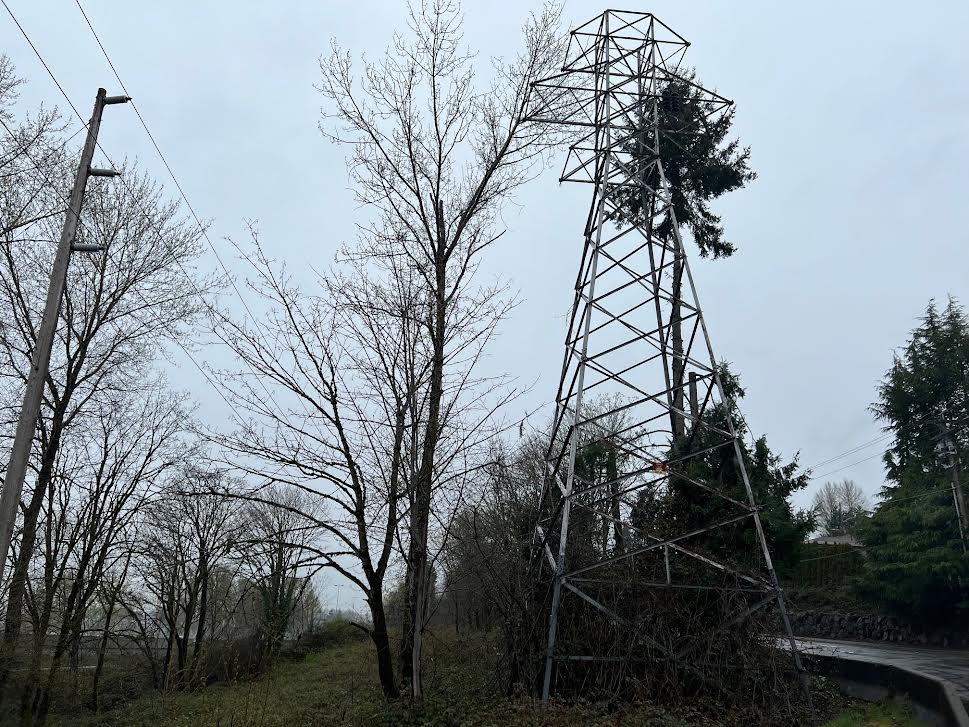
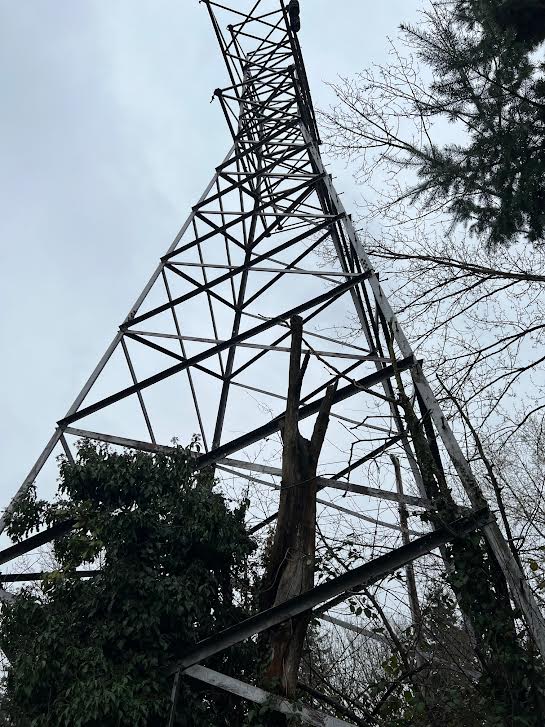
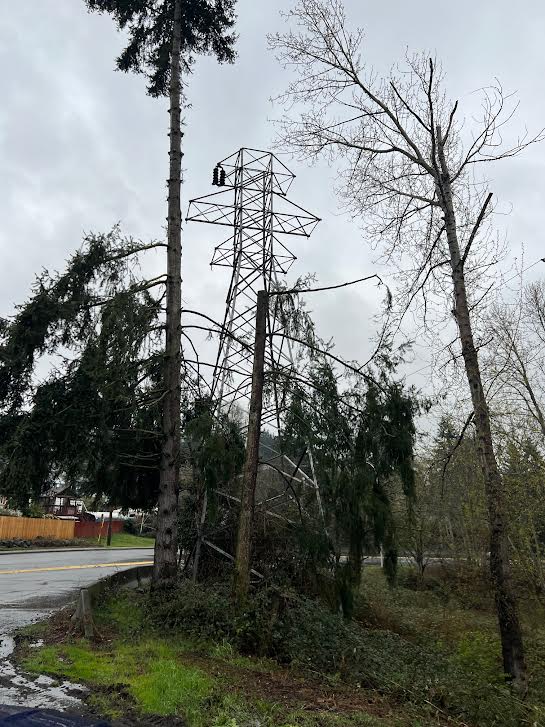
A trellis for invasive plants? This rusting tower and others like it on Sunset Blvd NE perform no useful function. The electric wires were removed years ago, and the towers are just abandoned and disintegrating in place.
It’s way past time for the Electric Utility to remove the derelict power line towers on Sunset. Our views in Renton are cluttered enough by power lines, that we don’t need a bunch of additional rusting towers adding their own blight.
I took these photos two years ago, and the scene is no different today (other than a little more weed growth and more rust. )
This power line was abandoned and replaced by a new run many years ago, but the retired power lines were initially left in place. Several years ago copper thieves began climbing the towers and stealing the wire, so as a safety measure the power company removed the rest of the wire.
I assumed they would eventually apply for demolition permits to remove the ugly, unnecessary towers, but that has not happened. I’ve expressed my displeasure to our local utilities in the past that they never seem to prioritize maintaining the appearance of their easements in Renton. This is just one example of it.
I don’t remember whether these were owned by PSE or Seattle City Light, but in either case the City of Renton should lean on them to take them down and clean up this easement.
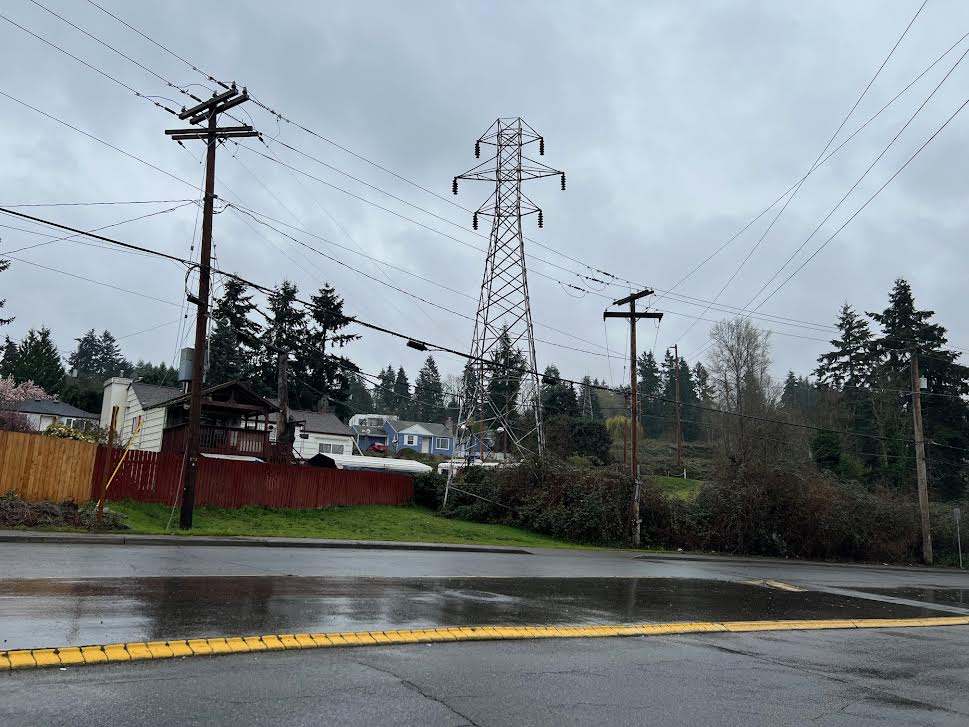
You may have to look closely to realize there are no wires going to this large electrical truss tower that pointlessly interferes with views in the Windsor Hills neighborhood.
The abandoned towers are in the greenbelt between I-405 and Sunset Blvd NEHimalayan Blackberry, english Ivy, and other invasive plant species climb the rusting structures, spreading seeds through wind and birds to nearby homes.The two towers shown are the closest to the street. There are several other abandoned towers in the greenbelt to the north of these.
As a 20-year member of I-405 corridor transportation planning team and a founding member of the Eastrail Regional Advisory Committee, I was glad to help bring Eastrail to Renton
Our new Eastrail hiking and biking Trail on the former Burlington Northern Santa Fe Eastside Line is a wonderful new amenity in our city. If you have not yet discovered it, you are in for a treat. With amazing views of the lake, streams, trees and nature at a grade of less than 1%, the trail is a delight for travelers of any degree of mobility.
The trail is a successful example of “railbanking,” where an otherwise abandoned rail corridor is preserved intact under a long-term agreement between the railroad and government agencies, allowing the corridor to become a public trail with the proviso that it could potentially be used by rail again in the future.
I was a longtime member of the I-405 Corridor Executive Steering Committee and Eastside Transportation Partnership when we learned the rail corridor would be abandoned. Working with King County, the Port of Seattle, the DOT, and others, we protected the corridor to assure multimodal transportation options up and down the corridor. I was a founding member of the Regional Advisory Committee for the new Rail trail, which we ultimately named Eastrail as it blended “Eastside Rail” and trail.
As someone who appreciated railroads, I was very pleased we could preserve the original trestles on the trail, and make them safe for pedestrians.
Several smaller trestles have already been converted for pedestrian use, and the plan is in work for the magnificent 1000-foot-long Wilburton Trestle in South Bellevue. Funding issues are being worked to upgrade the trestle across I-90, and build a pedestrian/bike bridge across I-405 in the Wilburton area where the original tunnels used by the train were dismantled during the previous I-405 widening.
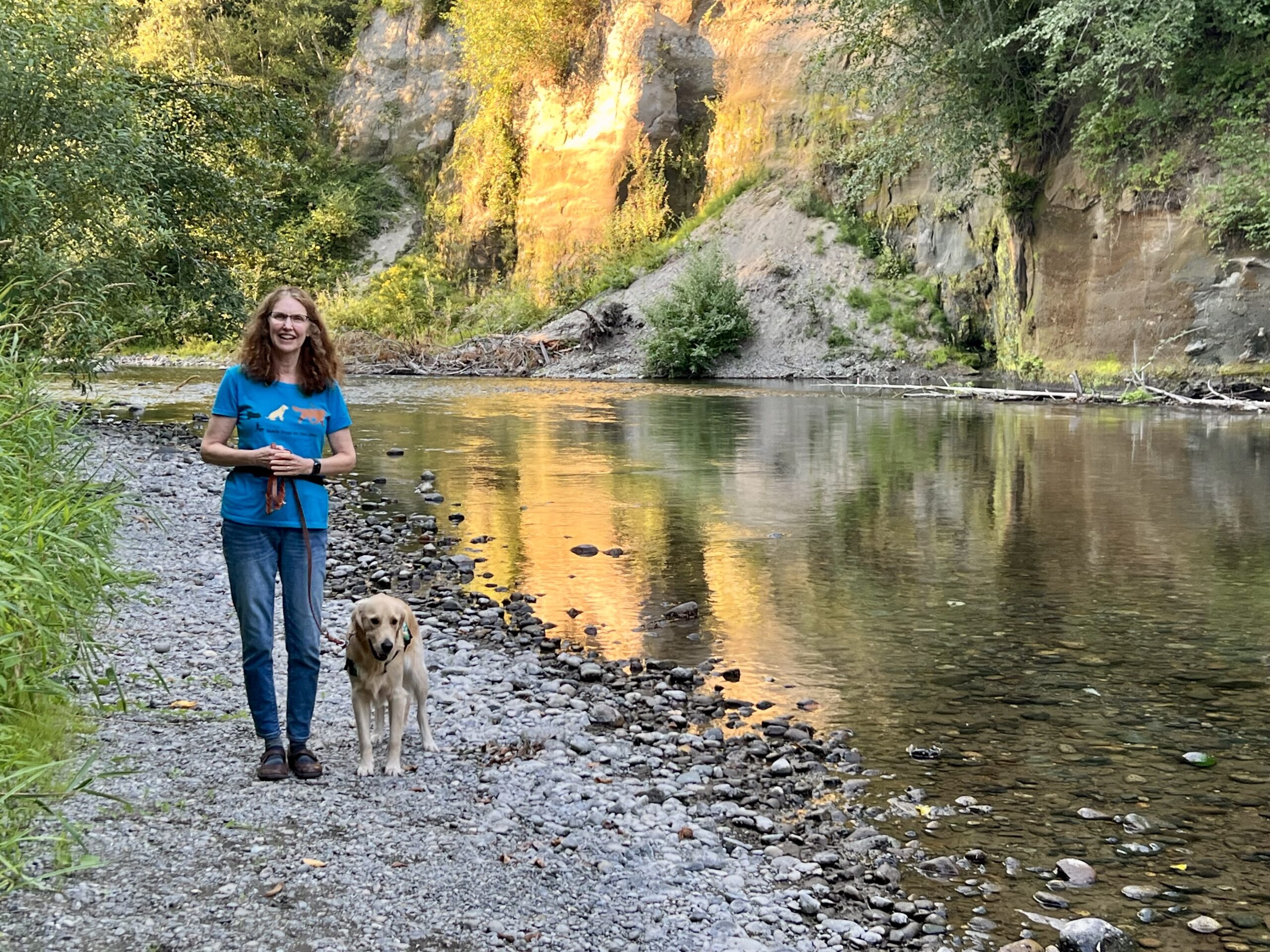
My wife Cathy walking the trail with me. Here it crosses over May Creek.Trail users get this good view of the Seahawks training center
A bike and pedestrian section north of the Seahawks training center, built on the original railroad trestle.
From below the railroad origins of the bridge are obvious, and add to the trail’s charmDetails of the historic timber trestle bents and beams that carry the new concrete walking surface
The thousand-foot-long, hundred-foot high Wilburton trestle will be converted to a bike and walking path. Amazon is helping with funding of this portion.
Seattle’s Chester Morse lake and 91,000 acre watershed at the headwaters of Cedar River is off-limits to visitors, ensuring pristine drinking water for Seattle customers. Photo credit: City of Seattle
An asphalt plant has been approved by King County upstream of Renton’s municipal water wells. The asphalt plant will disperse treated surface water into a dry well in the ground, above Renton’s aquifer.
Washington State has granted cities unique power to buy land outside their jurisdictions to protect their municipal water supplies, even from unwilling sellers through use of eminent domain. Renton should consider using this authority to buy the proposed Lakeside Industries Asphalt Plant site, in order to protect both the Cedar Valley Aquifer and the Cedar River. If Seattle was in our shoes, they would have already done this.
Seattle has purchased 91,000 acres in their Chester Morse Lake watershed in the uplands of the Cedar River to protect their water supply. Seattle won’t even let hikers on this property, as they feel the risk of contamination is too high.
Renton’s water comes from wells in the Cedar river basin, downhill from Seattle’s water supply. Renton draws water from the Cedar Valley Aquifer, which is about 100-300 feet beneath the earth’s surface. The aquifer is refilled continuously by groundwater seeping in through the valley’s uplands. A layer of silt and clay generally prevent the Cedar River water and the Cedar Valley aquifer water from mixing, although no one can know exactly what is happening underground.
With King County’s decision to allow an asphalt plant in the Cedar River basin, just a mile or so upstream of Renton’s municipal wells, Renton should take a page from Seattle’s playbook and exercise our land-purchase authority to protect our water supply.
There have been studies and discussion about whether runoff from the asphalt plant can get into the Cedar River; Lakeside Industries consultants says it won’t happen because they are capturing and treating runoff (potentially containing tar, gas, oil, and other industrial contaminants), and then purposefully infiltrating the treated water into the ground through a new dispersion system. i.e. they will intentionally inject their treated run-off into the ground above our aquifer.
While this system generally keeps the treated water out of the Cedar River, there’s no way to be completely certain that it won’t get into the Cedar Valley Aquifer. In fact, for many years, Water District 90, the water purveyor serving East Renton and regions east of our city limits, has been very concerned about this exact piece of property introducing contamination into the aquifer. This report from 2014 (section 4.2.2, page 15) describes the concerns regarding the former “Sunset Materials” site, which is the now site of the proposed asphalt plant.
Ask yourself; Would Seattle allow Lakeside Industries Asphalt plant to be placed in their Chester Morse watershed, where they won’t even allow hikers today? If they would not allow it, why does Renton need to allow an asphalt plant to inject industrial runoff water into the ground upstream of our drinking water wells?
For perspective, Irvine California is going to spend $360 million dollars to buy an existing asphalt plant, just so the city can close it down and improve the air quality in their community. Lakeside Industries paid around $12 million for their site on the Cedar Valley Aquifer. Renton’s purchase of this site would be a bargain compared to Irvine’s, about 1/30 the cost that Irvine is going to pay. And Renton’s purchase would help protect our water supply, a fundamental need for safety of our city.
After a purchase, the city could seek full or partial reimbursement via a Water Quality Grant from the Washington State Department of Ecology, which gives out between $100 Million and $200 Million every year for projects that protect rivers and streams. Several streams traverse the site in question before entering the salmon-bearing Cedar River; this project should be a top contender for funding. There are many other grant sources of income as well.
Too often, Renton finds itself pleading in court for fair treatment, when we could have used power already granted to us to protect our vital interests. This is one of those cases. Email your council and encourage them to pursue the purchase of the Lakeside Industries Asphalt Plant site, to protect our water supply. Send email to council@rentonwa.gov
Thanks to Renton resident Ben Johnson for working with me to develop this approach. Please see Ben’s comments on my previous blog entry for more of his thoughts on this topic.
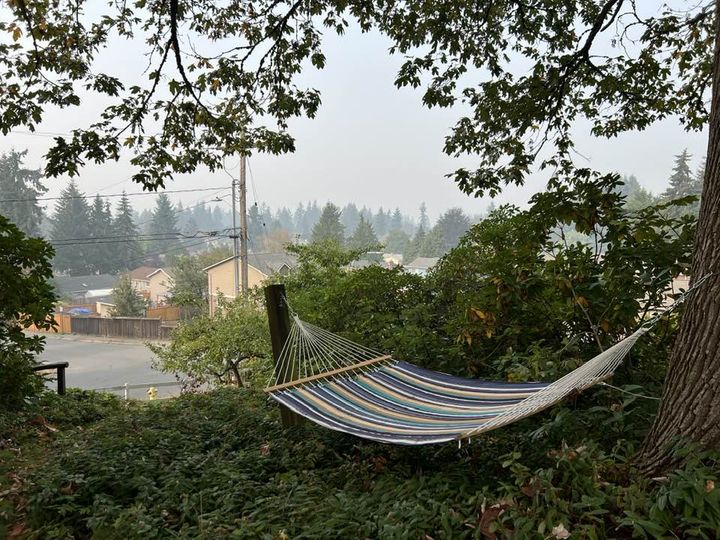
My unused hammock last October when we had unseasonably warm weather but we all had to stay indoors to protect our lungs from wildfire smoke. On October 18 and 19 Seattle had the worst air quality of any major city in the world due to a fires burning in the Cascades, including a fire in Alpine Lakes Wilderness about 30 miles from Seattle.
This is an update of an essay I wrote and posted on Facebook last October explaining how our Federal implementation of the Clean Air Act relative to forest fires is harming our summer air quality instead of helping it. And it’s estimated to be causing hundreds of deaths per year in our area. While the moderate smoke haze we experienced the last couple days was from Canada, it’s a reminder that Washington State smoke will probably soon come back and start disrupting summer plans.
Stanford University says Washington’s wildfire smoke is killing some of us. The smoke that always seems to come during some of our precious warm summer and autumn days is worse than just a nuisance keeping us cooped up when we would all like to be outside. According to a 2020 study by Stanford University, “wildfire smoke is likely responsible for 5,000 to 15,000 deaths in an average year in the United States. Smokier years like 2018 or 2020 will have a much higher death toll.”
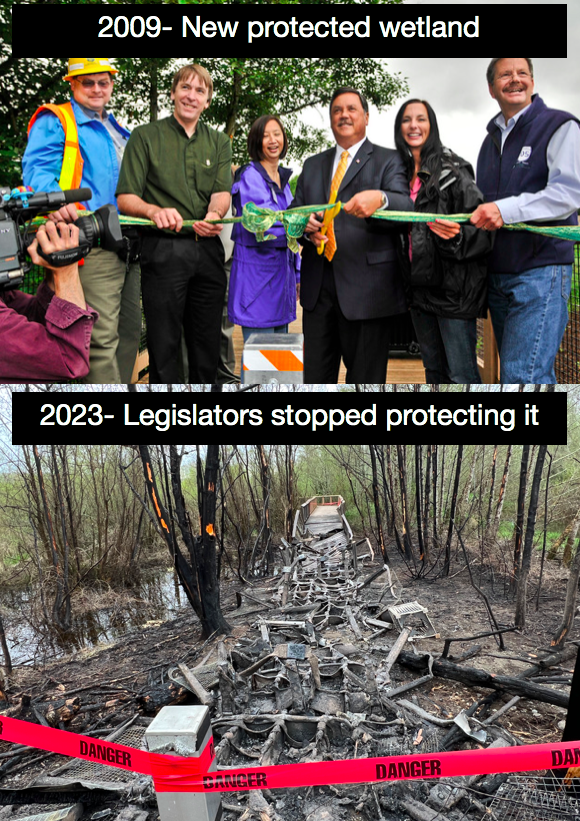
The ribbons in the before and after photos are in the same place. For background on these photos see my previous blog entry here.
Like many in our state, I’m finding it increasingly difficult to reconcile policies I’ve always supported regarding environmental stewardship and clean air and water, with the new trend of enabling offenders of environmental and other crimes. Our most sensitive wetlands and ecosystems are increasingly polluted and ruined without consequences. With King County Transfer Stations now charging $181 per ton to dump garbage with a $30 minimum just to empty a waste basket, and seemingly no consequence for littering any more, it’s not just the struggling unhoused putting garbage and pollutants in our environment.
One can not advocate for anarchy and still claim to be protecting the environment. All the laws protecting air, water, soil, plants and wildlife are meaningless without adequate police staffing and tools to enforce them and meaningful accountability for violators.
And it’s incongruent for anyone to claim to be a “climate activist” while enabling home break-ins, car thefts, and vandalism. All of these crimes have enormous environmental consequences, adding significantly to carbon in the atmosphere, as essential property is replaced and new protective measures are taken by property owners.
In 2022 my catalytic converter was stolen off my van in my driveway, along with thousands of other catalytic converters stolen from Washington automobiles that year. State legislators had crafted a law, still in place, that ensures anyone stealing catalytic converters won’t be pursued by police if they drive away. Our state is now the worst for thefts of catalytic converters, leading to tons of extra mining of rare earth minerals and an unknown number of vehicles driving around without the proper pollution control equipment. We’re all breathing more unburned hydrocarbon, nitrous oxide, and carbon monoxide because of this legislation.
In 2021 the city of Seattle considered implementing a crime-of-need defense, that would have made it okay for people to steal from a neighbor if they needed money for rent, perhaps taking a contractor’s tools and pawning them for cash. Fortunately this law did not pass, but the flawed reasoning that brought it to the table is still held by many local lawmakers including some in Olympia. The obvious way for a compassionate society to help someone trying to cover their rent when they can’t afford it is to extend assistance in the form of a voucher. If someone can’t afford food, we should give them access to a food bank. Enabling them to steal from a neighbor diminishes their self-esteem, gets them about three cents on the dollar for everything stolen, and puts the theft victim also at risk of needing rental assistance. Furthermore on a large scale it is environmentally disastrous, as the replacement of essential tools and repair of property has enormous costs.
Washington has by far the highest rate of stolen cars in the US, with an overall number of thefts that only trails California and Texas because those states are many times our size. Renton is seeing up to five auto thefts per day. The theft of a single car puts 4.2 metric tons of carbon into the atmosphere, so Renton car thefts are currently contributing 21 METRIC TONS per day of carbon to the climate change balance sheet. Anyone who is okay with this, who enables this by promoting lax law enforcement, is NOT an environmental activist.
The average home break-in dumps about the same amount of carbon into the atmosphere as driving a car 3000 miles after you figure in the replacement of property, the repair work, and criminal justice implications. A European study published in the Journal of Industrial Ecology estimates the carbon footprint of this and other crimes in one of the few studies on this topic. While some of the carbon footprint is produced by the criminal justice system itself, most of the criminal justice carbon footprint impacts come from cases of homicide, assault, sex offenses, and robbery; these crimes must be punished meaningfully to prevent vigilante justice (more crimes) and mayhem in society.
Figure from “Addressing the Carbon-Crime Blind Spot: A Carbon Footprint Approach” by Helen Skudder et al
In summary, if one cares about the protecting the environment and preventing climate change, they should care about law enforcement– because you can’t accomplish one without the other.
The environmentally sensitive Springbrook Creek Wetland Mitigation Bank has been set on fire, either intentionally or accidentally. The boardwalk that was installed to keep visitors from stepping on delicate habitat is now in ruins in the fire scene.
Cathy and me on a walk in 2019, and the boardwalk and vegetation as it looked before it burned.
There was a fire a few days ago that burned a sensitive environmental area in the valley in Renton. The fire appears to be human caused. Thankfully our outstanding Renton Fire Authority limited the damage, or it could have been much worse.
Nearby water quality is spoiled by fire debris from Trex decking and other materials. The Trex was chosen for the boardwalk to avoid the risk of the toxins in pressure-treated lumber leaching into this sensitive area. Trex is hard to light on fire, but unfortunately hard to extinguish once it catches.
The red tape of the fire line can be seen behind this sign indicating the sensitivity of the area
These signs surround the site, and people are supposed to only walk on the now-burned boardwalk. The red tape in the background is the fire line.
From 2003 to 2009 the Renton City Council and Mayor’s office worked closely with the State Department of Ecology, WSDOT, and other agencies to create a natural wetland habitat to help protect displaced and threatened migratory birds, fish, amphibians, reptiles, and mammals in the Renton/Kent Valley. As an engineer and environmentalist, I took great interest in this project, and I participated in many of the meetings prior to construction. The area was to be terraformed and landscaped with only native plants, and complex irrigation systems were installed throughout the planting area to ensure they became well established. Washington Department of Ecology features the successful project on their website here.
To help the public learn about the delicate ecosystem, a boardwalk was constructed of Trex material that bisected the project, and pedestrians could walk across the native habitat as long as they stayed on the walkway so they would not harm the sensitive nature below.
We dedicated the Springbrook Creek Wetland Mitigation Bank as a new park in May 2009, after millions of dollars were invested and countless hours of paid and volunteer labor were completed. The new park was called a “Mitigation Bank” because the 129 acres of land and the improvements were funded by builders and developers who wanted to fill in smaller sections of wetland in the valley. They could do so if they contributed an equivalent amount of land into the “wetland bank,” replacing their wetland with the new protected, cultivated, larger one on Springbrook Creek. The State Department of Transportation became a major contributor and partner as they needed to fill wetlands when they were widening I-167.
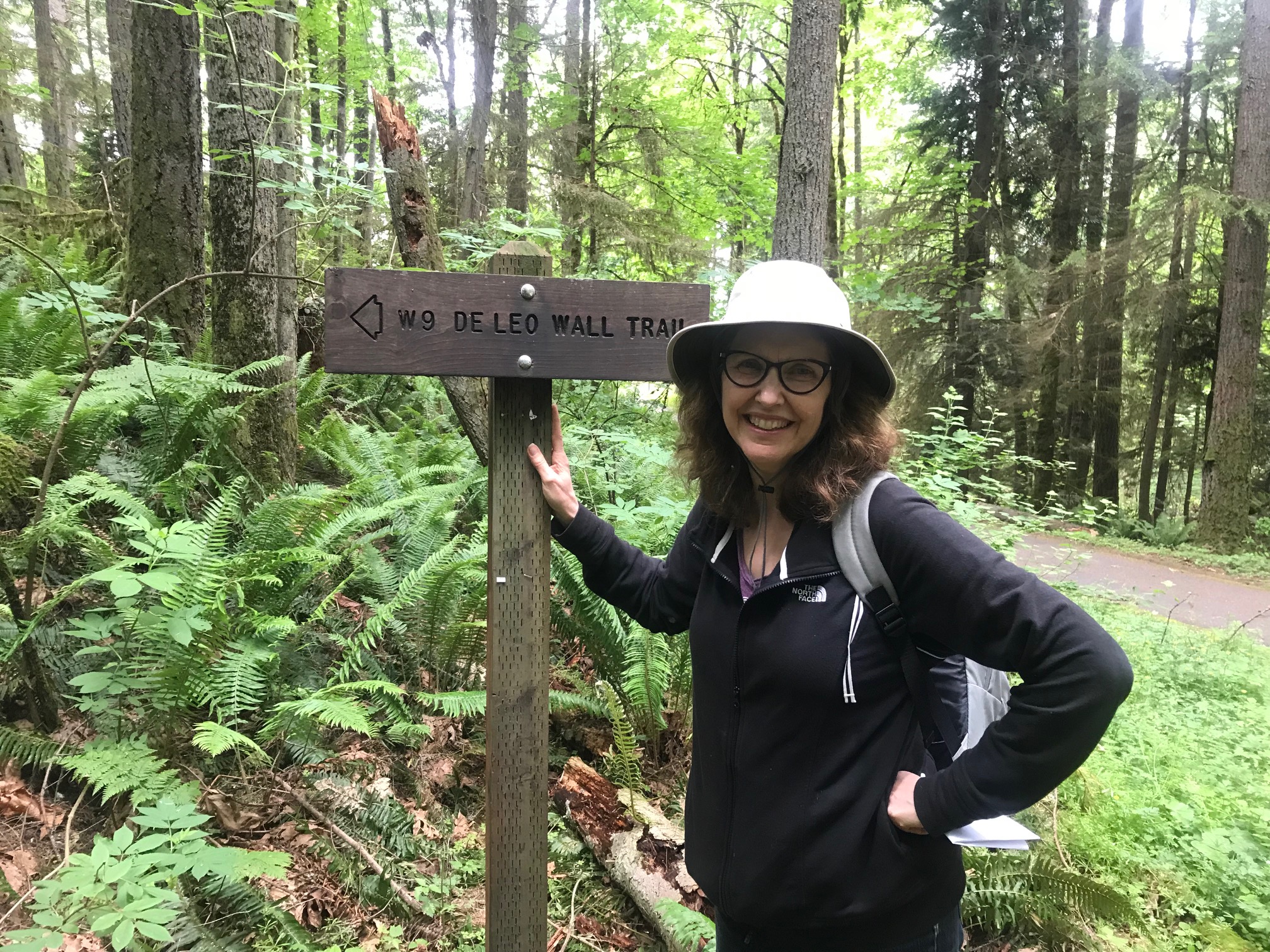
Photo: My wife Cathy on the DeLeo wall trail on Cougar Mountain.
A year ago a company requested permission from the Washington Department of Natural Resources to clear-cut harvest all the timber on 37 acres of steep property between Cougar Mountain State Park and May Creek, in the City of Newcastle, just feet from the Renton City Limits. The land is too steep for significant development, so the owners have turned to logging as a way to make an income from the land. Neither Newcastle nor Renton has a “timber harvest” zone, but State forestry permits currently supersede city zoning.