I was recently invited to a meeting of Renton airport users who have lost confidence in Renton’s airport management. They are considering forming an airport tenants union, to organize and push back on breath-taking rent increases. One airport business owner reports that the city has asked him to sign onto a 120 percent rent increase, 12 times bigger than what our state legislature said was the maximum a residential landlord could ever increase rent in a single year. Some tenants have said they have been given surprise retroactive rent increases, in which management said they forgot to raise the rent months earlier, and now demand tens of thousands in back rent– similarly to the billing failure that triggered the Landing Gear Works to ultimately move out.
Two years ago many small plane owners in Renton were issued surprise rent increases of 42 – 74%, making their tie-downs and hangars more costly than those at Boeing Field (which has much more infrastructure including two runways).
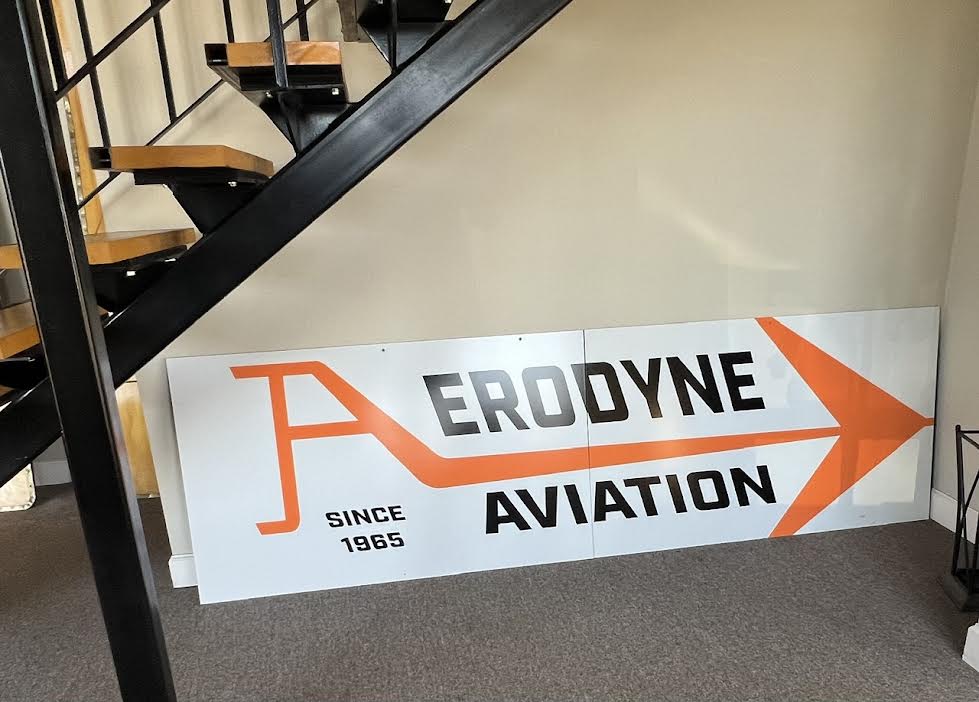
Aerodyne Aviation, a Renton pioneering firm in aviation development and the one-time home of airport namesake Clayton Scott, is being pushed from Renton Airport over a rent dispute. This new sign was going to be placed on their building, but it was never installed due to the disagreement.
In a recent blog post I described Renton Airport Management’s false “runway safety” explanation for pushing out Aerodyne Aviation, one of Renton’s oldest aviation research, design and maintenance centers. Today I’m describing Airport leadership’s similarly misleading messaging about the future of the Aerodyne Hangar. Airport property belongs to Renton taxpayers, and the public deserves an honest accounting of how it is being used to benefit our city.
Renton’s Airport management has declared Aerodyne’s Hangar so valuable that they want Aerodyne to pay more than three times the rent that Aerodyne paid for just their land lease last year. They say the Hangar and office complex, built by Aerodyne under their previous lease, has more than tripled the value of the property. But at the same time, paradoxically, the same Airport Management says it wants to tear down the hangar, suggesting it has no value.
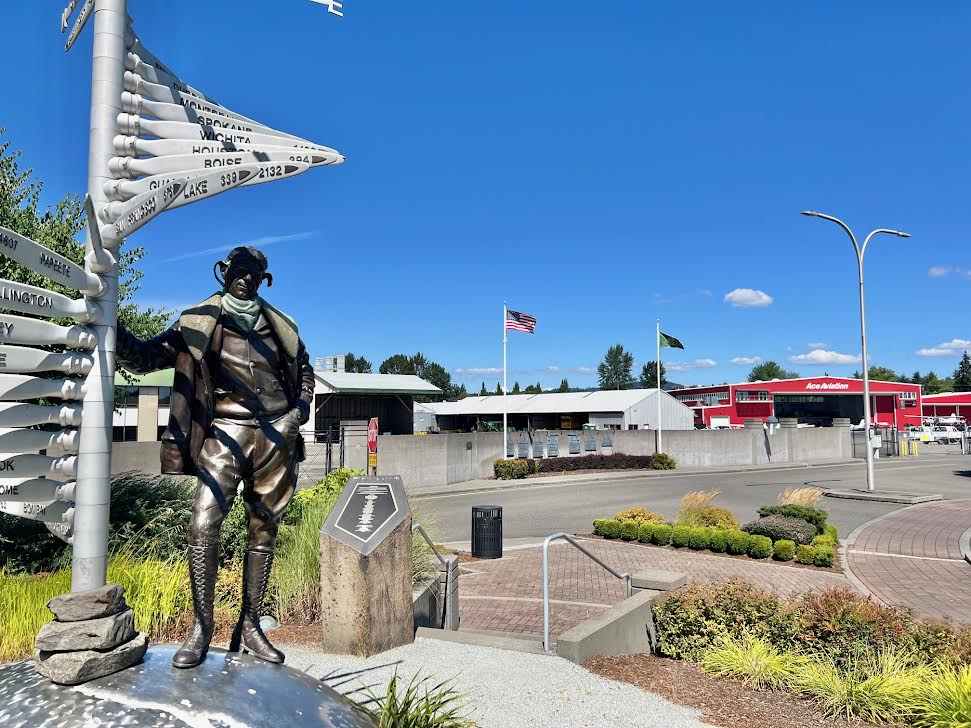
“Pathfinder” statue of Clayton Scott standing in front of Renton’s Aerodyne complex where Mr. Scott had his last Renton office. Our airport’s official name is Renton Municipal Airport Clayton Scott Field.
For the third time in two years, a thriving decade’s-old aviation business is being pushed out of Renton Airport unfairly, with Renton airport officials giving fake or grossly misleading rationalizations. The latest falsehood is printed on a letter with the Mayor’s name in the letterhead. It appears to have been contrived by the Airport Manager and Public Works Director, and is easily disproved with a city document. It’s past time for Renton Council to investigate and stop this pattern, and require these city employees to stick to the truth. The continued dishonesty reflects negatively on city government, and leaves many residents wondering if there is a hidden agenda at the airport.
Renton’s Aerodyne hangar and office complex has hosted many thriving aviation business ventures and significant aircraft for 42 years. Clayton Scott, namesake for Renton’s airfield, had an office at Aerodyne. Aerodyne’s long success is linked to its many strong leaders and partners, including some powerhouses in aviation circles. The company and its leaders have promoted aviation in Renton, advanced aerospace research and design, supported aviation education, modeled high standards for aircraft service and maintenance, and demonstrated overall commitment to advancing safety and efficiency in air travel.
On a tour of Aerodyne’s hangar in 2019
But Renton Airport Management now wants Aerodyne’s facilities vacated by next month, to then sit abandoned and producing no aviation activity and revenue, probably for years. This is the path that the former Rainier Flight Services Headquarters, the Landing Gear Works Manufacturing Building, and the Landing Gear Works installation hangars have been on for up to two years and counting.
Aerodyne’s hangar (Photo courtesy of Gary Palmer)
THE PHONEY REASON FOR ENDING AERODYNE’S 42-YEAR LEASE:
Renton Airport Management sent a letter to Aerodyne stating that Aerodyne must leave specifically “to meet runway safety area requirements as they relate to the goals of the Airport Layout Plan.” But this is not true.
New letter in preparation from Mercer Island Mayor to Renton Airport Director
The Mercer Island City Council and Mayor have predictably grown tired of Renton Airport’s new night-time jet traffic whizzing over their homes, less than 400 feet above their treetops.
Mercer Island is now asking Renton to try to direct the new jet traffic further away from their treetops. They want the jets to either climb over the Lake Washington channel between Mercer Island and Kennydale, or make a steeper climb to increase their clearance above their Island. Their concerns are safety as well as noise, as these jets can be going 200-300 miles per hour as they cross the middle of Mercer Island.
It remains to be seen whether their traffic pattern requests are possible, and whether these changes would be enough to stem the increasing complaints from residents of Mercer Island. And while these traffic pattern suggestions seem like reasonable recommendations, they may unfortunately increase jet noise in the Kennydale community with closer aircraft and steeper climb outs.
Our South Renton and Talbot Hill neighborhoods are also getting new night-time jet noise south of the airport. This didn’t have to happen, and it should not be allowed to get worse.
I recommend Renton residents tell our City Council and Mayor to stop encouraging new jet tenants, and restore a strong bias toward propeller-powered aircraft that better serve our Renton community.
[Update as of September 16: This letter was unanimously approved as the ninth item on the Consent Agenda at the September 16th Mercer Island City Council meeting]
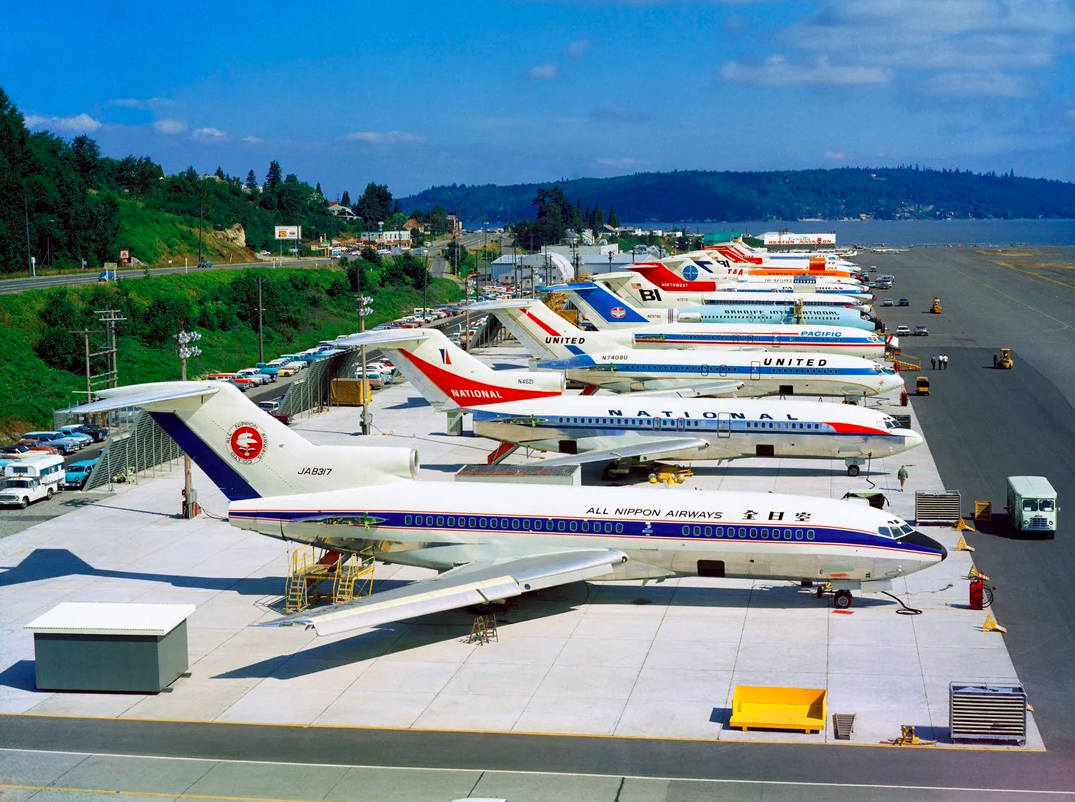
Renton airport in summer 1966. The Boeing Everett factory opened the following year.
This colorful picture of Boeing’s 727 flight line in the summer of 1966 has been shared at least a couple times on Reddit. The original poster three years ago also provided information on how long each of these individual airplanes performed in service. Several of them were flying until at least 2005, and one flying until 2014.
When I joined Boeing in summer of 1984 the company was still making 727 airplanes, but the last one was delivered to Federal Express a few months after I started work. Most customers looking for single-aisle airliners switched to ordering 757-200 airplanes (certified December 1982) and 737-300 airplanes (certified November 1984).
This photo serves as another reminder of Renton’s proud history in aircraft production. Renton is the birthplace of commercial jet aviation, and Boeing has played a major role in our city’s success for over 80 years. Renton should strive to keep Boeing building airplanes here for decades to come.
I’ve written more about Boeing’s significant contributions to Renton’s economy in a previous blog entry here.
The detailed information for these airplanes is below the break.
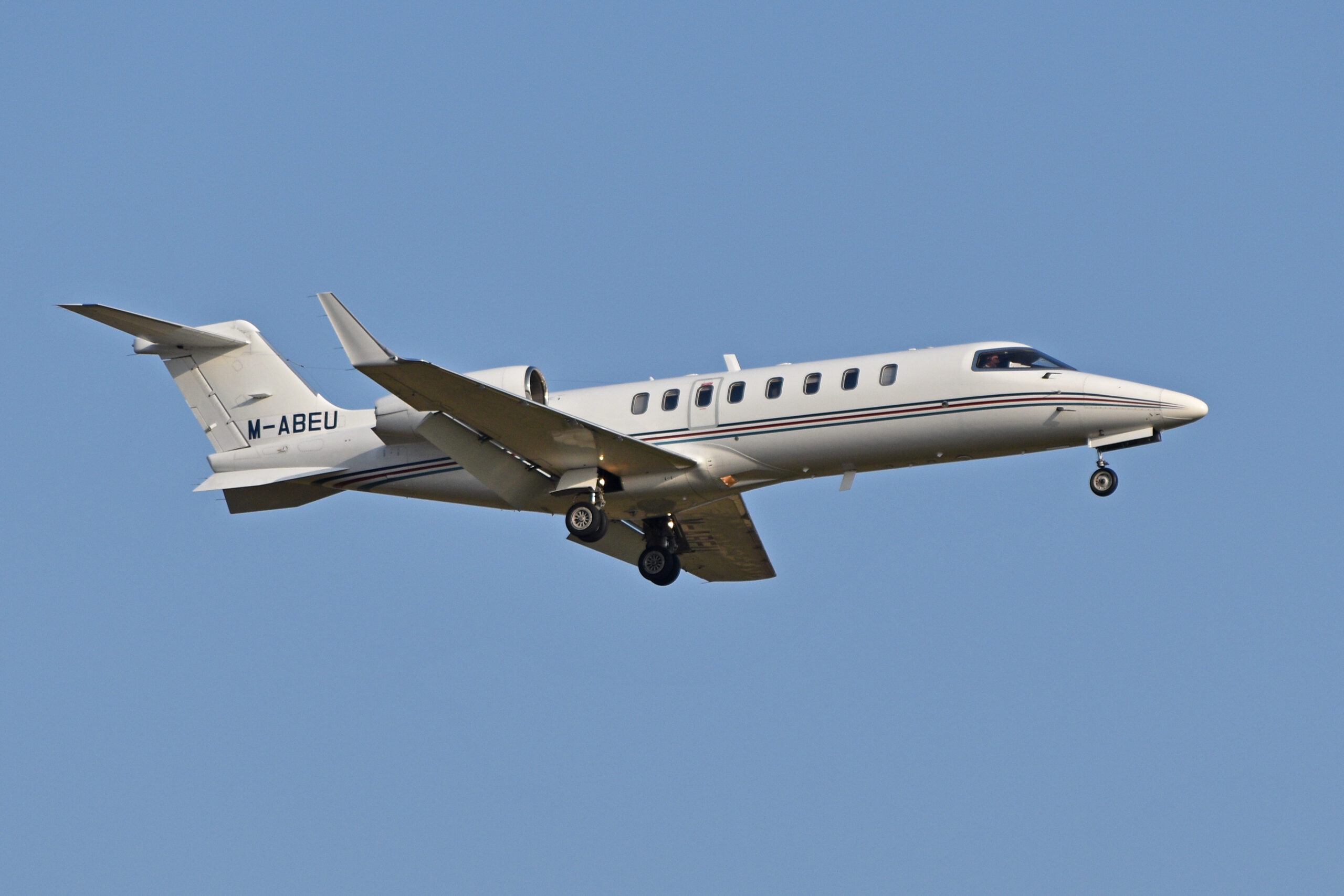
A Wikimedia Commons image of a Learjet 45. There were two Learjet 45 arrivals in Renton overnight, along with several other business jet arrivals and departures.
The Mayor responded by publishing his “Plane Speak” memo which included the nonsense assertion that the airport would be closed when the tower was closed (something that isn’t true and would not be allowed by FAA). Here is a quote from the memo: “Will Renton Municipal Airport be opened up to 24/7 jet traffic? No, any business operations will be subject to the air traffic control tower operation hours – from 7:00 AM to 8:00 PM in winter; and 7:00 AM to 9:00 PM during summer.”
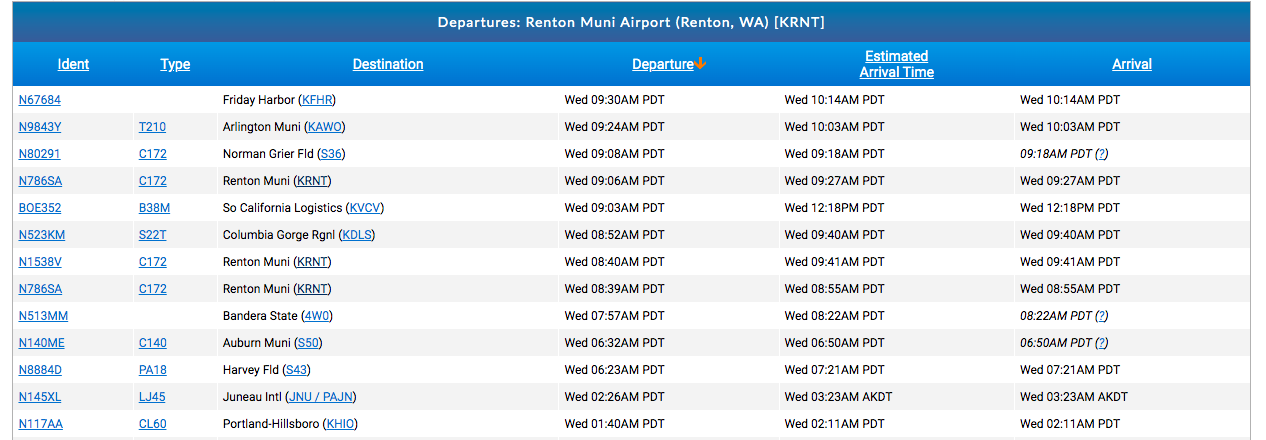
After hearing some jet activity last night, I took a look at the flight tracker to see how much traffic we are starting to get on a typical night.
The FlightAware flight tracker shows five business jet arrivals in Renton last night. A Cessna Citation from Milwaukee at 9:51 PM, A Gulfstream G200 from Chicago at 12:31 AM, A Learjet 45 from Anchorage at 2:56 AM, A Bombardier Challenger 600 from Bakersfield (Meadows Field) at 1:00 AM, and a Learjet 45 from Juneau at 12:52 AM.
There were also two overnight departures, a Learjet 45 left for Juneau at 2:26 AM, and a Bombardier Challenger 600 departed for Portland at 1:40 AM.
There were no propeller aircraft operating at these hours; only jets in Renton in the middle of the night.
As we get into the summer months and residents begin leaving windows open at night, the noise from these jets will likely become a bigger issue. If residents become concerned, they should write to the Council at council@rentonwa.gov, and ask the Council to adhere to the Renton Airport Management Sustainability Plan to keep our community airport from turning into a regional jet center.
Renton airport arrival data for last night, pulled from Flight Aware flight tracker
Renton airport departure data for last night, pulled from Flight Aware flight tracker
Numerous emergency vehicles and personnel respond to the scene of a light plane runway overrun. The two occupants were able to walk away from the accident. (Photo courtesy of Gary Palmer)
Renton Police reported on the incident on X, as follows: “A small plane skidded off the runway into Lake Washington at the north end of the Renton Airport. The pilot & passenger climbed out of the plane uninjured. The National Transportation Safety Board and the Federal Aviation Administration have been notified and will investigate.”
It’s great news that no one was hurt. This type of investigation typically takes months, so we won’t know the cause for a while.
Renton is increasing the price of small airplane tie-down spaces (front) by 74% this year. Rent for the T-hangars (back) is increasing by 42%. New rates are effective June 1st.
A statue of Clayton Scott, one of the Northwest’s great aviators who used to fly out of Renton, greets visitors to Renton’s Clayton Scott Field. Clayton Scott was inspired to fly in his youth after seeing the first barnstormers, and Renton’s Clayton Scott Field honors his love of aviation and spirit of discovery. Young people today are finding it increasingly expensive and difficult to follow in his footsteps.
In previous posts I’ve expressed concern that Renton Airport is pushing out propeller aircraft and ushering in more private jets in their place. In so doing, Renton Airport Management is making the airport less accessible for Renton residents, and losing sight of our community’s aviation goals as codified in our Renton Airport Sustainability Management Plan. It may not be long before Renton airport becomes an asset for Seattle and Eastside tech billionaires, while residents of Renton won’t be able to afford to use it. And every time Renton replaces a group of prop airplanes with another business jet we inch closer to having to extend the airport into the $500 million high school that is currently in planning.
This year’s rent increases of 74% for small airplane tie-down spaces and 42% for small T-hangars increases this concern. Renton’s tie-down rates will leapfrog those at Boeing Field; the new tie down rates for small airplanes will be a 33% more expensive at Renton Airport than at Boeing Field, even though Boeing Field offers two runways, a longer runway, and more services.
Airport Management has stated that these rent increases are needed to sustain the airport, but that is arguably because they have been driving out popular small airplane businesses like “the Landing Gear Works” and “Rainier Flight Services,” that were renting numerous facilities that are now vacant.
Some might say that anyone who is rich enough to afford an airplane can afford these rates, but that is not a clear picture of who is being impacted. Some of these airplanes are owned by Renton working people (or frequently several of them banding together) who maintain an airplane in order to advance their flight careers, commute to someplace remote, or fulfill important life goals; the large rent increase will impact them. As small airplane owners give up on Renton’s rates, private jet operators will rapidly move in to take over their real estate, and these jets will not be owned by Renton residents.
If we stay on this course, Renton will soon have the costs and negative impacts of running an airport, without the opportunity for Renton’s residents to use it ourselves.
Renton City Council has ultimate responsibility for airport leases, and anyone who wants to express concern about these increases should contact the council. Please see my post here regarding how to reach them.
Starting June 1st, small airplane tie-downs will cost $185.60 per month, and T-hangers will cost $580 per month (excerpt from Renton’s 2025-2026 Fee Schedule)In 2023-2024, small airplane tie-downs were $106.43 per month, and T-hangers were $409.43 per month (excerpt from Renton’s 2023-2024 Fee Schedule)Boeing Field tie-down rates of $124 per month are only 67% of what Renton will soon be chargingChart from Airport Director’s Report at May 13 RAAC meeting
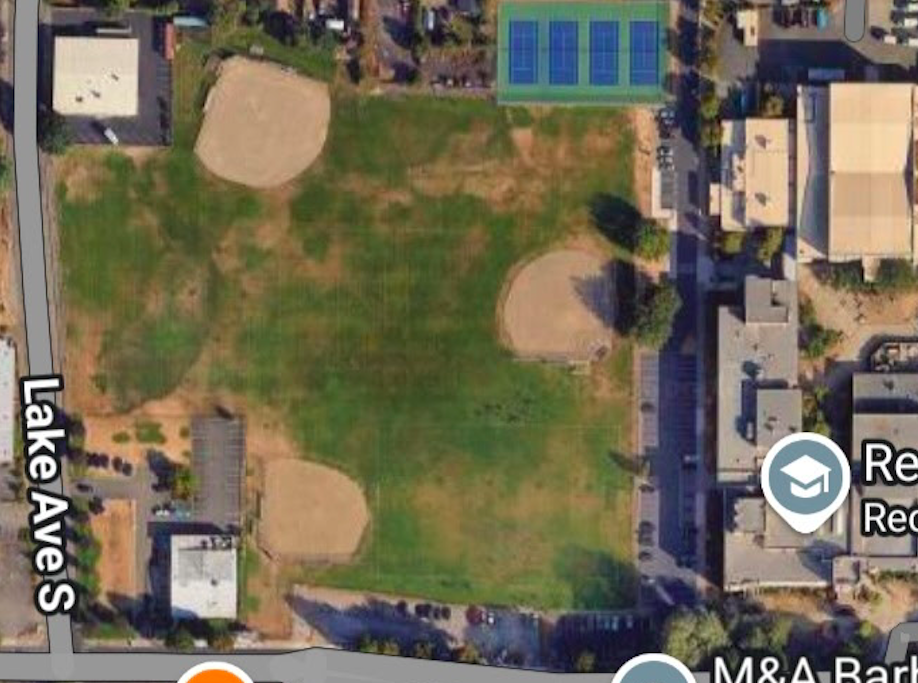
This image from google earth shows Renton High School’s baseball fields and the airport runway
Renton High School currently has four baseball diamonds, and two of them are in the Runway Protection Zone. Per FAA Advisory Circular 150/5190-4B , 2.2.5.1 “the purpose of the Runway Protection Zone (RPZ) is to enhance the protection of people and property on the ground.” The FAA would discourage construction of these baseball diamonds today. But the baseball diamonds have been in use since before FAA’s current land-use policy was in place, so they are considered “pre-existing” or “grandfathered” under regulatory guidance.
This screenshot from the 2022 Renton Airport Layout Plan shows that the northern two baseball fields are in the “Departure Runway Protection Zone”In this schematic of the revised High School layout, the architect depicts an “EXISTING TRACK” in the Departure Runway Protection Zone. This track is not actually existing, and would likely constitute a new use with a new concentration of people. It may not actually be allowed per Renton’s commitments to FAA. This would mean no space was gained by moving the ballfields.Closeup showing the “Existing Track” that does not existThe baseball field as shown on Google Maps today
With the relocation of these baseball diamonds into the current Tobin neighborhood, the School District is proposing to change the use of the property in the Runway Protection Zone to a high school sports track. I question whether this new use meets FAA guidelines. And unlike the existing baseball diamonds, the sports track can not be said to have been approved long ago, before current FAA regulations. Instead, it requires that professional engineers approve it in 2025, with concurrence of city permitting authorities who have responsibility for safety and to FAA.
Everytime Renton Airport accepts federal grants, the city commits to grant assurances which promise that Renton “will take appropriate action, to the extent reasonable, including the adoption of zoning laws, to restrict the use of land adjacent to or in the immediate vicinity of the airport to activities and purposes compatible with normal airport operations, including landing and takeoff of aircraft.”
As a new use in the Runway Protection Zone, the new sports track must be evaluated as to whether it would draw an assembly of people, and how densely populated this assembly could possibly be in the event of an airplane accident at this location.
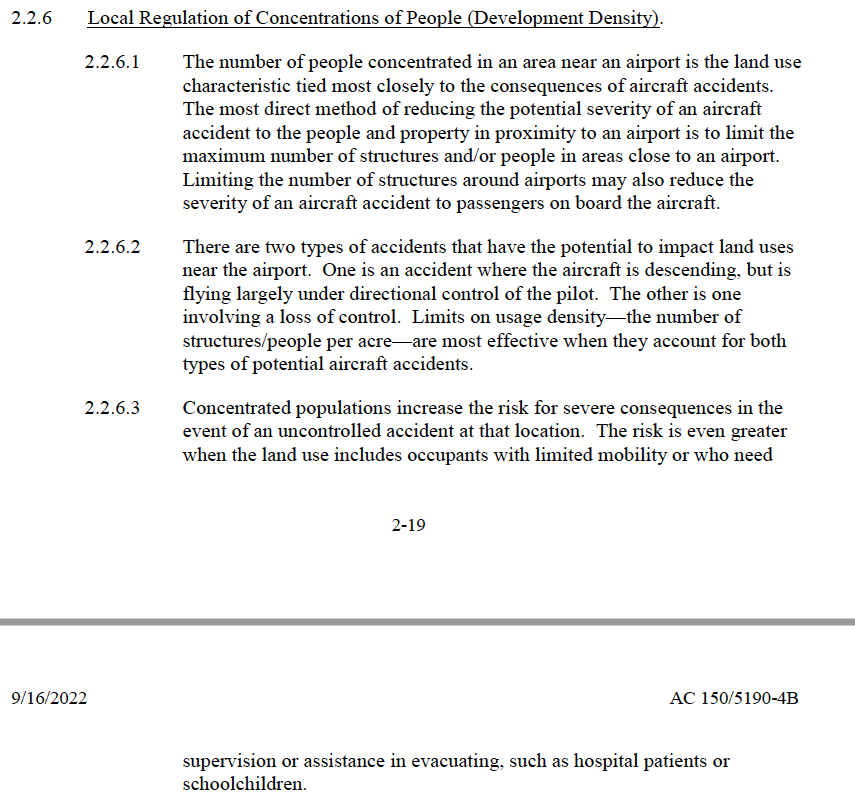
“2.2.6.1 The number of people concentrated in an area near an airport is the land use characteristic tied most closely to the consequences of aircraft accidents. The most direct method of reducing the potential severity of an aircraft accident to the people and property in proximity to an airport is to limit the maximum number of structures and/or people in areas close to an airport.”
“2.2.6.5 In general, the lower the density, the greater the level of compatibility a use will have with aircraft operations. An airport and the local community should evaluate density near an airport…. the goal would be to require any ensuing development to be at or below the current levels. This essentially focuses on making the current situation no worse. “
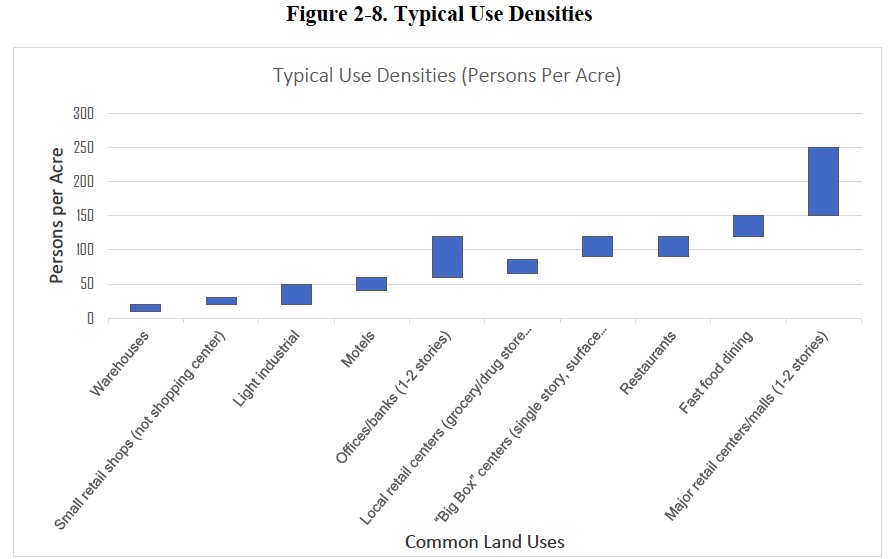
Foot races during PE class might be a relatively low density with just 20-30 students on the track. But a competitive track-meet could be very high density, attracting hundreds of people, with spectators on the infield and around the perimeter of the track.
And if the track surrounds a new soccer field, as most do, where spectators typically set up tents and chairs along the side lines, the density of people in the Runway Protection Zone could frequently exceed what is currently seen on the baseball diamonds.
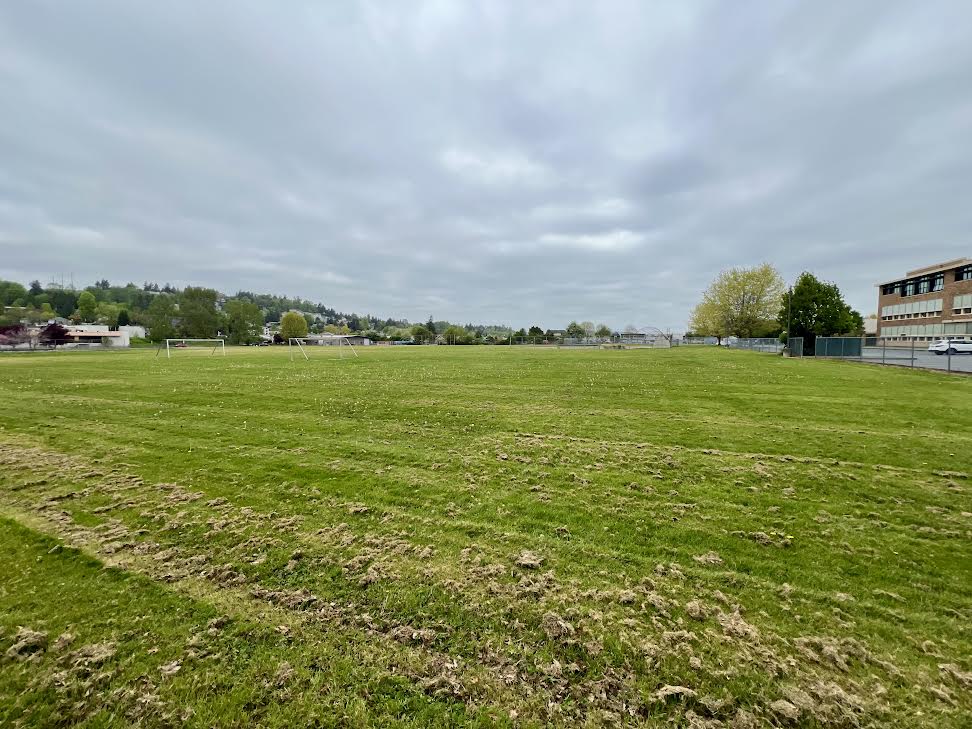
The baseball fields as they exist today have movable soccer goals, but these are located in the southern half of the field, outside of of the Runway Protection Zone, in an area proposed to be converted to parking with the new high school.
For some reason the new high school design approved by the board shows an “existing track” at the location, but there is no track in existence– only baseball fields.
The review and final approval of the details will not come from the FAA themselves, but must come from the Renton School District (as project designer and applicant) and the City of Renton. The City of Renton has final say as both the permitting authority and the airport sponsor. While the FAA won’t specifically make the determination about the compatibility of the use, they will determine whether the City of Renton has used an acceptable process to determine compatibility. If Renton has not, then the city’s ability to receive FAA grants will be in jeopardy, which would put our city’s finances and businesses in jeopardy. In the event of a catastrophe in a crowded gathering, Renton’s current City and School District elected officials will own many of the decisions that led up to it.
First two rows of table in AC 150/5190-4B. FAA expects elected officials who sponsor airports to become familiar with, and uphold, airport safety guidance. Per the AC: “Coordination and communication between elected and appointed officials and airport sponsors is vital to effectively implement and enforce land use compatibility initiatives because most land use decisions are vested with local governments.”
In summary, the baseball fields could continue to be used at their current locations since they are preexisting. If they get moved to a new location, it is questionable whether any high school sports facilities could be built at their current locations without potentially worsening the safety risks and possibly violating airport grant assurances.
In the end, Renton School District may find they forcibly cleared an entire city neighborhood and ended up with no more sports facilities than they have now.
At the last School Board Meeting, a School Board Member mentioned an episode in which a light plane made an emergency landing in the baseball field right after take-off from Renton Airport. This was indeed a dangerous incident, and the fixed base operator associated with the incident was asked to leave Renton Airport a short time later. But this risk is not in any way lessened by changing the baseball field into a running track and soccer field. It is very likely made worse.
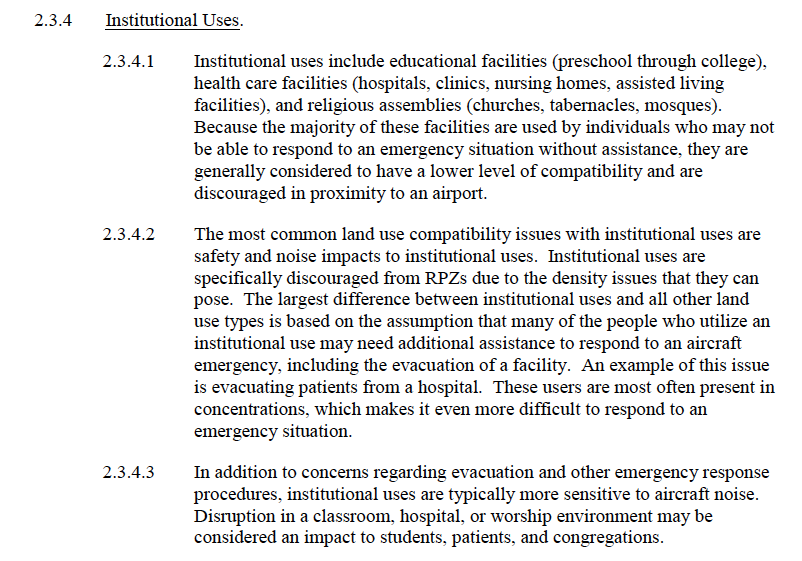
The most effective way to limit the airplane risk to Renton High Students would have been to move the high school, as voters approved in the 2022 ballot issue. Institutional uses, which include high schools, are the FAA’s least favorite uses in the danger zones around runways.
The second-best way to limit the risk would be to minimize jet traffic on Renton Airport, as Renton’s 5,300-foot runway is very short for jets landing and taking off at 140 miles per hour, and the risk increases with the number of operations. But our current Airport Management seems to be eliminating piston-engine aircraft and encouraging more jets at Renton Airport.
Residents and taxpayers may have to pick up the pieces as Renton School District and Renton Airport continue their headlong collision into one another.
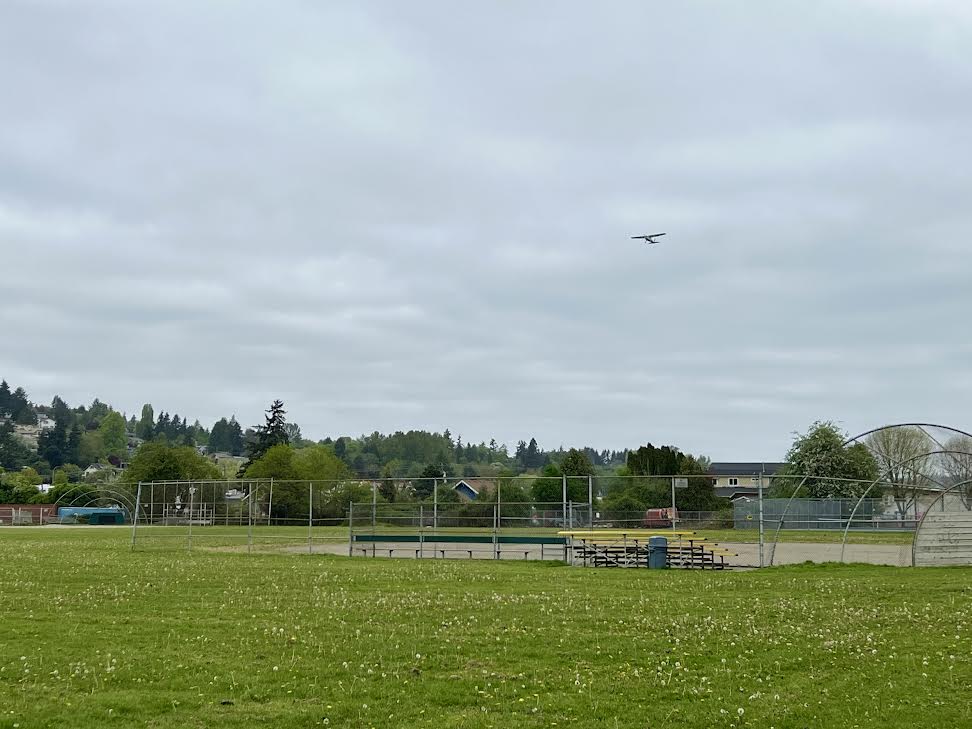
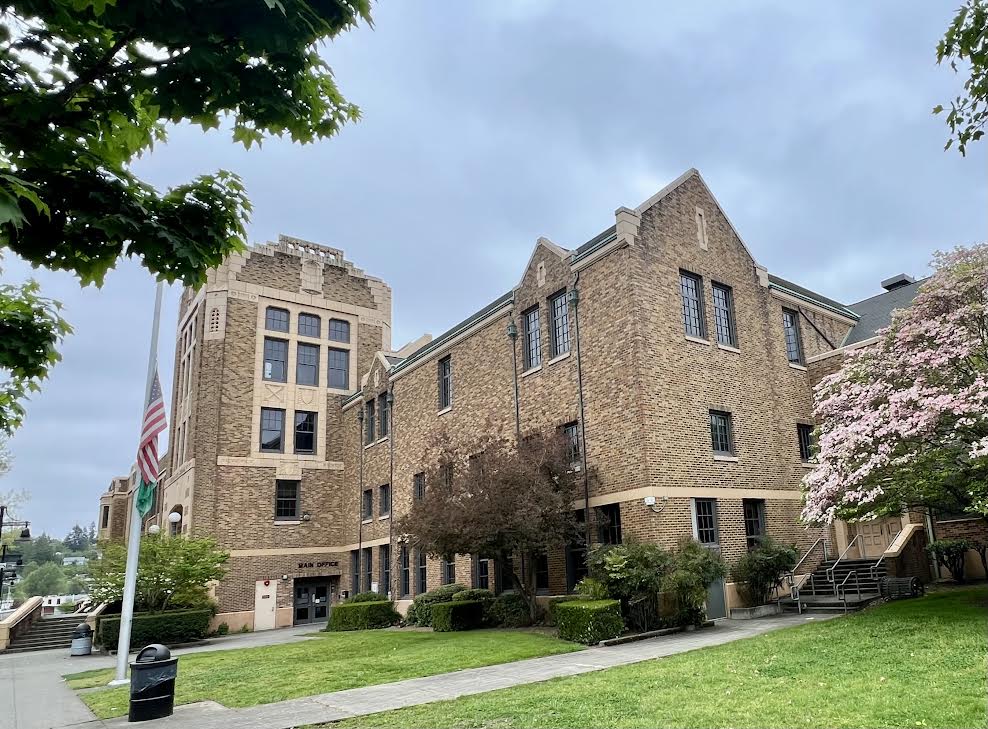
A small plane flies over one of the Renton High’s two baseball diamonds in the Runway Protection ZoneThe current Renton High School Baseball field includes three baseball diamonds and portable soccer goals. This field is proposed to be redeveloped into a parking lot and an “Existing Track,” even though no track exists in this area.This entire $500,000,000 project (which eliminates 32 homes and 8 businesses) is being done because the Renton School Board does not feel like the strikingly beautiful, historic Renton High Building is good enough for a high school, even after tens of millions of dollars of remodeling have been done to it in recent years.The FAA discourages institutional uses, including high schools, in proximity of an airport per this Advisory Circular
“Number of people concentrated in an area near an airport is the land use characteristic tied most closely to the consequences of aircraft accidents” according to AC 150/5190-4B
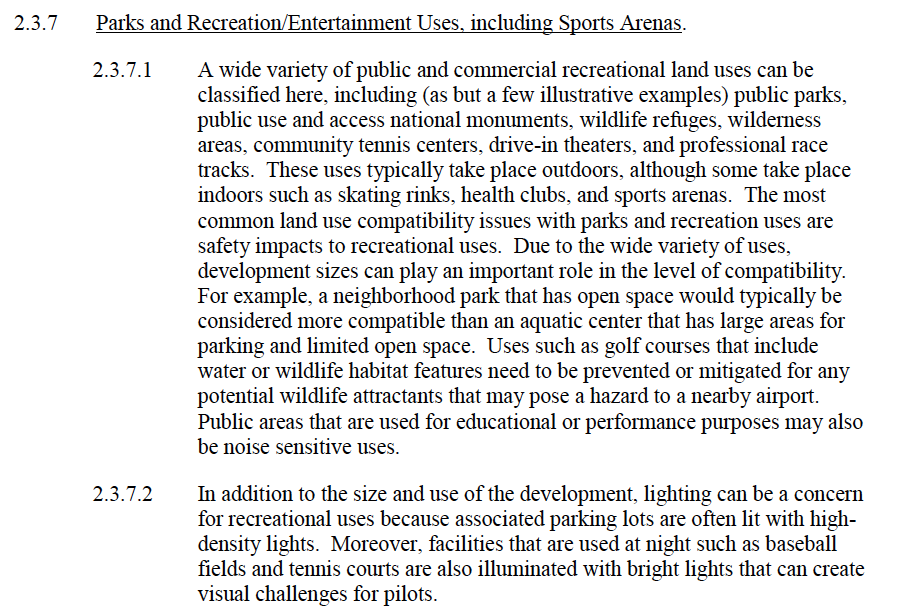
Parks and Rec facilities discussed in FAA Advisory Circular 150/5190-4B FAA guidance from FAA Advisory Circular 150/5190-4B on typical number of people per acre in different uses. Lower is better. A two-acre baseball field with 18 players and ten spectators could come in at the low end, but a sports tournament with hundreds of spectators could come in at the high end.
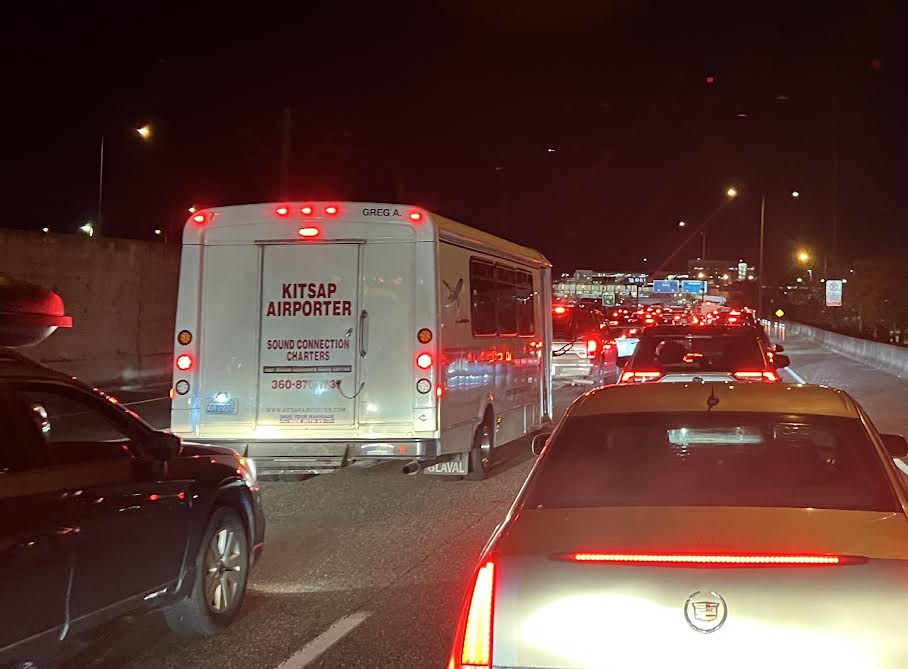
The view as my wife and I crawl for 25 minutes in a typical SeaTac airport arrival traffic jam last week
I’m excited about an arriving visitor this week, but I’m already dreading the traffic jam I know I’ll encounter at SeaTac Airport when we pick her up. While Port of Seattle leaders will give the excuse that these jams can’t be helped because of the large number of travelers, the reality is the Port created this problem with the poor traffic planning of the cell phone lot.
The 1960 SeaTac airport approach was brilliantly engineered for high volumes: three dedicated express lanes approaching the airport, growing into four — two departure lanes and two arrival lanes. Each of these roads double from two to four lanes at the terminal with the addition of curbside pick-up/drop-off lanes. The elegant design could smoothly handle today’s volume of travelers, if Port officials had not implemented the “rideshare weave” that requires 25% of the drivers to cut across four lanes of the other 75% of drivers in the last critical quarter mile of the approach.
As Rideshare became more prevalent –now estimated at about 25% of airport passengers– Sea-Tac and other airports across the nation set up waiting areas for drivers who are picking up. When drivers are notified their passengers are in the pick-up spot, they swiftly proceed to the designated location, and wisk their passenger to their destination.
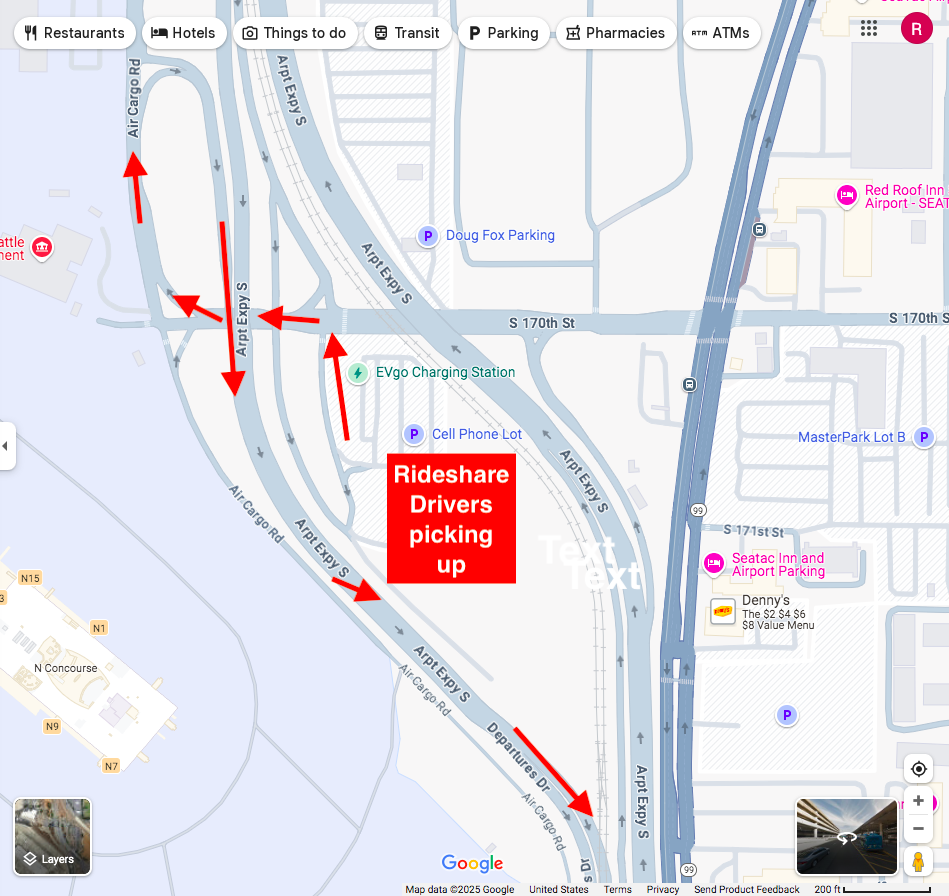
Except at SeaTac Airport. Here at SeaTac, designers located the cell phone lot such that every rideshare driver must merge onto the right lane of the final stretch of the airport expressway, and then during the next quarter mile move four lanes to the left, before exiting into a typically backed-up lane into the parking garage. This flawed configuration has been snarling evening traffic into SeaTac for years, and can seriously impact all passengers arriving or departing from SeaTac airport by cars, busses, and courtesy vans (whether or not they are rideshare passengers).
Rideshare drivers picking up passengers, and other cell phone lot users, follow this path when informed that their passengers are ready. It requires a merge followed by three quick lane changes across the airport expressway. All arriving airport traffic is slowed by these lane changes.
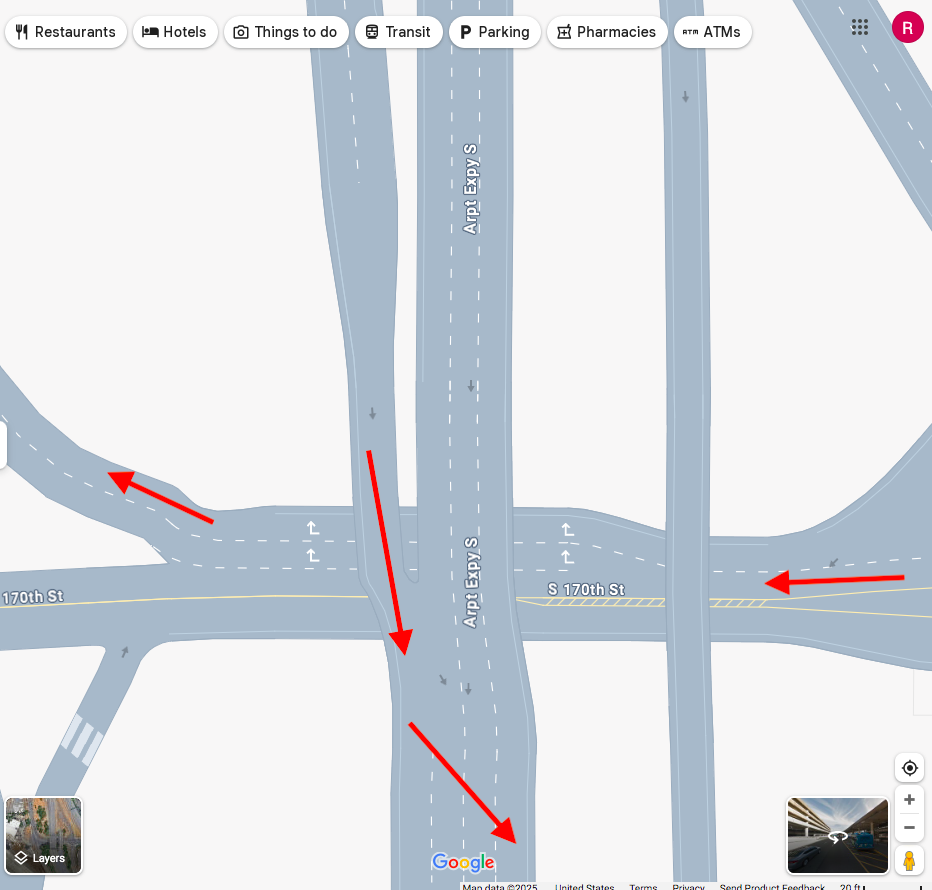
As rideshare drivers negotiate the multitude of lane changes, often hugging the right lane as long as possible before aggressively moving left, the entire airport access road comes to a standstill– not because of volume (as the Port states) but because the Port officials implemented the dangerous weave in the traffic design about ten years ago.
Details of the weave across four lanes right before arrival-departure split
This nightly traffic jam can easily add 20-30 minutes or more to a pickup or drop-off time, stressing travel schedules and making it harder to coordinate driver and passenger connections. When an arriving motorist finally gets past the weave, the traffic into the arrivals or departure curbs usually flow reasonably well, except where it gets blocked by idling drivers whose passengers have not arrived, and refuse to go around again because they can’t tolerate the traffic jam a second time. The weave-related traffic jams trigger additional scofflaw activity near the airport entrance, where scores of drivers pull over onto the shoulder next to “no-parking” signs in an ad-hoc cell phone lot, preferring to risk a ticket over the traffic weave from the designated cell-phone lot.
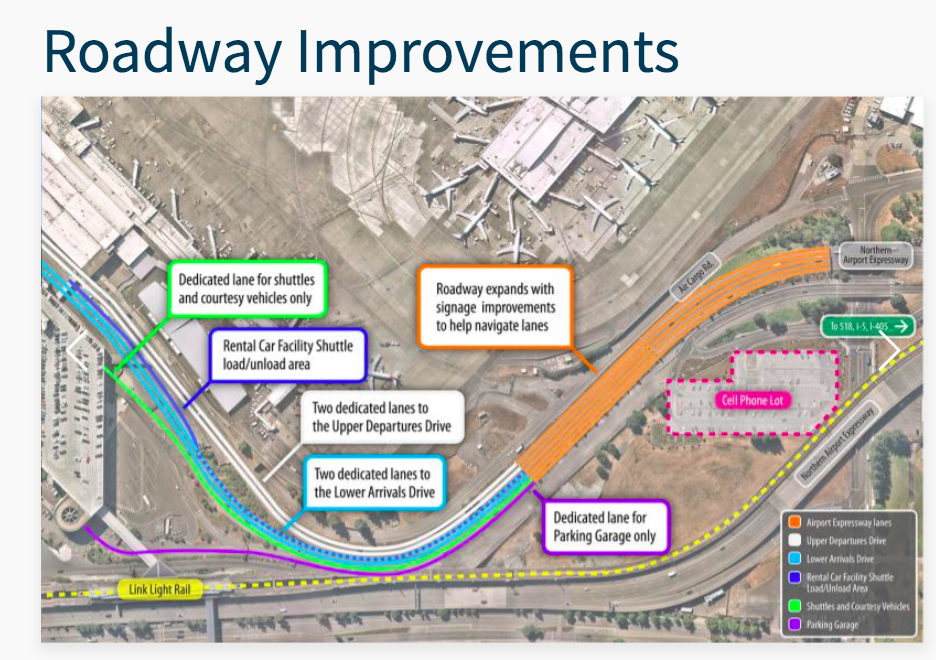
The airport clearly needs to find a way to NOT have to move all the rideshare drivers from the right side to the left side. But instead of resolving this weave years ago (with perhaps a direct road connection from the cell phone lot to the parking garage), the Port spent $13.5 million improving circulation into and around the cell phone lot in 2022. And next the port will spend $79.3 million widening the airport expressway, and making the backed-up single lane into the parking garage longer. All this new additional pavement will provide more space for jammed up cars to queue, but won’t address the weave problem at the root of the backup.
New pavement will be added with roadway improvements in 2026 for $79.3 million, but the Cell Phone lot users will still have to weave across all lanes of arriving airport traffic
Together, we taxpayers are currently putting about five billion dollars into Sea-Tac Airport expansion, so it would be nice if we could get to the airport reliably. As I sit stewing in these jam-ups, I blame the Seattle Port Commissioners more than anyone else for the traffic mess. They have ultimate responsibility to make our airport usable, and the buck stops at their office. Most of them promise higher energy efficiency and lower carbon in their campaign literature, and thousands of idling cars and people going nowhere doesn’t cut it. The Commissioners could have solved this by now, and instead they are banking on a 2026 fix that probably won’t work.
Departing passengers fret about missing their flights, while drivers picking up loved ones wonder how long they will be waiting in the cold, in this typical evening traffic jam at Sea-Tac Airport. Evening brings the worst jams because aircraft arrivals –and ride share pickups– are typically at their highest.
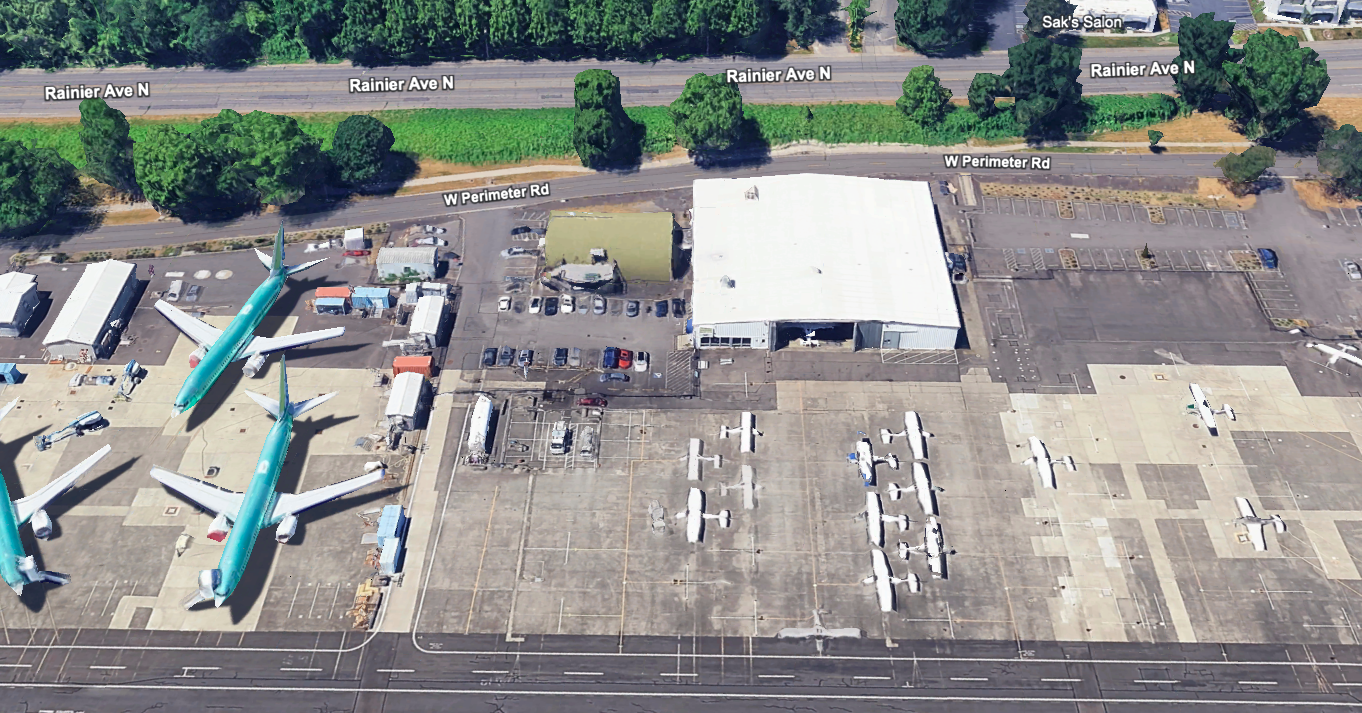
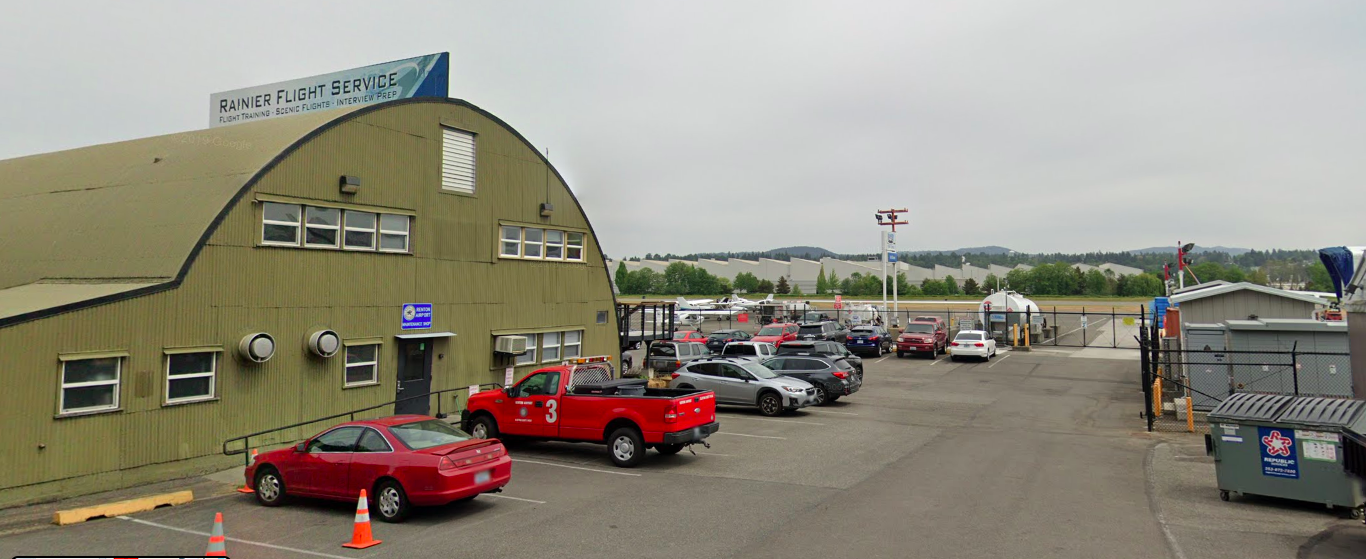
The flight school occupied the large white building in the center, and the fuel farm is located between the Boeing airplanes and the propeller airplanes.
April 21 update: Vesper Aviation raised a concern at tonight’s Council Meeting regarding the informal process used to award this lease, but the lease was nevertheless approved by Council. See my April 21 comment on this post for details.
Rainier Flight Services was one of only two public fuel suppliers on our airport. Installing fire-safe and environmentally-safe aircraft refueling tanks is not trivial, so this reduced the fueling options and hurt aircraft operators.
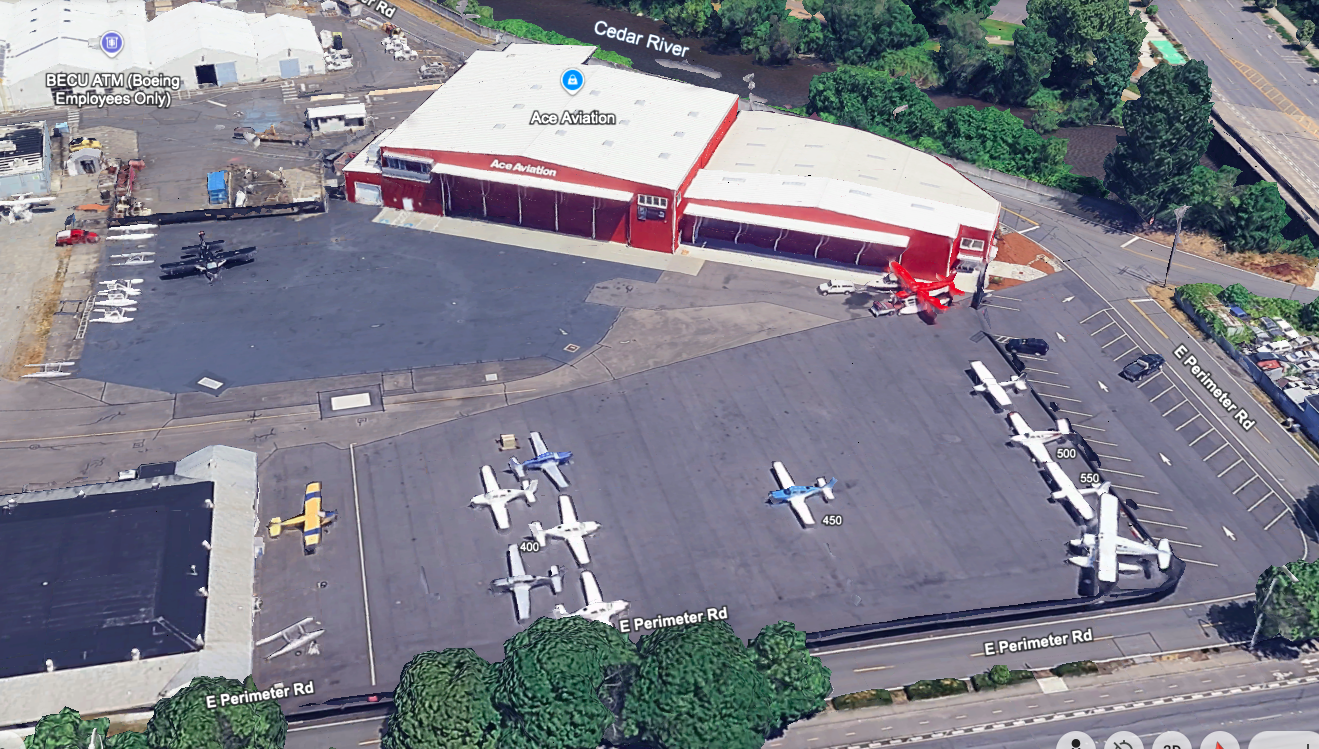
Renton’s Airport Management is now suggesting a solution to the near-term refueling issue, in the form of a new lease to BosAir, the parent company of Ace Aviation.
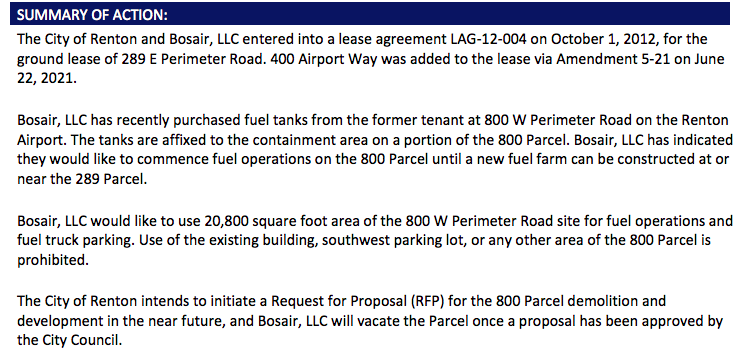
According to a Council Agenda Packet that will be considered tonight, Bosair has purchased the refueling equipment from Rainier Flight Services. Since it may take months or years for the refueling tanks to be relocated, Airport Management is proposing that the land under the tanks be leased to Bosair on a month-to-month basis. In other words, Bosair, or Ace Aviation, will take over the fuel supply business formerly owned and managed by Rainier Flight Services.
While this may be an appropriate solution, the Renton Airport Advisory Committee (RAAC) should have been consulted and the decision made more publically. Since the Airport Director used to work for Ace Aviation, utilizing the RAAC could help alleviate “appearance of fairness” concerns.
The former Rainier Flight Services fuel farm can be seen behind the fence in this photo
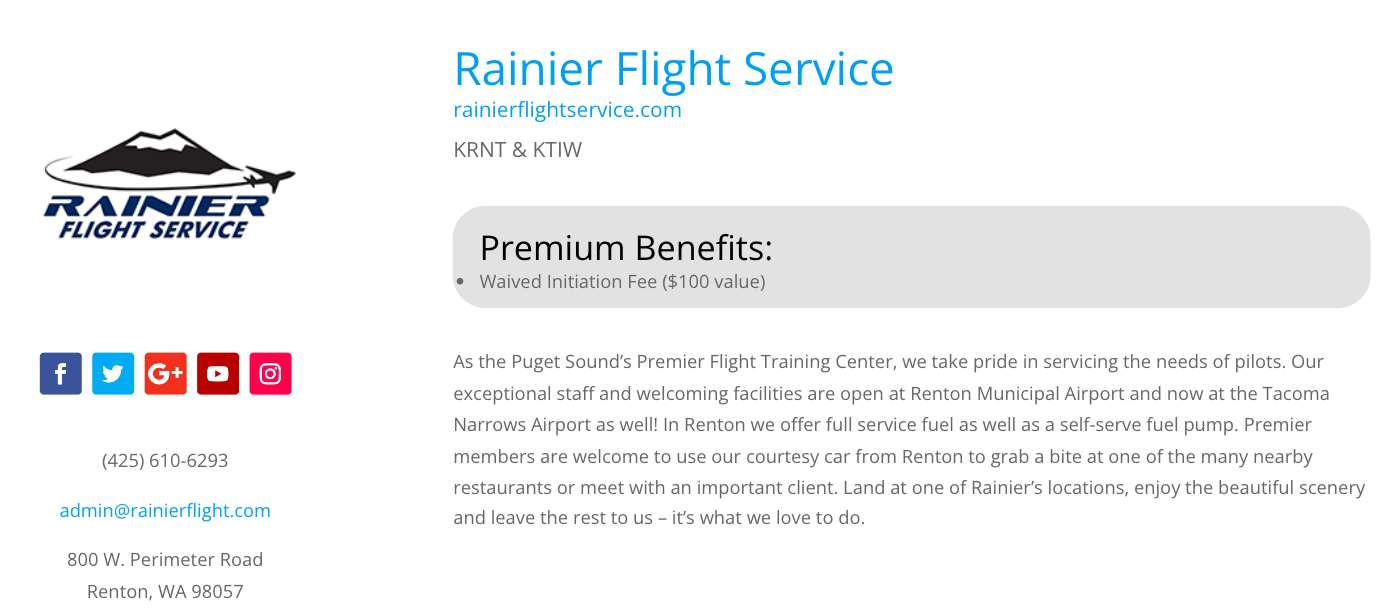
Renton Public Works now proposes that the parent company of Ace Aviation, which also owns the above facility at the SE corner of the airport, take over the lease for the fuel farm on the west side of the airportThe now outdated Rainier Flight Services website showed they provided full-service and self-service fueling optionsScreenshot from today’s agenda packet
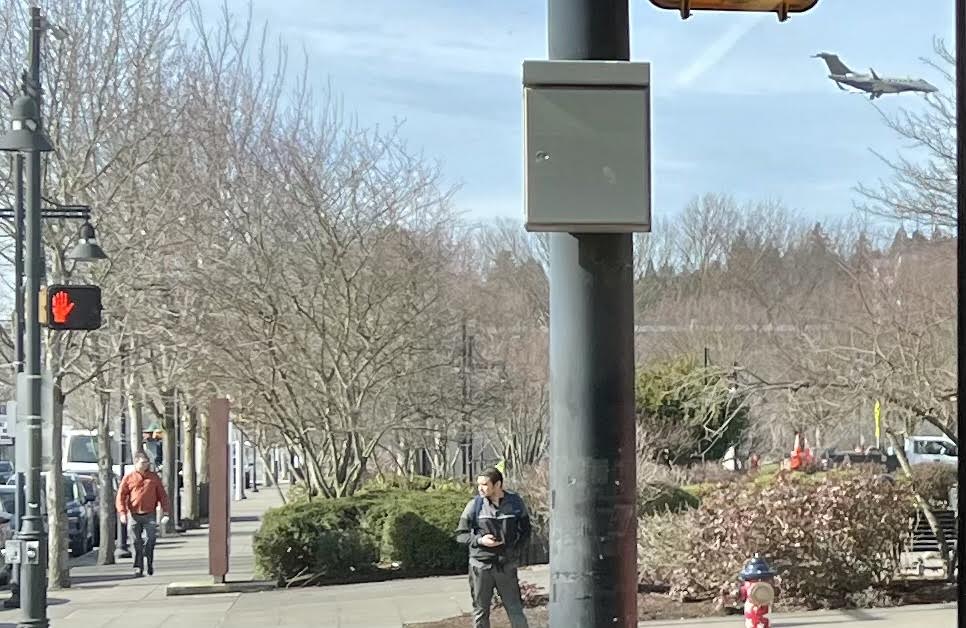
A business jet lands over Renton’s Piazza in downtown Renton. I shot this photo with my iPhone a week ago while dining in Rain City Market.
Don’t be surprised to hear more nighttime business jets in Renton through October. Boeing Field has completely closed their smaller runway for the next seven months, and their large runway will be closed every night starting at 8:15-9:15 PM and continuing until 3:30-5:15 AM.
While business jets based at Boeing Field would be expected to schedule their operations for the runway’s daytime (open) hours, Renton will likely pick up nighttime traffic from jets based elsewhere that are flying to our area and trying to work around the closures. Particularly jet taxi services will likely find Renton to be the most convenient nighttime alternative to Boeing Field.
Private jet traffic will likely pick up even more this summer, particularly with the FIFA Club World Cup soccer activities.
The impact from private jets in Renton is already being felt. I’ve heard from a Mercer Island resident who has noticed an overnight increase in Renton jet traffic. Jet traffic from Renton often goes directly over Island Crest Way, near the center of Mercer Island.
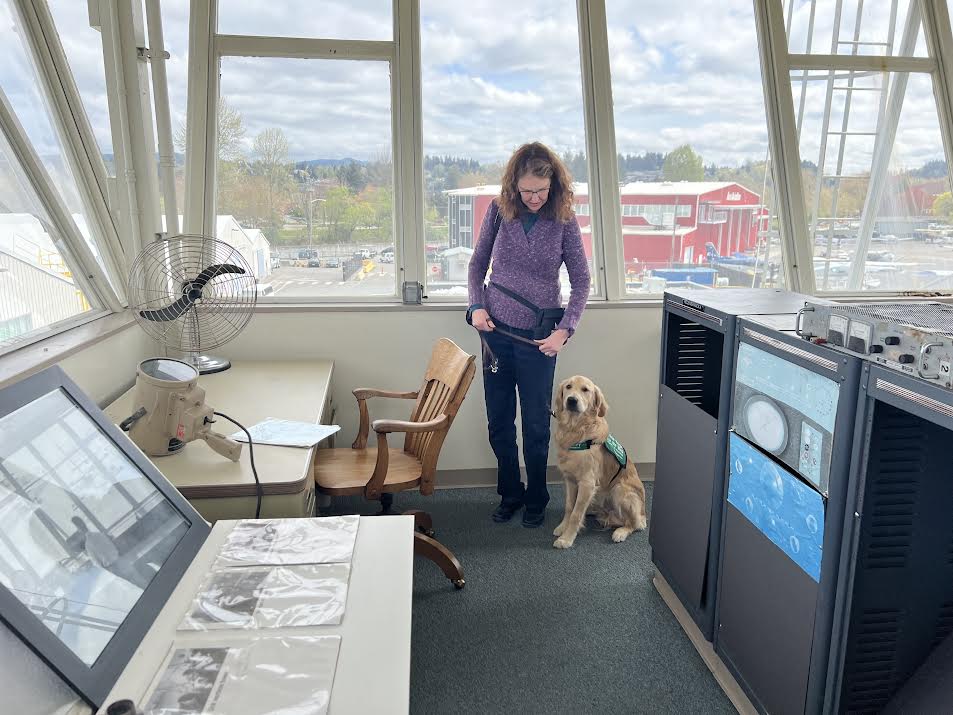
Scheduled for Demolition: A few years ago I would have been confident that all or part of Renton’s WWII air traffic control cab would be saved from the wrecking ball by Renton historians. But now that the City has severed ties with the Historical Society and emptied the Renton Historical Museum, it’s not clear who is watching out for Renton’s history.
A few months ago the City of Renton ended a 54-year relationship with the Renton Historical Society, kicking their priceless collection of artifacts and photographs out of the Renton Historical Museum. The Renton Historical Museum now sits empty and closed to the public, while the Renton Historical Society is actively searching for a new permanent location for their large collection, to replace the historic fire station they they helped run and maintain for 54 years. The Historical Society was taken by surprise by this move, and the city’s reasoning for the separation has not been clear.
Now while the Historical Society is distracted with this chore, the City of Renton has chosen this time to move forward on tearing down Renton’s 80-year-old historic air traffic control tower.
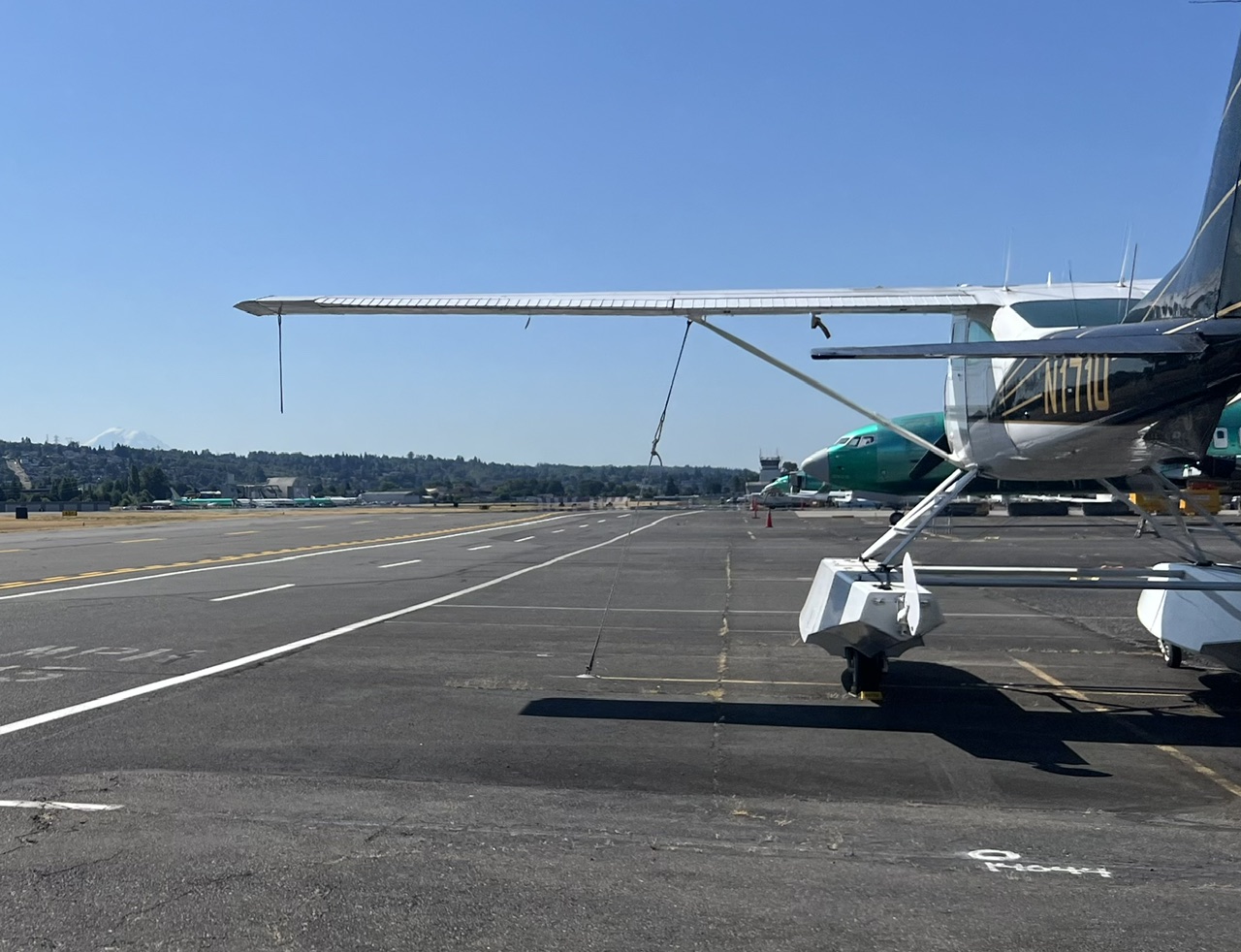
Rainier Flight Services aircraft, previously flown by Renton flight school students, are now based at Boeing Field. A hundred other pilots were in line for these aircraft tie-down spaces near the Museum of Flight.
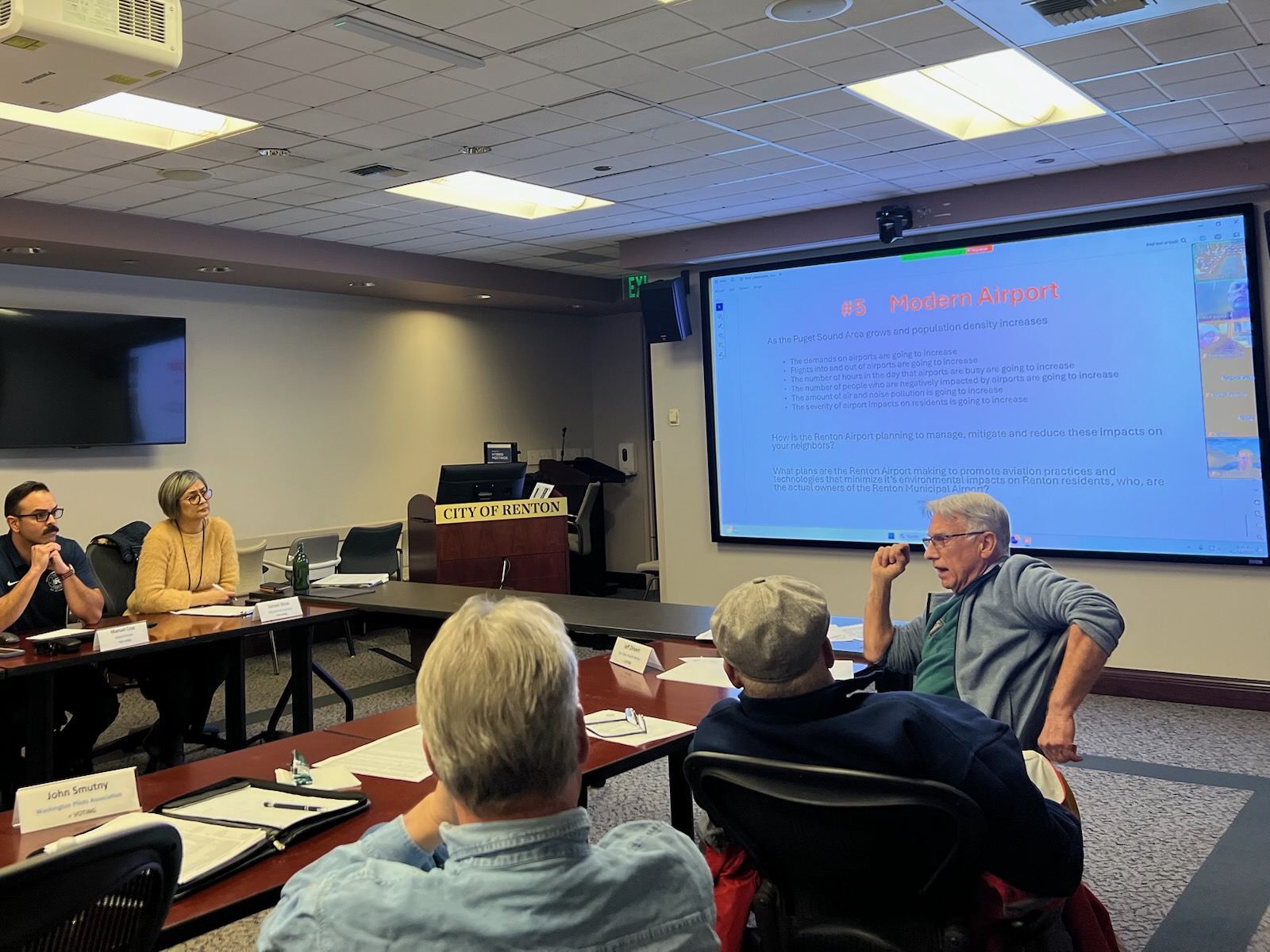
Members of the Renton Airport Advisory Committee (RAAC) and Airport leadership discuss the future plans for Renton’s airport at last Tuesday’s quarterly RAAC meeting. Some participants were on Zoom, visible on the right side of the meeting screen.
[Note: There was also some valuable information shared at the Tuesday meeting, including a thorough report from the South Renton neighborhood representative. I’ll cover this content in a separate article. ]
At the Tuesday meeting of the Renton Airport Advisory Committee, I was surprised and disappointed by the controlling, questionable guidance given by airport management to the Committee’s hard-working volunteer members.

 I was recently invited to a meeting of Renton airport users who have lost confidence in Renton’s airport management. They are considering forming an airport tenants union, to organize and push back on breath-taking rent increases. One airport business owner reports that the city has asked him to sign onto a 120 percent rent increase, 12 times bigger than what our state legislature said was the maximum a residential landlord could ever increase rent in a single year. Some tenants have said they have been given surprise retroactive rent increases, in which management said they forgot to raise the rent months earlier, and now demand tens of thousands in back rent– similarly to the billing failure that triggered the Landing Gear Works to ultimately move out.