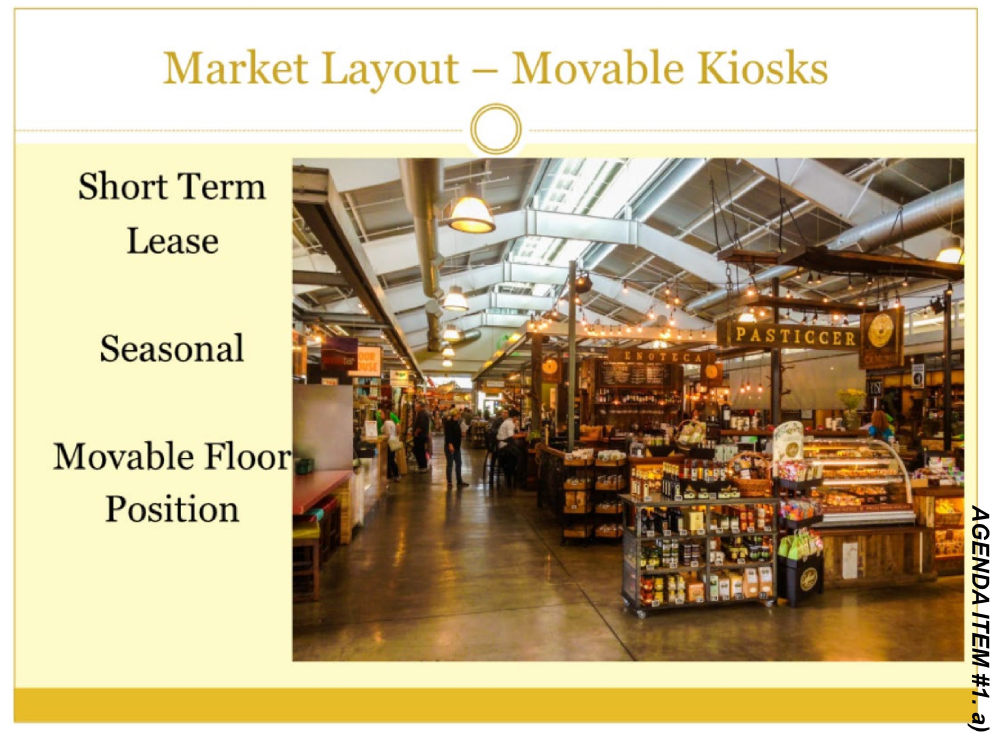
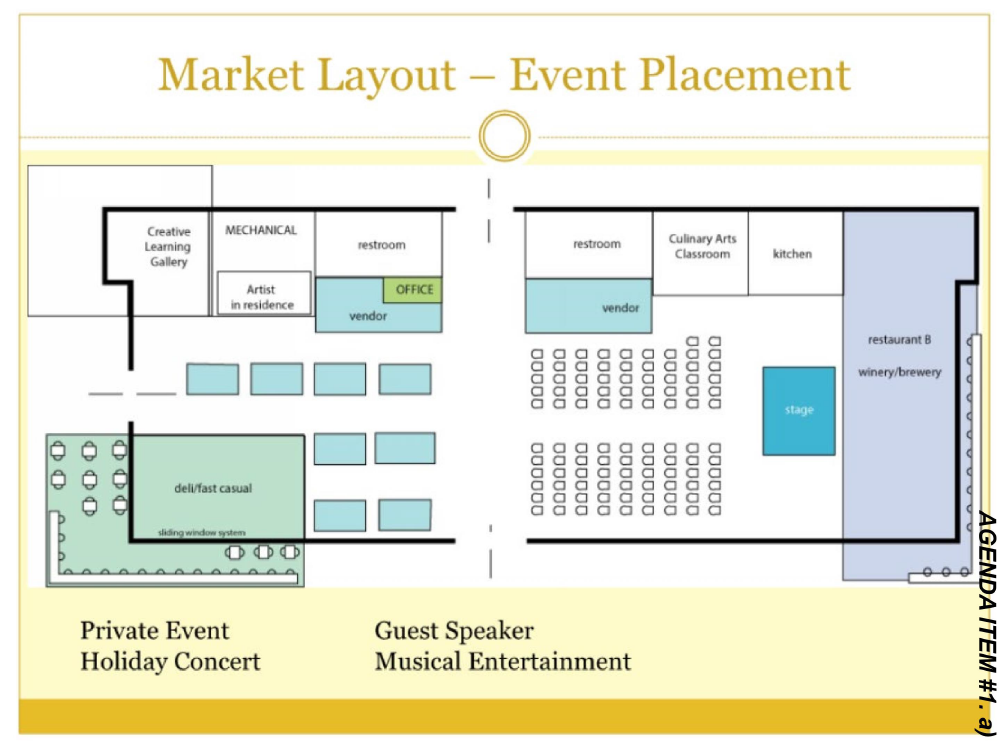
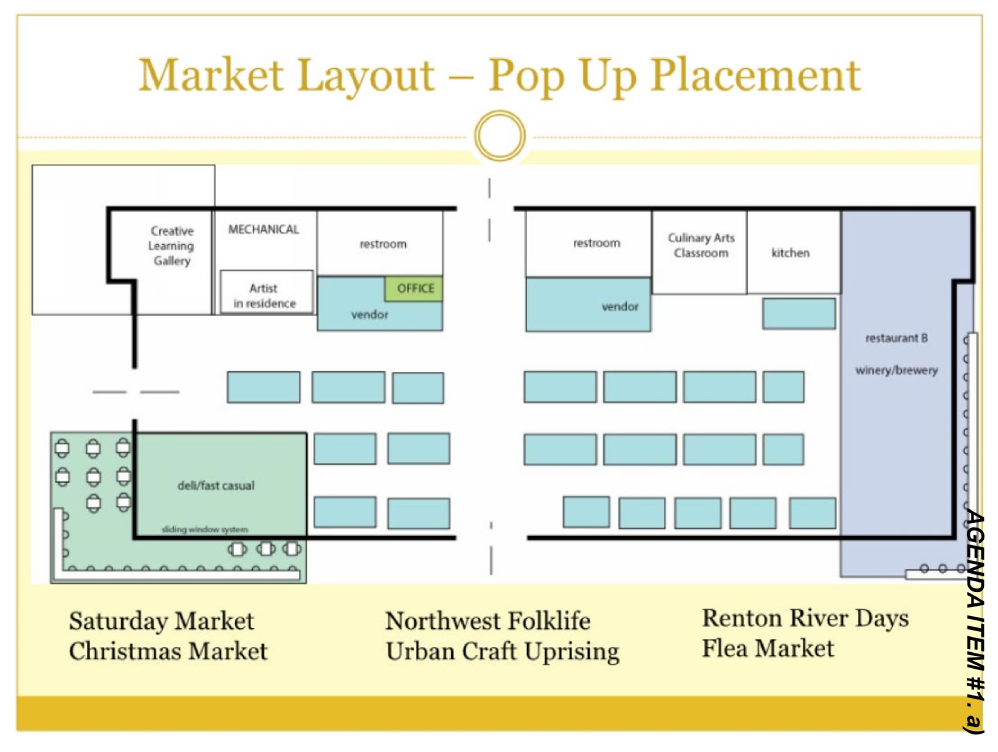
At my last Renton Council Meeting on 12/13/21, I was shown this chart as part of the Pavilion plan. New market Kiosks would offer goods for sale seven days a week; they would be able to roll out of the way for major events. All the changes would be funded by the new tenants.
At my last Council Meeting, in December 2021, Renton Council tentatively approved a Pavilion Event Center upgrade. The plan called for the selected bidder to use his private funds to add anchor tenants and portable market kiosks to the Pavilion building. The bidder wrote that he would take out a 1.2 million dollar loan to remodel and begin operations, and his anchor tenants would pay for their tenant improvements. Large events would be held in the updated Pavilion by rolling away the portable kiosks, and installing a stage when desired. In my comments that night I stated that the event capability (which was a requirement in the City’s Request for Proposals) was important to attract new visitors, and I hoped that the current tenants (Rain City Catering) would be able to utilize this event venue.
Per Mayor Denis Law in the Renton Reporter on May 3, 2019 “The proposal would leave the renovations, operations and management to the leaseholder”…. Law told the council that the city is not currently proposing money toward the project, nor would the city operate it.
In this chart from December 13, 2021, Council was shown that the Pavilion would still accommodate staged or banquet events. The selected bidder and anchor tenants were going to pay for the upgrades. The building had a crawl space which would have accommodated electrical and plumbing runs.
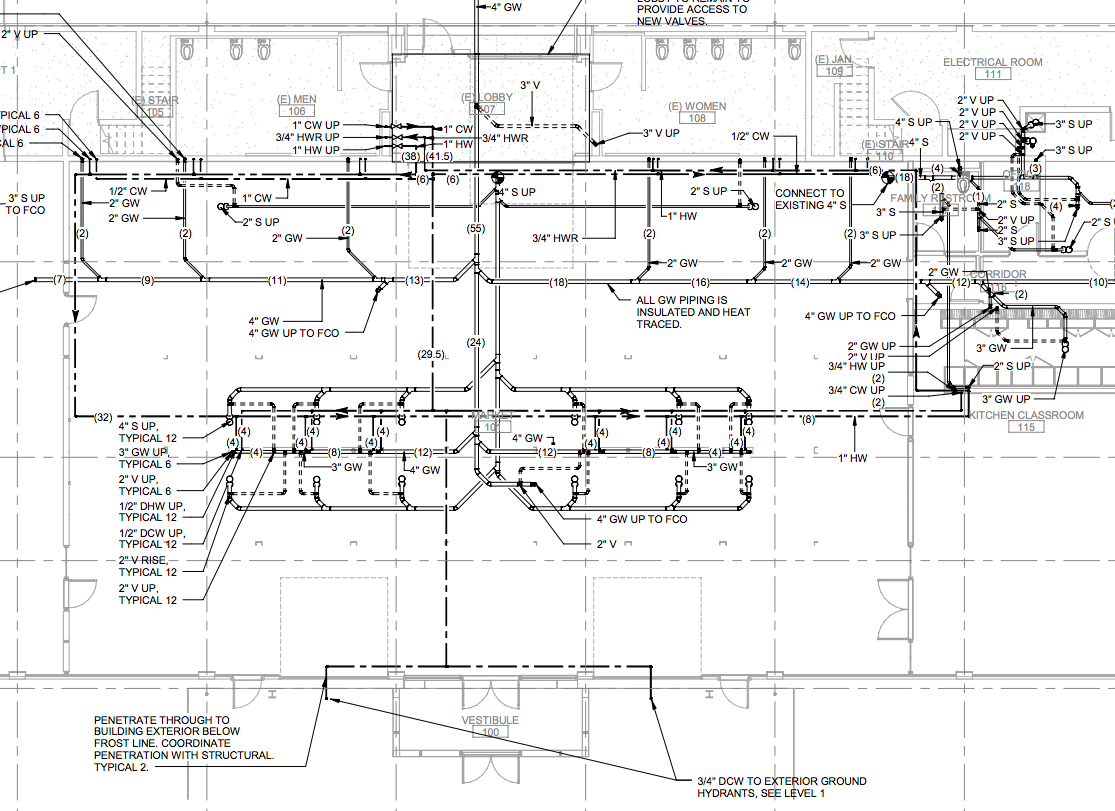
After I retired from Council, the plan went through complete upheaval with little public process. Instead of the selected bidder paying for the all the upgrades, Renton taxpayers will now pay $10 million for a total remodel of the Pavilion building, plus another 2.8 million for the adjacent Piazza Park, for $12.8 million total. The taxpayer-funded Pavilion remodel includes many features which would be considered tenant improvements: customized heating and ventilating equipment; new floors; interior dividing walls; an entry vestibule; full plumbing and electrical rough-ins for two main anchor tenants and 2-4 minor anchor tenants; plumbing and electrical systems for six permanent kiosks; enhanced area and decorative strip lighting at kiosks and entry points; and other decorative features throughout.
Even more impactful, by running utilities into the kiosks, the kiosks are no longer portable. The ability to host large events, which was a condition of the original RFP, has been eliminated.
The new tenant will also be renting the building at a fraction of market rate, starting with free for the first six months, then $4,909 per month for the next two years, then stepping up over four years to the far-below-market rent of $15.00 per square foot; after that it’s expected to stay well below market (as low as half the rent of similar sized buildings) with 3% annual increases. The tenant terms are so generous and the deal so different from the RFP, I strongly recommended the City issue a new RFP a year ago.
The plan that wasn’t supposed to cost the city anything in December 2021 has changed dramatically. But instead of explaining why these changes to the plan were made, the City has been communicating to the press and on social media that this new plan is the same plan that we agreed to before I retired. It obviously is not that same plan, as the charts below show and as I’ve covered in even more detail here.
Why does the City continue to insist that this is the same plan that Council agreed to in 2021? Are City leaders unable to justify their changes to the plan? Did they run afoul of fair bidding practices? Is there another reason? With no information being made public about this, the rumor mill has been coming up with its own answers.
Renton’s communication team should let the community honestly know when this plan changed and why it changed. Hopefully their reasoning is sound, and the rumors can all be put to bed.
In the approved December 2021 plan, the flexible space could have been easily reconfigured.
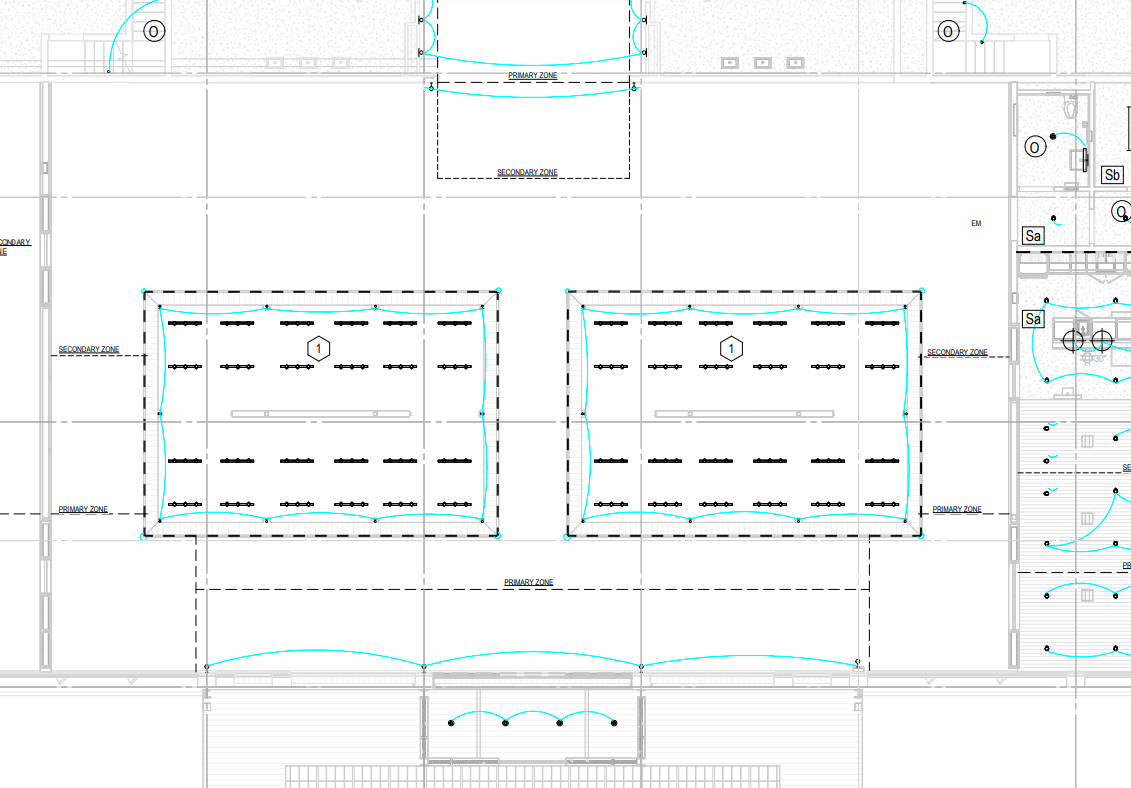
Lighting detail permit drawing for the new Pavilion plan, paid for by taxpayers. The dashed rectangles are lowered ceilings over six permanent market kiosks. The heavy dashed lines are new lines of can lights, accentuating the sales spaces. The blue lines are string lights to further decorate the selling areas and highlight the doorways. They’ll be pretty, but these would normally be considered tenant improvements, not a taxpayer responsibility.
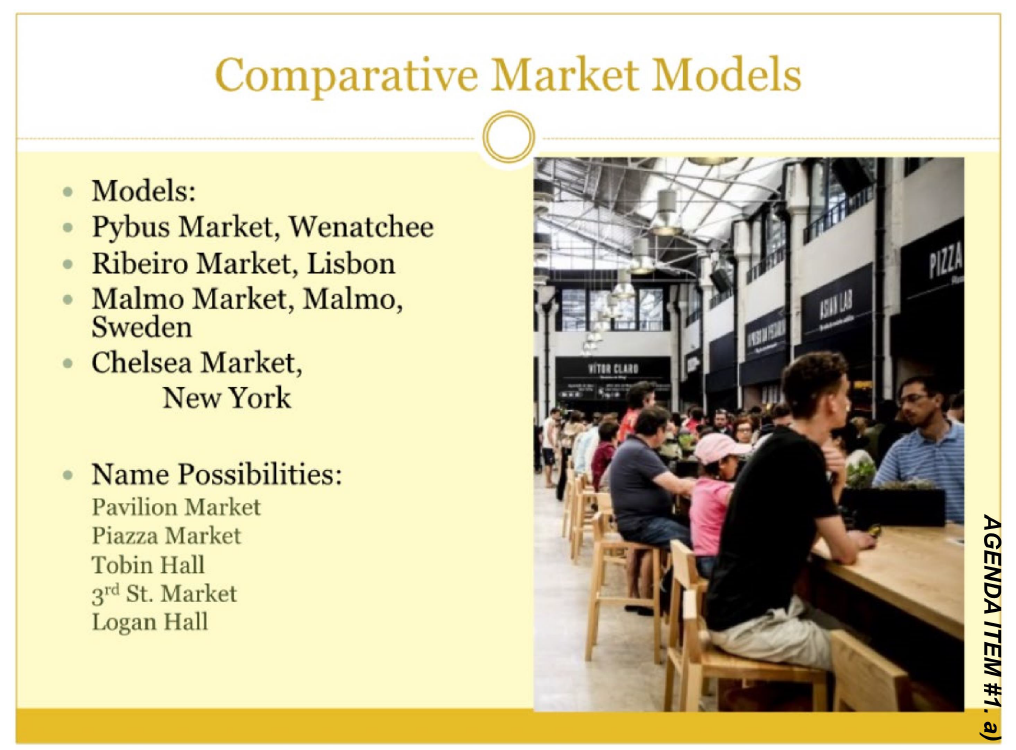
This chart from December 13, 2021 compares the new Pavilion Market plan to four markets that were all created with private dollars (as we agreed to with the Pavilion.) Now Renton is spending $10 million public dollars on the Pavilion– very different than all four of the markets shown.
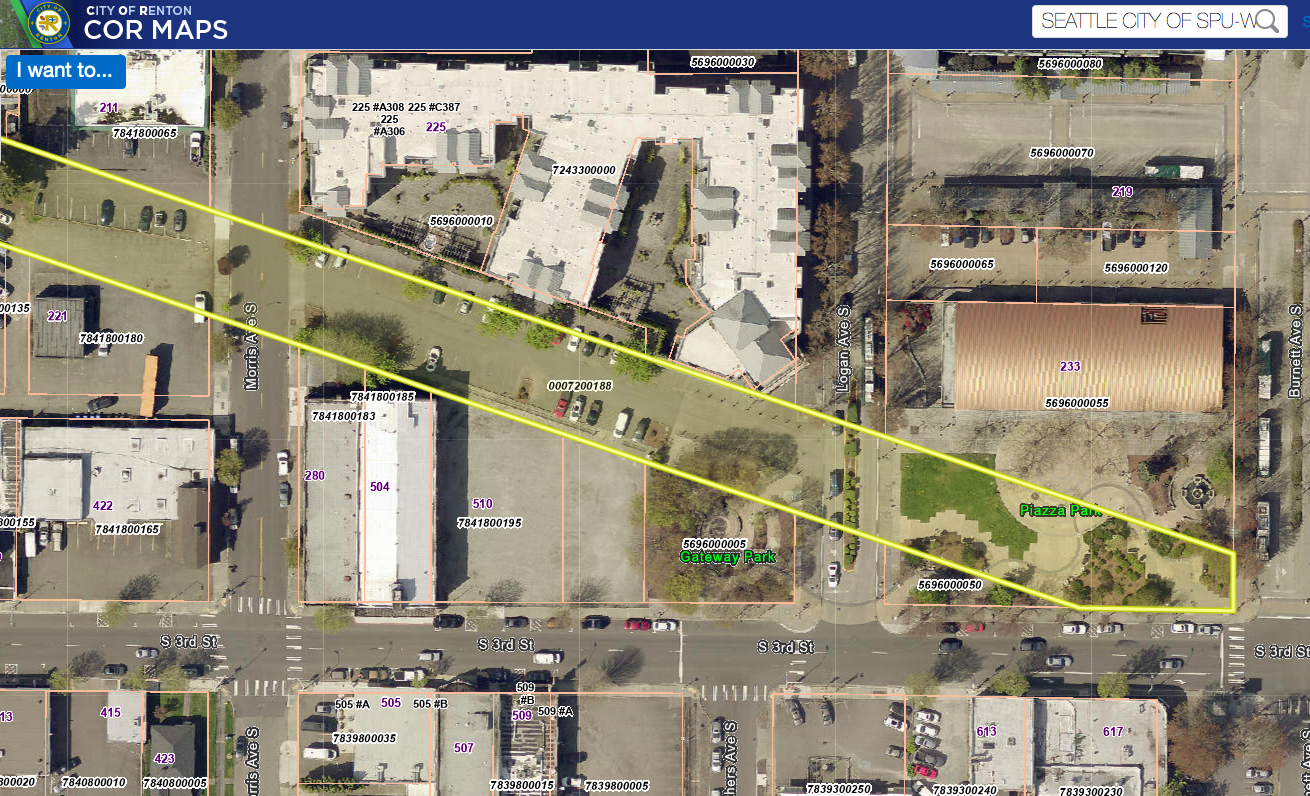
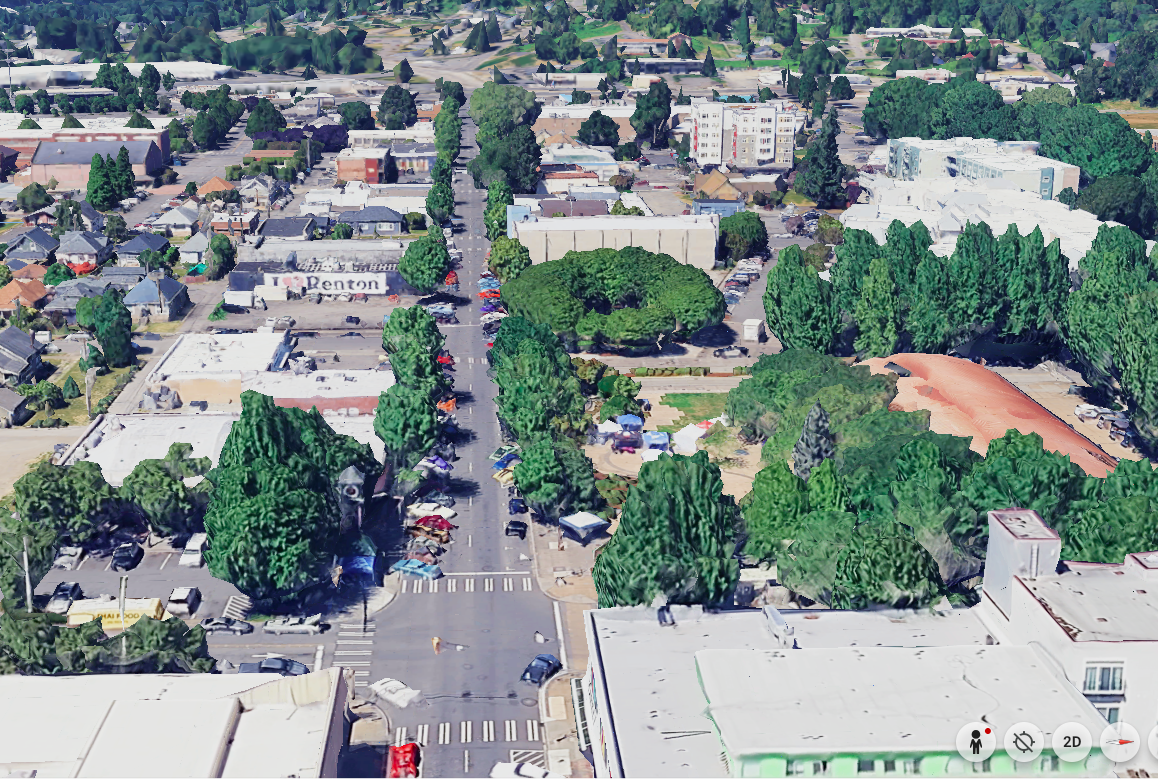
The land shown in yellow is owned by Seattle’s water department. They limit activities on it to protect their 60-inch-diameter Chester Morse reservoir pipeline. The pipeline runs just north of Legacy Square/Gateway Park (left) and beneath the center of the Piazza (lower right).
As crews rush to complete Legacy Square, the Piazza, and the Pavilion, they have to be extremely careful digging in the ground or driving trucks on the site. Seattle’s most important water pipeline system runs straight through the construction site, just a four feet under the surface. Any errant equipment operator who strikes this pipeline could cause a break that could dump 100,000 gallons per minute into downtown Renton, and deprive Seattle of 70% of its water. It’s actually a pair of pipes through the Piazza, one is 52 inches in diameter and one is 66 inches. The 66 inch pipeline is seventeen times bigger in cross-section than the 16 inch pipe that flooded Houser Way and Renton’s 200 Mill Avenue (former City Hall) building last week.
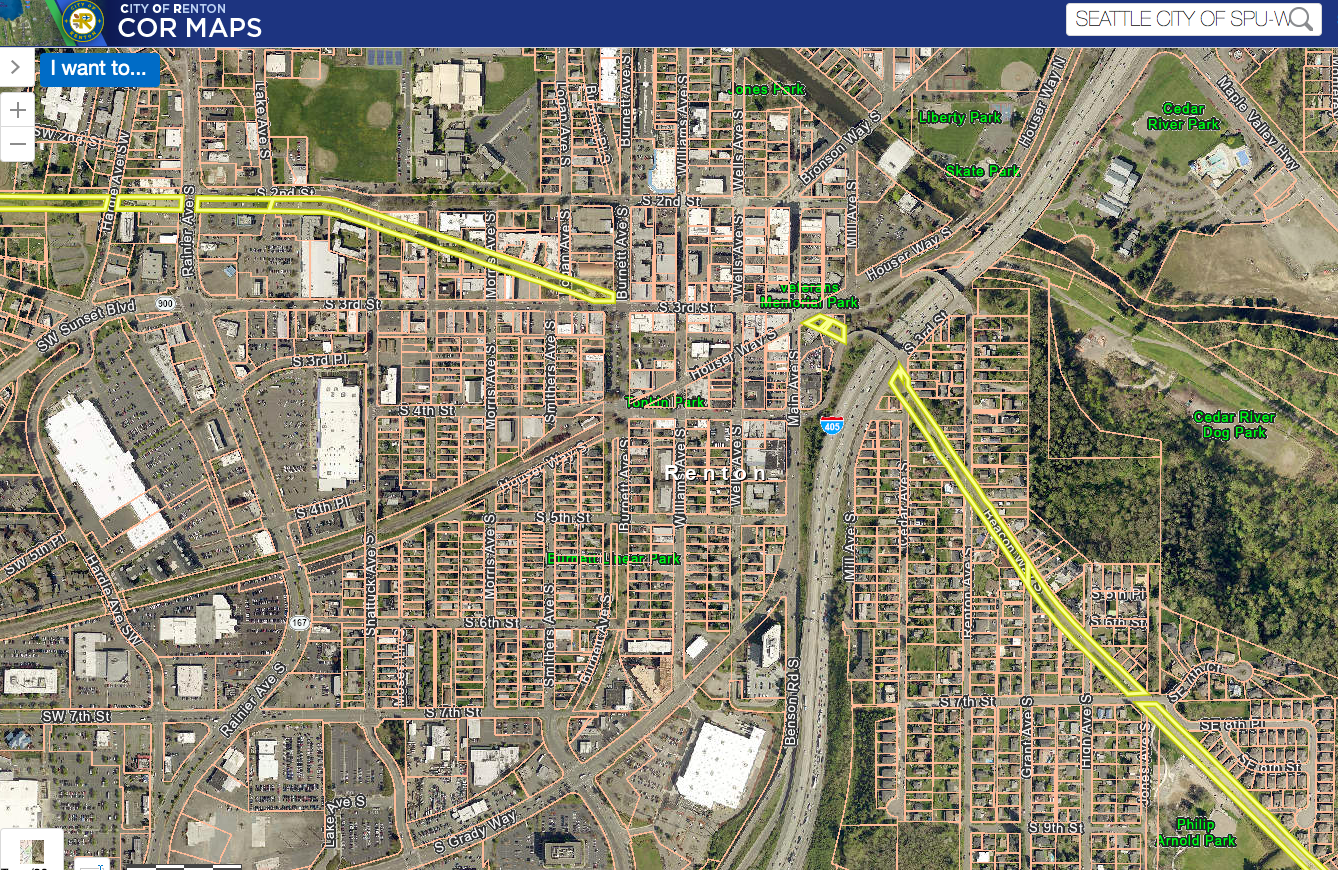
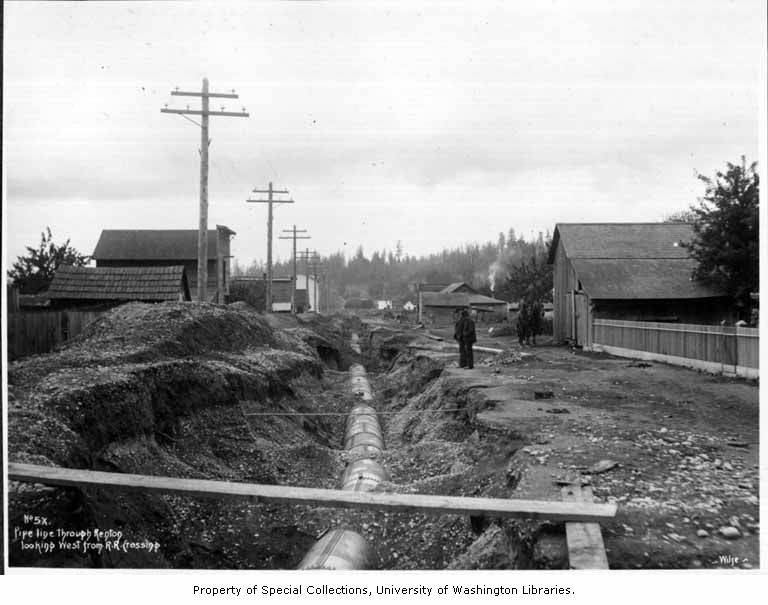
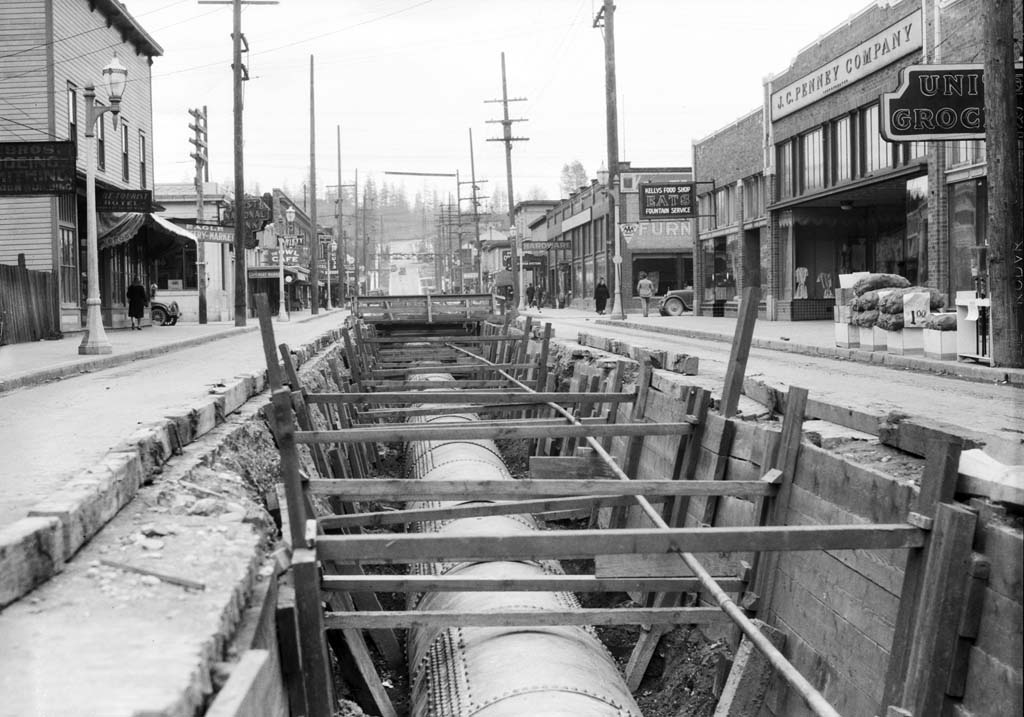
Here is a wider view of Seattle’s property ownership in Renton, to protect their pipelineHre is a 1931 photo of the pipeline in Renton, looking west. Notice it is not very deep.The pipeline in Renton on South Third Street, looking east. (1931 photo from University of WA)
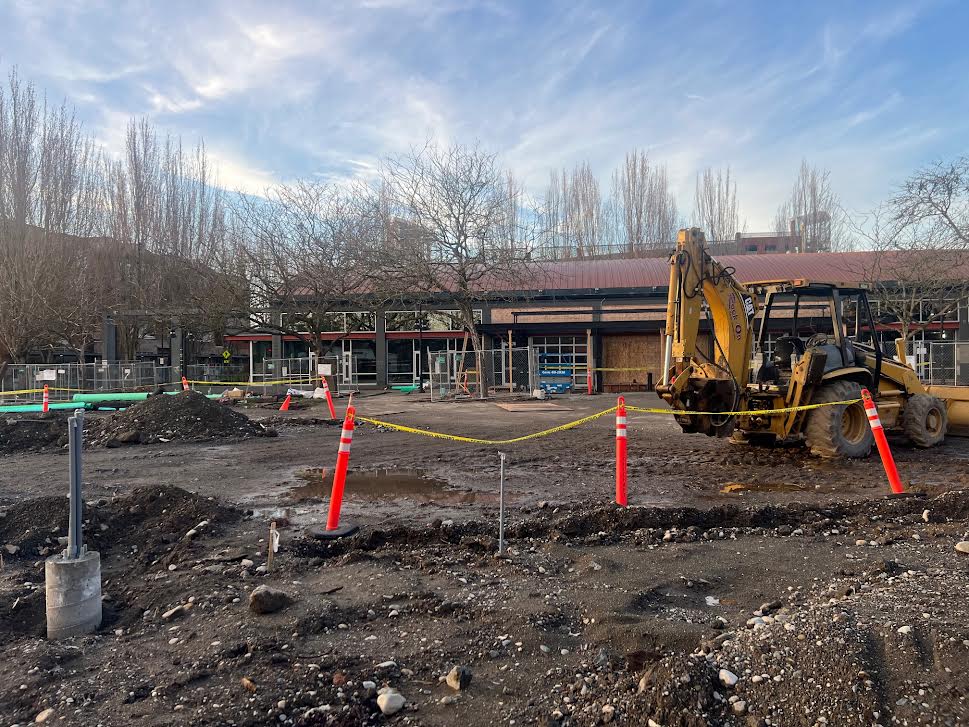
As the pipeline carries water across Renton towards Seattle, it runs along South 3rd Street until it gets to the Piazza Park. At that point it slightly turns and runs under the Piazza and just north of Gateway Park (future Legacy Square). The pipeline property is used for parking and landscaping in Renton, with no trees planted on top of it. Renton held extensive negotiations with Seattle before building the Piazza in 2000.This large excavator working on the Piazza is sitting directly on top of Seattle’s water line. If the operator errantly dug more than a couple feet into the ground, and broke the 60 inch diameter pipe, all of downtown could quickly flood. A break could dump 100,000 gallons per minute.
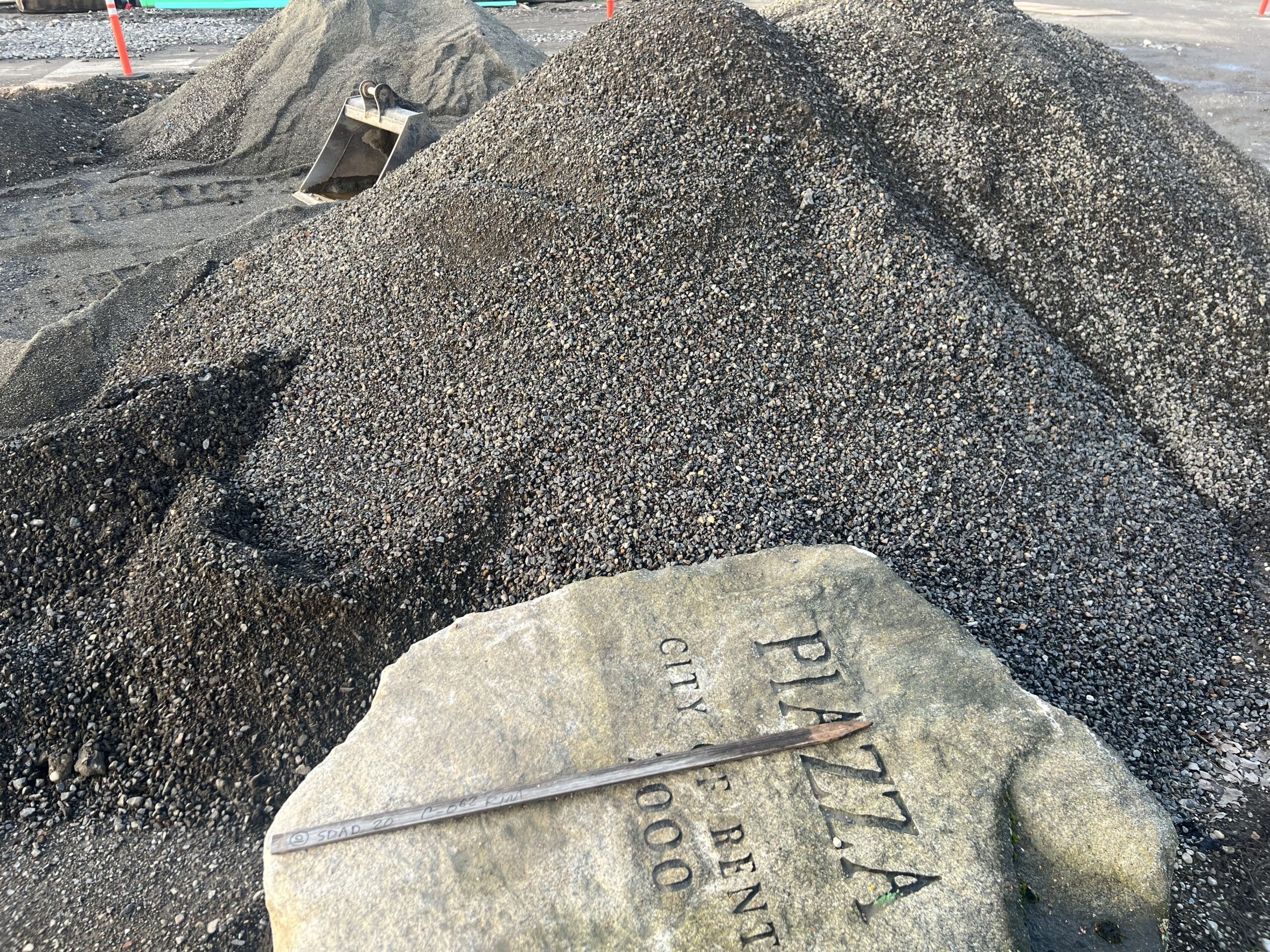
The $12.8 million pavilion/piazza makeover looks way behind schedule, with just nine weeks to go before the world shows up. (Piazza photo taken two days ago)
Now, with just barely two months to go (just 47 workdays), the Piazza construction timeline has gone from looking challenging to looking worrisome and mismanaged.
In addition to paying contractors $12.8 million to tear out and rebuild the Piazza and Pavillion, Renton has committed to pay a consultant up to $600,000 to “activate” the Piazza and Legacy Square this summer. Formal activities are scheduled to return to the Piazza by the June 2nd Farmers Market.
Ideally the consultants would use the next two months to install decorations, verify that the flower beds are tidy, walk-through the space with performers and vendors, and perform system sound and lighting checks. Instead, the consultants will be watching anxiously from behind a chain link fence as frantic construction crews work overtime to bury drainage and irrigation pipes, pour and finish concrete, affix plumbing fixtures, install wiring and electrical fixtures, plant trees, roll out sod, and establish flowers and shrubs… all within a nine-week window.
Even if all this work miraculously gets completed by June 2nd, it will have been a self-inflicted emergency that cost the city far more than it should have. There is little hope that this project will get completed with high quality and minimal overtime in less than nine weeks. An old project management axiom says you get to pick two: good, fast, or cheap. When you need it fast, you must sacrifice either quality or cost-efficiency.
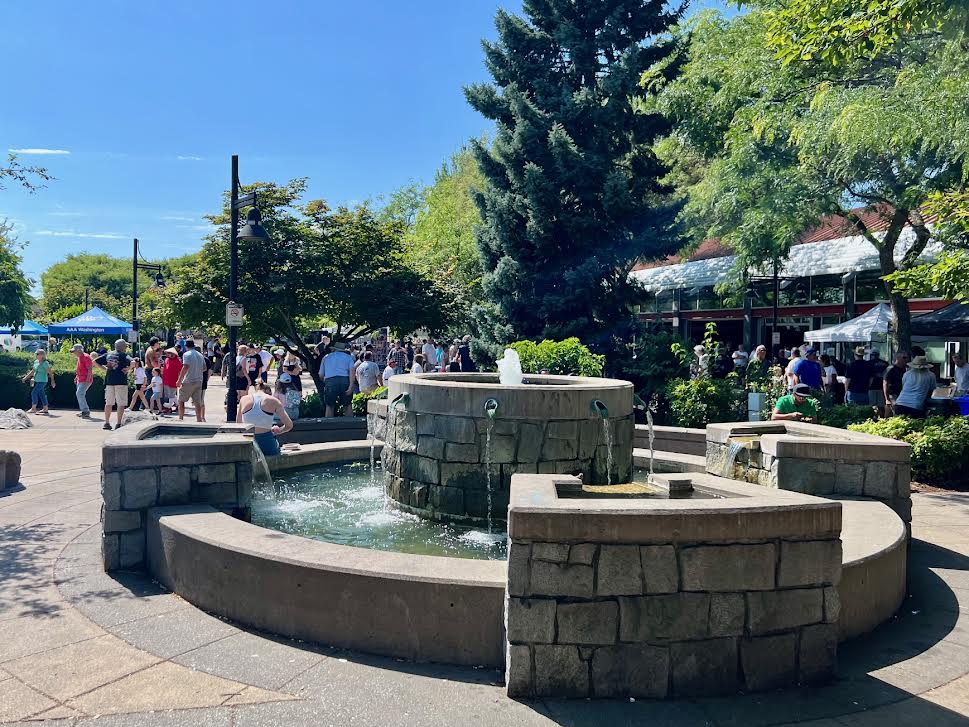
If the lovely and well-established Piazza had never been torn out, we would already be holding spring events in this park, creating momentum and energy for this summer. The Park was “World-Cup-ready” in 2023, as shown in the photos below. But Renton’s leaders had the Piazza demolished last summer. We’re now approaching our biggest summer ever for the Piazza, and it’s a muddy construction site. Even in the best case the Piazza will have unestablished plantings and the concrete will probably not be fully-cured by the deadline (it typically takes 28 days to reach full strength). And as I’ve covered in previous blog entries, the Piazza will have lost its water features and the majority of its tree canopy just in time for summer World Cup crowds to arrive.
One of two Piazza water features in 2023 (now destroyed)Piazza greenery during the Farmers Market in 2023Ten months ago the Piazza looked like this, unmaintained and closed to the 2025 Farmers Market. Late that summer all the pavement, lawns, water features, and most of the trees and plants were removed.
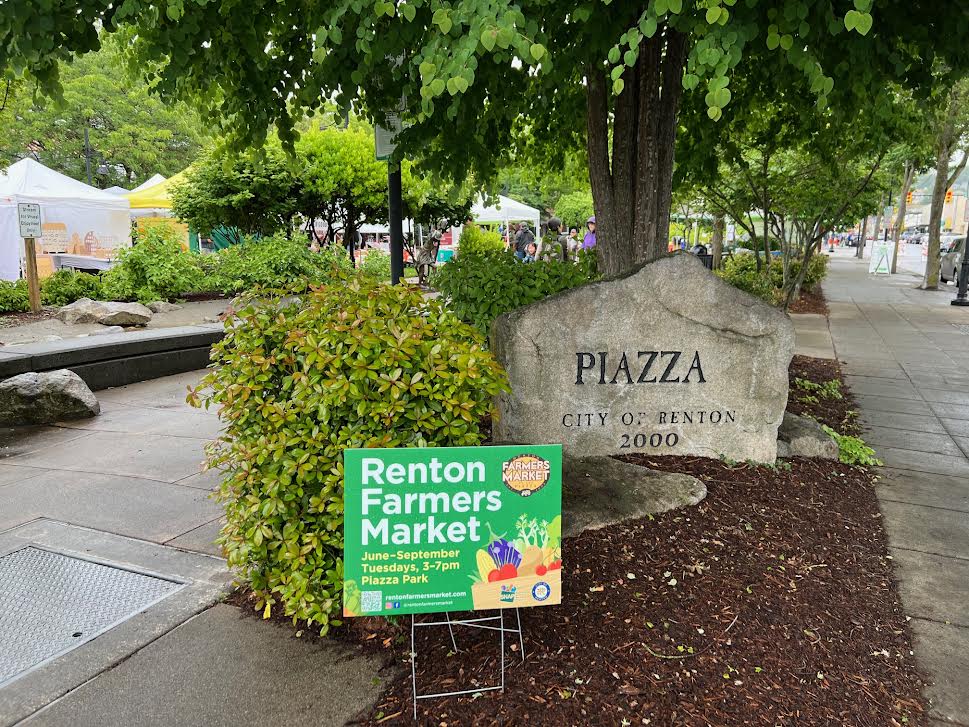
Renton Farmers Market website tells residents to “meet me at the market” on June 2, 2026, and includes a photo of the original Piazza. Renton will be celebrating the Market’s 25th season.As seen today, there is so much work to do before June 2nd
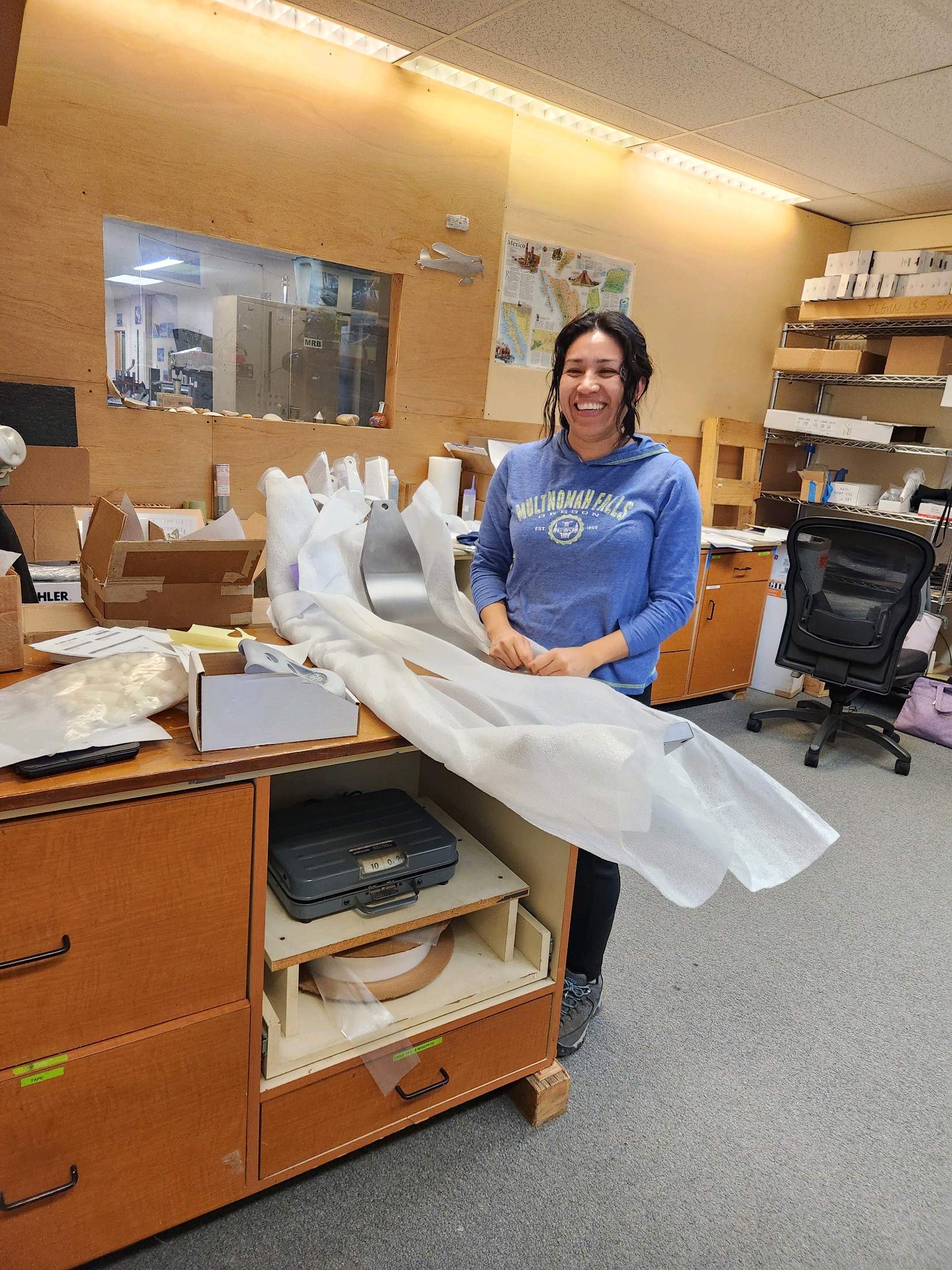
In this 2024 photo, Sofia Farret prepares high-tech Renton-made titanium landing gear for shipment, at ” the Landing Gear Works” at Renton airport. This facility is now abandoned.
The Renton City Council should thoroughly review how Renton manages our city facilities to return the best value to our residents and businesses. Lately, it feels like our city facilities are being treated as if they are disposable. With replacement buildings now costing in the tens of millions of dollars, our city facilities should be utilized to their fullest and managed with respect.
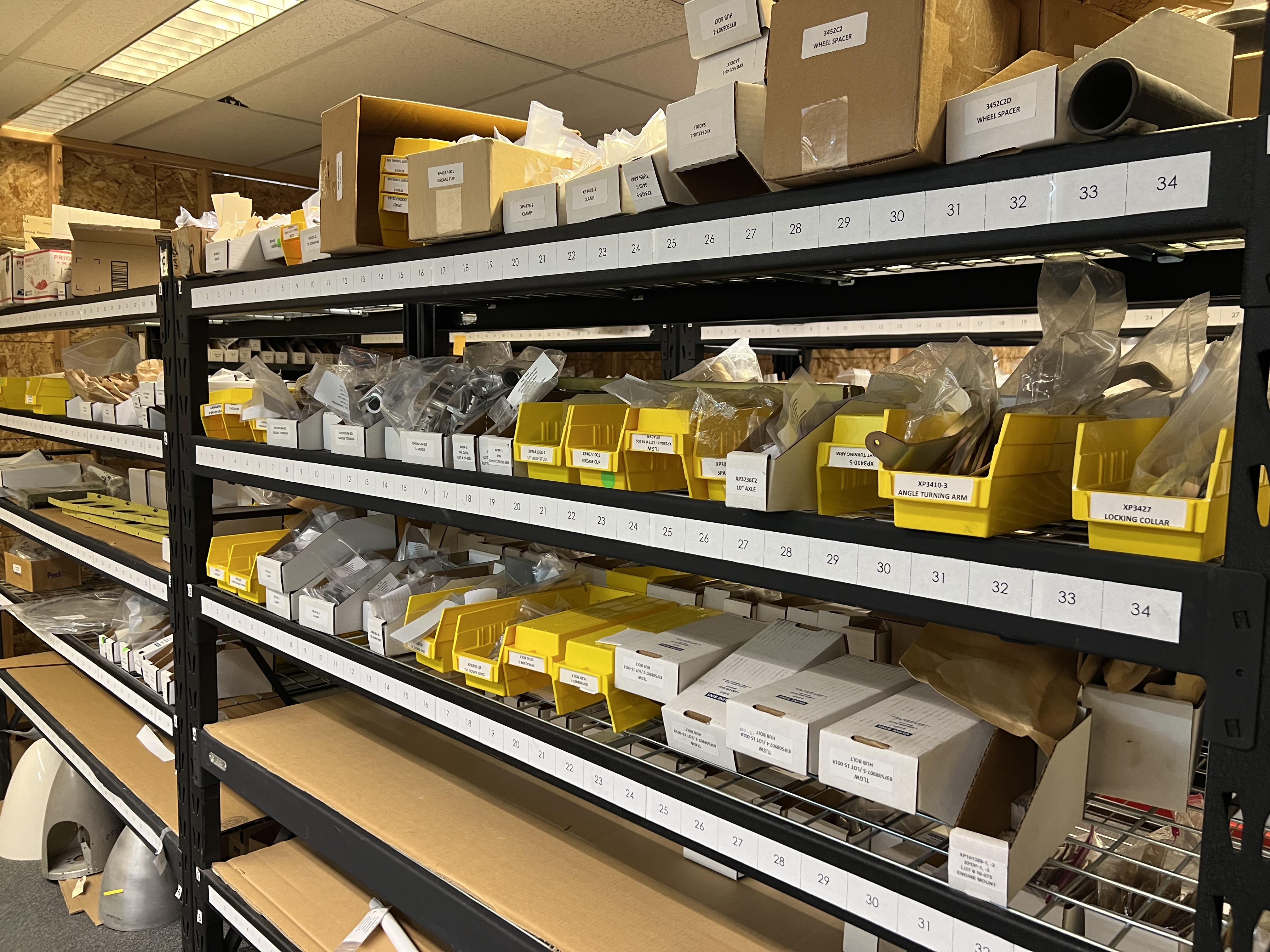
It’s been two years since the City of Renton evicted the popular “Landing Gear Works” from their leased manufacturing building and hangar at Renton Airport. The decades-old landing gear manufacturing company specializes in small-airplane components, and their operation provided desirable economic diversity to our airport. The eviction eliminated dozens of living wage jobs, sacrificed city B&O and sales tax revenue on a multi-million dollar business, and left aircraft owners queuing for support for their aircraft products while the Landing Gear Works hurriedly relocated their operations to other cities.
Two years after this eviction began, nothing has been done with the city’s now-empty buildings.
The eviction process began when a roof replacement was needed on the manufacturing building that was partially leased by the Landing Gear Works. The City (which owned the building) would neither pay for the repair themselves nor grant the tenant reasonable lease terms to accomplish the repair. The dispute became exacerbated when the city realized they had made a multi-month billing error, and then demanded tens of thousands of dollars in surprise back-rent from the Landing Gear Works at the same time as they were refusing to address the roof.
While a negotiated settlement could have quickly resolved these issues, the Renton City Council (which has responsibility and authority for leases) never publicly discussed a possible resolution, either among themselves or with the tenants. The Council remained silent during a series of Council meetings as the tenants made repeated heartfelt pleas for a negotiated settlement.
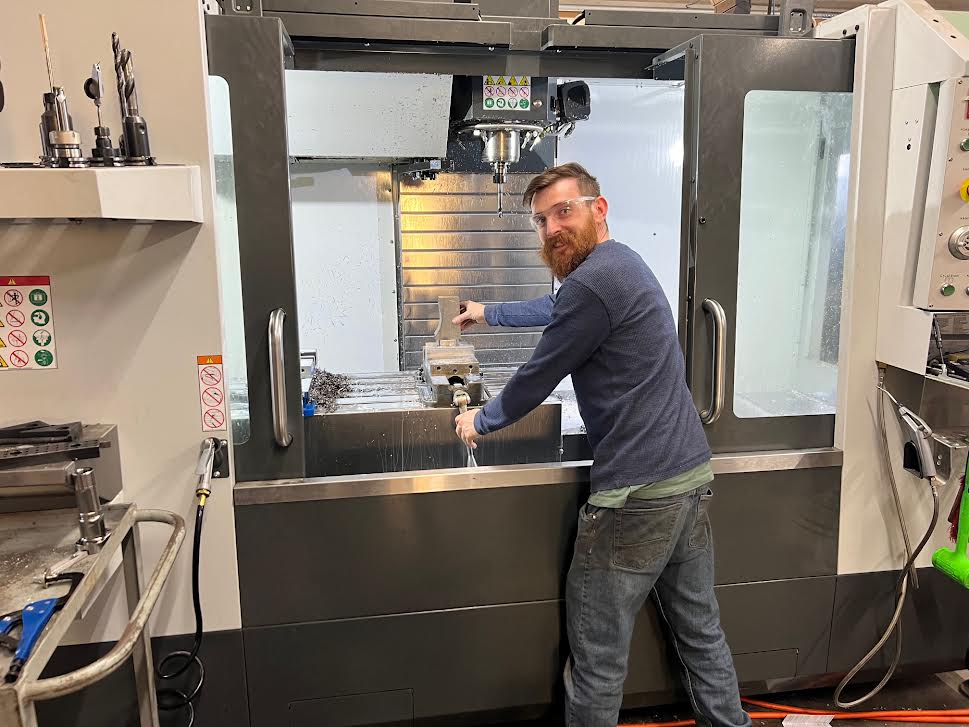
Derek Anderson, a third-generation Renton business owner and machinist is preparing parts for milling at the Landing Gear Works at Renton Airport in 2024. This building is now vacant.
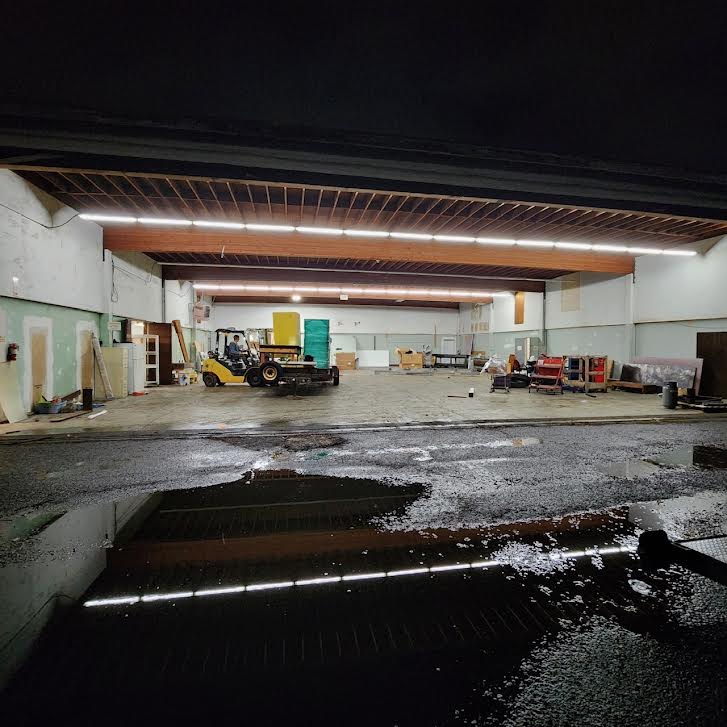
When it ultimately became apparent that the Council would not intervene, the airport manager pressed the tenants to work around-the-clock to meet a strict move-out deadline; the tenants used floodlights and worked into the nights, to clear the buildings– as if it was one of the City’s biggest emergencies.
But following the midnight move out, the city has let the buildings sit vacant and abandoned in the year-and-a-half since. The message apparently was “Hurry up and get out, so that we can leave TWO MORE City of Renton buildings vacant.”
The Landing Gear Works worked night and day in November 2024 to vacate this large hanger and a manufacturing building under intense pressure from Renton. After their forced move out, the buildings have sat vacant and neglected for the past year and a half.
While a new roof might have cost six months of lease revenues, it would have kept years of lease payments and taxes flowing into the city and preserved an important Renton business.
Eventually the manufacturing building (and maybe the hangar) will be demolished and replaced, but there is still a long process to do so, and it could have hosted a viable, revenue/tax-generating business in the years leading up to its replacement. We certainly don’t want private property owners leaving abandoned buildings all over our city, and there is absolutely no reason the City should be modeling this bad behavior.
The Landing Gear Works buildings have joined a long list of city buildings that have been temporarily vacated or completely abandoned by Renton in recent years, including:
The Former Chamber of Commerce Building (left vacant, now demolished)
The Renton Historical Museum (Historical Society kicked out, now sitting empty with unclear future)
Rainier Flight Services flight school building at Renton airport (school kicked out, building sitting empty)
The Pavilion Event Center (empty for over a year, now getting a taxpayer-funded $10 million conversion into a privately-managed market)
Carco Theater (flooded by Cedar River in December, activities cancelled as flood-damage is remediated)
200 Mill Avenue- former City Hall (recently flooded by broken 16-inch water main, repair costs and future currently unknown)
The Landing Gear Works hangar and nearby manufacturing building (thriving business kicked out, now left vacant)
This protracted, wasteful vacancy of the Landing Gear Works buildings was 100 percent predictable. In a blog post two years ago I identified many errors in the Mayor’s official statement regarding Renton’s airport management at that time. Many topics were errantly discussed in that memo, leaving me seriously concerned about Renton’s airport leadership. For example, the Mayor asserted that business jet operations would cease each day when the tower closed, and I corrected that (per FAA policy) jet operations would continue 24 hours per day which they have. The Mayor’s equally erroneous comments concerning the Landing Gear Works in that memo are shown in italics below, with my corrections underlined and linked to source data. (This exchange is excerpted from the April 2024 blog post):
5. Is there a business leaving the Renton Municipal Airport?
(Reminder: The full Mayor’s statement and my responses can be found here.)
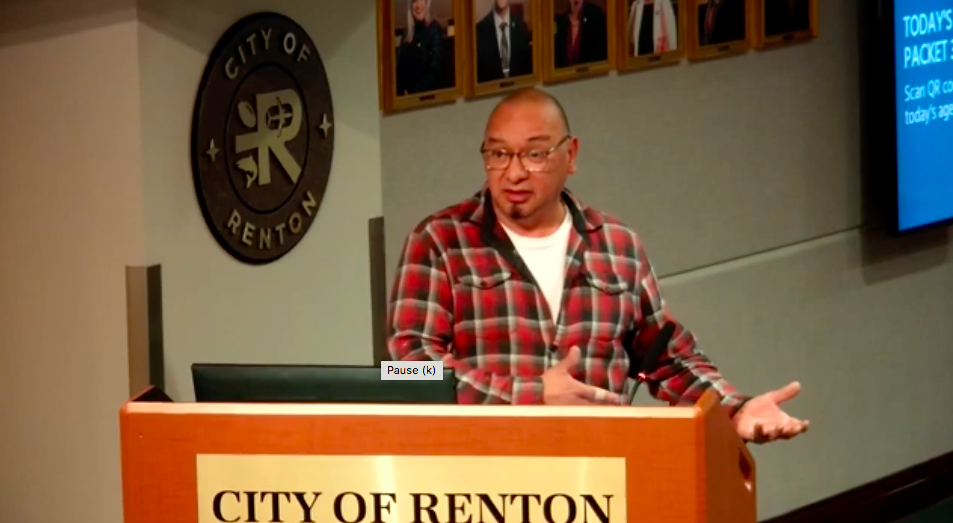
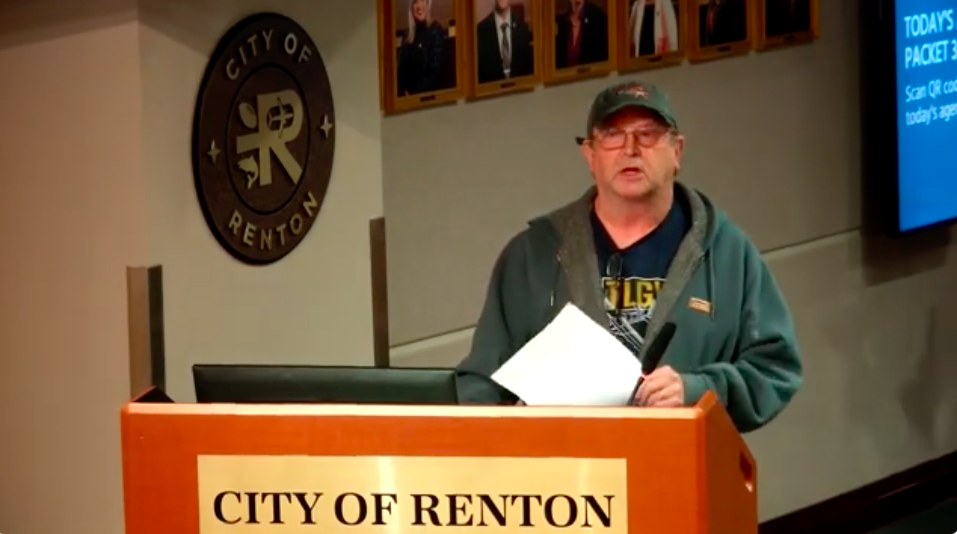
Employees of the Landing Gear Works made numerous requests to City Council to help them reach agreement on their lease
FAA-approved spare parts for aircraft landing gear, many of them fabricated in Renton, were stocked, sold and delivered from this facility in Renton. Renton collected associated B&O and sales taxes. This spares business has been moved, and the facility is now abandoned and empty.
Shiney titanium Renton-made landing gear adorn this Cessna 180. The city-owned historic building in the background needed new roofing, and the city was unwilling to discuss a plan to replace it. The building now sits empty.
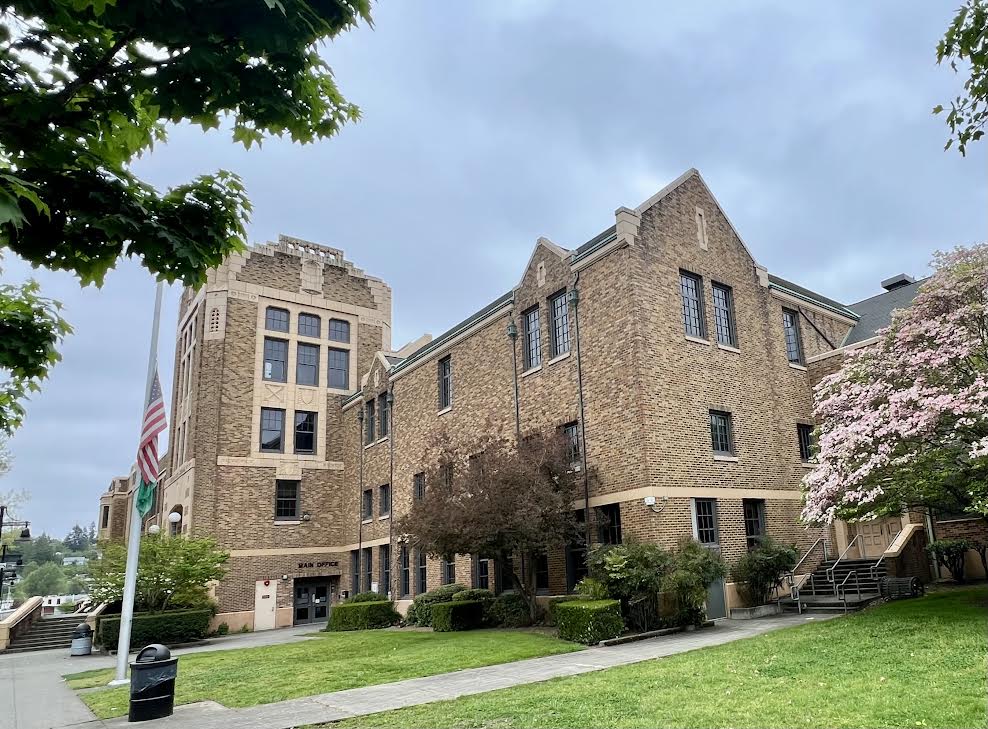
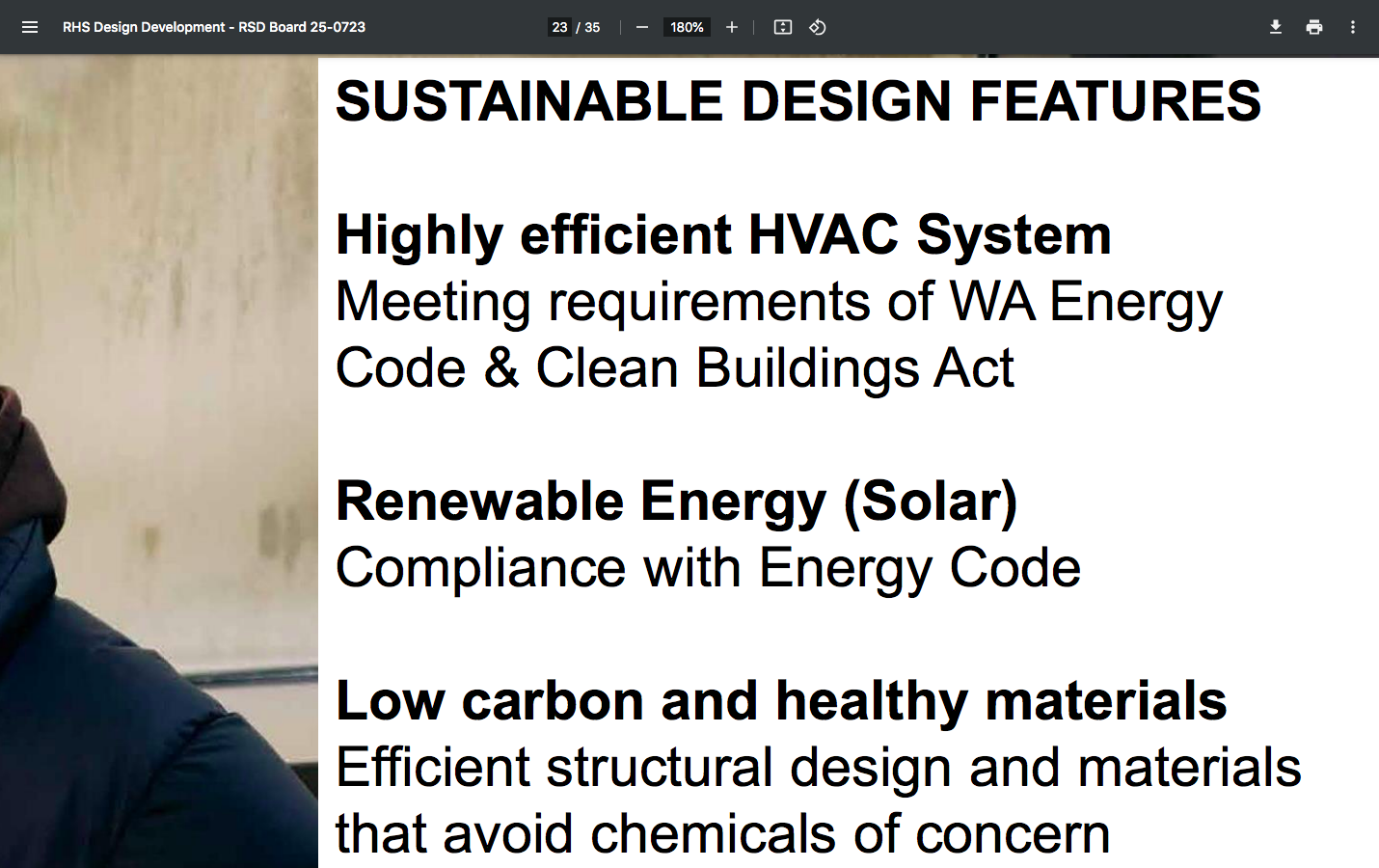
When Renton High School is torn down and replaced in the next four years, it won’t be a win for the environment. Yes, its replacement will have a “highly-efficient HVAC ” system and meet the “requirements of Washington Energy Code and Clean Building Act.” But constructing an all-new school instead of updating/expanding the existing one has a nearly insurmountable environmental cost. Millions of pounds of materials will be crushed and trucked to landfills, while millions of pounds of new materials will need to be mined, manufactured, and transported to replace them. It may take 80 years before an improved HVAC system overcomes this environmental impact, if it ever does.
In 2007 Carl Elefante, former president of the American Institute of Architects, summarized the new-vs-remodel dilema by pointing out that “the greenest building is the one that is already built.”
This link includes an excellent interview with Mr. Elefante, where he elaborates on this point. The argument that we should preserve buildings when possible extends far beyond Renton High School. We should be practicing it everywhere.
The Renton High replacement also involves tearing down 40 homes and businesses, which along with causing misery through unwanted takings and displacements, will also have to be replaced. And the new high school project will cut down hundreds of trees, more than the Renton code would typically allow for a site of this size. No amount of insulation in the new school will overcome the environmental cost of these impacts.
Our Renton students deserve the very best high schools we can give them, but no one should be arguing that this particular plan for Renton High was the most environmentally friendly one.
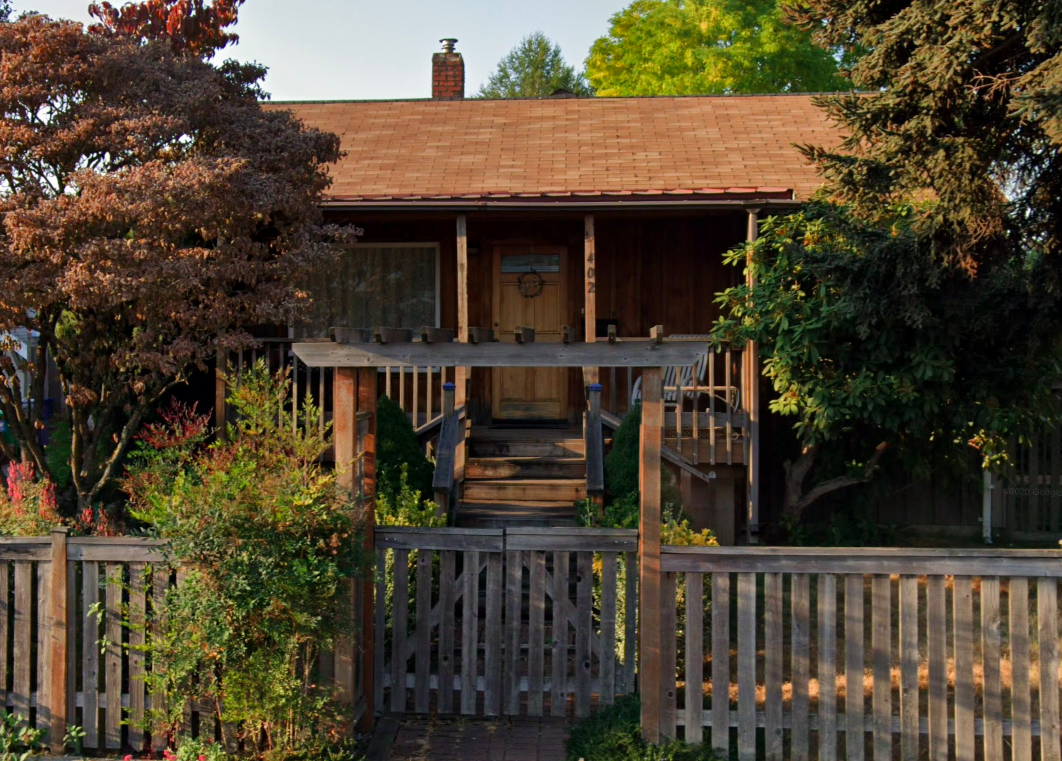
One of 32 houses being torn down for the new school. There are also eight businesses being bulldozed.Some of the trees being removed for the new baseball fields at the schoolThis page from the “New Renton High” presentation on the School District’s website implies that the new high school will be a win for the environment. (It won’t be)
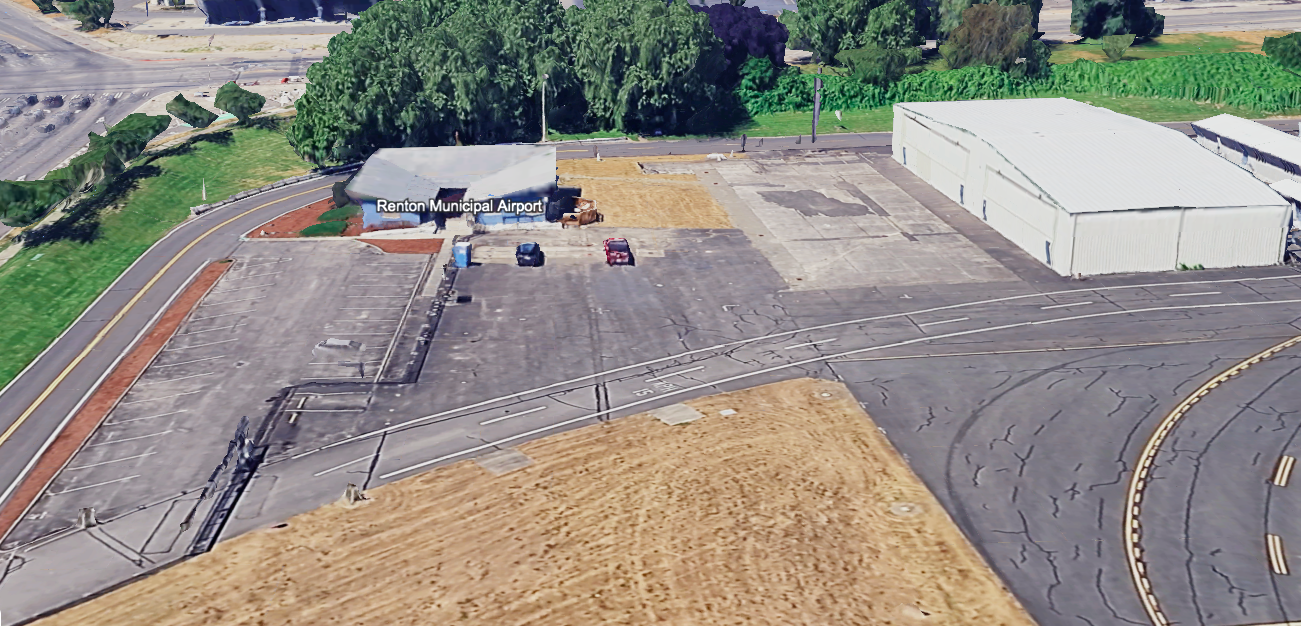
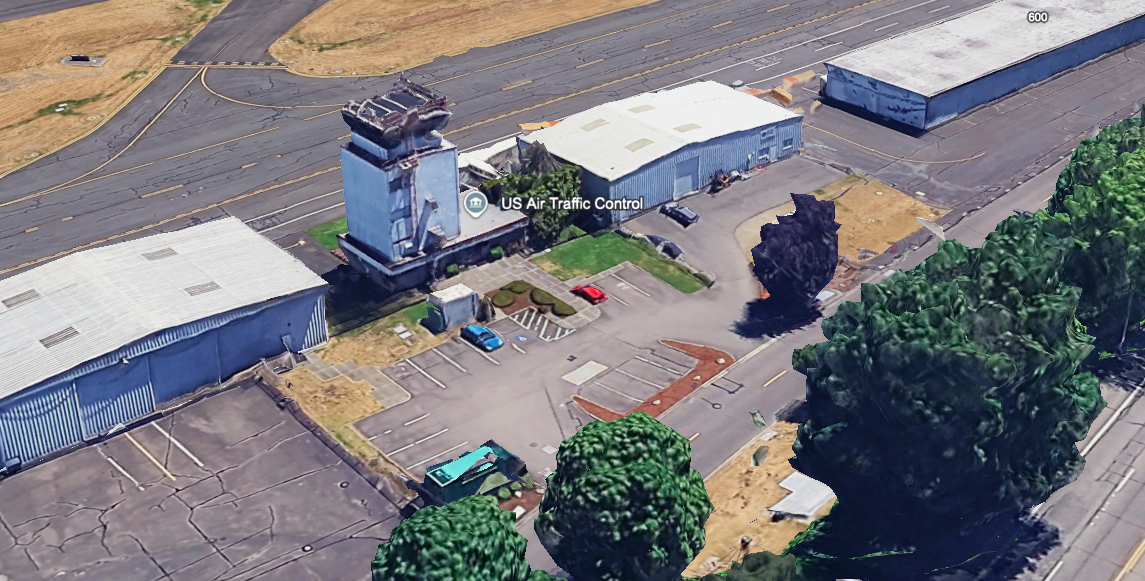
The City of Renton has recently done a million-dollar interior remodel of the small blue building at the southwest corner of the airport, to serve as an airport management office.The airport management office had previously been located in the one-story building at the bottom of the control tower
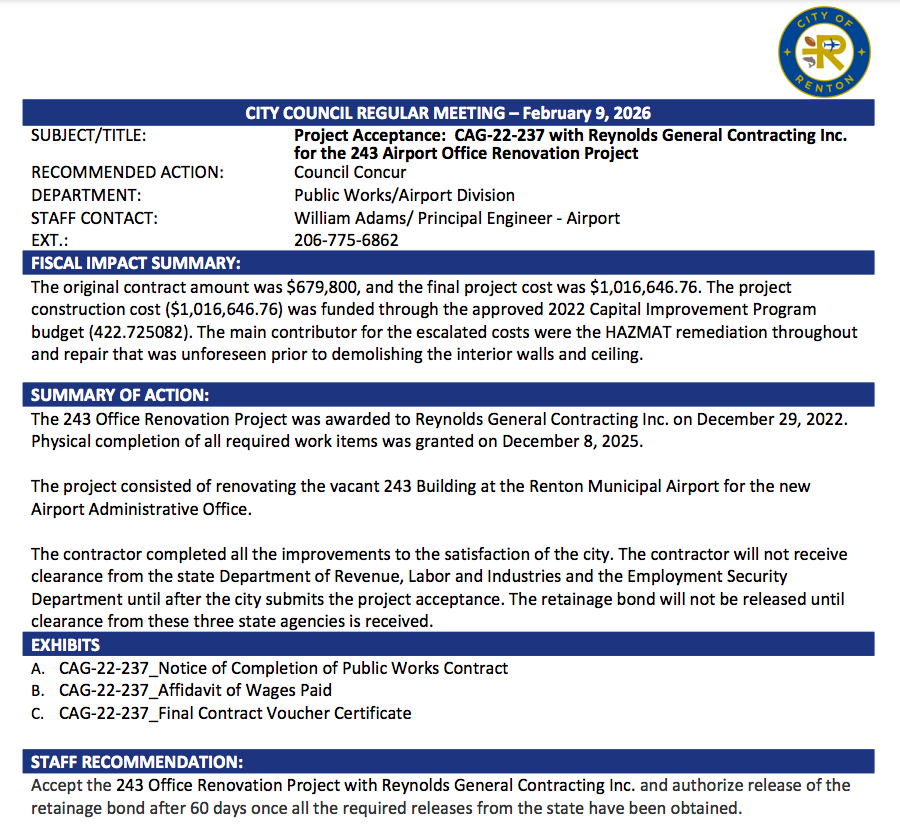
Author’s note: I’ve recently written two blog entries recommending that the City of Renton investigate the way it bids and manages Public Works contracts due to recent severe overruns. This is a story about a third public works project that experienced a 50% overrun in the same timeframe (i.e. three over-budget projects all required significant additional funding within a two week period. ) While one overrun might be an unfortunate anomaly, twice indicates a trend, and three times feels like it could be a new normal.
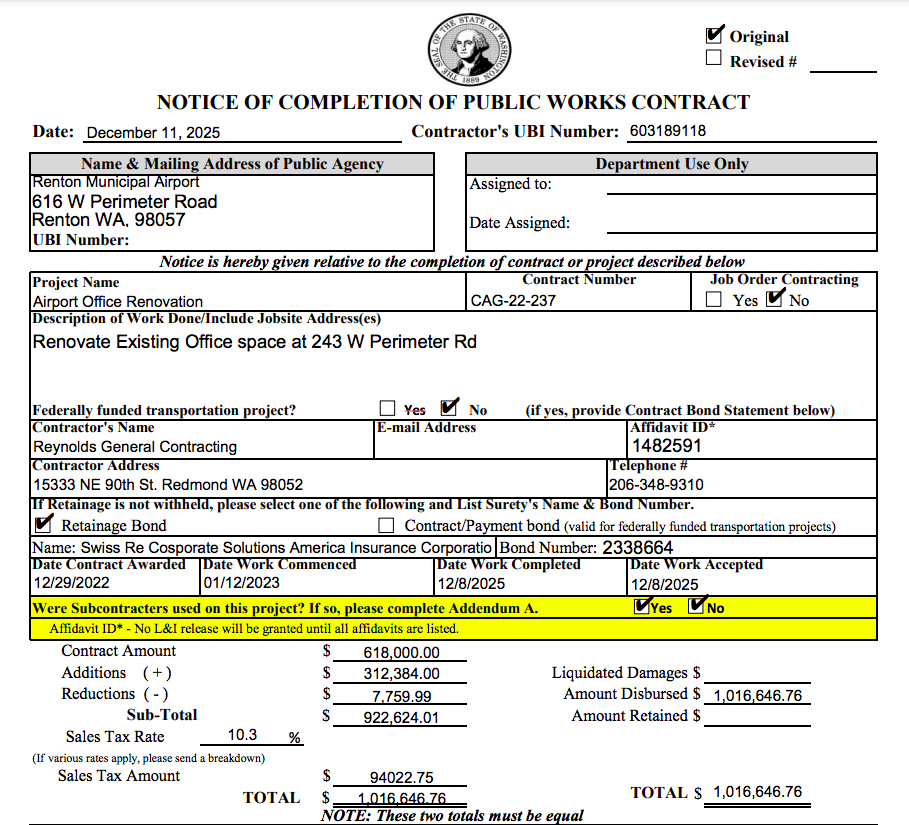
On February 9 the Renton City Council was asked to approve final expenditures for an office remodel project at Renton airport that exceeded the budget by over 50%. The project provided refurbished office space for an increase in the number of staff managing the Renton airport.
According to city documents, “the main contributor for the escalated costs was HAZMAT remediation throughout and repair that was unforeseen prior to demolishing the interior walls and ceiling.”
While safely dealing with hazardous materials like asbestos and lead are important, some of these materials could have been expected in a 1950’s era commercial building. And it seems like some preliminary investigation could have revealed their presence in advance. In future budgeting and bidding processes, it would make sense to explore for these materials and budget in advance for these contingencies.
With regard to the unforeseen repairs, contractors will tell you repairs are inevitable when remodeling an older building. Most Public Works contracts carry a 10% contingency to cover for unexpected repairs or other work, and that is typically sufficient. It’s hard to imagine that reframing or redecking a portion of a small one-story building should exceed the 10% contingency for this project.
The original contract amount was $679,000. The final amount was $1,016,647. This amounts to a 50% overrun.
When overruns climb this high, it can become impossible to determine whether the city truly got the best deal during the bidding process. We’ll never know if the second or third place bidder might have been less expensive overall… there is no way to know.
Overrunning the budget on projects can happen even with solid planning. But it seems like there is room for improvement in estimating Public Works projects, and the City Council should consider an after-action review to find these opportunities.
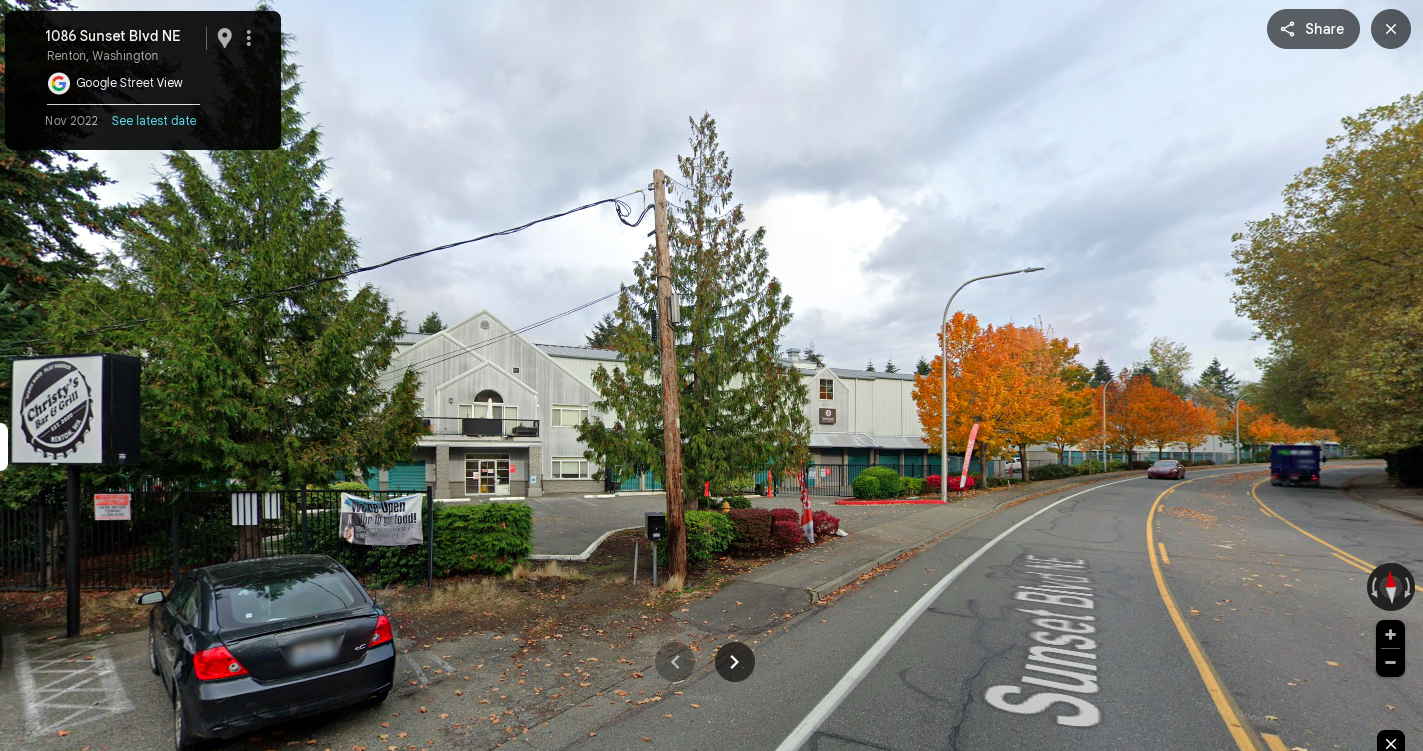
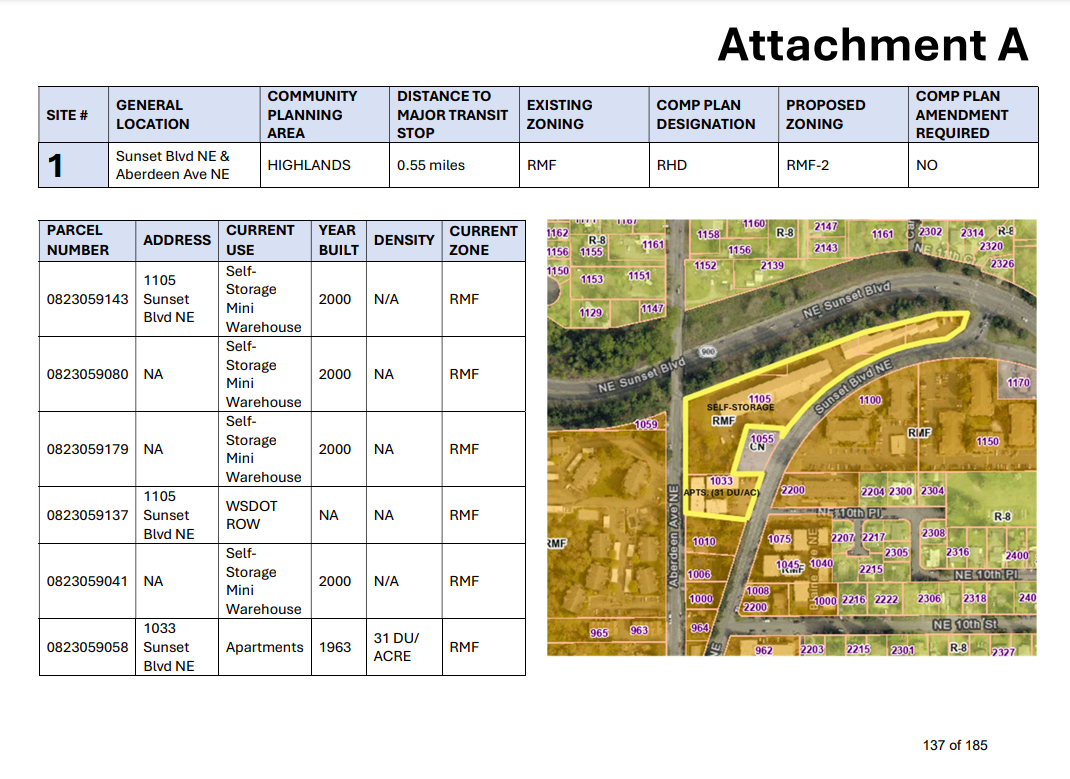
The Self Storage next to Christy’s Bar and Grill on Sunset was rezoned for 40 apartment units per acre as part of Site 1 of the rezone. (Christy’s zoning did not change.)
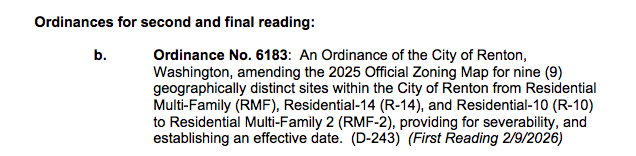
On February 23rd, Renton City Council changed the zoning on nine sites in Renton to 40 units per acre. Most of these sites were previously zoned for 10, 14 or 20 units per acre. Since they are largely already developed, its expected that they will be slow to redevelop.
However residents should be aware that they can now be legally developed at 40 units per acre. And since they are within a mile of a transit stop, the parking requirement may be as little as one car per unit, or even less.
I’ve included the details for Sites 2-9 below the cut, as well as the ordinance that was approved.
See the information for sites 2-9 by clicking below:
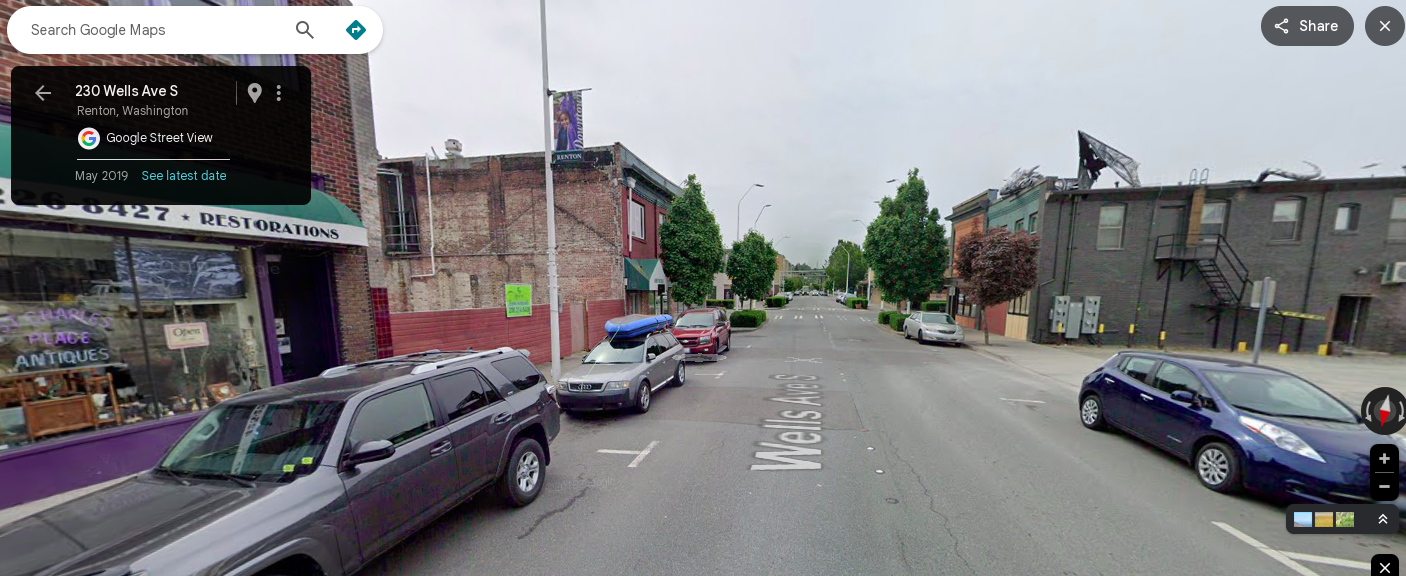
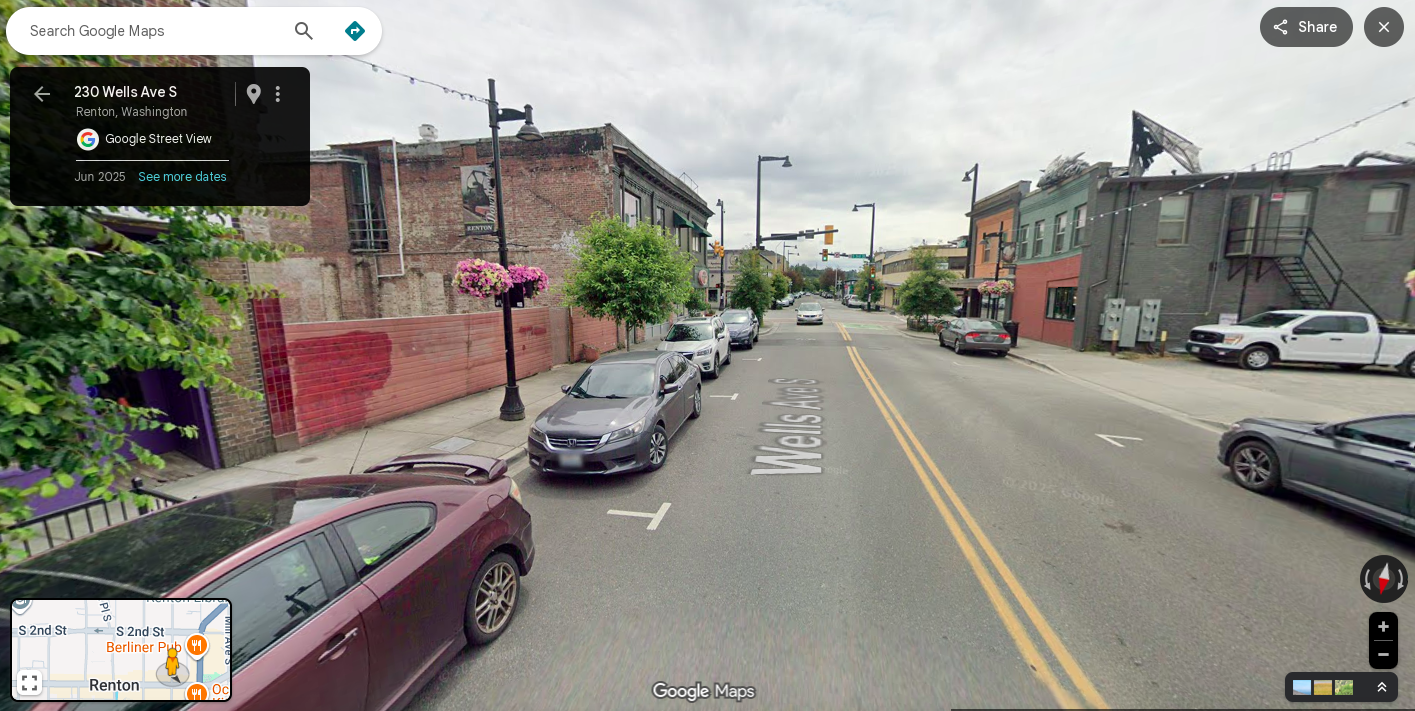
Wells Ave in 2018, with both travel lanes heading northbound (Photo from Google Maps)Wells Ave as it appears in Google Maps today, with two-way traffic
The Williams/Wells two-way street conversion was completed over a three year span from 2019 to 2022. The work included intersection improvements and new utilities and sidewalks on sections of Williams and Wells, as well as sections of South Second and South Third Streets. The project suffered several long delays, primarily from an evolving work statement and pandemic-era material and labor shortages. Our long-time Public Works Director retired in February 2020, and the project leadership went to Martin Pastucha, Renton’s current Public Works Director.
As the project overran the schedule, the costs ballooned. The contractors began submitting dozens of change orders to cover the changing project requirements, and cover their expenses that came from delays they felt were outside their control.
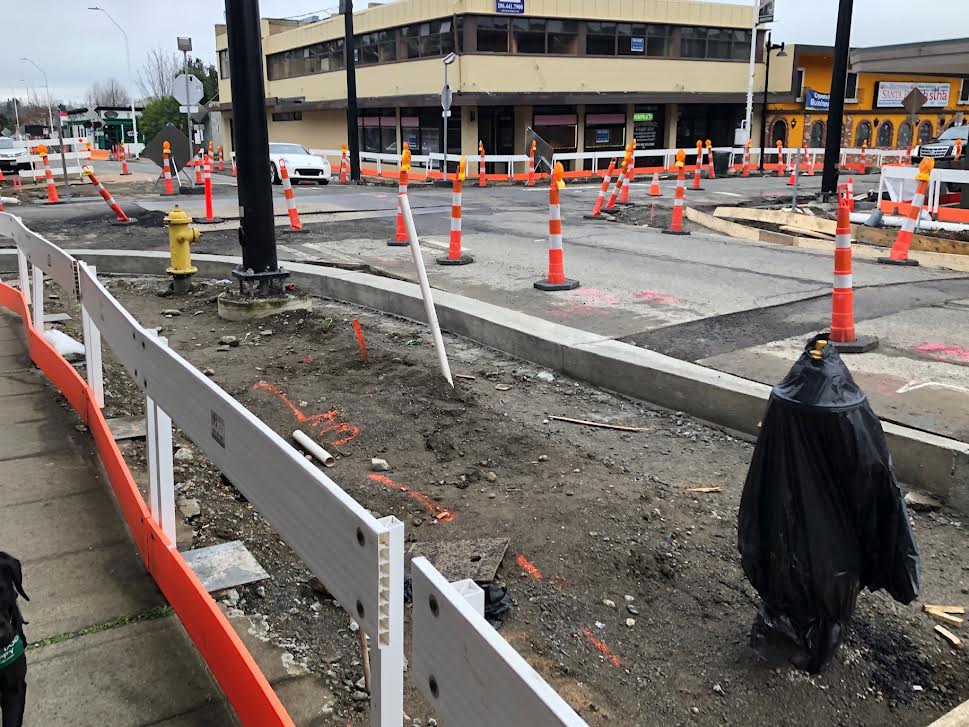
This 2021 photo shows the worksite at the intersection of Wells and South Third Street during the Williams/Wells street conversion. Impacted businesses begged the City to get the project done as quickly as possible. (Personal photo)
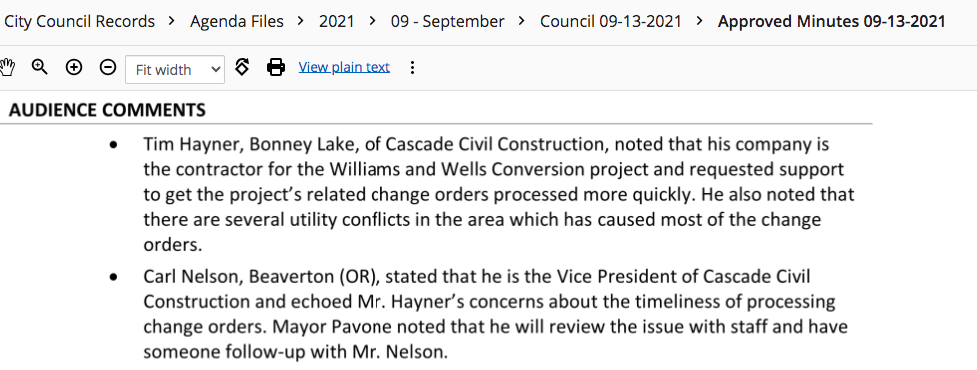
In late 2021, two representatives from the prime contractor, Cascade Civil Construction, attended (via Zoom) a Renton City Council Meeting to let the Council know that they did not feel that change orders were being approved quickly enough.
In 28 years on Council, this was a first for me; I didn’t remember ever having seen a contractor attend a Council Meeting to complain about slow approval of change orders. After the meeting I was informed by staff that the issue was a misunderstanding, and would soon be handled. (I was only on Council for three more months before my final term came to a close.)
The Renton Council Minutes from September 9, 2021.
The change orders continued piling up into 2022. While the initial agreed contract amount was $7,733,422, sixty-six total change orders increased it to $10,424,543, a 35% increase.
But it was not over even after the construction dust cleared. Cascade Civil Construction and the City of Renton fell into a dispute over an additional half-million to one-million in costs, and both sides began paying attorneys. Renton employed Perkins Coie in addition to paying City attorney staff. Both sides finally hashed out the final Change Order number 67 at a settlement conference, which will bring the contract to a close.
At the February 9 Council Meeting (three weeks ago), the Council approved this $602,390 change order, along with approving $304, 826 recently paid on the contract. There are also other fees associated with the settlement, including attorneys fees and recording fees, which added up to accrued 2025/2026 costs of 1.25 million dollars. By my calculations, the amount going to Cascade Civil Construction will bring their total up to $11,026,923, or 43 percent over the original contract amount.
The Council passed a motion at the February 9 Council Meeting to add an extra $1,000,000 to the Williams/Wells conversion project fund.
In another recent blog post I described how 56 change orders on the Rainier Avenue Project took it 29% over budget, and recommended Renton perform an after-action review to find ways to reduce these change orders on future projects. The Williams/Wells project could be included in this review.
Below the cut I’ve posted the agenda bill and settlement documents that the Council approved for Williams/Wells at the February 9 meeting.