 Written by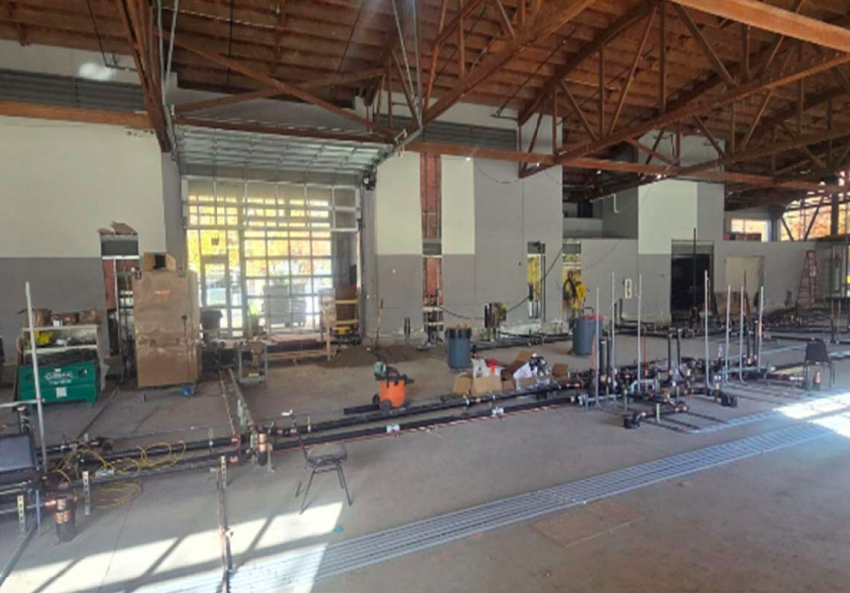
Millions of dollars in taxpayer funds are being spent to renovate the former Pavilion Event Center, including installing new plumbing to meet the specific preferences of a new proposed tenant and his subtenants. No leases are signed. The City is considering renting the newly renovated building to the private tenant/operator for $5.00 per square foot per year, increasing to $15 per year over five years. This is a fraction of the market rate. (The master tenant/operator would keep rents collected from subtenants.)
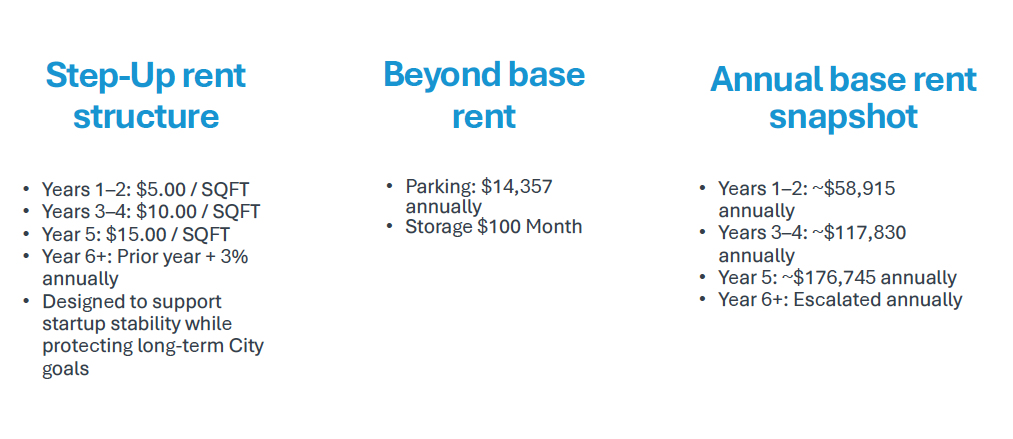
Renton Council was recently presented with these proposed lease rates for the Pavilion building. Beyond base rent the city would charge rent for 30 dedicated parking spaces at a rate that works out to $1.31 per day per space. (From last Monday’s Committee of the Whole packet)
A quick check of public real estate listings shows commercial buildings in Renton, many of them decades old, are being offered for lease rates of $20-$38 per square foot.
But Renton City Council is being asked to lease our newly renovated Pavilion building for $5 per square foot. The rate would rise to $15 over five years, and then 3% annually after that. Since commercial rates will also be increasing 3% per year, the Renton Pavilion will remain at about 50% market rate.
If this building was going to host a non-profit or publicly-owned “Public Market,” this lease rate would be considered highly charitable, but probably legal. But apparently the city plan is to have a private company rent the building for this give-away price, and then let the private company keep the profits for themselves.
Such an arrangement looks like it violates Washington’s constitution, by using public funds to support a private business.
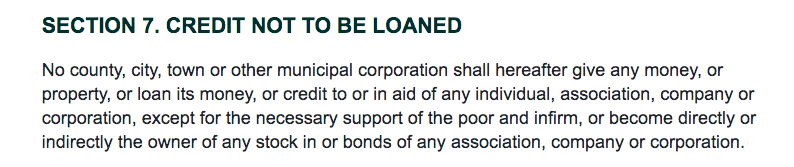
Washington State Constitution forbids using public money to benefit private business
The fact that the “Renton Market” sounds a lot like a desirable “Public Market” does not fix the issue.
RCW 35.92.040 gives cities Authority to acquire and operate public markets, but the city or a public corporation the city creates is supposed to operate them:
“A city or town may also construct, acquire, and operate public markets and cold storage plants for the sale and preservation of butter, eggs, meats, fish, fruits, vegetables, and other perishable provisions. Whenever the words “public markets” are used in this chapter and the public market is managed in whole or in part by a public corporation created by a city, the words shall be construed to include all real or personal property located in a district or area designated by a city as a public market and traditionally devoted to providing farmers, crafts vendors and other merchants with retail space to market their wares to the public.”
Since the City or a public agency is not operating the Renton Market, it’s no more eligible for public funding than any other business that residents might want in Renton, like a Trader Joe’s, or Whole Foods or Puget Consumers Co-op. As much as we would like more food choices, Renton and other cities are not allowed to subsidize private companies to get them to locate here.
This Pavilion project started out in 2019 with no subsidy offered. The Request for Proposals (RFP) made it clear that Renton would entertain proposals from private developers to make improvements to the Pavilion, paid for by the developer, in exchange for a longer lease; the developers would pay market-rate rent. The subsidies and city-funded tenant improvements were added after the RFP bid was selected.
Taxpayer subsidies of a privately-owned “public market” have not been meaningfully discussed in open-public meetings. A true “Public Market” could be a valuable asset for the city, but the current arrangement does not have the transparent public ownership that a Public Market requires. At Monday’s Committee of the Whole, several Council Members spoke to their desire to see certain types of businesses included in the “Renton Market,” only to be told that their suggestions would be forwarded to the (for-profit) “operator” who may or may not choose to pursue the Council suggestions. Council was also told the operator has not yet signed a lease with the city, even while tax money is being used to customize the building to meet the operator’s desires. This arrangement is unacceptable and should not be getting taxpayer subsidies.
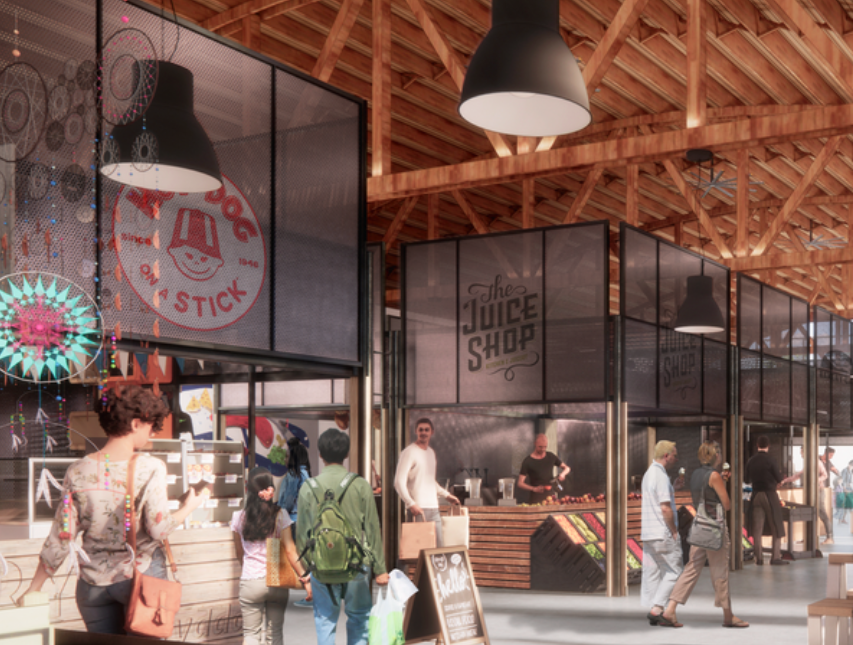
This architectural rendering has been used by the city in official documents to describe their Pavilion plans. The two businesses shown are part of west-coast chains, with the hot dog store having hundreds of locations. While these images might just be notional, a real Public Market should be dedicated to local businesses and preclude large chain stores.
Renton taxpayers are paying about $12.8 million to alter the Pavilion and the adjacent Piazza (which will provide dining space to the Pavilion.) Documents submitted to the City with the RFP proposal show the “operator” of the market predicting a combined loss of about $500,000 over the first three years, breaking even in year 4, then recovering all his losses and making a profit by the 6th year. He estimated increasing profitability after that, surpassing $300,000 in year 7, and blossoming to over $400,000 per year by the tenth year. He would then be eligible for two five-year lease extensions which could bring him another $4 million in profits, or more.
But it would take 70 years of the proposed $176,000 annual rent payments for the taxpayers of Renton to recover the renovation costs.
This looks like the type of public cash/credit giveaway that is forbidden by the constitution.
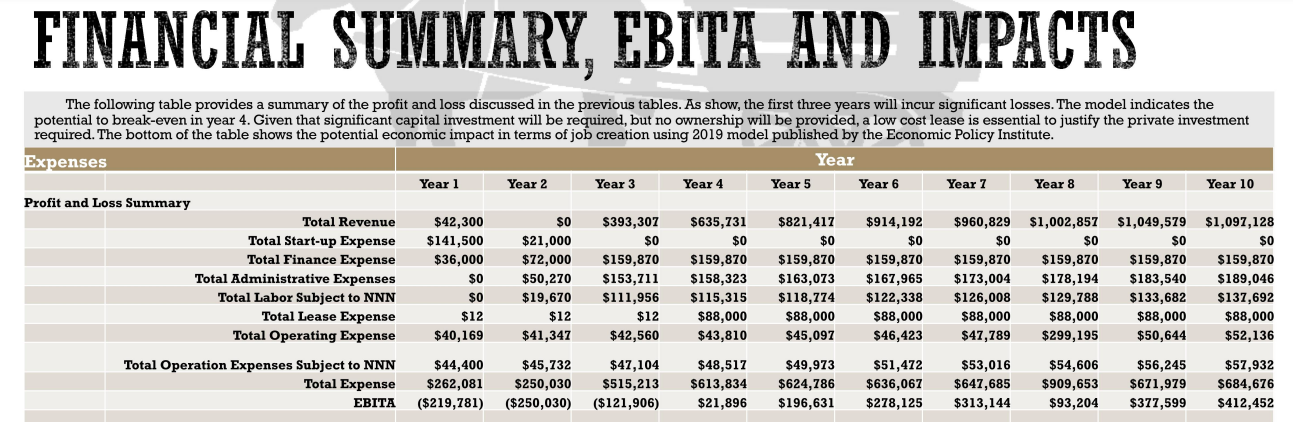
The selected RFP bidder predicted these estimated financials after making his bid. His estimated earnings before interest, taxes and amortization (EBITA) is shown in the bottom row. This data has not been updated with the latest rent proposal nor does it reflect the enormous investment (including tenant improvements) the city has made in the Pavilion and Piazza. An update of this data would be beneficial to the public.
As one other interesting data point, the “operator” who wishes to rent our newly-renovated city Pavilion building for $5-$15 per square foot happens to own a 65-year-old building a few blocks away from the Pavilion. His building is tax-assessed at $2.1 million (about 20% of what we are spending on updating the Pavilion), and he is advertising that building for lease for $20 per square foot. Clearly the Pavilion, with its park setting in the heart of downtown, is being subsidized at the proposed lease rate.
The Council is also being asked to lease 30 dedicated parking spaces in the adjacent City Center Parking garage to the operator for about $1.31 per spot per day, which is a bargain. The garage also provides hundreds of free two-hour spots to the Pavilion’s customers.
I don’t blame the operator for asking for the best deal he can get. He’s in business, and it’s what sensible business people do. But government officials have to say “no” sometimes. While a true public market could be a desirable public asset, Renton City Council must say no to a public giveaway to a private business.
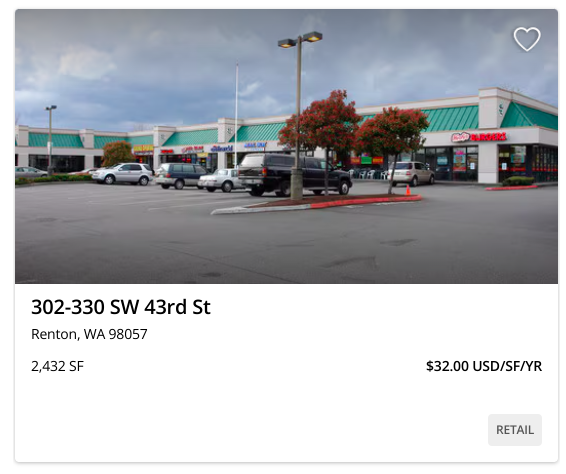
$32 per square foot per year is being asked for this commercial space on SW 43rd St
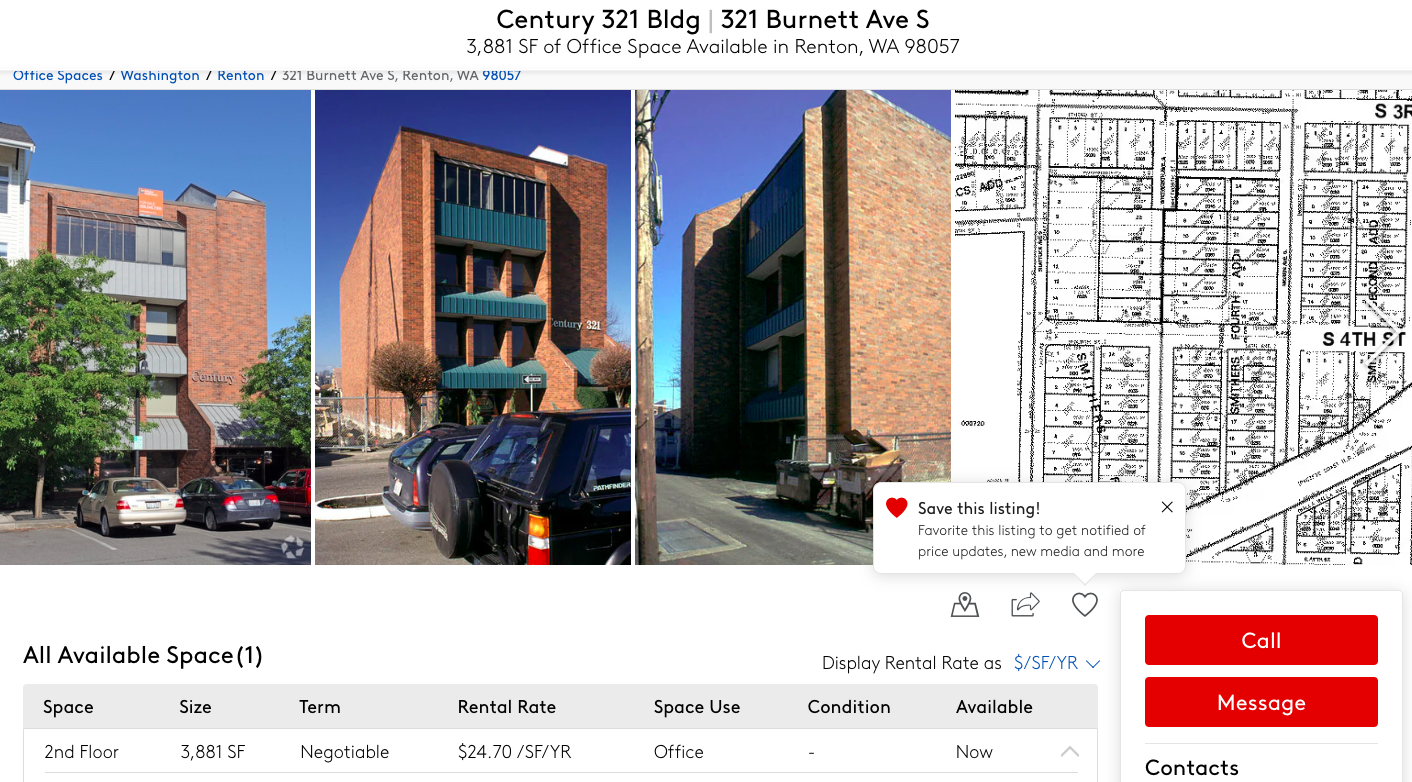
$24.75 per square foot per year is being sought for the downtown second-floor office space
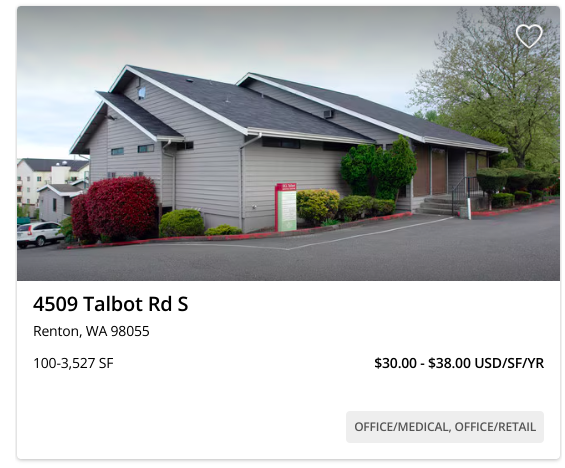
$30-$38 per square foot per year is sought for this Medical office on Talbot Road S.
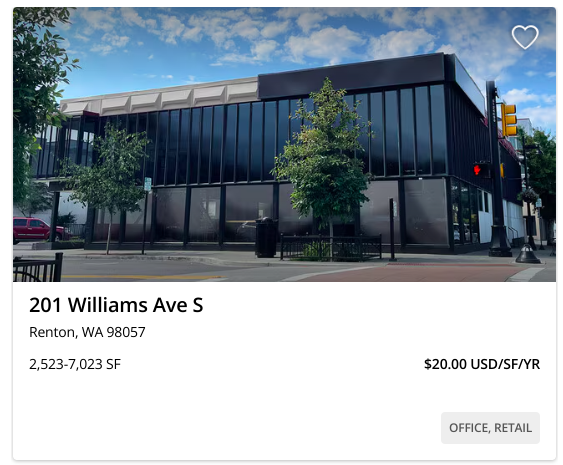
The proposed “operator” of the pavilion building owns this building on Williams (informally known as the Cheers building) through a holding company. He is seeking $20 per square foot per year in rent

“This looks like the type of public cash/credit giveaway that is forbidden by the constitution.” If only current Renton Council Members had the integrity to actually do something about all this corruption. But, but FIFA is coming, so please overlook everything else. Shaking my head in disgust.
These below-market lease rates remind me of citizen complaints I’ve read about in Santa Monica that involved Renton’s current Public Works Director Martin Pastucha (who oversees Renton’s Pavilion project), in which jet hangers worth $24 per square foot were allegedly improperly leased for $4.50 per square feet.
According to this published letter by a former Santa Monica Airport Commissioner, the “sweetheart leases” led to calls for the resignations of several of their city officials, including their city manager, their city attorney, and Renton’s current Public Works Director Mr. Pastucha, who resigned from Santa Monica during the time the complaints were being made.
https://www.smobserved.com/story/2016/07/07/opinion/former-chair-of-santa-monica-airport-commission-calls-on-city-manager-rick-cole-to-resign/1565.html
Interesting numbers. A shame that the math just doesn’t work.
I think the numbers could potentially work if it was a true public market. If the $300,000- $400,000 per year profits (expected starting year five) were getting reinvested into the market, returned to the City, or used to attract even more start-up growers and crafters this could potentially work. It’s the having the profits go to a for-profit business that makes it unworkable right out of the gate.
It also would have been okay if all the renovation and tenant improvements had been paid for by the developer/operator. But having the City pay for these, and the operator get the profit, is not workable.
I agree there. We need More Small Businesses, to make any sort of “Public Market” in Renton- work. Renton certainly isn’t entirely the town I grew-up in. Frankly- it’s becoming a boondoggle that could result in a reckoning that may tear the place apart.
Renton’s a place to live in. We’re not “stuffy” like Bellevue, and we’re not Seattle’s dumping ground. We’re our own place! The Pavilion issue needs to be resolved to be a driver and incubator of small businesses- not just another quick cash grab for a developer to plant in a few franchises that- while may be held by individuals, are beholden to corporations that could give less than a batted-eye for Renton’s well-being.
So… we’re setting up a slumlord for free? He gets all the profits and none of the large expenses?
The previous tenants got a sweetheart deal, but it was year to year and nobody else stepped up.
If I remember, the operator is a nice guy and isn’t a slumlord. But still…. we don’t need to give away things.
if the rfp was posted may 2019 and staff recommended the tenant to COW in august 2019, it does not appear the rfp was accepted by council until the concept was approved in december 2021.
how then was the city working with the tenant on designs and negotiations beginning in september 2019? are we reading something incorrectly here? is that 2 years of working with a tenant when the council had not yet approved the concept even? we are really confused in reading all of this
Sounds like they had, the operator and the operator’s concept in play, way before 2019. The RFP was sent out as fluff.