Today’s Journal; a very classy response from highland residents…I love seeing the peace restored

Highlands offers to work on neighborhood with city

By Dean A. Radford
Journal Reporter

RENTON — The Highlands Community Association struck a conciliatory note in a letter to Mayor Kathy Keolker on Wednesday, offering to work together to revitalize their neighborhood.

The letter was in response to a memo Keolker presented at Monday’s City Council meeting in which she said she will recommend the city not use its power to condemn property to create an urban village in the aging part of town.

Keolker and some association members, especially its secretary, Inez Somerville Petersen, have had some tense standoffs at council meetings over the city’s pursuit of an urban village — and perhaps the use of its power of eminent domain.

In his letter, approved by the association’s board, Terry Persson wrote:

“By shelving the threat of eminent domain, the city and the community can now move forward on several positive fronts to achieve what I believe is a shared vision for a safe, healthy, vibrant and affordable Highlands community.”

He titled his letter, “Burying the hatchet.”

In an interview, Persson agreed that discussions with city officials got heated.

“We really didn’t want to see that happen,” he said. “We wanted to work with them as a team.”

He said the city was taking a top-down approach to laying out a plan for the Highlands, rather than one relying on residents’ opinions. However, the city has offered numerous opportunities for public input in the Highlands.

Keolker was unavailable for comment Wednesday.

In her memo to the council, Keolker wrote that “many residents and property owners have galvanized around a desire to clean up their own neighborhood, but they want to do it on their own terms.”

Keolker and the city’s chief administrative officer, Jay Covington, were in Washington, D.C., talking with financial institutions about the millions of the dollars in bonds the city will sell to finance roads, utilities and other infrastructure to support The Landing, a major new development in north Renton.

However, Alex Pietsch, the administrator for the city’s Department of Economic Development, Neighborhoods and Strategic Planning, said the city will talk with any residents “who are interested in bringing about the revitalization of that neighborhood.”

For years, the city has considered an urban village for about 360 acres of the Highlands near the Hi-Lands Shopping Center on Sunset Boulevard just east of Interstate 405. Some of the World War II-era temporary housing there is in desperate need of repairs.

The Highlands association has offered to help look for money to assist low-income residents in making repairs or improvements, to identify violators of city codes and to help establish zoning that encourages redevelopment, but preserves the landowner’s rights.

The association is no longer officially recognized by the city, but whether that might affect how involved it can get in official business in the Highlands is unclear.

But Persson points out that the association has about 350 members and he said it’s recognized by many as the voice of Highlands residents in that area.

In his letter to Keolker, Persson wrote that Highlands residents are already reroofing, painting, cleaning up yards and planting flowers.

Dean Radford covers Renton. He can be reached at dean.radford@kingcoun tyjournal.com or 253-872-6719.

Last modified: June 29. 2006 12:00AM

Seattle PI Guest Columnist Michael Bindas, recognizes Eminent Domain is not the Answer

Thursday, June 29, 2006
Keep Kelo out of Renton Highlands

MICHAEL BINDAS
GUEST COLUMNIST

Don’t worry, eminent domain abuse can’t happen here. … I promise.

A year ago last Friday, the U.S. Supreme Court issued one of its most reviled decisions. In Kelo v. City of New London, the court held that government may use eminent domain to condemn homes and small businesses not only for true “public uses” but also for purely private development.

With the Supreme Court’s go-ahead, politicians and their developer cronies went on a nationwide condemning spree. Since Kelo, there have been more than 5,750 filed or threatened condemnations for private development.

Like most Americans, Washingtonians were outraged by Kelo and its aftermath. They demanded the Legislature act to prevent eminent domain abuse here.

Initially, legislators seemed to take heed. They floated proposals, even held hearings.

Guess who showed up? Lobbyists for municipalities and city planners.

Guess what their line was? “Washington isn’t a Kelo state. It can’t happen here.”

The Legislature did nothing, the session ended and here we are — in Renton, where recent events demonstrate that the legislators were taken.

Renton Mayor Kathy Keolker doesn’t like being leader of a city with a working-class image. Instead, she has a “vision” of an upscale “urban village.” She planned to make that vision a reality by leveling the homes of her working-class constituents.

For the past several months, Keolker has been preparing to use Washington’s Community Renewal Law to clear out the Renton Highlands. Adopted in 1957 during the “urban renewal” fad, the law authorizes cities to condemn homes in supposedly “blighted” neighborhoods and turn the property over to private developers.

It doesn’t matter whether the homes are actually blighted. Under the law, the city may use eminent domain because of neighborhood conditions that are exclusively the city’s responsibility, such as “inadequate street layout.”

The mayor was all set to use the Community Renewal Law when the courageous efforts of Highlands residents, along with increased scrutiny brought about by the Kelo anniversary, caused her to take a step back. On Monday, she explained she would not use the law “at this time.”

Keolker’s overture is cold comfort to Highlands residents. She insists eminent domain may still “become necessary,” adding that she is “happy to revisit” the issue. Worse, she blames Highlands residents for derailing her plans, claiming they “employed mischaracterizations, exaggerations, and scare tactics that distort the intent of some of the city’s concepts.” Really?

In a timeline made public earlier this year, Keolker detailed her “vision” for redeveloping the Highlands. Dubbed “Outline of Implementation Timing and Steps,” it noted that a study “needed to support a declaration of blight” was “nearly complete” and that the declaration, along with “plans for … housing relocation and replacement” would be submitted to the City Council by July 31. By 2007, the city’s “Development Partner” would initiate the “first redevelopment project(s).”

Understandably worried about the fate of their homes, residents voiced concern. The mayor’s response? Accuse them of “scare tactics.”

Citizens shouldn’t have to endure government threats and abuse for simply wanting to keep their homes. They deserve, and the Constitution demands, more.

Keolker owes her constituents an apology. Swearing off eminent domain for private development would be a start.

Until then, though, don’t worry. Washington isn’t a Kelo state. I promise.

Michael Bindas is a staff attorney with the Washington Chapter of the Institute for Justice, which represented the homeowners in the Kelo case. For more information, visit www.ij.org.

Renton Highlands Revitalization: Today’s King County Journal Story

The Journal did a good job capturing viewpoints in this story, but I feel the mayor is way too pessimistic. We still have many unused tools to encourage redevelopment. Some of these are; flexible new zoning, waiving impact fees, fast-track building permits, reduced permit fees for projects that meet community goals, and free stock building plans. In fact, what we have been doing is just the opposite of encouraging free-market revitilization. Ironically, we’ve maintained a construction moratorium in this area during the last 14 months, at a time when buildable land is scarce and land values are soaring.

And I disagree with the suggestion that the city not spend budgeted money for highlands public infrastructure merely because the Community Renewal Act (CRA) failed. The first million dollars of highland money was set aside during the Jesse Tanner administration, when there was no talk of CRA. This money can be used to fix crumbling sidewalks and inferior pavement which has made it difficult for even the most motivated property owners to obtain curbside appeal. And the CRA, formerly known as the Urban Renewal Act, is not always effective. Historically, half of the time CRA has been used across the nation it has made things worse, not better. It’s had an even worse record where an organized faction of the community is working against it, as has been the case in Renton. I question whether CRA is even appropriate in an area such as Renton Highlands, where market forces are already pushing land values to one million dollars per acre at current conditions, and individual duplexes have been selling for $300,000 to $400,000.

There is no reason that we can’t clean up the highlands quickly using the tools of the free market, collaboration with residents and property owners, and city support and incentives. Enough pessimism and grief. Let’s get it done, and as a partnership!

_________________________________________________________________________________________________________

Renton backs off Highlands threat: Mayor says by not using power of eminent domain, progress could be slowed

By Dean A. Radford
Journal Reporter

RENTON — In a retreat from what some residents saw as threats to condemn their private property, Mayor Kathy Keolker is recommending that the marketplace become the driving force behind redevelopment of an aging part of the Highlands.

However, not using the city’s power of eminent domain under the state Community Renewal Act could slow the progress toward a healthier and safer neighborhood, she argued, with less public money available for the job.

It’s a course that some on the council favor and certainly one that citizen activists with a strong belief in private property rights support.

Rarely, if ever, have city officials — and the community — faced such an emotionally charged issue as revitalizing the Highlands.

It has soured some relationships within the council, the mayor and some of the people they represent.

“We just need to take a break,” said Keolker, who said she’s saddened by the situation she faces.

“The vision is good. The goal is good. We can’t get there right now,” she said.

The use of the city’s power to condemn property became a rallying point for some neighborhood activists, even though the city offered assurances it would only use such power as a last resort and only to protect public health and safety.

Without a plan for Highlands revitalization in which the city is a major player, Keolker said, it’s unlikely she would recommend spending the $1.5 million the council has set aside for street, sidewalk and stormwater improvements there.

Her recommendations are now before the City Council, which include working with the Renton Housing Authority to redevelop its affordable housing.

And the city would continue to “vigorously pursue” violations of city codes involving “unsafe, unhealthful, derelict or nuisance properties,” she wrote the council.

Keolker has asked the council to still pursue the concept of an urban village for about 360 acres of the Highlands near the Hi-Lands Shopping Center off Sunset Boulevard just east of Interstate 405.

Through new zoning yet developed, the city would increase the housing density in the Highlands area, helping to spark economic development, while still providing affordable housing.

The housing there now — some single-family homes but mostly duplexes and triplexes — was built about 60 years ago to temporarily house World War II workers at the Boeing plant in Renton and their families.

Keolker has taken the brunt of the criticism from those Highlands’ activists who say the city is being heavy-handed in its drive to redevelop the neighborhood.

She points out that this is the city’s policy — not hers — and the City Council told her to act boldly and aggressively in the Highlands.

The council was 100 percent behind the policy, but that support has waned, in part because of misinformation spread by neighborhood activists, she said.

Those scare tactics, Keolker said, have prevented a discussion about affordable housing for those on lower incomes who live in the Highlands.

Prominent among those activists is Inez Somerville Petersen, the secretary of the Highlands Community Association. The group, she said, was to lay out its next moves Tuesday night at a board meeting, but she said they won’t drop their appeal of land-use decisions the city has made in the Highlands.

She denies spreading misinformation either at City Council meetings or through her numerous e-mails. Her information, she said, comes from official city sources.

To understand Keolker’s message, Petersen said, you have to read between the lines.

“The declaration of blight is taken off the table, but only temporarily,” Petersen said. She points to a line in Keolker’s letter:

“In time, we may find that some of our original ideas will become necessary to bring about widespread improvements,” Keolker wrote.

To Petersen, that means that Keolker “is not really conceding anything here.”

It’s too early to say how property owners and prospective developers will respond to redoing the neighborhood. But ultimately the city may have to step in “unless some miracle occurs,” Keolker said. “You can always hope for miracles.”

Angering Petersen, too, is the loss of the city’s official recognition of the association because she lives along Lake Washington, not the Highlands. It’s city policy that board members of its neighborhood associations actually live in the neighborhood.

“She (Keolker) has tried to buy herself some time to get her own cronies in a housing association that will go along with her ideas,” Petersen said.

Keolker said there are plenty of Highlands residents who support revitalization, some of whom don’t like the direction the Highlands association has taken or its political activism.

“We would like to have a positive relationship with the people who live in the Highlands,” she said.

Keolker won’t place a deadline on when she wants to see real progress in the Highlands, something, she said, that might look like an “implied threat.”

And Petersen said “there is no timeline on private property rights.”

Randy Corman, the council’s president, said from his viewpoint there is no timeline to get things done in the Highlands by the private sector. However, redevelopment will occur and some residents will fix up their homes.

“We won’t be able to force it,” he said.

Dean Radford covers Renton. He can be reached at dean.radford@kingcountyjournal.com or 253-872-6719.

Last modified: June 28. 2006 12:00AM

Good council meeting tonight

Tonight’s council meeting was productive. The administration presented a new recommended Highland’s neighborhood approach which reflected growing council majority feelings in the Highlands. The Community Renewal Act and eminent domain will no longer be considered for this neighborhood. We are hoping we can instead accelerate the positive changes that residents have already begun in this neighborhood, enact more-flexible zoning, lift the construction moratorium, and begin healing the trust issues. I’m optimistic that we are close to agreement on this lightning-rod issue for the first time in months. Very good news.

Jimi Hendrix home gets put on it’s new foundation!

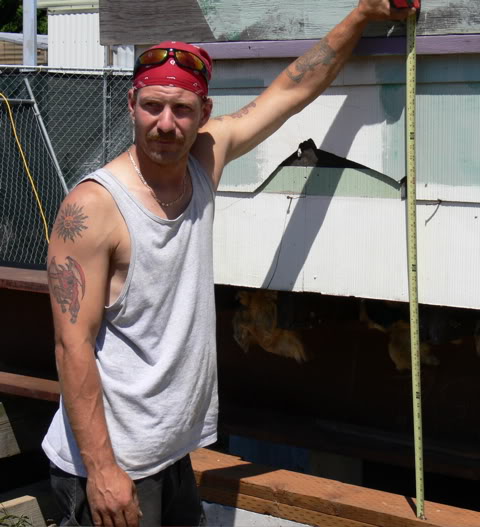
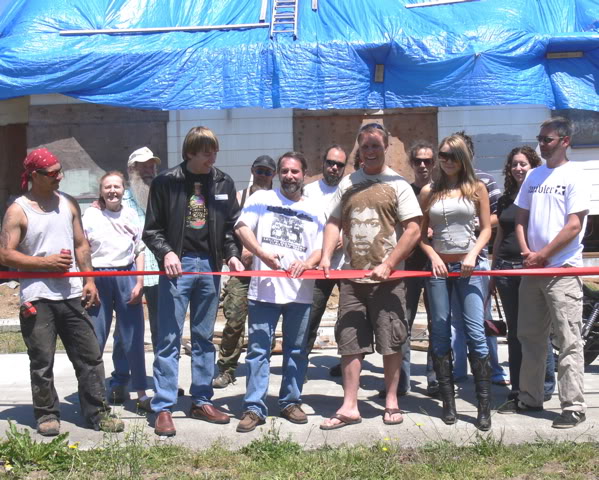
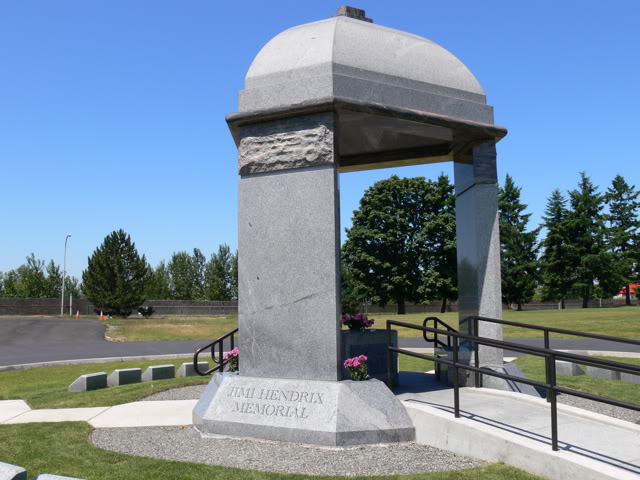
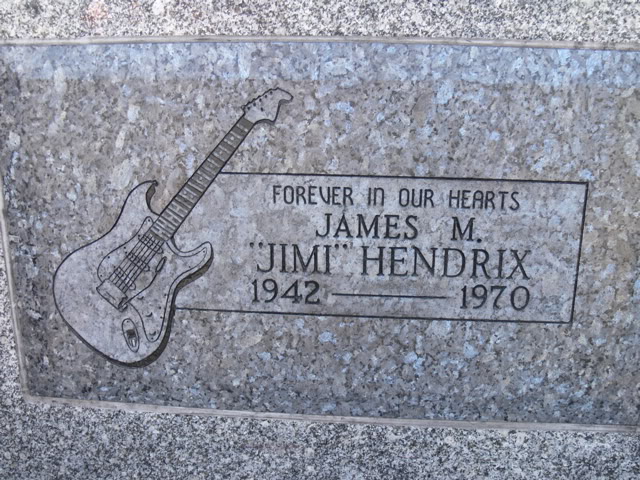
I visited with the team working on the Jimi Hendrix house yesterday, across the steet from the Jimi Hendrix memorial at Greenwood Cemetary. The Jimi Hendrix Foundation has saved Jimi’s boyhood home from destruction, by finding a permanent site for it in Renton. They will restore it, and incorporate it into a museum and music store, and they have some exciting landscape plans in work.

I was very impressed by the group’s spirit and dedication to this work, and I can not believe that the city of Seattle let this treasure get away from them.

Here are a couple shots of the celebration yesterday.

Photobucket - Video and Image Hosting

Photobucket - Video and Image Hosting

The Jimi hendrix Memorial, across the street at Greenwod Cemetary….Photobucket - Video and Image Hosting

Photobucket - Video and Image Hosting

Today’s King County Journal: Eminent Domain

Here is an interesting story in today’s newpaper…..

______________________________________________________________________________________

Highlands residents fight against city’s plans: Some fear Renton will use eminent domain to make them leave

By Jamie Swift
Journal Reporter

RENTON — City Councilman Randy Corman can empathize with residents of the Highlands who are fearful the city will condemn their homes to develop a high-density urban village intended to reinvigorate the area.

Corman, the council president, stood side-by-side on a busy street corner Friday afternoon with a group of Highlands residents waving “no eminent domain” signs.

“The mayor tried to take my house,” Corman said.

Mayor Kathy Keolker was a city councilwoman in 1989. That year, the council tried to condemn Corman’s Highlands home — the same home he lives in now — to clear the way for a new development.

After a court battle, Corman won and was able to keep his home. But he says he’ll never forget the frustration and the intimidation of challenging government.

Corman was so disturbed by the situation that in 1991 he decided to run for the City Council. He targeted Keolker, because “of the pivotal role she took in condemning my property,” he said.

Keolker held on to her seat, but Corman would grab a spot on the council in 1994.

On occasion, Corman said, he’ll say to his wife that he should work harder to cooperate with Keolker.

But his wife always responds: “But she tried to take our house,” Corman says, with a chuckle.

“That’s the back story,” Corman said. “That’s what set up this whole grudge match.”

The mayor was out of the office Friday and could not be reached for comment but the city’s vision for the Highlands is to transform a neighborhood, which is dotted with blighted homes, into an urban village. To that end, the city is trying to increase the housing density.

However, an appeal lodged by the Highlands Community Association puts the city’s vision on hold, at least until the fall, said Alex Pietsch, the city’s administrator of economic development, neighborhoods and strategic planning.

Pietsch said Friday the city has always talked about eminent domain as “a last choice after all other strategies have been exhausted.”

He said the belief that the city is likely to condemn properties is “being perpetuated by people who have their own agendas.”

The residents believe they are in the path of the city’s vision for a renewed urban village in the Highlands, near Sunset Boulevard Northeast, just east of Interstate 405. And they are concerned the city will use eminent domain powers to make them leave.

Corman estimates the city is unlikely to use eminent domain to build its urban village, considering the current makeup of the City Council.

At least four of the seven council members are against using eminent domain, Corman said Friday — which marked the one-year anniversary of the U.S. Supreme Court’s Kelo V. New London decision, which broadened governments’ eminent domain rights.

In response to that year-old decision, President Bush on Friday signed an executive order declaring the federal government can only seize private property for a public use such as a hospital or road.

Last month, Corman pitched a resolution to the City Council which would have eliminated the possibility of using eminent domain powers in the Highlands neighborhood.

“I was essentially filibustered,” said Corman, adding that council members unwilling to commit to such a step used government process to avoid a vote on the resolution.

Until the city eliminates eminent domain as an option, the Highlands residents will live in a constant state of anxiety, Corman said.

“It’s like taking months away from their lives,” Corman said.

“As soon as you realize how many rights have to get trampled to do this, you should realize you need to do the hard work of finding another idea,” Corman said.

Jamie Swift can be reached at jamie.swift@kingcountyjournal.com or 253-872-6646.

Renton Highlands Revitalization: Take Two

I want to see the Highlands revitalized as much or more than just about anyone else. I’ve lived (with my family of seven) within two blocks of the 1940s duplex area for 20 years. For fifteen years I have been an owner of a remodeled duplex in this neighborhood, and I’ve never lost faith that the area was poised for an economic renaissance (For 15 years I’ve been sure that the area will turn the corner the next year).

When prosperity did not come, I began tossing in my two cents over the years, letting the City Economic Development department know that the area could probably sustain a slightly higher housing density (such as small lot single family, or possibly townhouses) if that is what it would take to finally bring some new construction. For this reason, I was delighted this year when the mayor announced that staff was going to focus attention on finally revitalizing the highland residential areas.

Somewhere along the way, however, we drove off-course, hit some bumps, lost our cargo, and had a wreck. And like a highway accident, there was a lot of blame afterward. But it’s now time to get our bearings and get going in a safe and appropriate direction.

Since the property is privately held, the city can not treat the land as a blank slate. Any illusion of that has been eliminated by the clear resistance the neighborhood had shown to the mechanisms of blighting, community renewal act imposition, and eminent domain. Efforts to use these tools now or in the forseeable future will certainly meet with strong opposition from at least some of the residents and property owners. HCA (hca-renton.org) is organizing more activities to shut down this option, and to me it is as sensible as deliberately running a car into a brick wall for us to continue trying this approach.

Instead, we need to get the residents and land owners back on our side, and work this issue as a team. I don’t think it will be that difficult. HCA’s website has a proposal that seems very sensible to me. I expect that if we adopted it today, we would see both new construction and improved maintenance in the Highlands. In general the HCA proposal calls for flexible zoning, allowing single-family and duplexes as conforming uses, aesthetic standards for higher-density housing, low interest loans to seniors who need to maintain the appearance of their property, tighter maintenance standards in the neighborhood, aggressive enforcement by the city code compliance officers, public infrastructure maintenance where needed, neighbors joining together to enact neighborhood covenants, increased coordination with the police and/or neighborhood watch, and no declaration of blight or eminent domain takings. None of this seems counter-productive to me, and several leaders of HCA have already said that they can live with our proposed zoning if we continue to allow low density as well.

I would add to the HCA proposal some tools that we could supply as a city, at no cost to the property owners. For instance, we could consider creating stock-plans for townhouse development; “follow this free building plan, and you are allowed four new townhouses where you currently have an old duplex” for instance. we could also waive mitigation and impact fees in the redevelopment district.

We have talked about creating a citizen committee to oversee this plan. I think this is a good step, if we can readily reach agreement on who the comittee members are. If we have too much trouble reaching agreement on this point, we may have to keep the planning in the hands of the council. I would feel best having members of this committee primarily be property owners and residents in the neighborhood, supplemented by a representative of Renton Housing Authority, the planning commission, a city council member, and a city staff member.

The only thing we will need to let go of is the view that we are going to build high-density apartments at this site, on land that we have accumulated by eminent domain takings. Since I never wanted such a thing to happen, this one is pretty easy for me to let go of.

The final concern is what happens if some lone holdout refuses to fix or sell their old duplex, and it runs the neighborhood down. I believe the answer to this is that if it in really bad shape, we can solve it under current nuisance abatement ordinances with far less legal expense and political issues than we will incur trying to blight a neighborhood in the face of so much opposition. The public speakers at our hearings have made the case that many of the owners are not trying to harm neighboring property values; they would like to do more, but because of age or limited financial means they can not. In these cases, the option of extending property repair and clean-up assistance, rather than an eviction notice, seems more humane.

I hope you, citizens of Renton, can agree with me. I will be encouraging the rest of the council to move in this direction. With it’s outstanding vistas, excellent access, proximity to shopping and the lake, and fantastic residents, we can make the Renton Highlands a beautiful place to live.

Photobucket - Video and Image Hosting

Me on an afternoon walk with my family through the North Harrington neighborhood.

Renton Council clears the Landing for Takeoff


Photobucket - Video and Image Hosting
 

We held an exciting Committee-of-the-Whole and City Council Meeting last night. The council voted 7 to 0 to approve the construction of the streets to support the new Landing shopping center. The bonds will cost us 1.3 million per year, but we expect to receive new tax revenues of at about twice that on the most basic version of the Landing shopping center. The new construction will include the connection of Logan Avenue with the Freeway, which will put an arterial connection directly from I-405 (exit 5) though the Landing and into the center of our downtown. This will be great for our city.

Better still, we are doing the roadwork in concrete instead of asphalt, which has a life expectancy of 35-50 years. The bonds will be paid off a generation before the roads need significant maintenance. Meanwhile, the Landing will provide shopping, dining, entertainment, and tax revenues to our city.

Our attorneys are still fussing with some assorted appeals of the project, several sponsored by South Center Mall, but I believe these will at most affect the plans only “around the edges” a little. We know the land will support a shopping center, and we are going forward with the roads.

We will next turn our attention to a possible public parking garage and other public infrastructure enhancements. If these can be shown to produce a denser entertainment center and more financial activity, and enough tax revenues to pay their way (per the approved development agreement), then I am quite in favor of them.

I hope you, dear readers, share my enthusiasm for this project. My neighbors, my family and I have waited a very long time to get these kinds of shopping and entertainment options so close to home. And the tax money will help the city’s bottom line.

Ugh! Still more controversy! Council legal assistance

Here’s a new area of stunning conflict. When we approved our 150 million dollar budget last fall, we smartly included twenty thousand dollars for use by the city council in seeking third-party legal opinions if we find ourselves in disagreement with the Mayor’s office. I have to credit my wise colleague Don Persson for recommending this line item in the budget, and astute colleague Denis Law for pushing it along. It was our intent not to use the whole amount, and only to use any of the funds in cases that would put our usual city attorney Larry Warren in a difficult situation. The council agreed at the time that the money could be allocated by the Council President, based on a request for outside legal council from any council member. Simple enough.

Then on April 17, when I made a motion to stop the mayor from interrupting the public as they were speaking at a hearing, the mayor ruled my motion out of order based on her accusation that I was trying to break the law. Not long afterwards, others suggested to me that it was time to seek an outside legal opinion. After all, the mayor accusing the council of breaking the law seems like a clear time for an outside opinion, wouldn’t it seem? Don Person and I worked though all proper channels, secured the legal opinion, and guess what….the mayor did not need to interterrupt the speakers who were worried they would lose their homes due to a zoning change. Yep, yours truly was not breaking the law by letting the public address their elected representatives at a public hearing. Amazing. I guess the US Constitution does mean something. But that’s the predictable part, here is the the interesting part….

On Thursday we discovered that the mayor was deliberately refusing to perform her administrative duty of signing the check for the outside attorney. Even though it was a council approved expense, it was authorized in the budget and she had no legal veto right, she simply refused to perform her job. In the best case her pride got in the way of her doing her duty; in the worst case she wants to be able to wrongly accuse without apology or repercussions. In any case, I was ready to let this bounce off, but others on the council are not feeling so generous.

We’ll see what happens next. Stay tuned!

Another article from my Mom

Another article from Mom. Those of you who are strong private property advocates would really like my mother. And believe it or not, she can be more stubborn than me when she wants to be.

Enjoy!…..

Posted on Sat, Jun. 17, 2006

California county’s use of eminent domain upsets developers
SAMANTHA YOUNG

Associated Press

WOODLAND, Calif. – A 17,000-acre swath of farm land that is rich in water reserves went up for sale two years ago, catching the eye of real estate developers but alarming local officials who feared its water would be siphoned off to satisfy Sacramento’s sprawling suburbs.

The sale set off a costly court case when the Yolo County Board of Supervisors decided to seize Conaway Ranch through eminent domain, saying it wanted to protect the water rights and open space. The ensuing fight has pitted a rural county against a consortium of wealthy Sacramento developers who maintain they have no plans to build on the land.

But it also has sparked wider interest. Property rights advocates upset over last year’s U.S. Supreme Court decision expanding the governments’ right to seize land point to Conaway as another example of eminent domain abuse.

The controversy has become a flashpoint during a year in which an initiative seeking to restrict the use of eminent domain appears headed to California’s general election ballot in November.

Two courts so far have sided with the county, ruling that it has a legal right to protect the area’s rice fields, water and wildlife from the threat of development by its owners, the Conaway Preservation Group.

“I believe to my core if these guys were to keep this property, they would market this water to the highest bidder,” said Supervisor Mike McGowan, one of the lead negotiators in the county’s talks with the developers. “Their motive is to make money. They’ve acquired this ranch as an investment.”

In court, attorneys for the Conaway Ranch’s owners have argued the county has manufactured a “self-created threat or fear of development” that puts agricultural land across the country at risk of government takeover.

“Speculation does not serve as a ground that allows government to take private property,” wrote attorney Gary Livaich. “Conaway ranch and its resources are being preserved and protected under the stewardship of its private owners.”

—

In the spring, Conaway Ranch is covered by rice paddies and alfalfa crops. A few buildings are clustered at the center of the ranch – a warehouse used by the tenant farmers and two others that serve the ranch’s duck-hunting club.

About half the land also is used during the winter as a floodplain when the Sacramento River reaches dangerous levels, serving as a crucial outlet for rising waters and as a key link in Sacramento’s flood-control plans. Because of that, only the westernmost sliver of the ranch between Woodland and Davis, home to a University of California campus, is eligible for development.

Supporters of the county’s eminent domain effort say precedent for the action already exists, pointing to the federal government’s buying development rights from farmers in 2002 to protect land at Point Reyes National Seashore.

Antonio Rossmann, an adjunct professor of law at the University of California, Berkeley and an expert in land-use law, said the courts have given local governments the prerogative to buy land to preserve it.

“I think the county is on firm ground,” Rossmann said. “The Conaway Ranch case is essentially a political dispute that the landowners are trying to divert into a legal case.”

Nevertheless, the case has fired up local property rights advocates who complain the county has no business buying a working ranch from unwilling sellers.

The next twist in the case is expected to come this fall from a Yolo County jury, which will decide how much the county should pay to the Conaway Preservation Group. If the developers are not satisfied with the result, they could appeal.

The coalition of developers paid $60 million for the ranch in 2004 after the county began its eminent domain proceedings on the ranch. Their appraisers now estimate it is worth as much as $240 million for its development potential, water resources and hunting rights.

In another twist, the Rumsey Band of Wintun Indians, which operates the Cache Creek casino in northwest Yolo County, has offered to loan the county the money to buy the land. That has prompted concern among critics that the tribe might seek favors from the county in the future.

McGowan, the county supervisor, said there’s no such deal between Yolo County and the tribe. He said the Rumsey Band simply wants to be “a good neighbor” and that the property would never be home to a casino. He promised full disclosure of the loan details when the terms are set.

—

The land comes with title to 30,000 acre-feet of water from the Sacramento River and another 20,000 acre-feet from groundwater wells. Combined, that’s enough to supply 200,000 people a year – 15,000 more than the population of Yolo County, according to U.S. Census Bureau estimates.

Over the years, county elected officials have fought proposals by area farmers to sell their water outside the county. It is among a dozen jurisdictions in the state that regulates exports of groundwater but lacks the authority to regulate water drawn from rivers.

Experts in state water law say Conaway Ranch owners could sell their rights to Sacramento River water.

“If we can have a fair price for the land, then I think it would be a good idea for Yolo County to secure its water supply,” said Richard Howitt, a professor of agriculture economics at the University of California, Davis, who has studied the impacts of water transfers out of Yolo County.

The farm land also presents an attractive target for housing developers, said Dave Jarnette, a commercial appraiser in Rocklin, a Sacramento suburb.

“In the grand scheme of things, looking out 10 to 20 years, it certainly seems to make sense, because we’re running out of land to develop,” Jarnette said.

All but 2,000 acres of the ranch is designated as farm land under a state law granting farmers tax incentives to maintain agricultural use.

But in a preliminary development proposal drawn up for the Conaway Preservation Group, a private planner hired by the group suggested that 3,800 acres could be turned into a planned community of 12,000 houses, commercial and retail buildings.

In spite of those plans, Conaway Preservation Group representatives said they have no interest in developing the land. The development proposal was pitched to investors when the group president, Steve Gidaro, wanted to buy the land in 2004, but the investors scuttled the plan in January 2005, said Tovey Giezentanner, a ranch spokesman.

Instead, the property will be marketed as a conservation investment to developers looking for open space that can be preserved to offset their building enterprises elsewhere.

“The difference between now and the early 1990s is there wasn’t money in conservation then, whereas there is now,” Giezentanner said.

Neither Gidaro nor any of the investors agreed to be interviewed for this article.

—

The Yolo County Farm Bureau and the ranch’s 20 tenants are opposed to the county’s eminent domain bid.

“There are ulterior motives behind their quest,” said Joe Martinez, the farm bureau president. “They want to divert the water to urban use.”

That point resonates with farmers who have watched elected officials snap up parts of the ranch at least three times to meet the needs of area residents – by Woodland and Davis for sewage treatment and by the county for a garbage dump, Martinez said.
Martinez said farmers trust the Conaway Preservation Group not to sell the water because several of the group’s leaders are avid duck hunters and have an interest in preserving the land for open space.
[end quote]

Eminent Domain and Community Renewal Act

Wow-

Even my own sweet mother in California is sending me stuff about fighting eminent domain. She has been reading my blog, and found this article about organizing against the use of eminent domain. I think the HCA could have written this article themselves.

Renton City Council should have ended the eminent domain threat in the Highlands months ago, and ended everyone’s anxiety on this issue (including the elected officials anxiety!) It’s time to pull the community back together.

I’m thinking of trying another motion Monday night on the topic, but I’m tired of getting fillibustered by the council minority and the mayor like this “blah, blah, blah, process, blah blah, more hearings, blah, blah, more process, blah, blah, didn’t announce in advance, blah, blah, you are breaking the law to want to stop this, blah, blah, why don’t you use my bathroom, blah, blah, where is my lipstick, blah blah…wow it’s almost midnight and time to go home, blah, blah….” You know how it goes. I will think about whether I am up for it!

Anyway, here is the article my dear mother emailed me……..

__________________________________________________________________________________________________________________________
Business

Organize with others to fight eminent domain

By Ilana DeBare

san francisco chronicle
Tucson, Arizona | Published: 05.22.2006
[begin quote]

Q: I own one of several auto repair businesses on the same block of a small Bay Area city. We suspect the city is planning to redevelop this area into condos. (There’s a lot more tax money in condos than in auto repair shops.) We are scared of being forced out by eminent domain. What can we do?

A: Organize, organize, organize!

Eminent domain is the process in which the government can force people to sell their property for the public good. That’s how cities commonly get land for public structures like roads, streetlights and schools.

It’s also used for economic development, with cities assembling a number of small parcels for development into a privately owned shopping mall, big-box store or, in your case, condominiums.

The process often begins with the city declaring that a neighborhood is “blighted.” Then city officials can require owners to sell their property.

A 2005 Supreme Court ruling gave local governments wide latitude in using eminent domain for economic development. So your odds are better if you fight this at city hall rather than in the courts.

“You need to organize and get together with other folks who are threatened by this,” said Steven Anderson, an attorney with the Castle Coalition, a property-rights group.

Some of his suggestions:

l Identify other affected property owners and form a neighborhood or business association.

l Find out the actual status of this project. Is it just in the rumor stage, or is it under way? “I recommend you speak to a lawyer for an hour or two and ask questions like what is the procedural status of this project, and what kind of hearings have to take place before any property gets condemned?” Anderson said.

l Meet with local elected officials. Show up and speak at all the relevant hearings.

l Write op-ed pieces explaining your views, and call local reporters to share your story.

l Get tips from other activists. For instance, a San Jose group is waging a similar fight (www.coalitionforredevelopmentreform.org).

Want more information? The Castle Coalition offers a step-by-step Survival Guide for fighting eminent domain at www.castlecoalition.org online.
[end quote]

Annexations

There are many neighborhoods bordering our city that are looking at the potential of annexing over the next few years. People in this position often have many questions and concerns, and I’m not going to try to address them all with one journal entry this morning.

I would instead like to convey my basic position on annexations, and invite readers to contact me at 425-271-6913 or leave comments below with any questions they have of me on the topic.

My basic position is this:

If you are in our Potential Annexation Area (PAA), and the majority of your neighborhood wishes to join our city, then I welcome you with open arms. If you are in the PAA, but the majority of your neighbors do not wish to join our city, then I understand and I have no issues with that..peace to you, and your settlement :-). Lastly, if you are outside our PAA, and you wish to join our city, we should work with other jurisdictions to update the PAA and go from there.

My only wish is that you and your neighbors have accurate facts and data to work from (this is my inner engineer’s voice), Therefore, I support our staff’s printing of materials that explain how your situation is affected by annexation. I want this material to be politically neutral, accurate, and readable.

I will generally not plan to attend meetings of King County residents who are weighing an annexation decision, because I don’t want to put myself in the position of taking their decision personally. If I’m not at their meeting, I won’t have my feelings hurt if they decide not to annex…better for them, and better for me!

In summary, if you are in our PAA, treat it like an event invitation. Ask your questions, get the facts, and make the decision that works for you. I’ll support you either way.

Building the roads for “the Landing”

Well, on Monday the City Council will take up the subject of approving the construction bid for the roads at the Landing (the new shopping center located on the surplus Boeing property). This is one of the subjects Mr. Peter Buck, the attorney for South Center Mall, picked on us about last Monday night.

We have a good plan, but perhaps a little more homework to do before we are ready for a vote. Council Member Denis Law has kept this vital concern on the front burner, and I shared my take on it with the Mayor’s executive assistant today. He has agreed to work on it. Specifically, Denis and I think that Council Members and the public need to be provided with a financial summary that demonstrates that two-thirds of the anticipated tax revenues from the project will pay for the roads we are going to construct, consistent with the development agreement between the city and the developer. The financial analysis does not have to identify specific businesses; it can use average predicted sales revenues on a per-square-foot basis for retail business, restaurants, and health clubs. This analysis will give us a basis for going ahead with the road construction.

As a second decision, at a later date, we need to determine if we will participate in construction of a parking garage in order to increase the density of the project and add an entertainment center (with a movie theater). This decision will be based on a second analysis, that shows that the additonal tax revenues resulting from a more intense version of the Landing project will provide enough additional revenues to fund further public infrastructure (like a garage).

So, we in fact have a two part decision to make, and we need two financial summaries to make these decisions. In keeping with Mr. Buck’s request, we should prepare these in a way that the council and public get the data necessary for a decision, but we don’t get data that is not our business (such as private business information).

It sounds like the financial arrangement will pencil out for the taxpayers, as it well should. Everyone who lives in Renton knows there is pent up demand for more shopping and restaurants in town. And whenever our residents pay state sales tax, over ten percent of the tax gets turned over to the city where the purchase takes place. This amount of money going to Renton instead of Tukwilla, Bellevue or Issaquah should easily cover some new roads.

Now it’s Friday evening, and time for some family activities.