
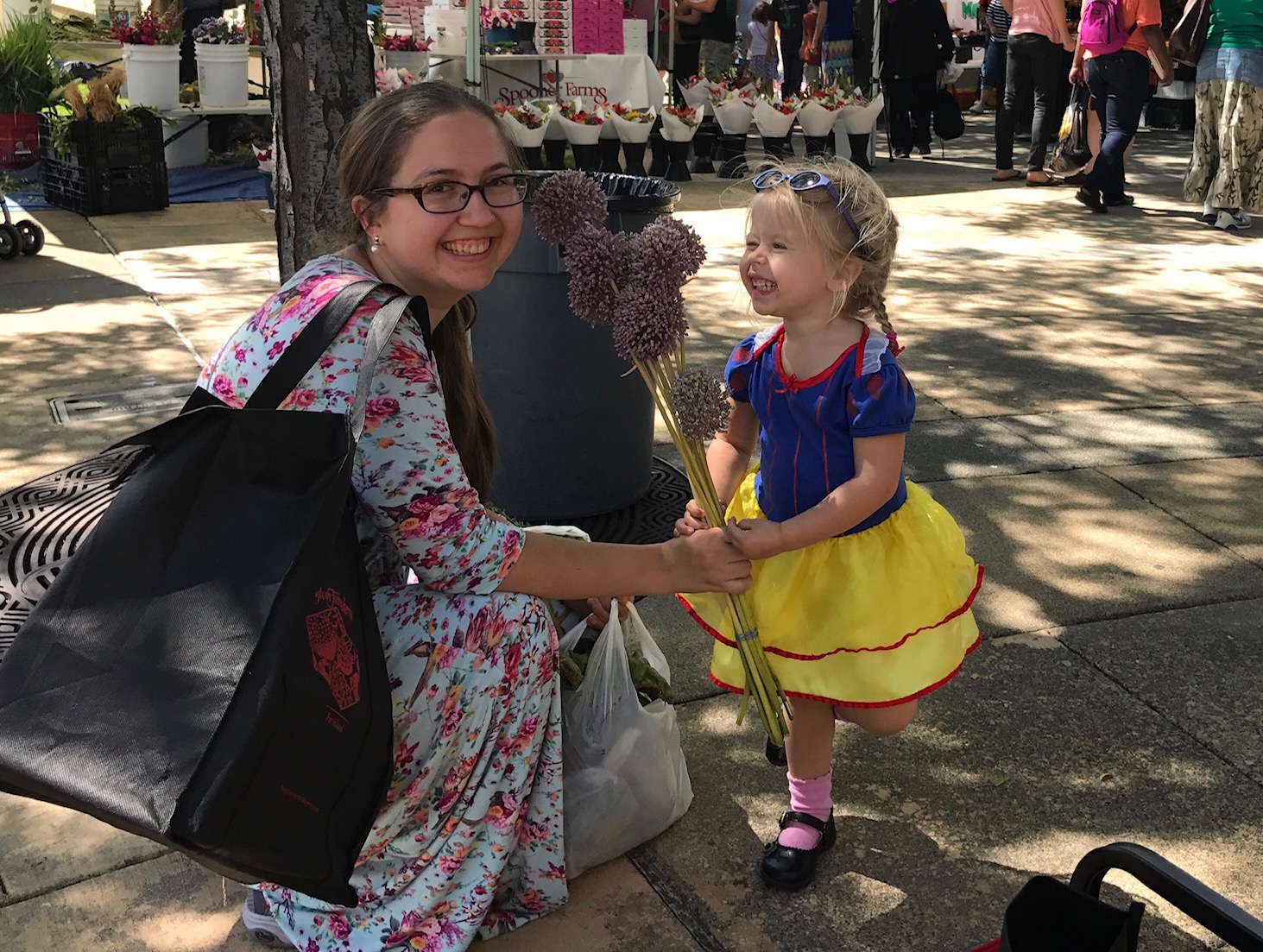
 Tomorrow is the opening day of Renton Farmer’s Market! I’ll be there at 3:00 PM with members of my family as the opening bell formally kicks off the 2019 season.
Author: Randy Corman
Hi, I'm Randy Corman, Renton City Councilmember. I am the most senior member of the council, currently in my 25th year (I have been elected seven times). I pay for this website with my own funds. Please recognize that all views expressed in my journal entries are my own, and not the official position of Renton City Council, other councilmembers, nor the city of Renton. Thanks for reading.
Citizen led efforts to save Cougar Mountain’s DeLeo Wall from clear cutting
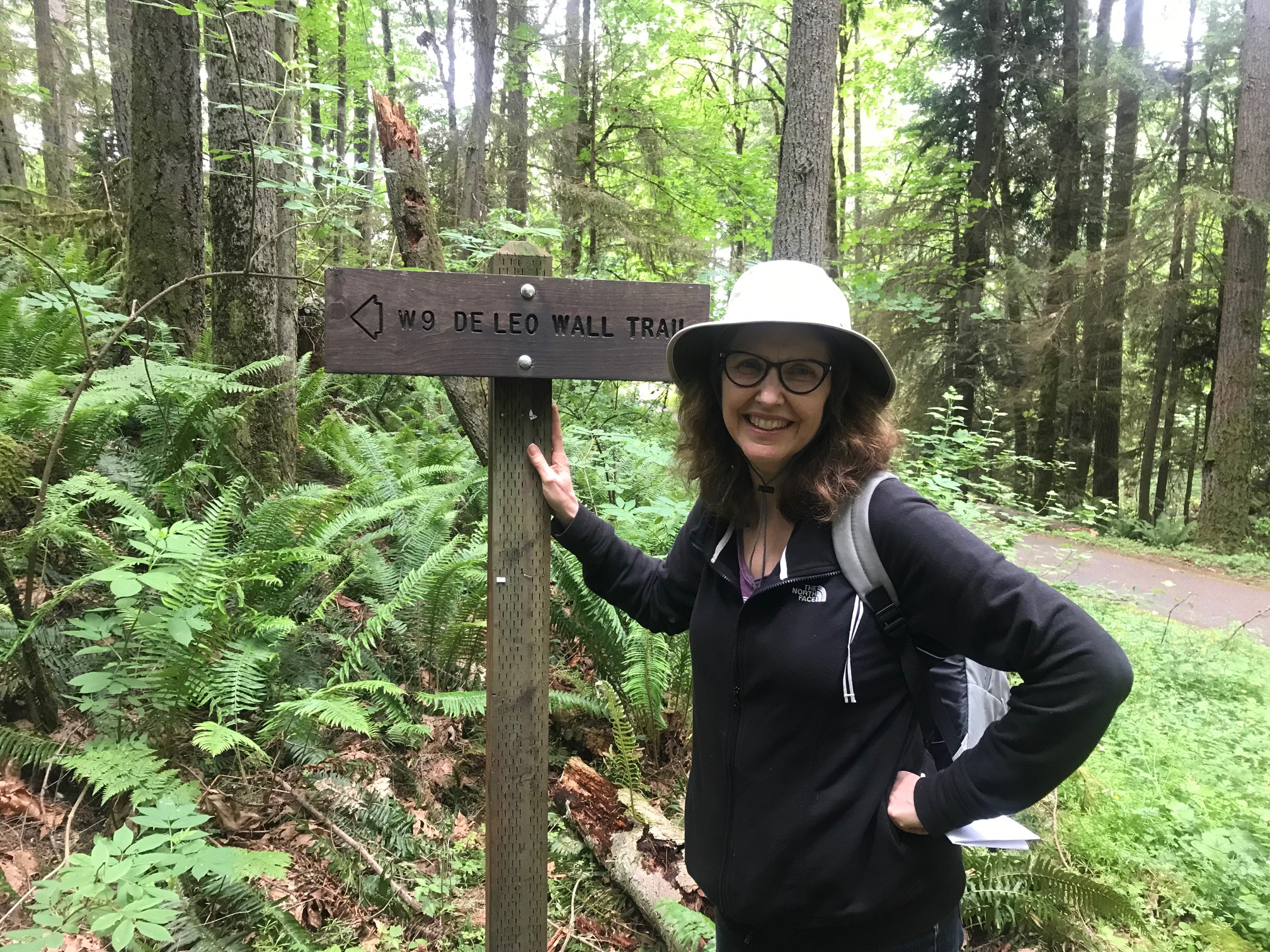
Photo: My wife Cathy on the DeLeo wall trail on Cougar Mountain.
A year ago a company requested permission from the Washington Department of Natural Resources to clear-cut harvest all the timber on 37 acres of steep property between Cougar Mountain State Park and May Creek, in the City of Newcastle, just feet from the Renton City Limits. The land is too steep for significant development, so the owners have turned to logging as a way to make an income from the land. Neither Newcastle nor Renton has a “timber harvest” zone, but State forestry permits currently supersede city zoning.
Nature, historic homesteads, and new development peacefully coexist in May Valley thanks to May Creek Basin Action Plan
Seven years into my Renton Council service, after years of witnessing heart-wrenching flooding in the May Creek Basin, we finally had a plan to fix it. Cities of Renton and Newcastle had teamed with King County, along with residents, property owners, and environmental experts, to develop the May Creek Basin Action Plan. Along with colleagues and scientists, I had trudged knee-deep in mud as we examined areas hardest hit by flooding and landslides. Our site surveys were followed by hours of meetings, and teamwork with maps, zoning plans, and development standards. I had special interest in the May Creek Basin plan, as I also served as Renton’s representative on WRIA 8 salmon recovery committee, and we were getting close to publishing our draft plan for saving Chinook Salmon in the Lake Washington, Cedar River, and Lake Samamish watersheds (which includes May Creek. )
We all knew there would be more development in the beautiful May Valley. The area is characterized by lovely historic homesteads offering healthy country living conditions just minutes from employment centers in Renton, Bellevue, and Issaquah. These homesteads were interspersed and surrounded with undeveloped land that potentially offered new picture-perfect home sites, so long as the flooding, landslides and sustainability could be brought under control.
May Creek in Renton. (Photo courtesy City of Renton.)
Sunset Neighborhood Park completion, including playgrounds and water feature, coming soon!
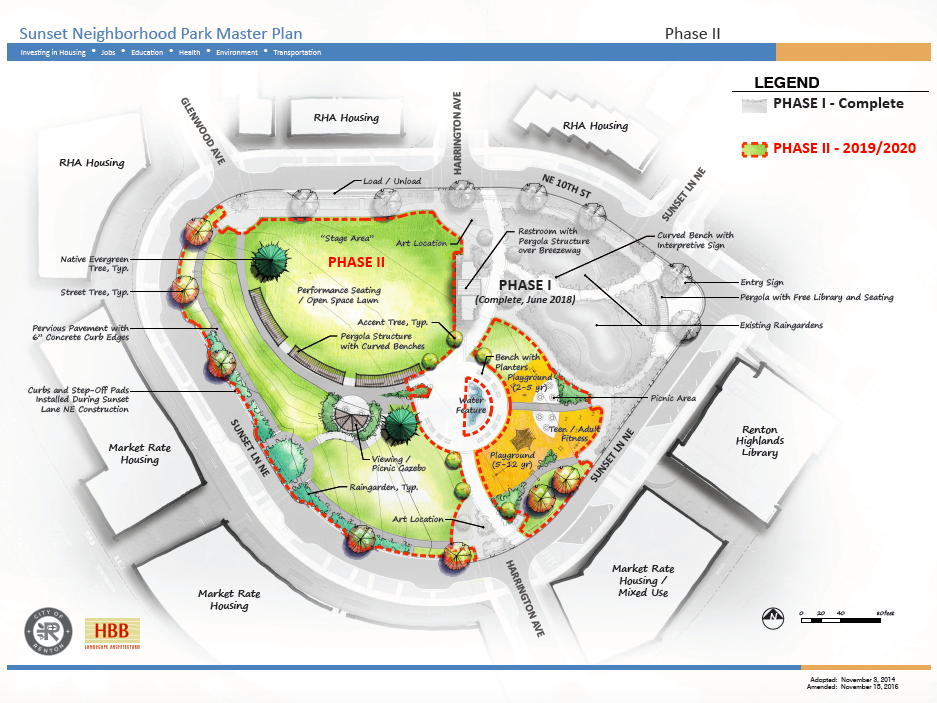 Click here for a full-size PDF of the Sunset Neighborhood Park Masterplan Revised Phase II-2018
Many residents have asked me for more details regarding the plan for the Sunset Neighborhood Park, which is off to an excellent start but is not complete yet. Phase 1 included an entry plaza by the library with seating and overhead pergola, restroom facilities, wide walkways, a large lawn area, and rain gardens.
Renton Highlands Revitalization still moving forward even with setback at Hi-Lands Shopping Center
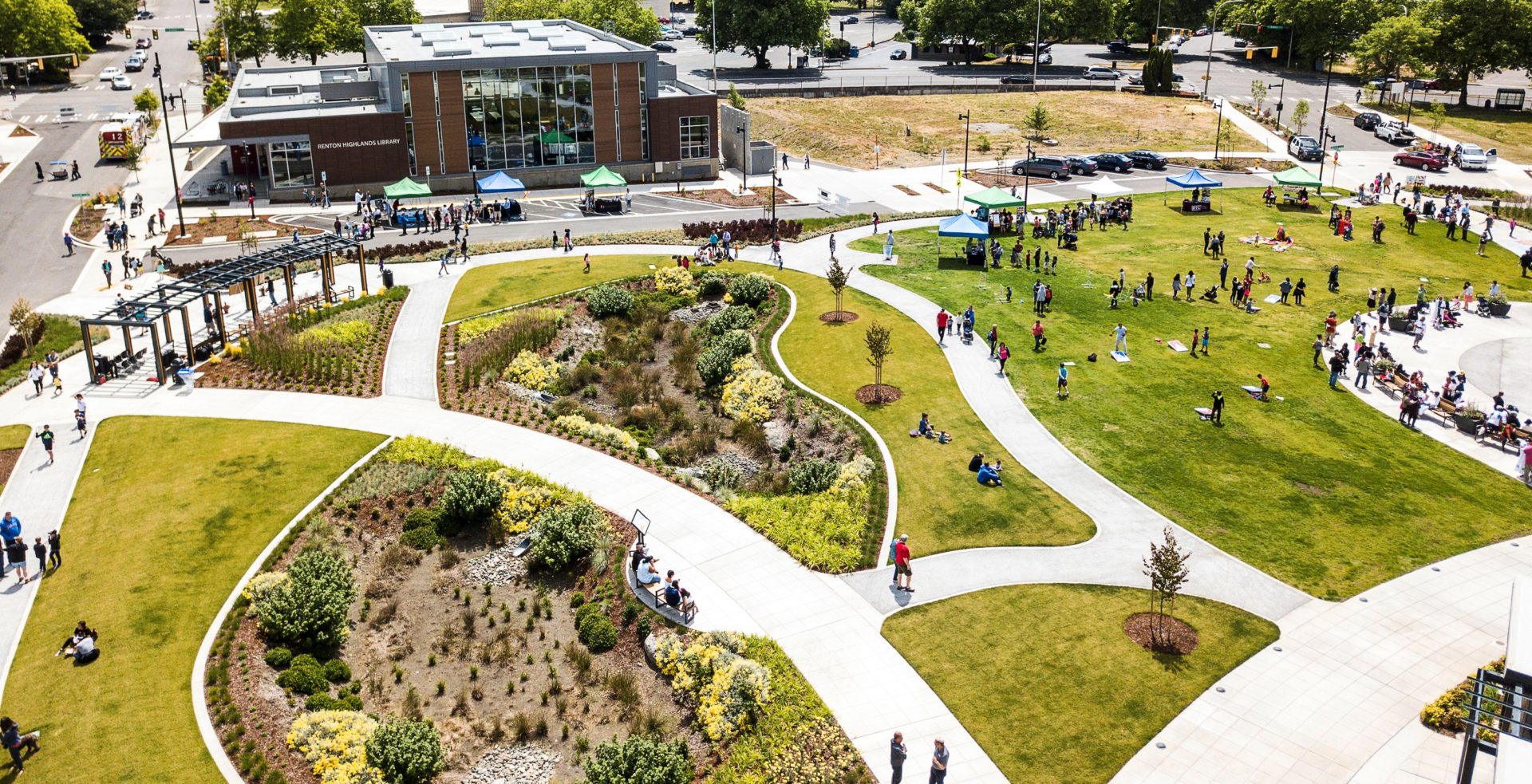 Photo courtesy of www.sunsetrenton.com
Renton residents got a first hand account of my reaction when I learned the builder had pulled out of the Hi-Lands Shopping Center renovation right after making the long-time tenants move out. I got the news in a public meeting, and reporter Haley Ausbun did an excellent job of recording my candid reaction in an article in the Renton Reporter. “The loss of the Solera Project came as a shock to Corman at the March 18 Committee of the Whole meeting.” …“This shopping center has been ground zero of the Highland redevelopments for probably 20 years at least,” Corman said.” …”Corman also said he was disappointed, and doesn’t understand what led the eviction to happen so early.”…“We’re trying to do a revitalization, not end up with a shuttered shopping center,” Corman said at the meeting. “It’s been such a long road to get here.”
In summary, I share the community’s disappointment in the way the Hi-Lands Shopping Center business timing was handled. I’m also working with our city’s economic development department to help ensure the planned renovation project gets going again soon, and that we don’t miss any opportunities to find homes for the businesses that were displaced.
With that said, I want to assure the Community that Renton Highlands Revitalization, also known as “Sunset Area Transformation” is proceeding at a brisk pace. A beautiful, sustainable, inclusive, and thriving Renton Highlands, including new market-rate and affordable housing, improved transit, and an all-new “parkway-style” Sunset Boulevard, is just a few short years away. In city-building time scales, it’s just around the corner.
The 11-acre Highlands Shopping Center is a part of the overall plan, but only a small part, as the entire improvement area covers 269 public and private acres. Decades ago, during a bleak period when businesses were pulling out of the highlands, I encouraged the council to put $1,500,000 in a fund to jump-start Highlands Revitalization . We’ve targeted this money for infrastructure, property acquisition, and planning, including creation of the award winning Highlands Revitalization Plan that is summarized well in this “CityLab” news article here. In author Kaid Benfield’s words, “If you’re looking for exemplary revitalization with new, first-class green infrastructure, community facilities and mixed-income housing, take a look at what’s happening in the Sunset district of Renton, Washington, a city of about 90,000 people south of Seattle.”
It took countless meetings with residents, businesses, and dozens of governmental and charitable stakeholders, to arrive at the highly collaborative and successful plan we are working to today. We had some notable rough spots in the early days of creating the plan, and through it all I personally worked hard to help keep residents and property owners on board through every step. We also suffered a small setback when one of our first demonstration projects, Harrington Square Apartments, suffered a dramatic fire while being roofed during construction, before the building’s fire walls and fire-fighting features were completed. Thankfully no one was hurt, and our dedicated firefighters aided by recently enlarged water lines and reservoirs were able to readily contain it.
In recent years we have re-worked the plan to make it an even more collaborative and co-owned product of 28 stakeholders/partners, maximizing our opportunity for County, State, Federal, and private grants. Because the Sunset Transformation Plan is so comprehensive, including new housing and transit, it has been successful in pulling in many millions of dollars in outside assistance. Most recently, King County pledged $5,000,000 towards this plan and hundreds of thousands of extra hours of bus service to Renton in support of the important new housing that is going into the area. We’ve also been able to acquire grants to allow us to simultaneously complete phases 2 and 3 of the park near the library, which will bring new playgrounds, water features, shelters, tables and seating to the park, completing it.
Within the private development community, this plan is well known, and we expect to see an increasing number of private retail and housing projects on the Sunset corridor in the next decade. This will help us meet growth management targets, while keeping the high-density housing on appropriate corridors where it does not increase traffic in single-family neighborhoods.
I’m excited about this plan and I hope you are too. I’ve worked on it 20 years, and as Mayor I plan to see it through to completion. As always, please feel free to comment with your thoughts below.
For a virtual year-book of Highland Revitalization Discussions and related blogs, search “Highlands” in my search bar or simply click here
The history of the Landing, our modern regional shopping destination
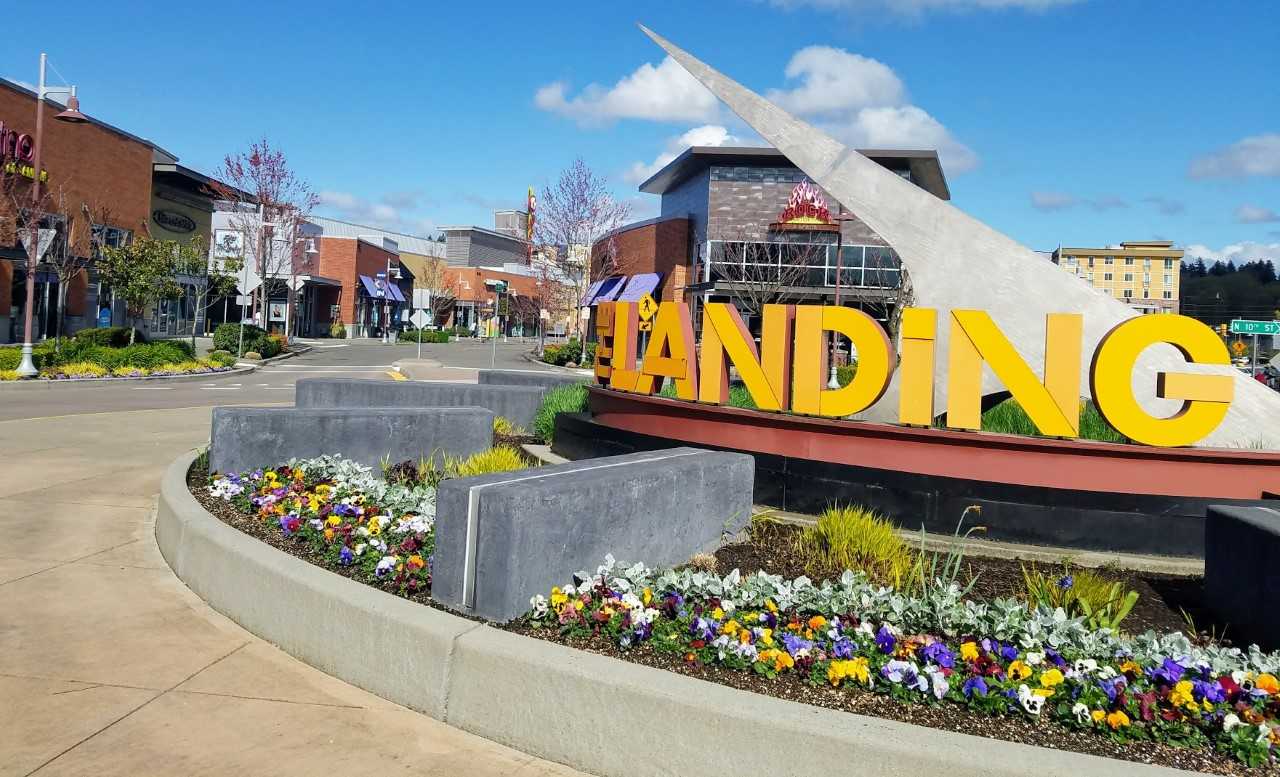 Photo courtesy of Gary Palmer
We first envisioned the Landing in 2000, in Jesse Tanner’s second mayoral term. I was council president that year, and had been working for years with Jesse, the Council, and our Economic Development Director Sue Carlson to increase Renton’s retail sector. Decades earlier Renton had lost major retail anchors to Tukwila’s new Southcenter Mall, including Penny’s and Sears. We knew that bolstering Renton’s retail offerings would increase city sales tax revenues and provide residents with additional fun and convenient places to shop and dine. Boeing had recently let us know they were to begin putting 3-5 acre tracts of surplussed industrial property up for sale as the company modernized its design and inventory management systems.
We saw an opportunity for a new shopping and entertainment center instead of warehouses and storage yards. We could foresee the possibility of a sixty acre mixed-use center, as long as the property was not sold in individual pieces. We developed the working title “Southport Landing,” adopting the Southport name from an adjacent development in its early planning stages on the waterfront at the site of the former Shuffleton power plant. Jesse, Sue and I (as council president) interviewed several potential project developers to establish viability of our vision and learn what they would need from us to be successful. In the next several years this project took shape in many ways, including hammering out a critical agreement with Boeing. If the aerospace company consolidated the land into one large parcel while they pulled back from it, instead of selling it off a few acres at a time, the city of Renton would contribute roads and public infrastructure to the final project. The City would use some of the tax revenues generated by the new project to pay for this infrastructure. Renton would get a say in the purchase and sale agreement, including approving the buyer and the proposed project.
We selected Harvest Partners, who employed renowned architects and brought us concepts we approved. The name got shortened simply to “The Landing”, since “Southport” was an independent (closely coordinated) project on the lake. Then we battled environmental lawsuits funded largely by Westfield, owner of Southcenter Mall as they seemed determined to prevent us from building the Landing. Making things more complicated, Westfield has significant leverage over many national retail chains since Westfield owns malls throughout the world, so we found we were generally going to need independent local companies and non-Westfield-dependant retailers to populate our new center. Construction finally commenced in 2007.
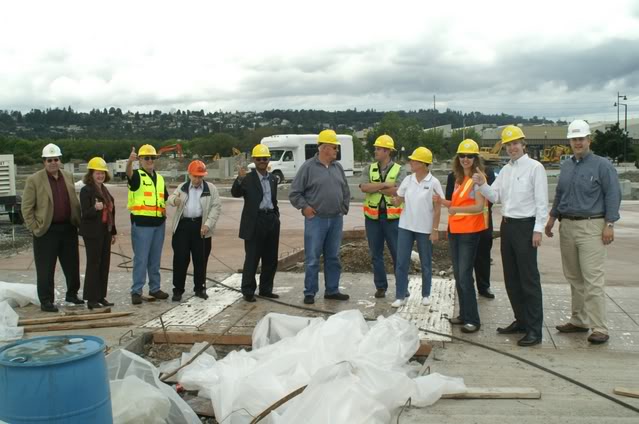 City officials and citizens standing near the center roundabout in the entertainment area of the Landing.
Then the great recession hit and we had some setbacks, like losing the Starbucks store. Harvest Partners had nearly completed construction, and they earnestly pushed forward with leasing, confident the economy would come back.
Within weeks of opening, it was clear we had hit a home run. Renton residents flocked to the new stores and entertainment, instantly filling local restaurants like the Rock and Papaya, and quickly making the Target and LA Fitness some of those chains most successful stores in the nation. The fact that we had to seek local chains and retailers ended up being one of our greatest strengths, as residents found the Landing to be a lovely and unique shopping environment, with wonderful new offerings, providing a fresh change from standard malls across the country.
Daily activities at the Landing can be found here.
To see pages of articles and photos from my blog during the creation and opening of the Landing, click here.
I’m running for Mayor!
My family and I are very excited to announce that I am officially running for the the office of Mayor of Renton!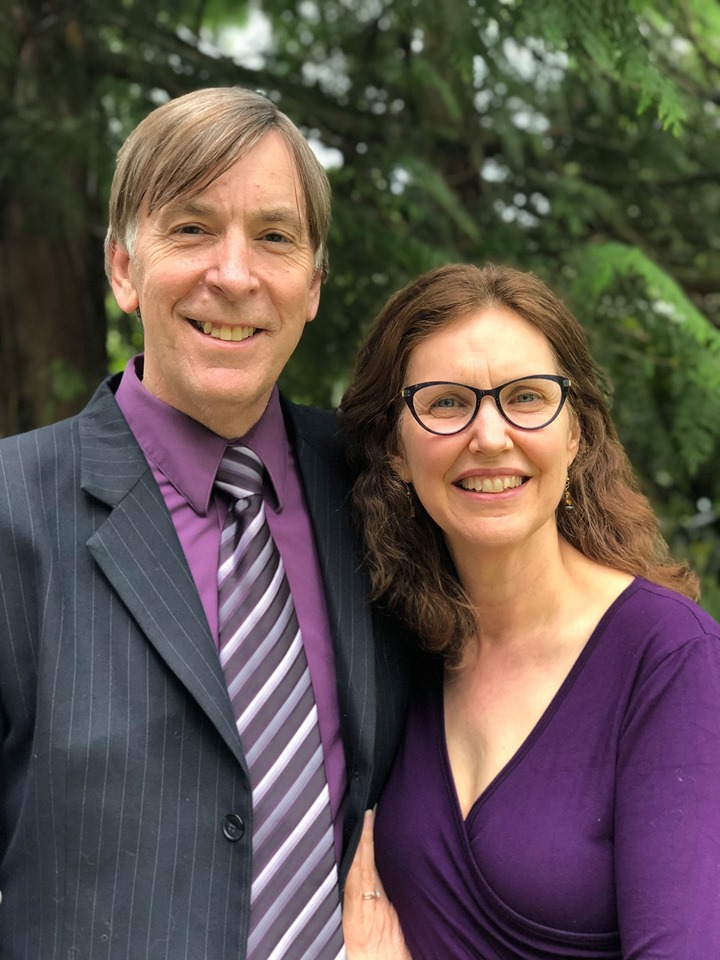
This position is an open seat, as Mayor Law has announced his retirement at the end of this year. As the senior Councilmember, I will bring over 25 years of experience as a Renton Councilmember to this role, including five years as Renton Council President and another five years as Council President Pro-Tem. I have chaired every council committee, and have substituted for the Mayor on many occasions. I have worked with four Renton mayors in my decades on City Council.
I also bring 33 years of management and engineering experience from my career at the Boeing Company from 1984-2017. Early retirement from Boeing has afforded me the opportunity to serve Renton residents in this new role.
Over the years I have been instrumental in bringing us the Landing, downtown Piazza, Farmers Market, Southport, 405/167 improvements, street and sidewalk improvements, the Henry Moses Aquatic Center, the Neighborhood Program, modern fire and police stations, the off-leash dog park, expanded municipal arts (including the new rooftop dragon!), and many other new parks and libraries. I’ve represented Renton in many regional forums including the I-405 Executive Committee, Metro Regional Transit Committee, and Salmon Habitat Recovery. I’m currently collaborating with the Mayor and council colleagues on downtown and highlands revitalization projects, creating a Benson Hill Community Center, building a more inclusive city, adding new police officers, building a new police training center, and working to reduce traffic congestion, while minimizing costs to homeowners by expanding Renton’s retail base.
As Mayor I will bring the same enthusiasm, open-mindedness, collaboration, and desire to hear from the whole community that I am known for on City Council. I promise a smooth and collaborative transition of leadership, followed by building on our successes toward an even brighter future for all of us.
Main Street is the first of many; one-way street downtown is converted back to two-way
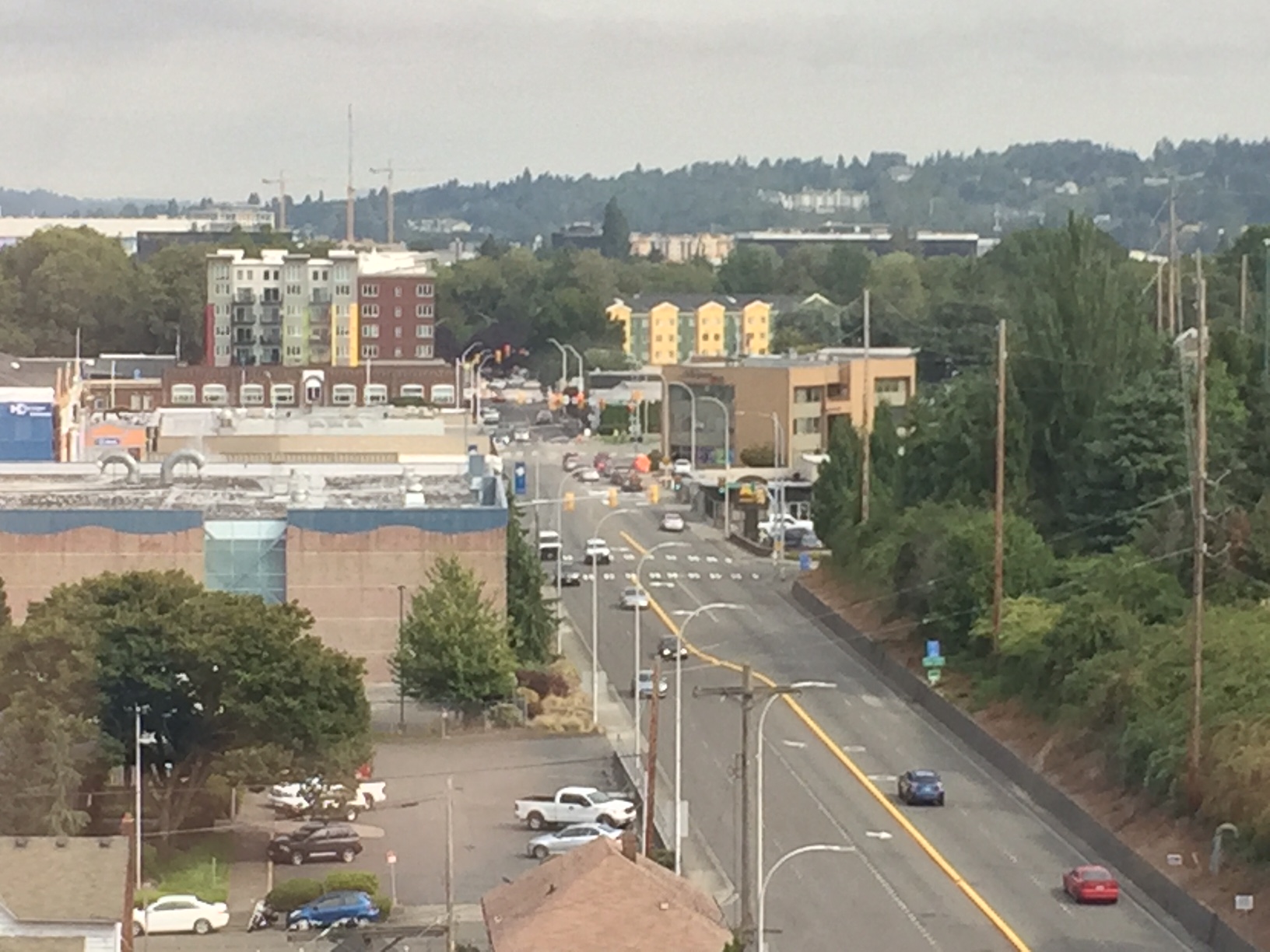
Above: The view down main street from City Hall. The street was already open to two-way traffic in the foreground, but was closed to northbound traffic North of the Veterans Park in the distance. (All traffic was forced to turn right just past the three story building on the right side of this photo –where an orange construction sign can be seen on the sidewalk. This traffic can now also go straight.)
From a meeting room in City Hall this morning, I caught the scene as our Transportation team opened up the north end of main street to two way traffic for the first time in half a century. Motorists seemed unsure of themselves as they tentatively drove in new directions and tried some new turning movements. This was the first of several one-way to two-way street conversions we are planning in the coming years to give our downtown a more livable environment and make it easier to navigate.
This street conversion will be followed by similar changes on Williams and Wells, and ultimately Second and Third Streets in future years if we can secure the necessary funding. The conversions require updating of signals and intersections to latest standards, so the cost to eliminate all one way streets in Renton is in the tens of millions of dollars. We’re hoping to focus on the easiest and most important ones first, and obtain much of this money through state and federal grants, existing transportation revenue sources, and extra sales tax revenues resulting from increased vitality of downtown businesses as we improve the environment.
We’re planning on accompanying the changes with wider sidewalks with outdoor dining, diagonal parking (where possible), and enhanced landscapes.
To help nurture a thriving business environment, engineering designs will encourage pass-through traffic not to go through our historic downtown. For example, SR 900 has been moved off of Second and Third Street, and onto the newly widened Rainier Avenue and I-405.
I wrote a blog entry in 2011 with some of my ideas on downtown revitalization, and I described (with photos) how slowing down traffic, focusing on street frontages, and working together as a community dramatically transformed the downtown in my hometown of Livermore, California. That blog can be found here
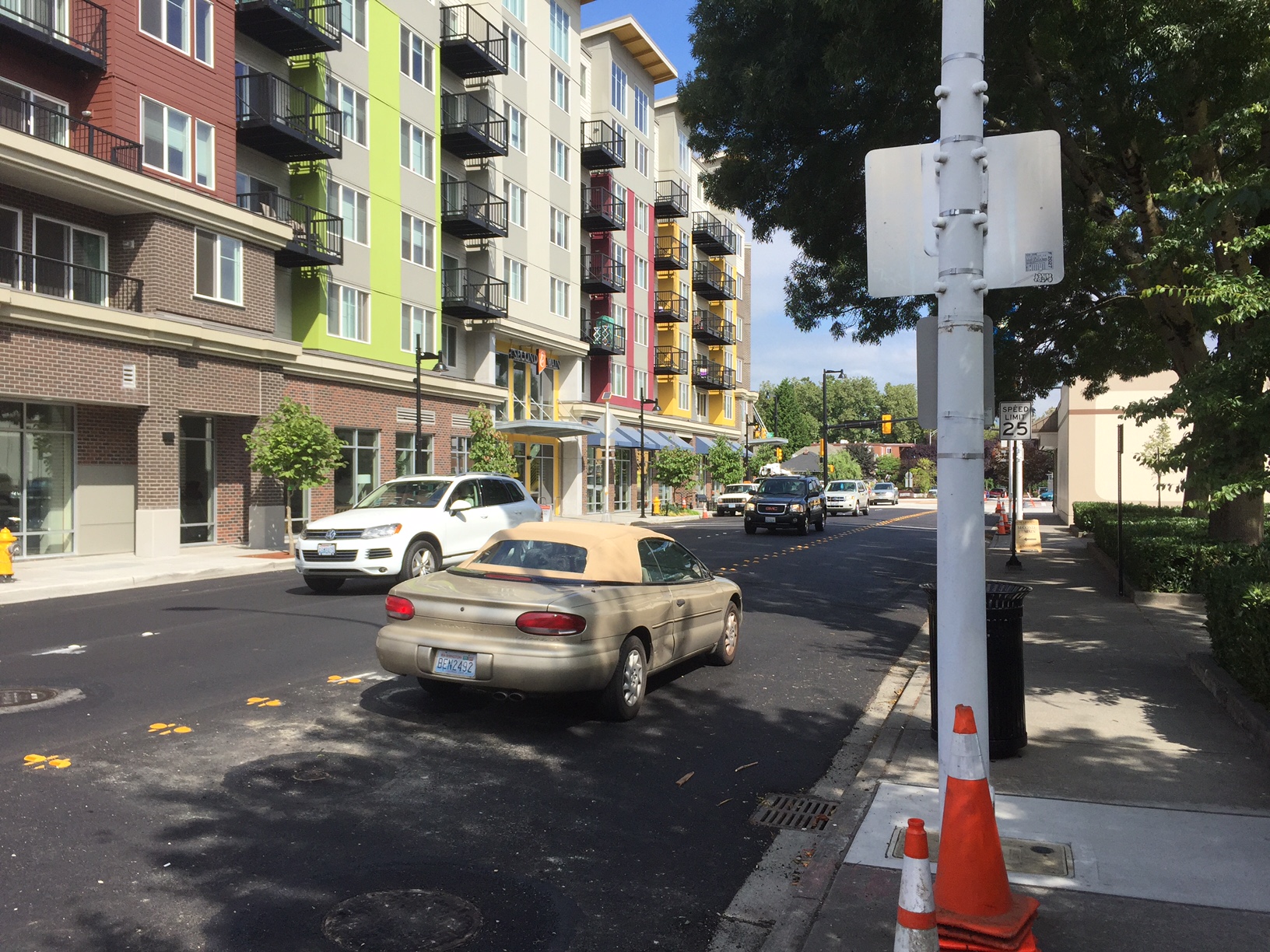
Above: The new two-way section of Main street, in front of g.h.y. bicycle shop.
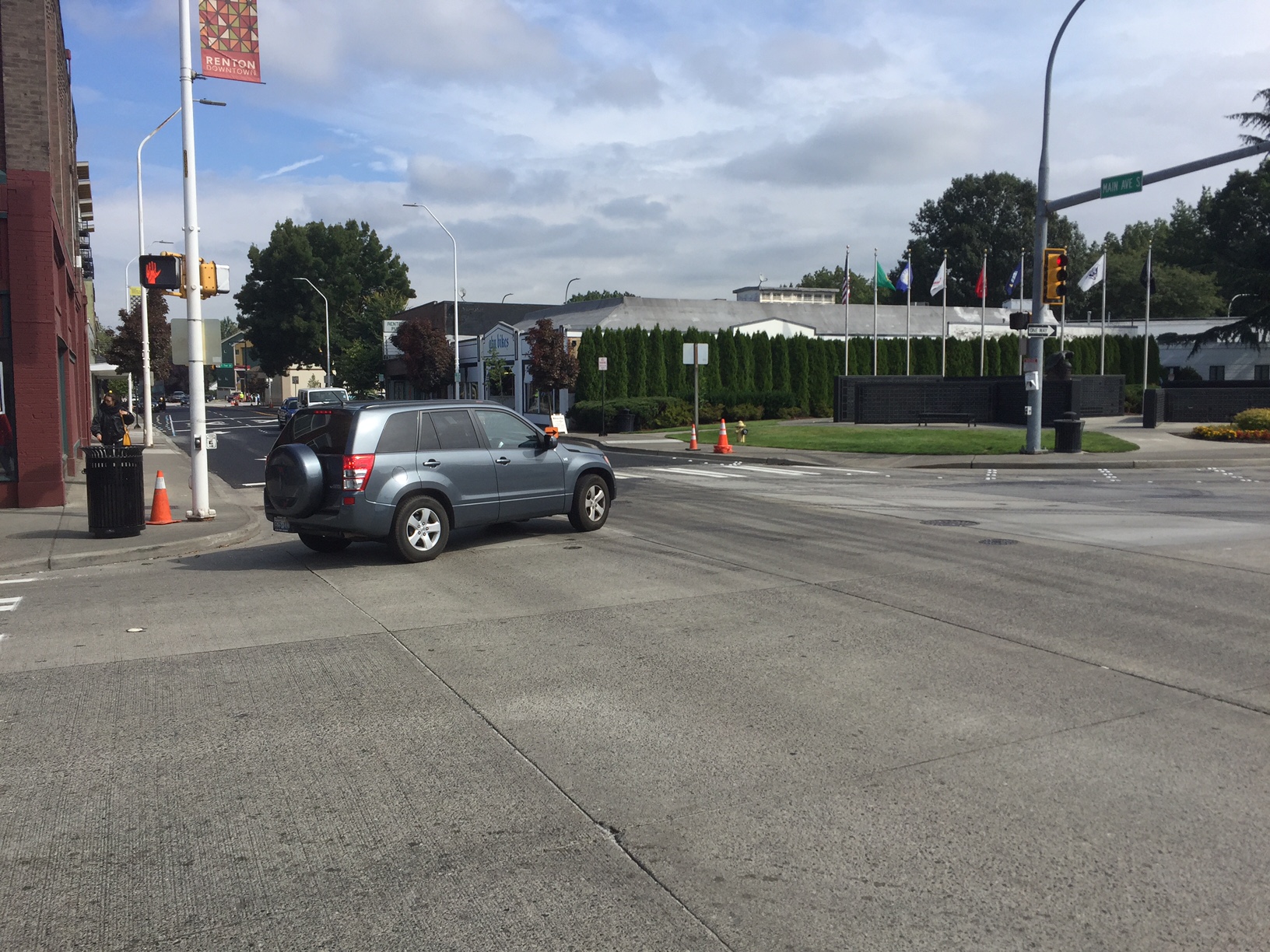
Above: A motorist headed east on Third Street tentatively makes a left turn onto Main Street, something that was not possible since the 1960s.
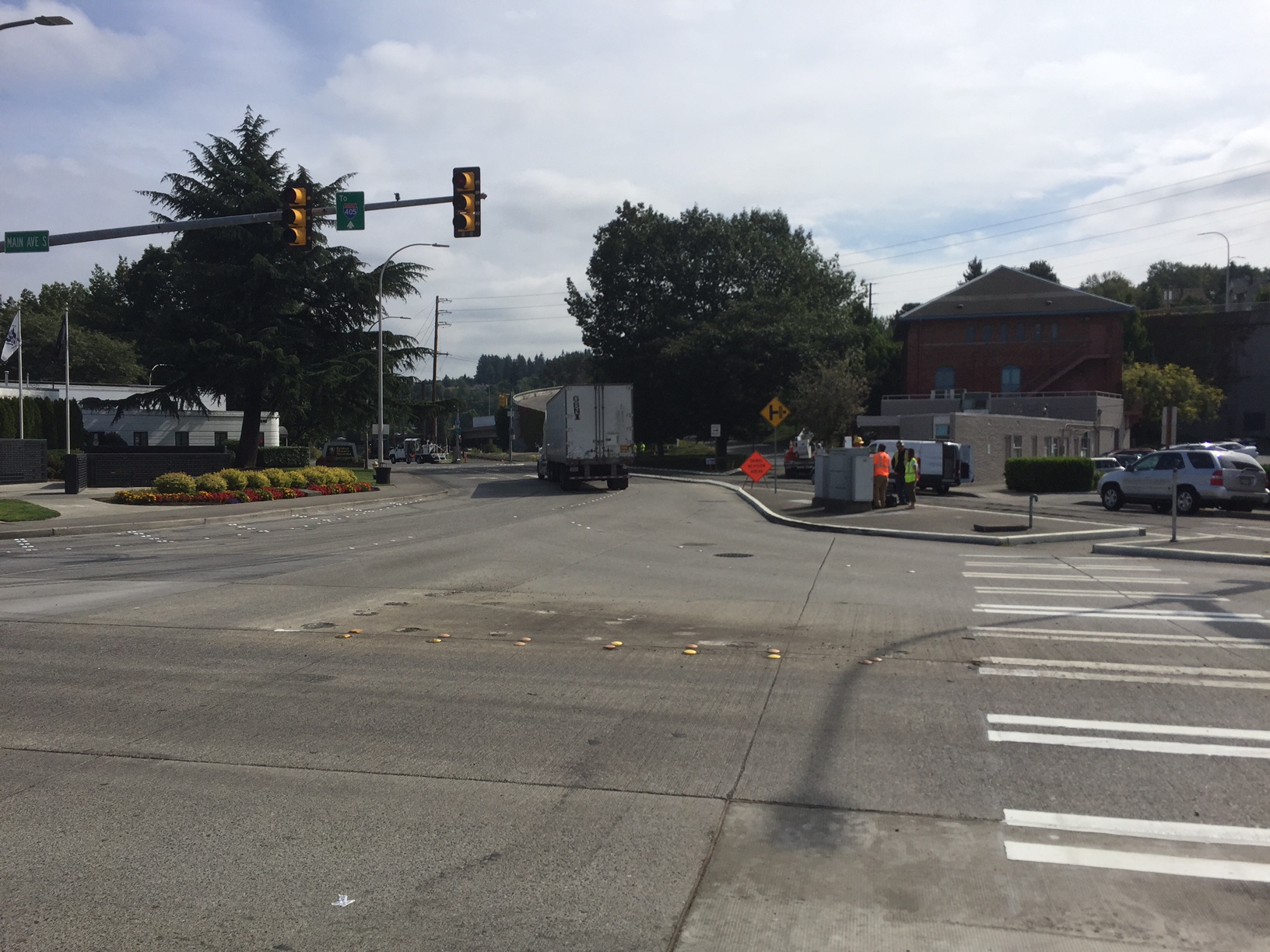
Above: Renton transportation experts monitor the stop signals and the control box, making sure the new traffic signals are working exactly as engineered to allow the new travel and turning directions.
Clarified in writing and signed in ink; eminent domain not to be used for Community Center river promenade plan
Six years ago Renton adopted a City Center Community Plan that created vision for the future of our downtown and it’s adjacent neighborhoods as envisioned by residents, businesses, and other stakeholders. This was the first of what will ultimately be 8, 9, or 10 plans covering our entire city and potential annexation areas.
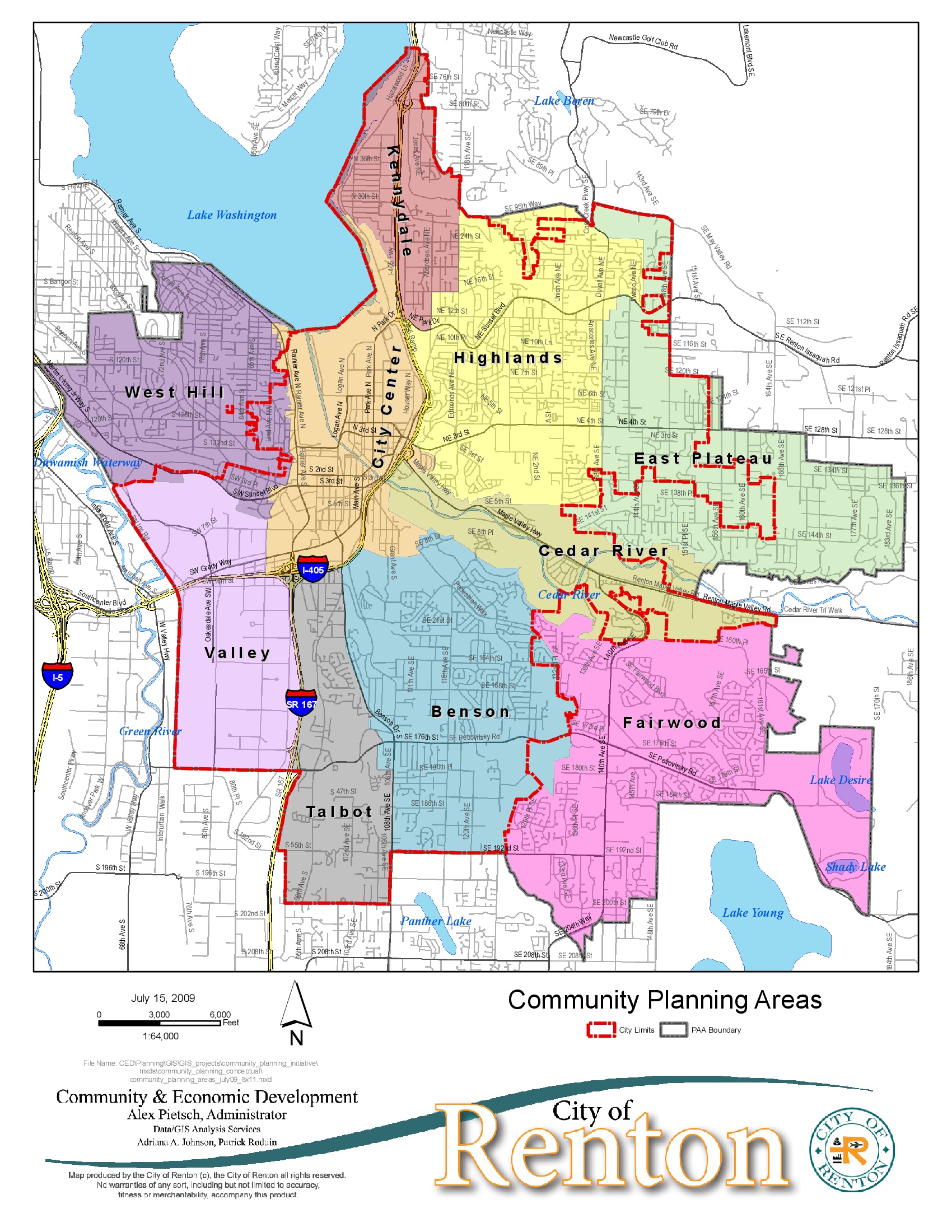
The City Center Community Plan was one of the first plans created, along with Highlands and Benson, under our Community Planning program
The completed City Center Plan contains many excellent ideas, and the entire 165 page document can be found here HERE
There was one detail that raised concerns by some residents in the area, and it was brought to Council’s attention last year.
Section 8.3.3 of the plan includes discussion of a greenway/promenade near Cedar River, based on some notional sketches elsewhere in the plan. This section includes the language that “the City should work closely with property owners, business owners, and residents that will be impacted by zoning changes or potential land assembly.”
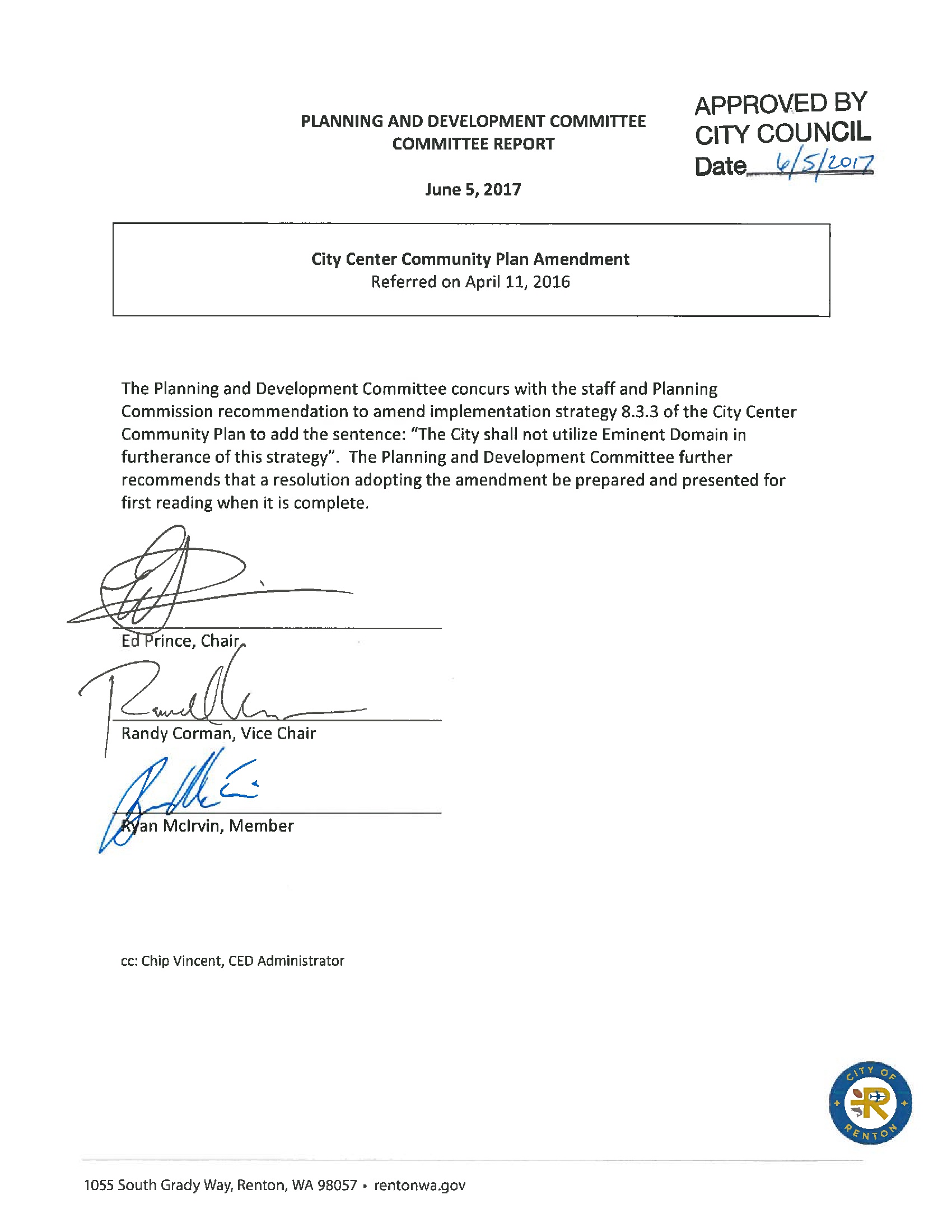
Some homeowners in the area became concerned that the City could be planning an eminent domain taking of their riverfront homes or property to accomplish this plan. When the issue came before City Council, the City staff explained this was not the intent of the plan, but residents remained worried. So to alleviate this fear and help these residents feel safe with the plan, council unanimously agreed to formally adopt a written amendment to the plan to clarify that eminent domain would not be used for this purpose. The statement went through our Planning Staff for drafting, our City Planning Commission for review and recommendation, and then came back to Council’s Planning and Development Committee for a formal recommendation to the council. We produced the report below, and council formally adopted it on Monday night.
I’ve been a consistent voice against eminent domain overreach, a topic which brought me into City politics 30 years ago. Please read this blog entry to learn more.
New I-405 to I-167 HOV connector is one step in a long-term plan to fix this major freeway intersection
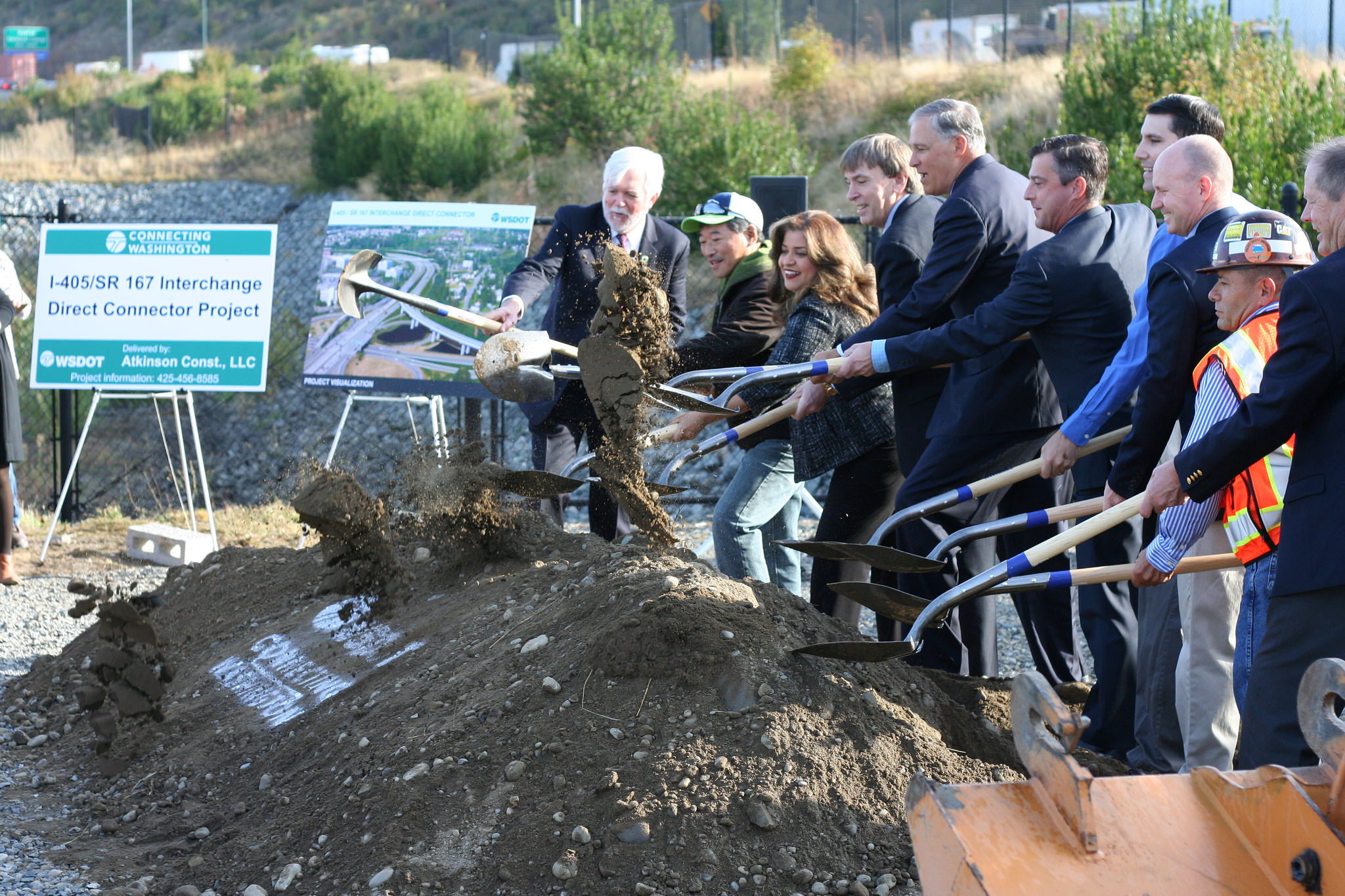 Breaking ground on the 405/167 HOV direct connection last year
Most Renton residents are aware that a major construction project is occurring at the intersection of I-167 and I-405, bringing much-needed improvement to this overwhelmed intersection. But what is less well known is how the current project, the connection of the HOV lanes from I-405 to I-167, will fit into a larger project that may not be completed for another decade or two depending on when funding is available.
I’ve prepared this blog entry to help clarify the situation.
The original I-405/I-167 interchange makes use of four “clover leaves” to transfer motorists from one roadbed to another. It may be an appropriate design today for the crossing of two rural highways in a sparsely populated area. It was not too bad in 1965 when it went into service. But this design requires cars to slow to about 20-25 miles an hour to make the curves of the clover leaves and is not an effective design for a modern urban freeway connection that is moving tens of thousands of motorists per hour. As motorists slow to make the cloverleaf turns, they quickly form a queue that backs up onto the freeway, bringing traffic to stop-and-go conditions in which the road loses two-thirds of it’s carrying capacity.
The proper fix for this is to keep motorists moving at 45-50 miles per hour as they make the freeway connections, keeping traffic at it’s optimum carrying capacity. (Freeways carry the most cars per hour when motorists are moving at a steady 50 miles per hour or so; at lower speeds people will follow so close they can trigger a stop-and-go condition, which dramatically cuts carrying capacity, and at higher speeds like 65-70 good drivers will spread out so much for safety that the capacity drops.)
One of the challenges with making these high-speed connection ramps at the 405/167 intersection is that we have important Renton local access to the freeway at this location. Rainier Avenue/405 is used by tens of thousands of Renton motorists per day to get access to I-405 and 167. We are trying to join two major urban freeways and serve local residents all at the same location.
So the State Department of Transportation has been working with Renton to fix freeway flow AND preserve our local access to I-405. A solution has been identified. The final configuration of the new freeway is not funded and is not widely advertised, so I am sharing it here.
The final configuration, which I don’t expect to see for maybe another 10-15 years or so, will give Renton residents I-405 access via a “split diamond” interchange system, offering on-ramps to northbound I-405 via Talbot Road (a project we completed about 7 years ago), and access to southbound I-405 via Lind Avenue (a project that will mirror the Talbot Road interchange and be completed in the future.) The Talbot and Lind Avenue onramps will be connected to one-another via improved frontage roads. This final arrangement will eliminate three of the cloverleaves on I-405/ I 167, leaving only the leaf that handles the relatively low volume of Northbound 167 drivers merging onto South/West I 405.
The project in work now will not complete all of this work, but will be an important component that will add near-term relief. It has been engineered to support the final configuration.

The above project is the one in-work now (for which we held the ground-breaking above). The flyover ramp shown in the picture connects the HOV lanes from Northbound and Southbound 405 and 167. You can read more about this project here
The future final configuration will add direct connections for single occupant vehicles, and will look like the picture below. We will need to work with the state and federal government to secure more funding to complete this.

Future (indefinite date) completed I405/I167 interchange
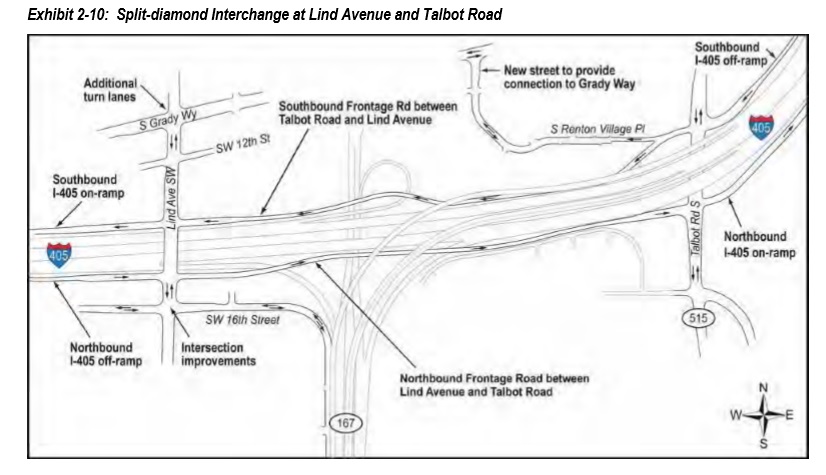
Engineering layout of proposed new “split diamond” interchange, providing local access to I-405 from Lind Avenue and Talbot.
If you are interested in learning more about the final plan, you can go to this link.
Keeping I 405 and I-167 flowing is extremely important to Renton. In addition to needing these freeways to serve residents and businesses in our community, we also find our surface streets get seriously congested from cut-through traffic as out-of-town commuters look for ways to avoid these freeways on a daily basis. During peak hours, many of our streets have more pass-through traffic (neither originating or terminating in Renton) than local traffic.
Construction starting soon on incredible new bike and walking trail from Renton to Woodinville
For those of you who have not heard, Renton is partnering with King County and several Eastside cities to build a premier bike and walking trail from Coulon Park to Woodinville. The trail will utilize the abandoned East Side Rail Corridor, that has been preserved under a Federal “rail-bank” program that keeps it intact by trail use and preserves the possibility that it could one day again have active rail on it.
The first phases of trail construction will begin later this year, with a goal that the entire, incredible project will be completed by 2020.
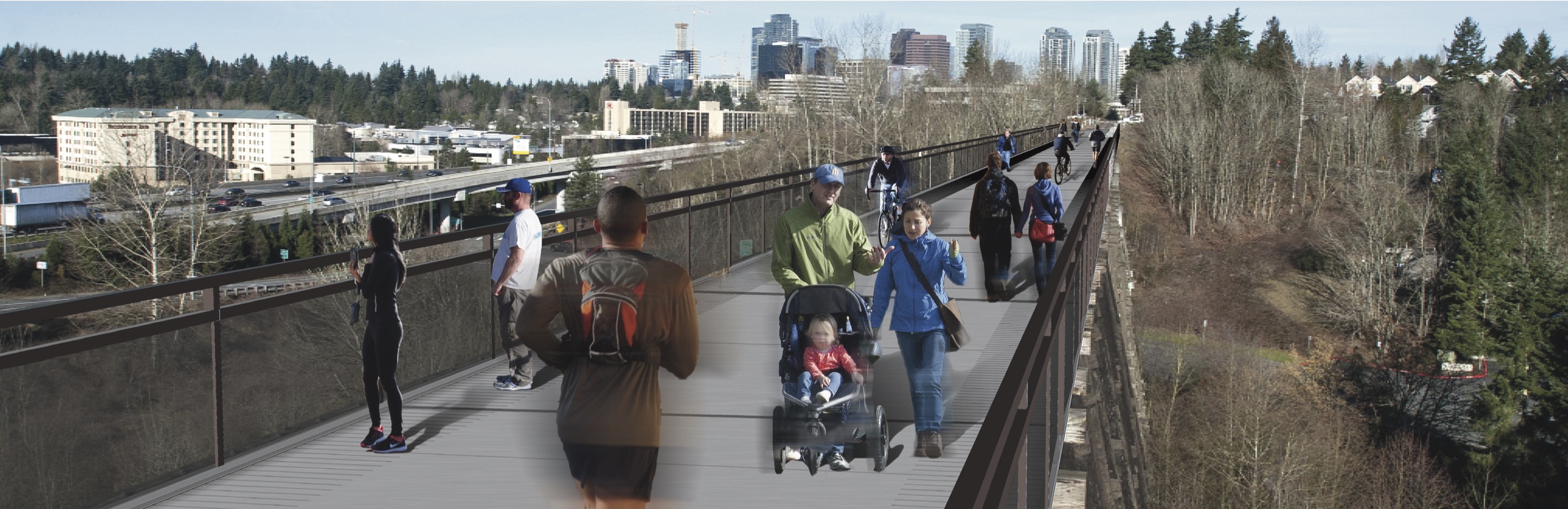
This project will open the century-old Wilburton Rail Trestle to hikers and bikers, who for the first time will be allowed to traverse the 100 foot-high-wooden structure on a new deck that is 16 feet wide. This is certain to become one of our region’s top attractions.
The above video provides a preview of the trestle crossing (minus deck and railings)
The trail will cross I-405 near the trestle, over a new pedestrian/bike bridge that will be built in South Bellevue near the location where the southbound I-405 tunnel was removed during the last I 405 widening a decade ago. Before this widening project, the rail crossed I-405 on a lid over the freeway.
Construction in Renton will start this year with the tracks being lifted, and a new compacted gravel surface being installed in their place. The trail will be open to the public in this form initially, and a year or two later it will be paved to 16 feet wide. The trail is wider than most of our others, as we are trying to make room for bikes and hikers in both directions.
This trail will be a valuable connection on the eastside, and a valuable amenity for Renton residents. Funding is coming from King County Parks and Trails bonds with contributions from a number of other governmental agencies,
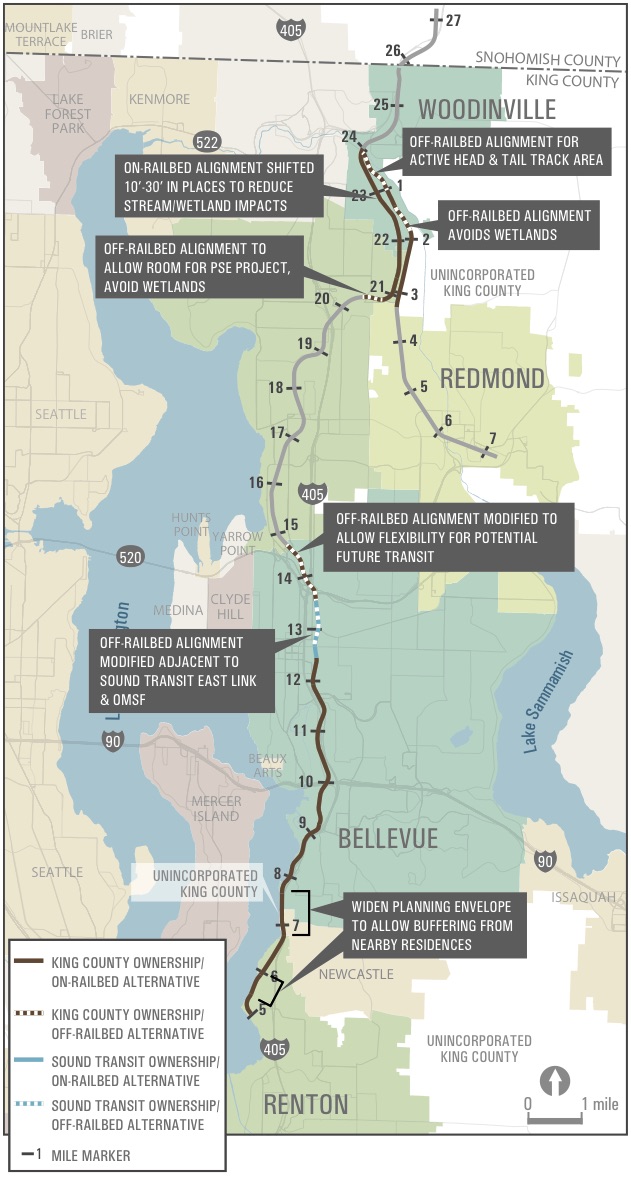
The map above shows the extent of the new trail
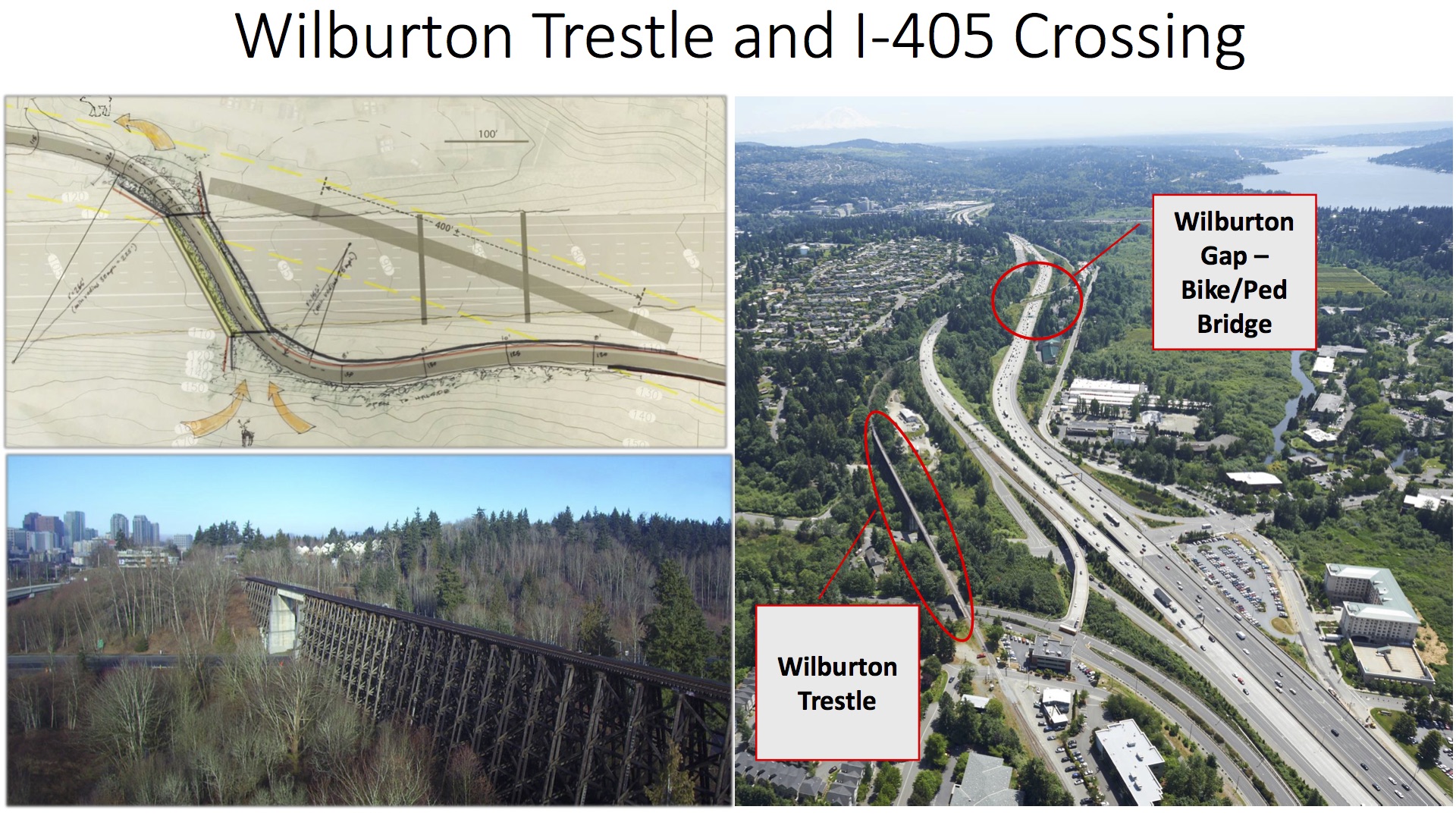
New Vehicle Trespass Ordinance will give police a new tool in fighting car prowls
We added a new chapter to our municipal code last night that defined a new crime in Renton of Vehicle Trespass. We reviewed the ordinance in Public Safety Committee late in the afternoon, and then presented it to the full council for both first and second reading last night. The ordinance makes it a punishable crime just to enter someone’s car without permission or a valid reason, or even to attempt to enter someone’s car without permission and without a valid reason.
This goes further than the state law on vehicle prowling which basically requires a burglary to occur in order to charge a misdemeanor. This new Renton ordinance was inspired by residents who have obtained security camera footage of prowlers attempting to enter cars, and occasionally entering them. Such footage will now allow an arrest to occur, and the culprit can be charged based on fingerprints, security footage, and/or witness testimony. Our police representatives at the Public Safety Committee meeting said the ability to arrest someone going through a parking lot and trying car doors may help prevent prowlers before they even get into someone’s car and take someone’s valuable.
Click on this link to read the ordinance for yourself….it is a pretty quick read.
One of the considerations in making this crime a misdemeanor instead of an infraction is that infractions generally must be witnessed by a police officer to be enforced. An appealing aspect of an infraction is that if an infraction is witnessed by an officer, the officers testimony is generally sufficient to prove the infraction, making it easy to charge. On the other hand, if the only evidence is a citizen witness, the misdemeanor is better because the citizen testimony can be used as evidence in court (subject to cross-examination and other rules of evidence.) Misdemeanors also carry the threat of jail time for repeat offenders, so they are a more effective deterrent. (This element is a consideration in the vicious animal ordinance, as a supplement to the state dangerous dog statute, that we are working on in response to citizen testimony at a council meeting a few weeks ago. I’ll cover that in a future entry.)
So, please call 911 if you see someone that does not appear likely to have permission entering a vehicle, and tell the dispatcher you may be witnessing an illegal vehicle trespass. (The ordinance is fully approved by council, but will require a few weeks for publishing, so there may be a few weeks delay before the change in the law allows new prosecutions.)
I’m happy to be blogging again!
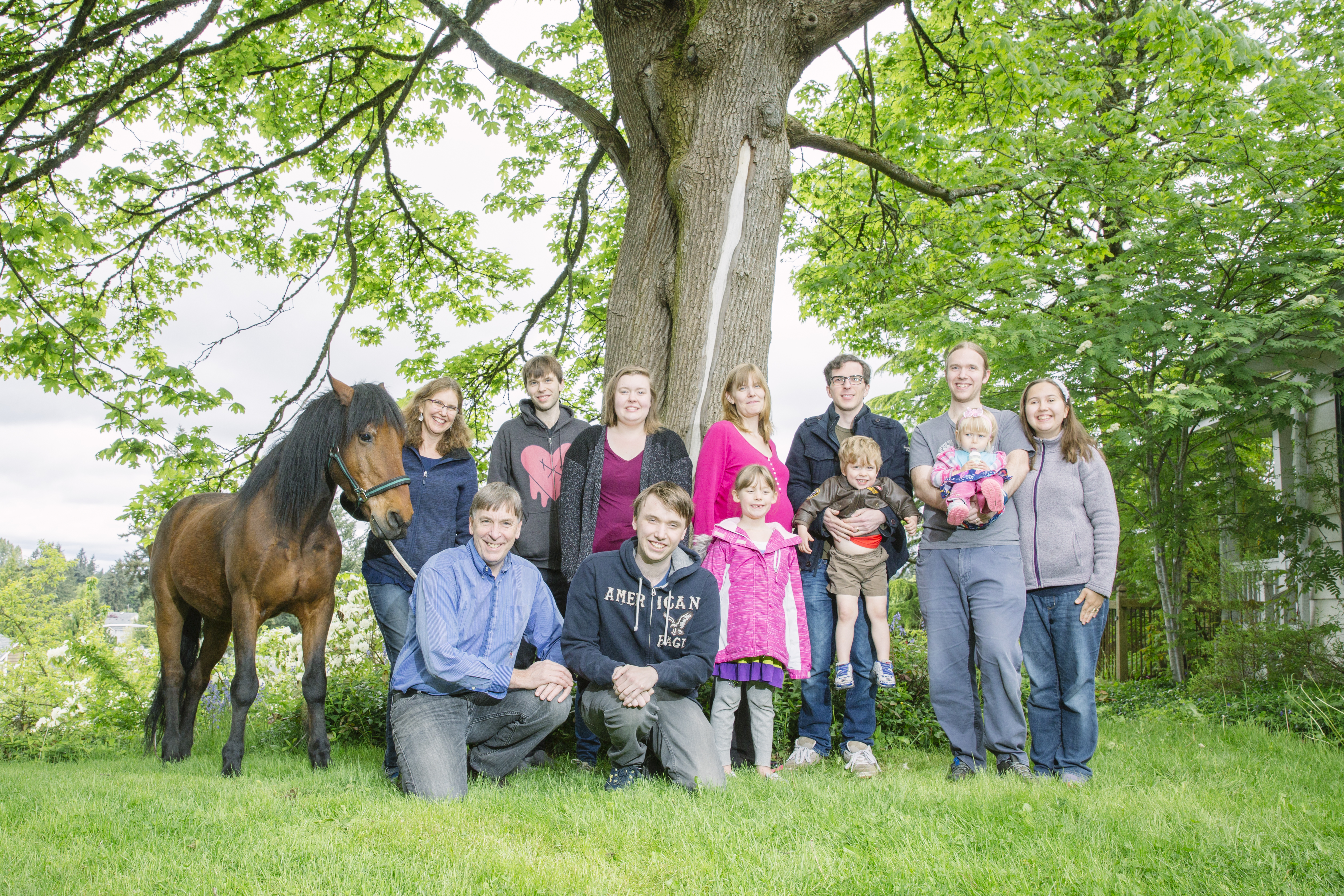 After a five-year break in blogging on this site, I’m delighted to be picking up where I left off. I can tell from the photos it has been a while- the little girl playing croquet in my previous blog entry is now the six-year-old standing in pink in the front-center of the photo above. (My wife, kids, daughter-in-law, son-in-law, grandkids, and horse Zeus round out the photo)
I am going to have the time to write again because….big announcement coming… as of July 21st, after 33 years, I am retiring from my day job as a Manager at Boeing. This change will give me additional time to dedicate to my growing family and the Renton Community. I’ve added two new grandchildren since my last blog entry, and one more is due any minute– yes, you read that right…any minute 🙂
Our City is engaged in some major redevelopment projects– on the lakefront, in downtown, in Renton Highlands, and elsewhere. We’re also working to build new parks and planning an additional community center. Meanwhile, the State Department of Transportation is in the midst of a major widening of I-405 through our city, with much-needed fly-over ramps that will connect I-405 and I-167. We are also facing new challenges, such as growing homelessness exacerbated by high real estate prices, a nationwide heroin epidemic, ever-increasing traffic congestion, and general uneasiness created by division in the other Washington.
And of course, we’re also kicking off our 2017 campaign season, welcoming new participants to the dialogue and generating many new topics to discuss.
I’ll write a new entry soon, so please keep checking back. Meanwhile, please feel free to browse the 1600 entries below, along with the 11,000 user comments, to refresh your memory on previous topics we discussed here at randycorman.com.
Renton Water Fluoridation will be debated at tomorrow’s Committee of the Whole; Center for Disease Control data on safety is far from definitive
The fluoride debate has has come back to Renton. We’re receiving emails and letters from citizens on both sides of this issue, and both sides are passionate. The issue will be dabated in our council chambers tomorrow at 6:00, during our Committee of the Whole meeting.
The proponents of Renton water fluoridation have generally been arguing that fluoridation has been shown safe and effective at reducing cavities, that the science was settled years ago by thousands of studies, that fluoridation helps everyone have fewer cavities especially the poor, that prominent organizations and individuals for decades have endorsed community water fluoridation, that the US has been moving toward more and more community fluoridation, that fluoridation was considered by the Center for Disease Control to be one of the 10 greatest health achievements of the 20th century, and (counter-productively) that opponents of fluoridation are conspiracy theorists.
The opponents of Renton water fluoridation argue that the science does not in fact say fluoride is safe for everyone nor is the science complete, that fluoride effectiveness when swallowed is significantly less than when applied topically, that fluoride in the water supply has not been shown in double-blind studies to reduce cavities, that fluoride should not be given to people without informed consent, that it is a “drug” that is being forced upon everyone in the entire community in an uncontrolled dose (dependent on their water consumption and the use of other fluoride products) and with no regard to their age or medical status, that far more nations on earth have rejected community water fluoridation than adopted it due to the reasons given above, and (tangentially) that it is a poison in high concentrations.
I’m paying extra close attention to this debate this time. While I grew up in the 60’s believing fluoride was safe for everyone, I have increasing doubts after reading our government’s own documents on the topic, and two years ago I proposed lowering our fluoridation level after the EPA reduced its recommended level (which we subsequently did– click for details).
As another piece of data, a few years ago I installed a reverse osmosis filter for my daughter to remove fluoride from her water after she positively correlated painful and expensive gastrointestinal issues it to fluoride hypersensitivity– a condition recognized by the National Academy of Science (see below). Prior to cutting her fluoride intake, her condition had led to over $600 of prescription medicine per month, with an annual $10,000 colonoscopy, and a risk of possible surgery to remove her colon. After isolating fluoride as the cause, which she did by drinking water exclusively from her husband’s family well outside of Renton and then she verified by living symptom-free in Japan (where they don’t fluoridate and few products contain fluoride), she has reduced her medical expenses and symptoms to zero by eliminating fluoride from her diet. This experience did not make me convinced I needed to eliminate fluoride from the water supply, but it left me with an open mind on the topic.
In an age of information, diversity, and respect for personal choice, water-fluoridation opponents (like my daughter) are not just fringe voices anymore. In the last two months, overwhelming citizen coalitions in the two largest unfluoridated city’s in America, Portland Oregon and Wichita Kansas, have just made it clear to their leadership that they want a voice in this debate– Wichita (population 384,000) just rejected fluoridation by 59% to 41%, and Portland Oregon (population 593,000) just got the issue put on a public ballot as a referendum (collecting about 43,000 signatures in 30 days when less than 20,000 signatures were needed) after their city leaders voted to fluoridate their water. While some may say these citizens are recklessly bucking the trend set by larger US cities over the last few decades, others argue they are following the lead of the world’s greatest international cities that have rejected community fluoridation such as Tokyo, Paris, London, Stockholm, Copenhagen, Rome to name just a few.
On November 16th, as I was trying to make sense of all of this, I received an email from our City Utilities department sending me to an official CDC website for definitive information on Fluoride.
The email read: “Please find below a link to the CDC’s website on fluoride. There is a lot of very good information on fluoridation on this site. The CDC touts fluoridation of public water supplies as one of the 10 best health innovations of recent times. ” The email contained a link to the CDC website. CDC Community Water Fluoridation
Okay, I thought. When controversy strikes, I should follow the process. Hence, I followed my city staff’s recommendation, went to the CDC site, and familiarized myself with the safety studies.
On the Center for Disease Control Site, I clicked Safety, then National Academy of Science, and then their 2006 report for EPA, per the tree below:
The 2006 NRC Report on Fluoride in Drinking Water: A Scientific Review of EPA’s Standards
And I found something I never expected. Far from showing that the science is resolved, the CDC site directs readers to a study prepared for the EPA by the National Academy of Science in 2006 (seven years after the CDC proclaimed fluoride one of the greatest health achievements of the 20th century); the National Academy of Science Study says there may be linkages between community water fluoridation and reduced brain development (lower IQ), bladder cancer, Alzheimers, diabetes, auto-immune disease, gastro-intestinal illnesses, brittle bones, accute florosis, downs syndrome, and a host of other problems. The CDC also says on their website that while originally community water fluoridation was thought to reduce cavities by 50% to 60%, today they now believe the benefit may be (18%-40%) reduction in cavities because of all the other sources of fluoride.
This data from CDC struck me as a LOT of risks of EXTREMELY serious illness, reduced brain functioning, and pain and suffering– to get as little as 18 % reduction in cavities, and I expect readers will want to see it for themselves. As you read through it, remember that this is the data from the people SUPPORTING water-fluoridation, the best thing they can find to assert it is safe. I have copied the link path below, along with key findings and recommendations from this report.
Here is a sample from the report by the National Academy of Science Report which the CDC references to claim fluoride is safe:
“…it is apparent that fluorides have the ability to interfere with the functions of the brain and the body by direct and indirect means. To determine the possible adverse effects of fluoride, additional data from both the experimental and the clinical sciences are needed.”
“Fluorides also increase the production of free radicals in the brain through several different biological pathways. These changes have a bearing on the possibility that fluorides act to increase the risk of developing Alzheimer’s disease.”…”Studies of populations exposed to different concentrations of fluoride should be undertaken to evaluate neurochemical changes that may be associated with dementia. “
“The conclusion from the available studies is that sufficient fluoride exposure appears to bring about increases in blood glucose or impaired glucose tolerance in some individuals and to increase the severity of some types of diabetes. In general, impaired glucose metabolism appears to be associated with serum or plasma fluoride concentrations of about 0.1 mg/L or greater in both animals and humans… A comparison … will show that the 0.03-0.1 mg/kg/day range will be reached by persons with average exposures at fluoride concentrations of 1-4 mg/L in drinking water, especially the children.”
“Further effort is necessary to characterize the direct and indirect mechanisms of fluoride’s action on the endocrine system”
“The primary symptoms of GI [Gastro-Intestinal] injury are nausea, vomiting, and abdominal pain. Such symptoms have been reported in case studies and in a clinical study involving double-blind tests on subjects drinking water artificially fluoridated at 1.0 mg/L.”
“It has long been suspected that fluoride, even at concentrations below 1.2 mg/L in drinking water, over the years can increase the risk for renal calculi (kidney stones). Research on this topic, on humans and animals, has been sparse…”
“Genotoxicity tests indicate the potential for fluoride to cause mutations, affect the structure of chromosomes and other genomic material; affect DNA replication, repair, and the cell cycle; and/or transform cultured cell lines to enable them to cause tumors when implanted into host animals.”
“An association of uterine cancer (combination of cervical and corpus uteri) with fluoridation was reported by Tohyama (1996), who observed mortality rates in Okinawa before and after fluoridation was terminated, controlling for sociodemographics. This analysis is a follow-up of the positive results from a previous exploratory analysis that comprised a large number of comparisons conducted by this researcher with the same data set.”
“The combined literature described above does not clearly indicate that fluoride either is or is not carcinogenic in humans.”
“Further research on a possible effect of fluoride on bladder cancer risk should be conducted.”
“Additional research is needed on fluoride concentrations in human bone as a function of magnitude and duration of exposure, age, gender, and health status.”
“The current MCLG was designed to protect against stage III skeletal fluorosis [includes increased risk of fracture]….the committee judges that stage II [which is reached with lower levels of fluoride] is also an adverse health effect, as it is associated with chronic joint pain, arthritic symptoms, slight calcification of ligaments, and osteosclerosis of cancellous bones.”
“On the basis of this information, all members of the committee agreed that there is scientific evidence that under certain conditions fluoride can weaken bone and increase the risk of fractures.
“High-quality studies in laboratory animals over a range of fluoride concentrations (0-250 mg/L in drinking water) indicate that adverse reproductive and developmental outcomes occur only at very high concentrations. A few studies of human populations have suggested that fluoride might be associated with alterations in reproductive hormones, fertility, and Down’s syndrome, but their design limitations make them of little value for risk evaluation.”…”A reanalysis of data on Down’s syndrome and fluoride by Takahashi (1998) suggested a possible association in children born to young mothers. A case-control study of the incidence of Down’s syndrome in young women and fluoride exposure would be useful for addressing that issue. “
Looks like a lot of risk and uncertainty for an 18% reduction in cavities.
When we go into council chambers tomorrow night, and ask our followup questions of the professionals, I won’t be interested in hearing name dropping about a Surgeon General in the Reagan Administration who thought fluoridation was a good idea 30 years ago. In general, I will have little interest in recommendations from three or four decades ago– too many of the old recommendations have been invalidated through the years. I want to hear scientists address the issues raised by EPA, CDC, and National Academy of Science in the 2006 study posted on their own website.
Thanks for reading. Please feel free to give my your input about this report in the comment section below.
Croquet at Renton’s Riverview Park; showing off my granddaughter
My granddaughter is getting bigger. Here she is at our 11-acre “Riverview Park,” (a few hundred feet from Cedar River) ready to challenge me to a game of croquet.

Now that the library election is behind us, I plan to mix up my blog entries with more varied topics. Next up…trees!