
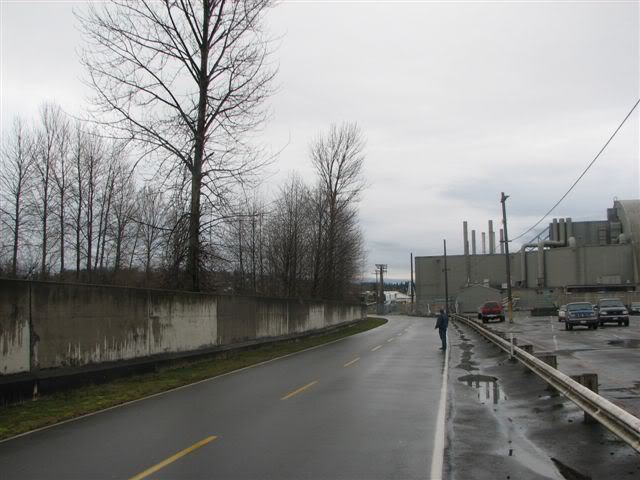
The tall tree on the other side of the wall is one that had to be removed
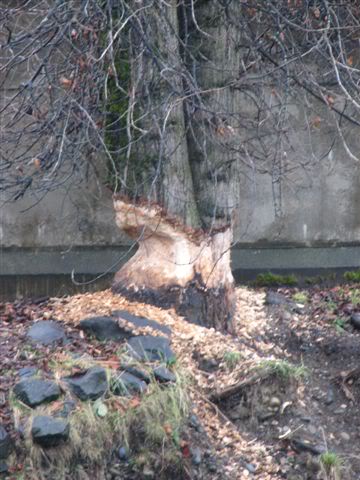
Here is the reason it was unsafe
City crews had to take down some cottonwood trees today that were at risk of damaging the Cedar River flood wall, as well as a road and electrical wires down by the river.
The reason…. a busy beaver had damaged the trees so badly they were ready to fall over in the next high wind.
Wow that is a intense bite!
Someone who read Ranger Rick and is very good at animal things can verify this.. but I believe I remember that the beaver does as much damage to the environment as man does… maybe more.
Bad Beaver!
Actually, I think beaver dams are supposed to be good for ecosystems, since they provide habitats in the form of ponds for many species. So, while they do indeed create physical changes to the environment and can “damage” human property, those changes aren’t detrimental to other plants and animals on the whole. Granted, it sucks to have your home flooded due to a beaver’s activity, but that’s one of the pitfalls of living next to an active stream or river.
I wouldn’t have a problem relocating “urban” beavers to more appropriate natural areas, but I’d imagine there aren’t a lot of place left where they’d be able to build a home. Poor beavers.
Here’s a snippet from an article on why beavers are being reintroduced in Scotland:
The Scottish Wildlife Trust’s chief executive, Simon Milne, said: “The beaver is a keystone species whose reintroduction can bring benefits to the countryside including improving the ecology of wetland habitats and associated birds, insets fish, reducing downstream flooding and improving water quality.”
The re-establishment of a complex ecological balance in an environment blighted by years of sustained abuse, overdevelopment and exploitation isn’t an easy step. Any investment in re-establishing eco-communities that are viable must include mammals, and creatures up and own the food-chain. The reality is that ever since humans hunted the beaver to the point of extinction around 400 years ago, there has been a major gap in the ecosystem. This kind of species reintroduction is an important marker for any society declaring itself committed to some semblance of “sustainability”.
The knock-on effect on other species is thought to be considerable. Environmental campaigners and research experts have long argued that these “river engineers” who build lodges, dams, canals and pools attract a host of wildlife, such as kingfishers, fish and dragonflies. It’s also believed that as well as creating a range of new wildlife habitats, damming has a significant impact on water quality throughout the river system. Sediments are slowed down and pollutants are oxidised when water seeping through the dam from the pond is aerated. Dead wood in flooded woodland attracts invertebrates while providing feeding and nesting opportunities for birds.
See the full article at http://commentisfree.guardian.co.uk/mike_small/2007/08/eager_for_beavers.html
A case like this, you relocate the beaver, or simple kill it. I know it’s sounds bad but they repopulate quickly and are a rodent.
Having raised a rat, hamster, and several mice when I was a kid, I take offense to your rodentphobia!
Seriously, I’d trust that in most of these cases, the beavers could be relocated. No one wants to have to kill Bucky Beaver.
Ya, let’s spend 10k worth of tax payer dollars to relocate these things. I say, get rid of them now at the lowest cost. They may have to be extinguished.
Only if they can first smack you upside the head with their tails.
Kinky!