This is going to a fun fundraiser at the Renton Airport, in the beautiful state-of-the-art Ace Aviation “Red Barn” facility. Thanks to Karen Stemwell and Marcie Palmer for organizing, and Kurt Boswell for hosting. RSVPs (to VoteRandyCorman@gmail.com) are appreciated to help us plan food, but not required. If you can’t make this event, donations are still greatly appreciated to help raise money for a final mailer. You can donate through this link: https://secure.anedot.com/elect-randy-corman/donate
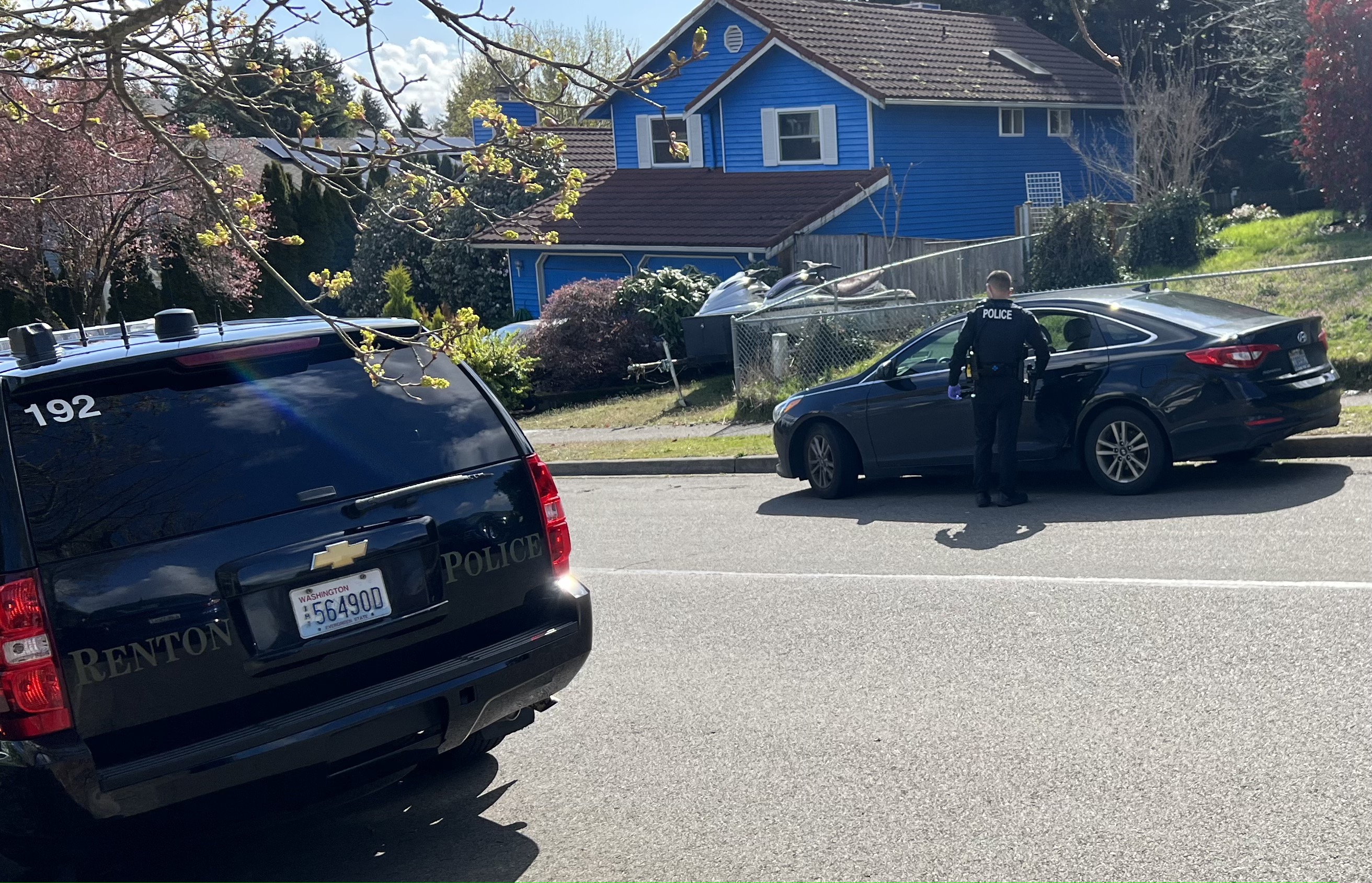
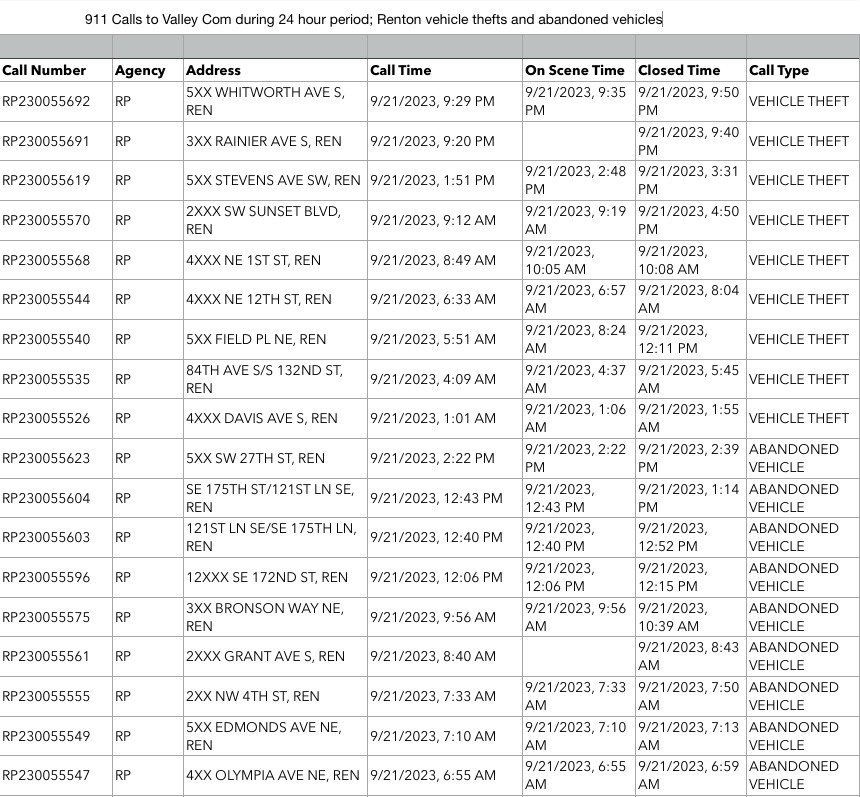
Renton police process an abandoned stolen car in April 2023Yesterday’s calls to 911 Valley Com included nine stolen vehicles in Renton and nine abandoned vehicles in Renton. Cars are increasingly stolen and used for crimes, and then dumped in damaged condition. (Police are typically not allowed to pursue them under our state’s 2021 pursuit law, RCW 10.116.060.)
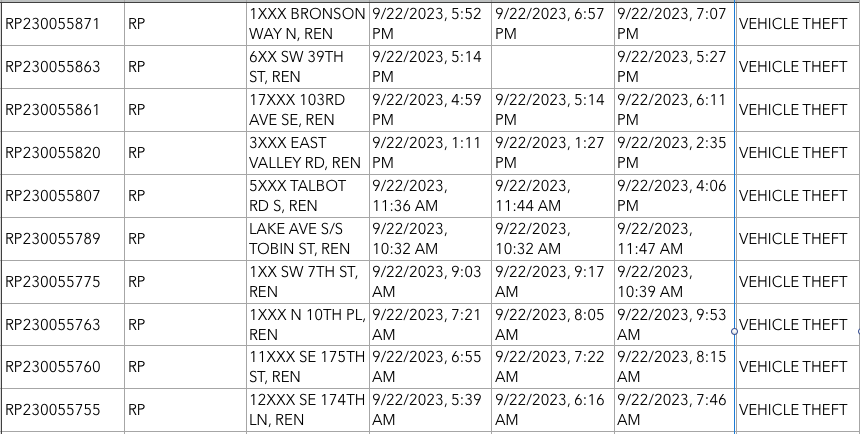
Updated: the following day there were TEN car thefts; see bottom of article
Yesterday I looked at Valley Communications 911 call activity, and noticed there were nine vehicles reported stolen in Renton in a single day. I also noticed that at the same time there were nine calls about abandoned vehicles, some of which were likely stolen in previous days or weeks. Valley Com only publishes the last 24-hours of calls, and I have not been tracking the statistics daily, so I can’t say if this is a one-day anomaly or a new higher trend. But in either case, it’s nine people or families in Renton that sadly lost their cars in one day. Each stolen car is a financial and emotional setback for Renton residents, and for those with little margin in their schedules it can create a major disruption in their lives.
Renton Police are doing all they can to fight this trend. But the high rate of car thefts in Washington has been facilitated by the state police pursuit law, which has created an incentive for criminals to use stolen cars to commit burglaries and other crimes. Under laws put in place in 2021, police cannot initiate pursuit of burglary suspects in a car, so if the car is stolen and untraceable the suspects may never be apprehended. Stolen cars have become Washington State’s get-out-of-jail-free card.
Under the 2021 law, drivers in stolen cars can also drive recklessly without fear of being pursued, which has contributed to more fatal car crashes than we’ve seen in decades. This bleak trend has tragically reversed years of positive safety trends from highway and vehicle safety improvements. The legislature made some small improvements to the law in 2023, but it still contributes to crime and highway safety problems. The latest data shows this year is worse than last.
This does not mean high-speed pursuits should be authorized in every situation. We should return to the better-designed and very thorough policies we had in Renton prior to the 2021 laws. These pursuit policies were continuously adjusted based on real experience from our officers and the community, and they served us well in Renton. I and other Renton elected officials had an oversight role in making steady improvements, balancing the needs of road safety and law enforcement.
Even though the legislature is not currently in session, it’s helpful to keep your representatives informed about your feelings on these issues year-round. Courteous emails from the heart are the most effective. Let them know your personal concerns, and any personal impacts you’ve experienced. Now is a good time to write to them; they are between sessions and probably receiving fewer emails, and may have more time to focus on yours.
Our 11th district State Legislators that represent most of Renton are:
Senator Bob Hasegawa, Bob.Hasegawa@leg.wa.gov
Representative Steve Bergquist, Steve.Bergquist@leg.wa.gov
Representative David Hackney, David.Hackney@leg.wa.gov
Update on 9/23: To see if the 9/21 data was a one-day anomaly or more of a trend, I checked data the next day. There were TEN car thefts in Renton on that day. Here is the data.
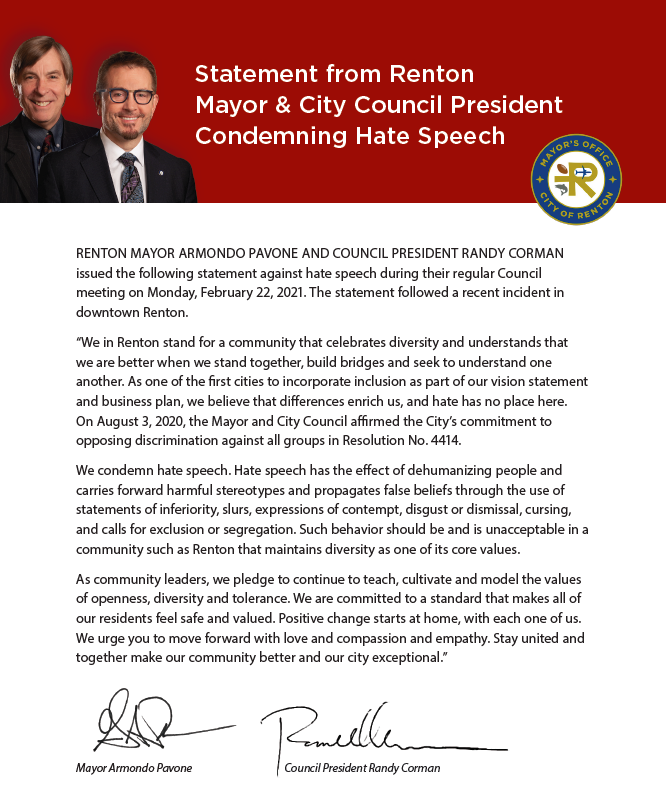
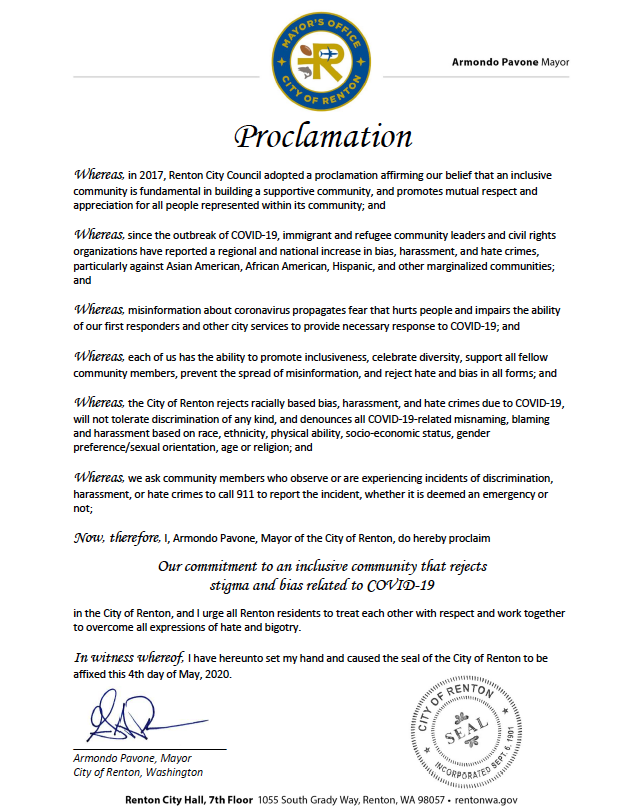
City of Renton official information release from February 22. 2021
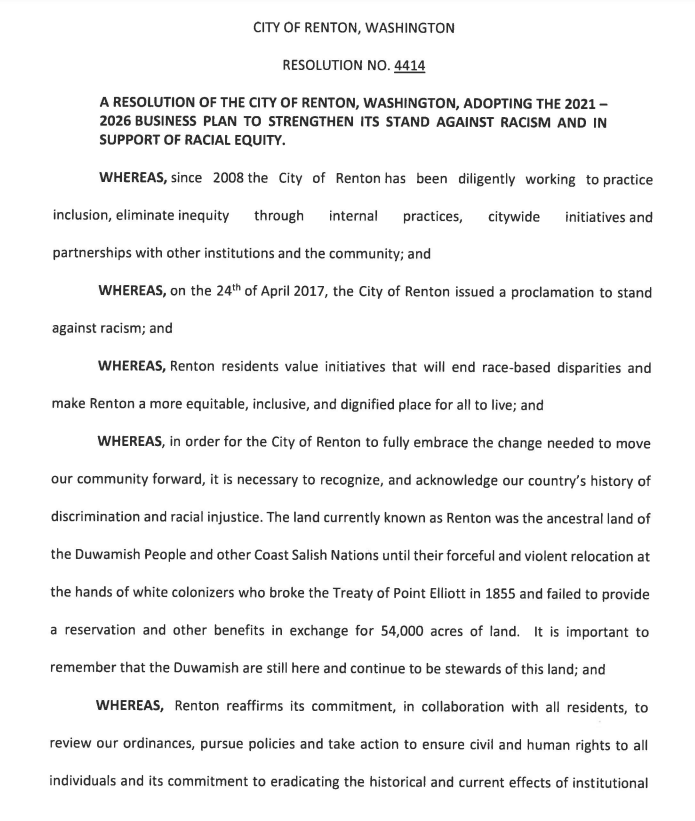
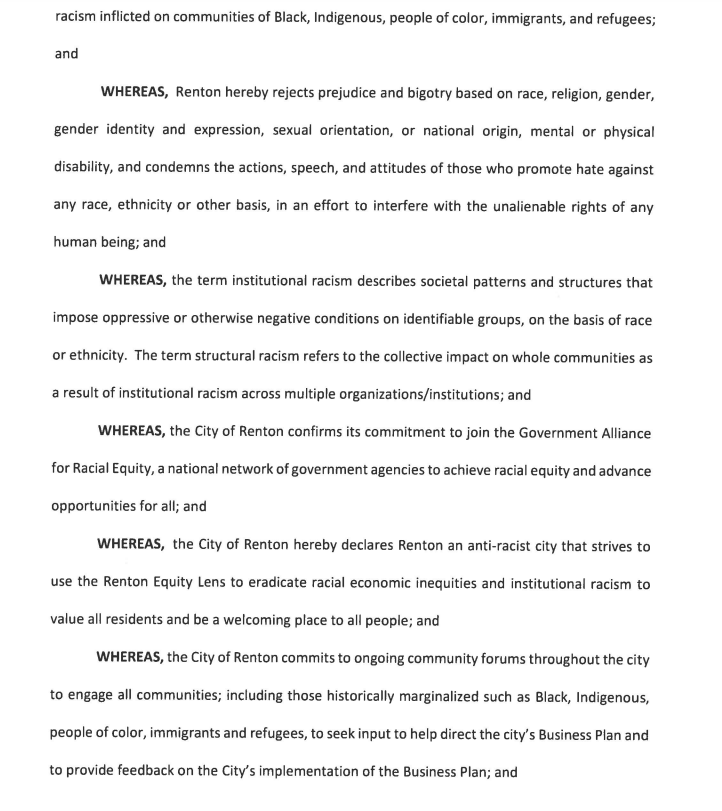
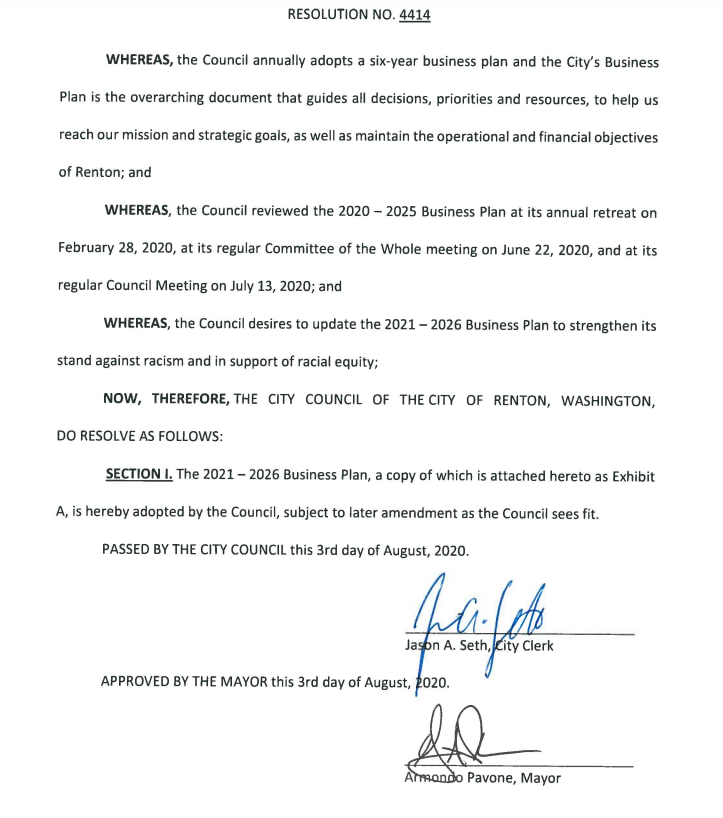
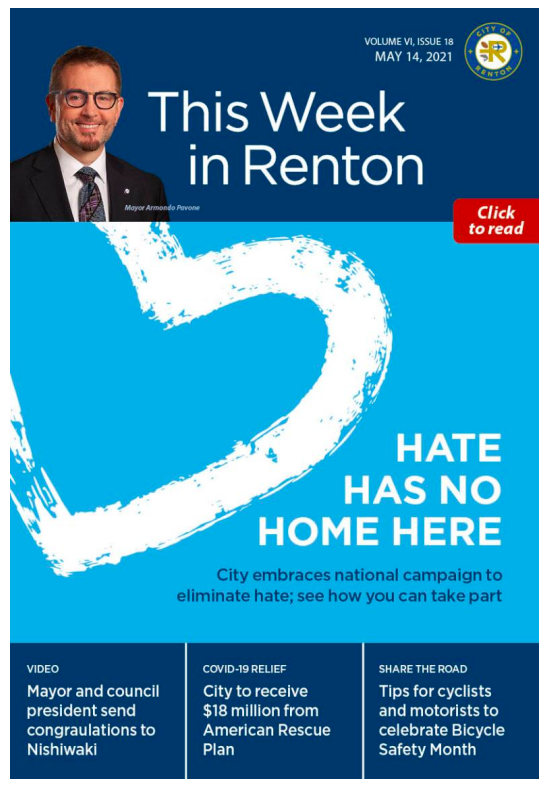
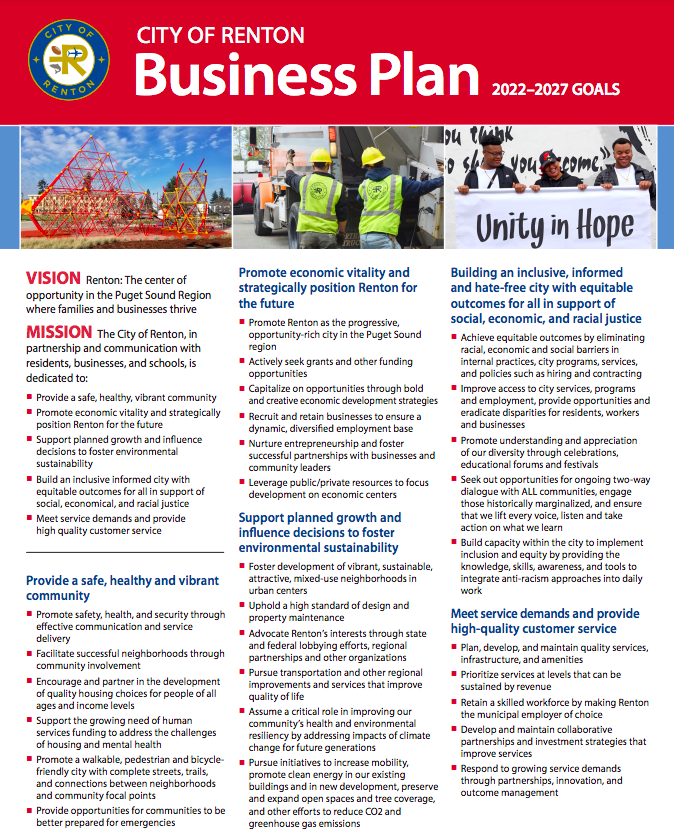
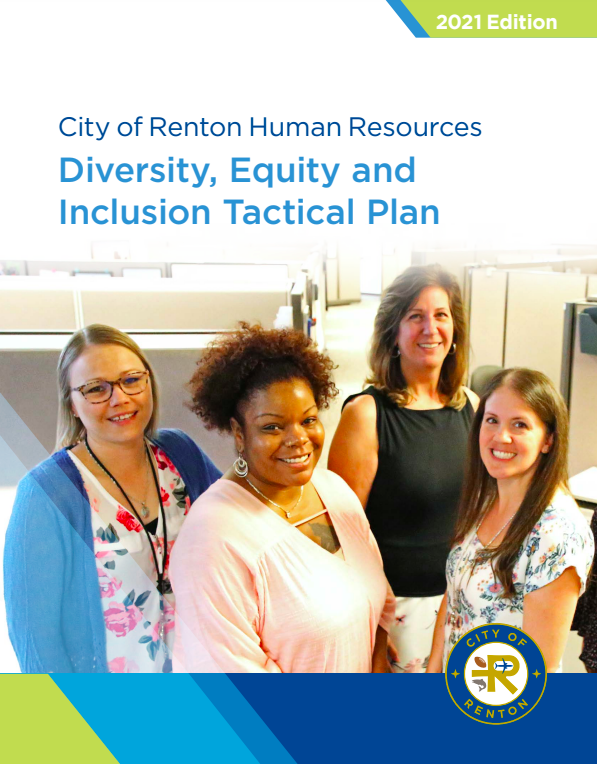
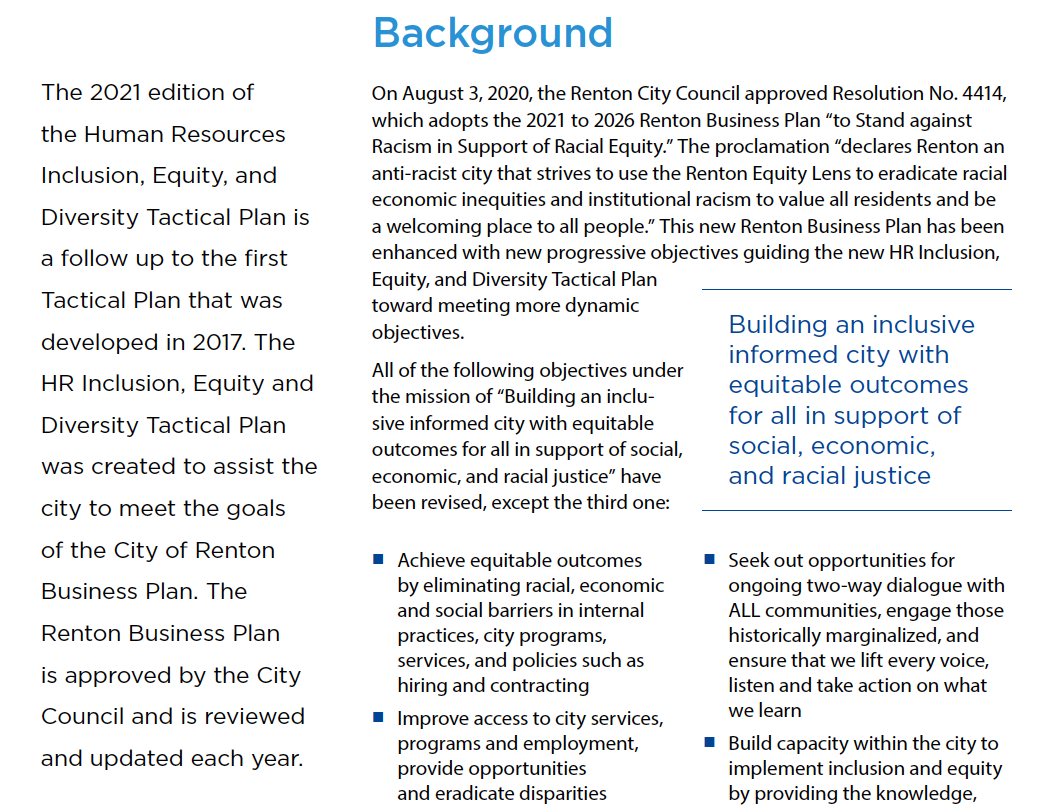
For some reason at the forum last night my opponent falsely accused me, as a senior council member and Council President, of not responding to Asian and BIPOC hate speech during the pandemic. The truth is I treated it extremely seriously and took many meaningful actions. We passed a city proclamation condemning it in May of 2020, and passed a resolution in August of 2020. The Mayor and I made another firm public statement in February 2021. In May 2021 we joined the”Hate Has No Home Here” national campaign. That spring we specifically emphasised we were were a “hate-free” city in an update to our business plan at the Council Retreat that I chaired. We also updated our Diversity, Equity and Inclusion Tactical Plan that year, and chartered a new Equity Commission to supplement the work of our Inclusion Task force during my last two months on council, while I was Council President. We also took many other steps to counter hate speech.
It is counterproductive to all these efforts for my opponent to falsely communicate to our residents that city leadership has not condemned hate. It’s also simply dishonest. The documents can be found all over the Renton City Website. Here are some excerpts.
This business plan was completed at the Council retreat in 2021, which I chaired as Council President.
Page 1 of our 24-page Inclusion, Equity and Diversity Tactical Plan. The plan can be found here.
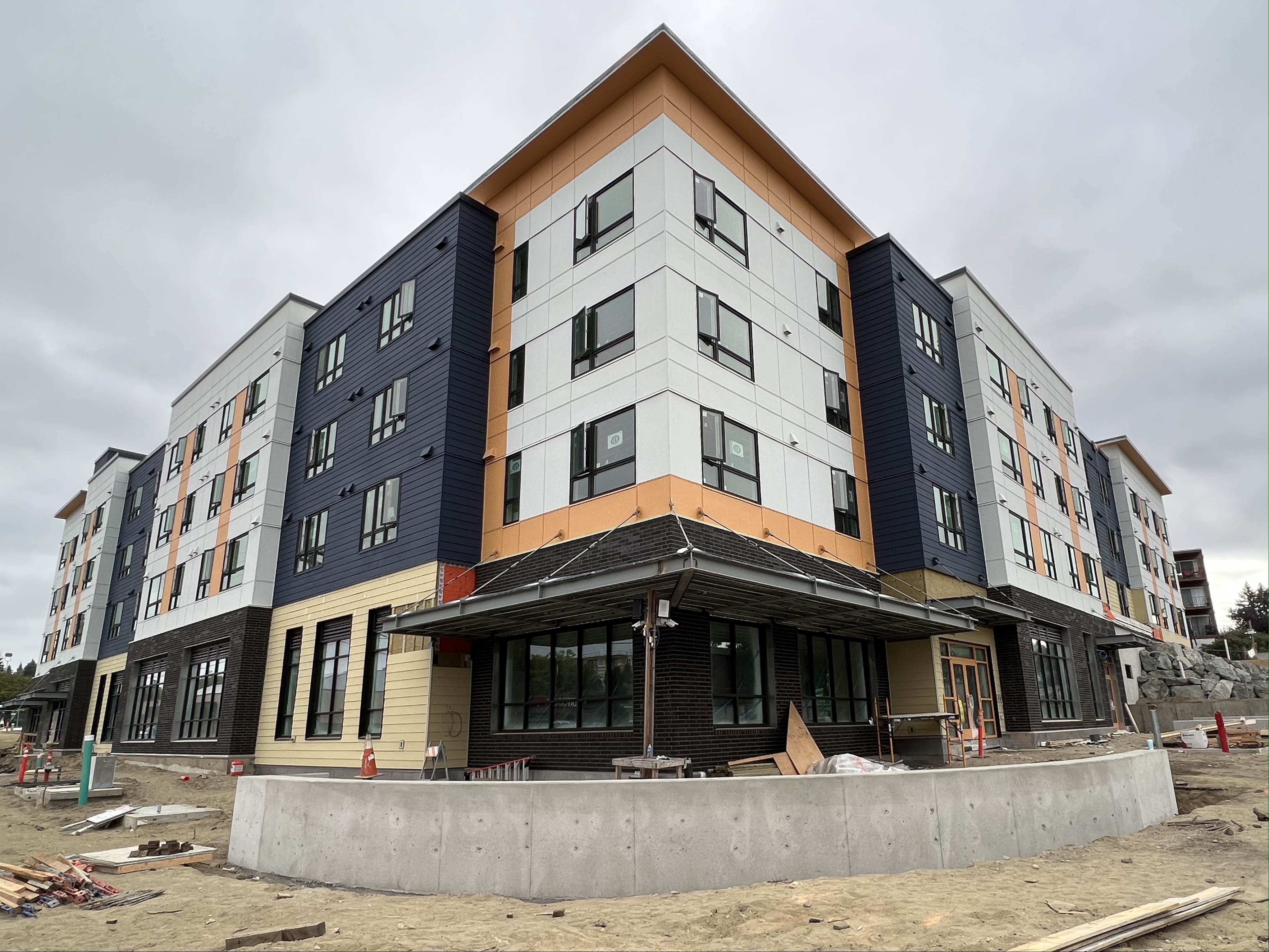
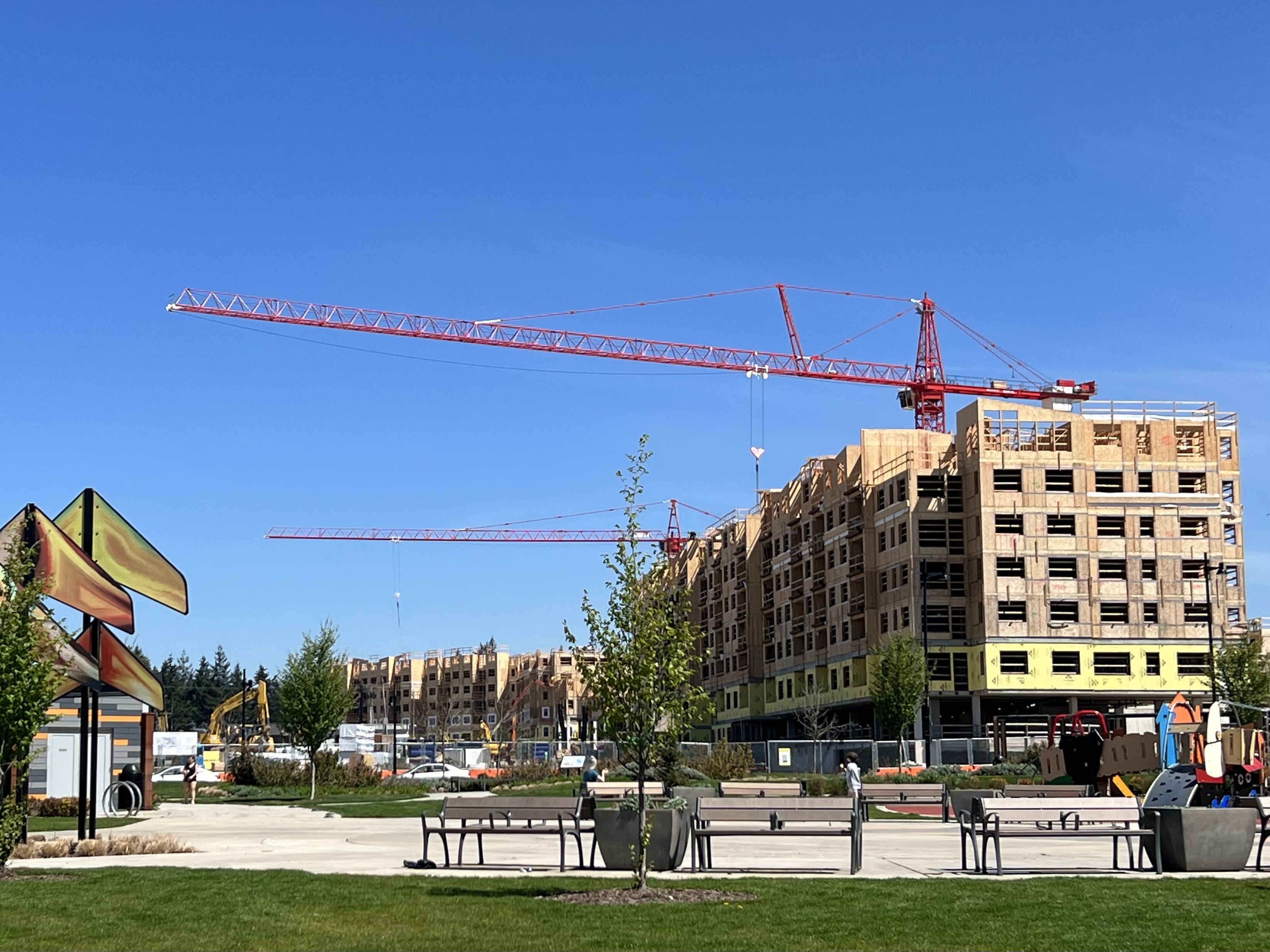
Sunset Gardens in Renton Highlands will include 76 units – studio and 1BR priced from 30%-50% of Area Median Income. (Picture taken today, 9/17/23, by Randy Corman)
Everyone is asking, what can we do to alleviate homelessness?
Our emergency shelters play an important role, but they are like hospital waiting rooms. If a hospital does not have the rooms and staff needed to serve all their patients, the answer is not to spend all the money building a bigger waiting room. The long-term solution to our housing crisis lies in permanent housing and treatment, not in more emergency shelters. (This focus, along with the immense cost, was why I questioned the KCRHA draft five-year plan that proposed spending 25 billion dollars on emergency sheltering, but included no permanent housing.)
As a society we must find a way to build housing that the vast majority of Washington residents can afford, and assist the remainder with dignified subsidized homes appropriate to their needs. We also must treat those with behavioral and addiction issues that hurt their ability to remain housed. Cities, Counties, the State of Washington, and the Federal Government all have major roles to play in this effort. Only when we have all our residents living indoors will we be able to look across our cities and feel truly proud of where we are.
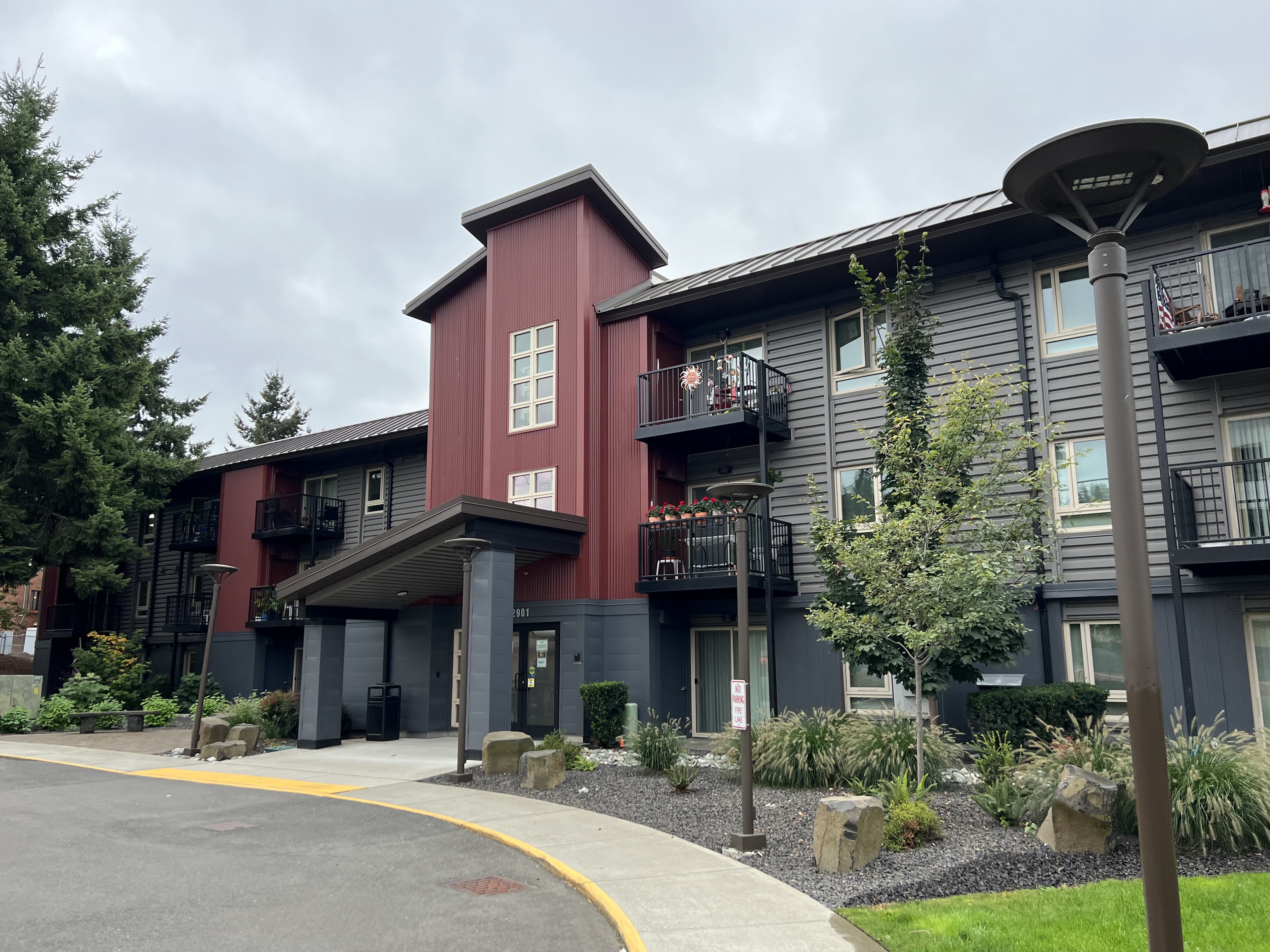
Sustainable long-term housing: Renton Housing Authority’s Golden Pines, built in 1976 and recently refreshed, provides 62 units of low-income senior housing; part of a growing inventory of many hundreds of apartments that RHA maintains for low-income residents.
This a complex topic that I can’t cover with a single blog entry, so I’m going to use this entry to outline the problem as I see it, and identify sub-parts to the solution that I will delve into in follow-on blog entries.
I’ve seen lots of debate about whether homelessness is a housing problem or a drug/behavioral health problem. It is truly both, as there are many avenues into homelessness in our society. Working people can fall into homelessness along with people struggling with addiction and behavioral challenges; furthermore, homelessness exacerbates mental health issues, and can lead to addiction. So the fix involves helping people who are able to work but struggling with affordability, along with helping people who are ill to secure dignified accommodations.
(1) For those who are working, but can’t find affordable housing:
(a) We must make it a state-level and national goal to refocus on affordability as one of our prime metrics in our housing policies. We already prioritize other very important aspects of housing, like safety and energy efficiency. These are critical, and we need to reasonably maintain them. But affordability needs to go hand-in-hand with them.
(b) When regulatory changes are not enough, we must adequately fund subsidized housing programs, and build the necessary housing stock as a society to ensure everyone has a home.
(2) For those who are struggling with behavioral health issues or addiction, we must emphasize treatment:
(a) Residential treatment beds must be more widely available, and offer long enough treatment periods and enough follow-up that they achieve good outcomes
(b) Those who receive treatment and can return to family after treatment should do so when possible. If no family is available, they should be provided supportive living facilities that facilitate sobriety and mental health.
(c) Those unwilling to participate in treatment should be repeatedly encouraged and offered treatment. If they get arrested for committing low-level crimes, they should be incentivised to seek treatment as an alternative to incarceration.
(d) Those who are ill and refuse to accept treatment should still be provided appropriate housing, but only in adequately-monitored, sustainable facilities that will not become dangerous or dilapidated by their illness.
(3) We should help prevent homelessness for those currently housed:
(a) When someone who’s leasing an apartment encounters a rare one-time challenge paying rent, such as a car theft or health crisis, short-term rental assistance is the least expensive and most caring way for society to help.
(b) Prevent predatory landlords from taking advantage of vulnerable tenants through reasonable regulations that do not inadvertently dissuade good landlords and investors from providing more housing options.
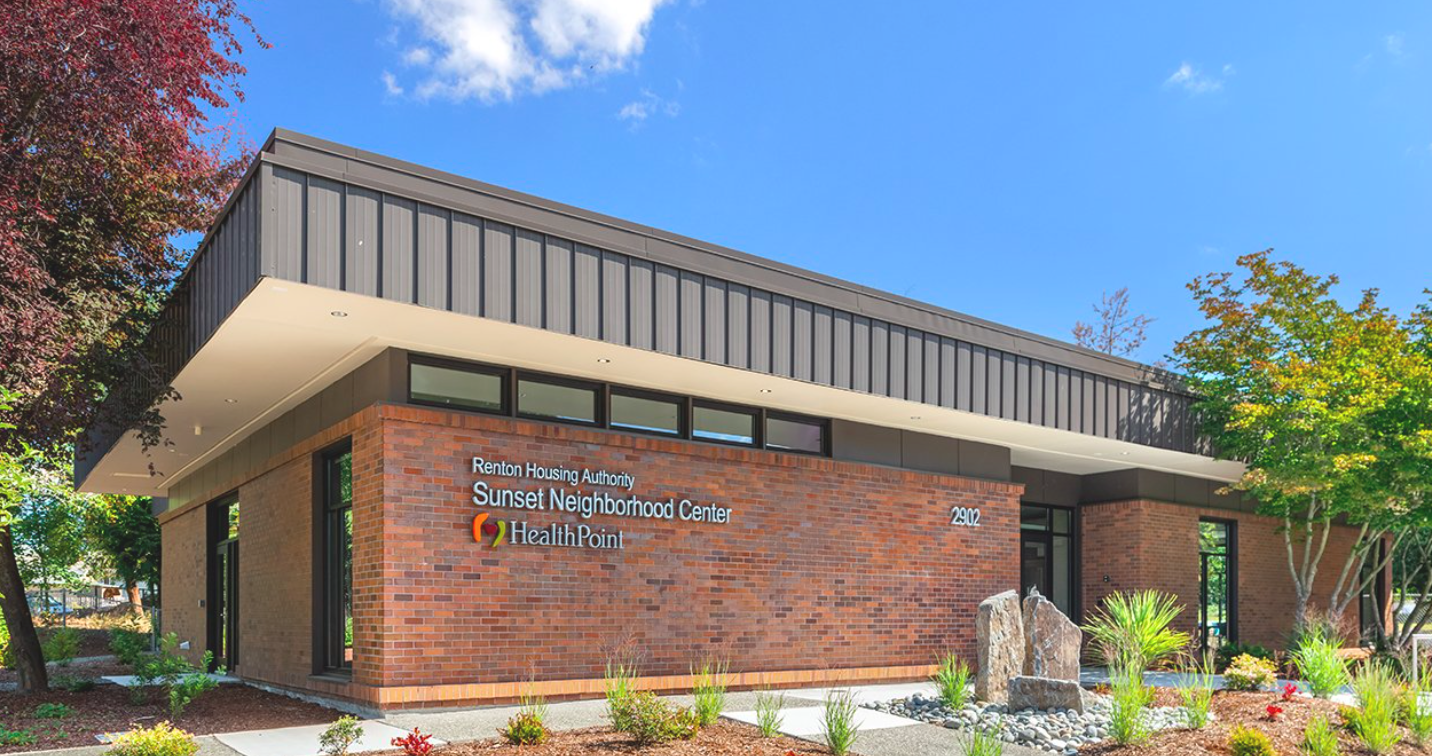
Renton’s former Highlands Library has been remodeled by Renton Housing Authority and several partners to provide outpatient physical and mental health services, dental, and educational services. More residential treatment programs are needed throughout our region,
After 28 years as an elected official and 33 years as an engineer, I’ve already been following this plan for many years. As just one suburban council member, I could not accomplish it by myself, but I’m eager to share the details of the direction I’ve been trying to go and how this plan has guided my decisions along the way.
I would like to hear from readers before I publish all the details of this plan. Do you agree with the way I have outlined the solution? are there other sections I should add? Please let me know in the comments. And please check back in the coming days as I share the details of each element of this plan.
Solera Apartments in Renton Highlands will include 275 affordable units targeting 60-80 % AMI, along with 315 market rate apartments and 96 townhomes.
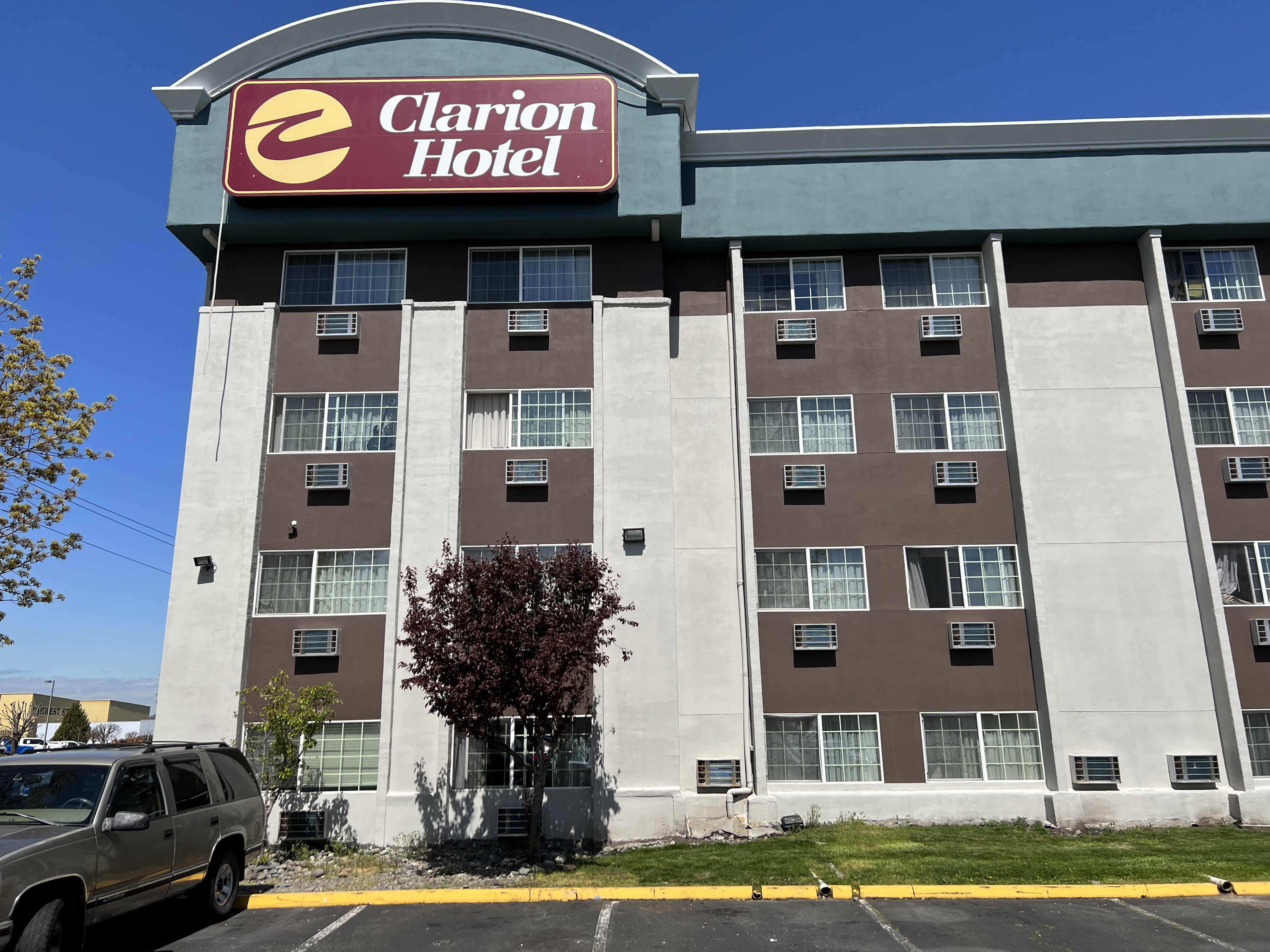
Fact Check: The Renton Clarion Hotel has accepted vouchers for hotel rooms to assist homeless residents; while most Renton officials and news media sources were aware of this, King County Regional Homelessness Authority, which is supposed to be the overarching coordinator of homeless response, was not.
In my previous entry, I explained that Council Member Carmen Rivera wrote an op-ed to the Renton Reporter claiming I was misleading when I said the Red Lion hotel was no longer available to host travelers. (The Red Lion hotel is uninhabitable right now, and I was obviously honest about that.). She’s promoting the conversion of the Econo Lodge to a homeless services shelter, so this is a timely issue right now.
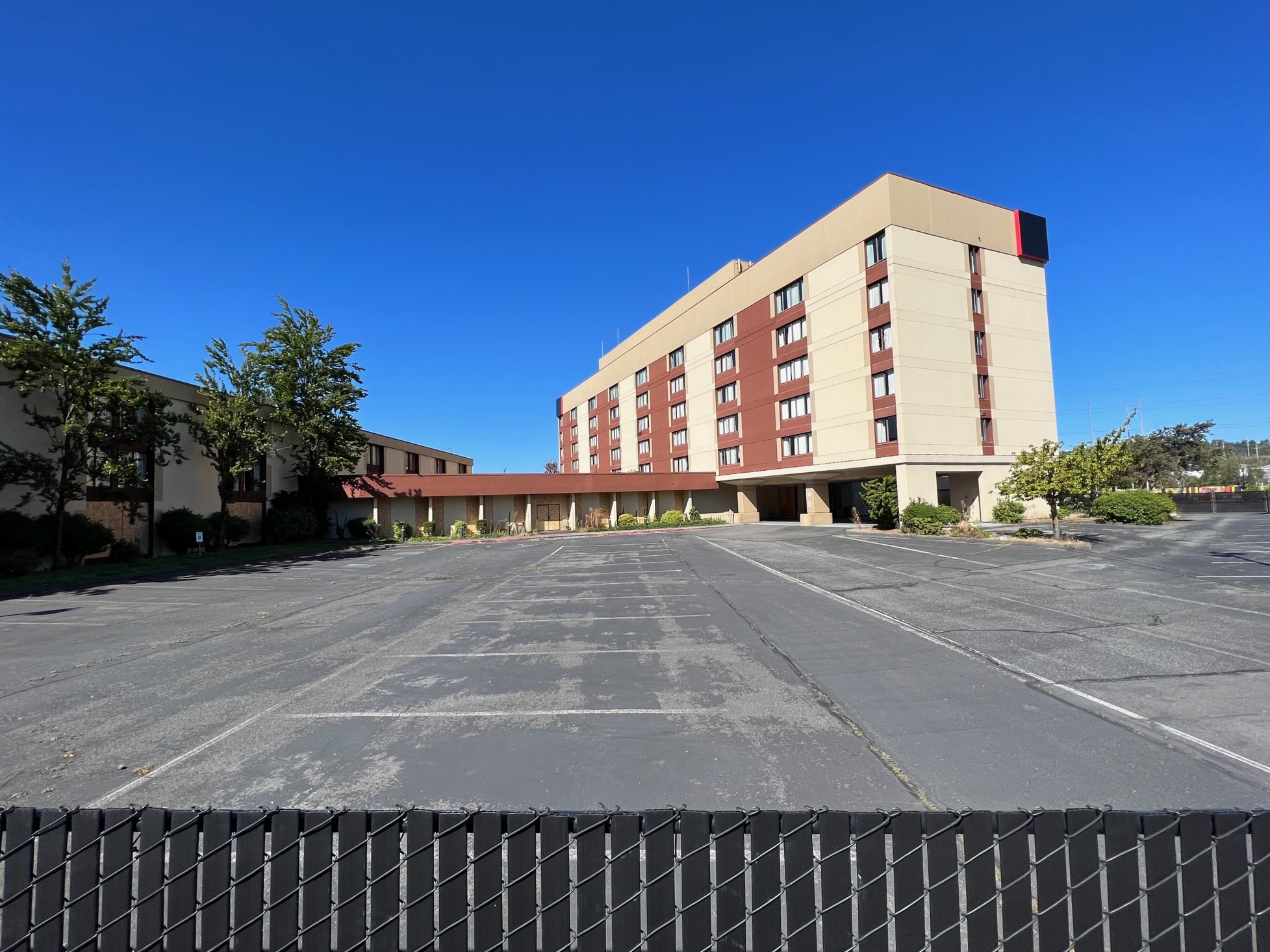
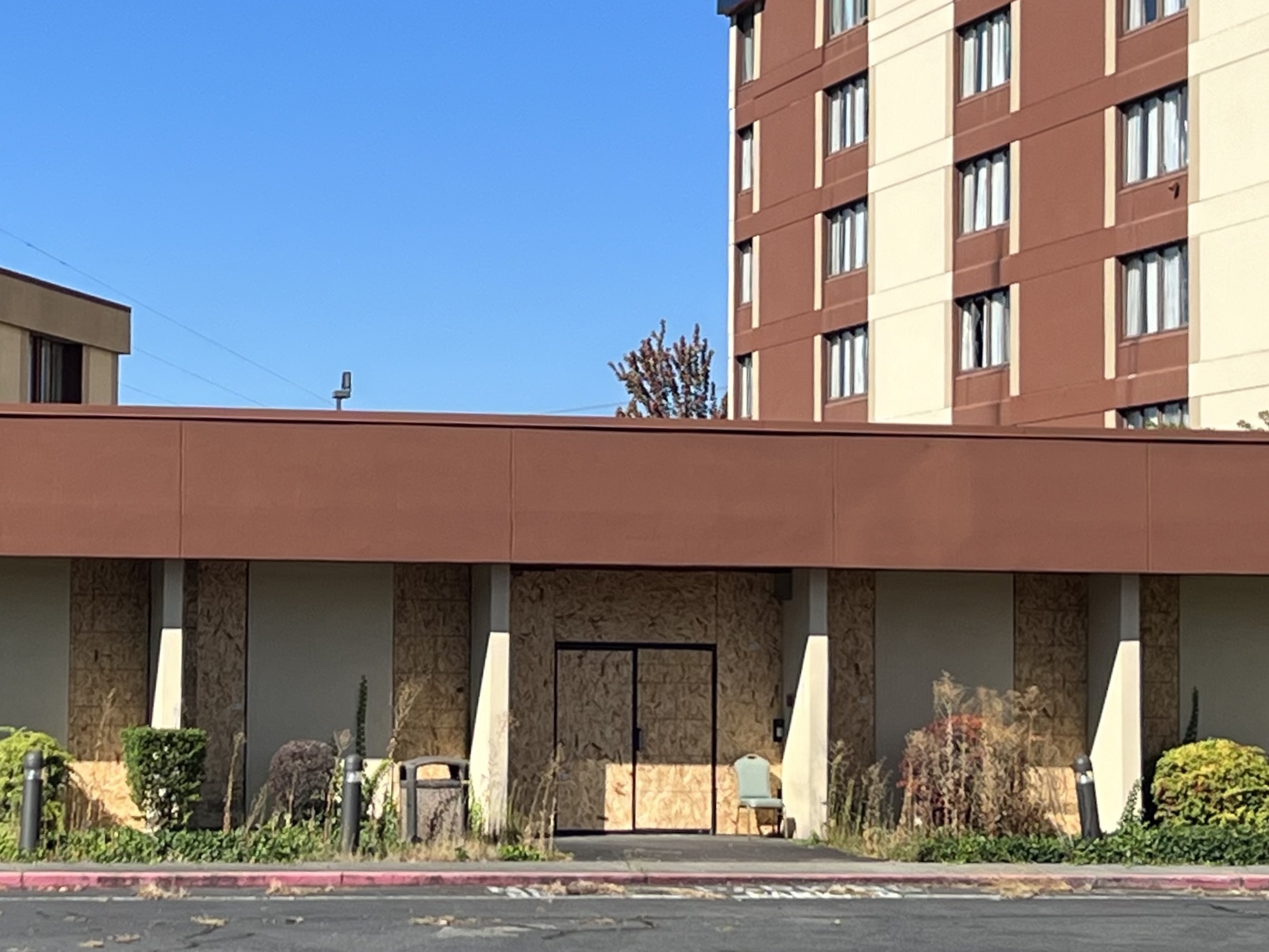
Fenced out. Renton’s once bustling Red Lion hotel, convention center, and restaurant is boarded up and costing King County $330,000 per month as they try to figure out what to do with the damaged property.
Today, I’m going to describe many other errors in her article.
Ironically, in her op-ed she says “We have also seen a decline in journalistic integrity, including fact-checking and vetting sources,.” Then she fails to vet and fact-check her one-and-only source.
Renton Councilmember Carmen Rivera and King County Regional Homelessness Authority imply our Red Lion Hotel and Convention Center is still hosting business and leisure travelers, even though it’s leased and boarded up by King County. It was converted to a shelter, and never converted back after ruinous fires and floods.
Is the Renton Econo Lodge next? Renton Council Member Carmen Rivera argues that since the County wrecked the Red Lion Hotel and can’t restore it, it shouldn’t count as a hotel that Renton has given up. So the Econo Lodge and others should now be available to the County.
At least one Renton Council Member appears to be arguing in favor of Burien moving some of their unhoused residents to the Econo Lodge Hotel in Renton. Burien’s official city website says they are still considering the idea (it’s the REBLX site in their official post). To help get more of Renton’s hotels converted to shelters, Council Member Carmen Rivera provided a guest editorial to the Renton Reporter so full of obfuscations and misstatements regarding my comments on the topic that it will take me several blog entries to unpack it. Her goal appears to be to increase Renton’s already way-oversized contribution of hotels to the County’s sheltering efforts.
The only accurate thing Councilmember Rivera said about me in her letter was that I voted in favor of an ordinance creating some reasonable size, location, and operating guidelines for homeless services use in Renton, along with four of my colleagues. We did so to ensure we didn’t have another hotel produce dangerous living conditions or fall into ruin the way the Red Lion Hotel and Convention center did. My opponent in my current council race, Kim-Khanh Van voted against this sensible ordinance, along with one other council member. And based on her op-ed, Carmen Rivera would have voted against this ordinance if she had been on council. In other words, like Kim-Khanh Van, she would like no limitations on converting Renton’s hotel space to shelters to solve other cities’ homeless challenges.
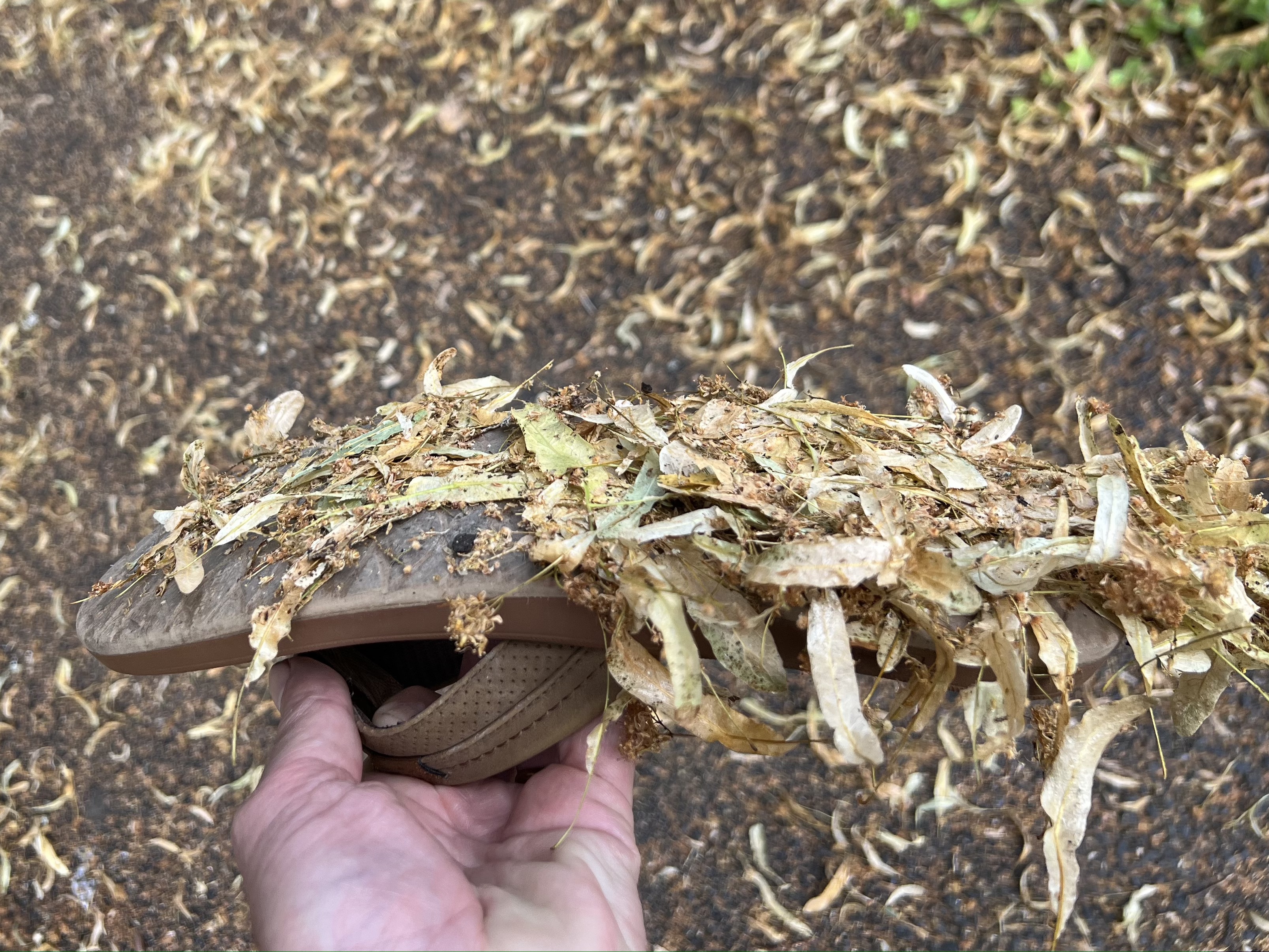
While it’s hard to see it under all the sticky debris, I’m holding my flip-flop sandal and examining it after walking under an American Linden tree. I learned a lot about linden aphids from Chamber of Commerce employee Darlene Larsen after walking on a sidewalk near the Chamber building.
Darlene Larsen, a Renton resident who cheerfully assists visitors at the Renton Chamber of Commerce, has brought a sticky situation to the city’s attention. She recently responded to a request for input on the landscaping plan for the Rainier Avenue reconstruction. Her input: please do not plant American Linden street trees.
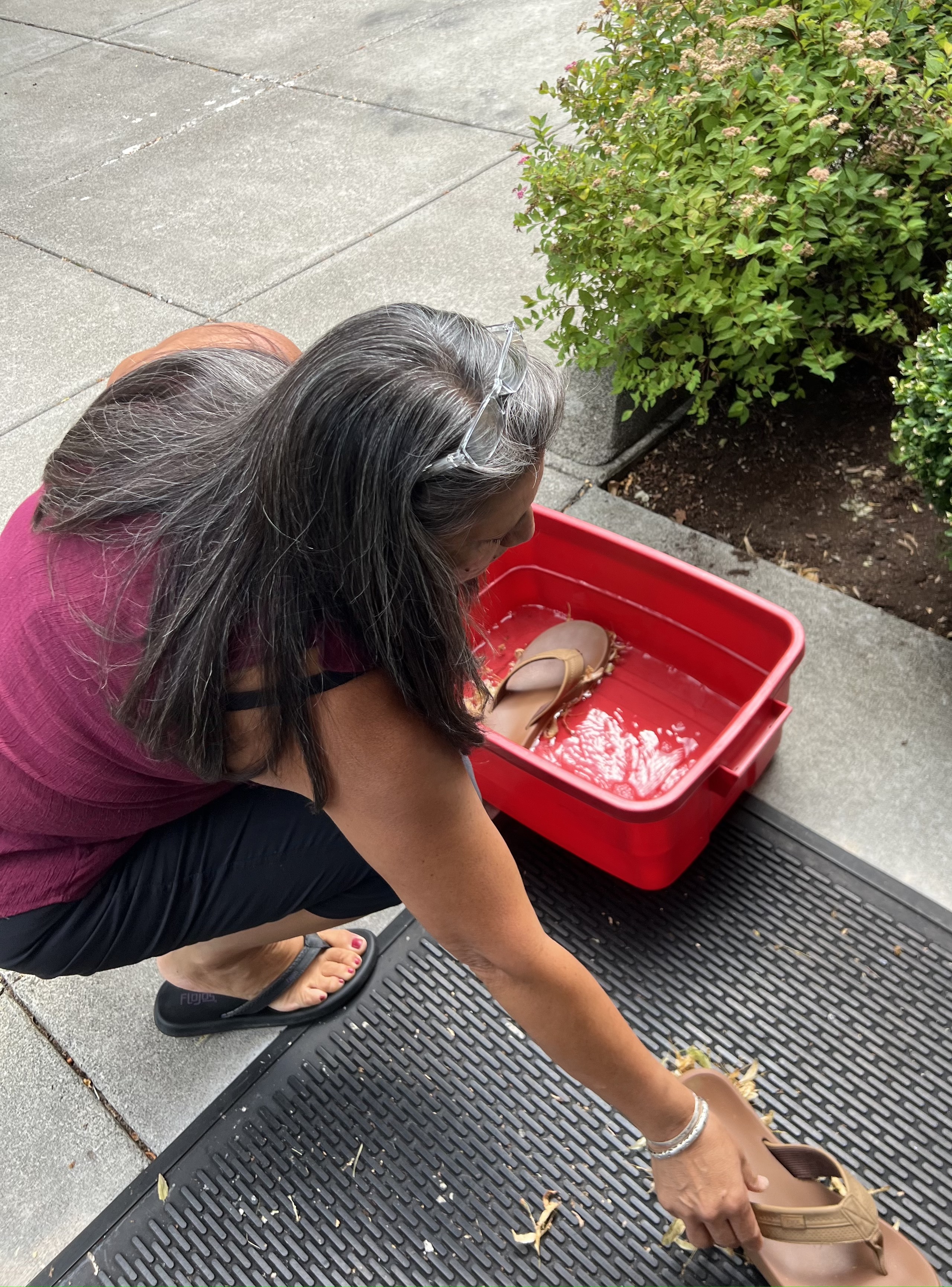
Ms. Larsen knows what she’s talking about. She has kept a washtub handy at the Renton Chamber of Commerce this summer to help visitors clean their shoes if they walked through the sticky mess on the sidewalk on the north side of the Chamber building. Some heritage-size American Linden trees shade the sidewalk and street parking along this section of South 4th Street, and these stately, dark green trees were historically ideal street trees. Regrettably, the invasive linden aphid has recently been attacking these trees, and while the trees are hearty enough to survive the attack, the aphids produce a very sticky byproduct that gets all over sidewalks, cars, signs, hydrants, and shoes. The sticky substance is called aphid honeydew, and it clings like syrup to everything it touches.
Ms. Larsen kindly goes out of her way to help visitors clean the aphid honeydew off their shoes
When the city asked that public comments be sent to the Rainier Construction team regarding the Rainier Ave landscape plan, Ms. Larsen noticed the draft plan appeared to potentially include Linden trees. So she made an input today (September 13), that included the following recommendation:
Valley Com dispatched Renton Regional Fire Authority to downed power line at 10:36 PM
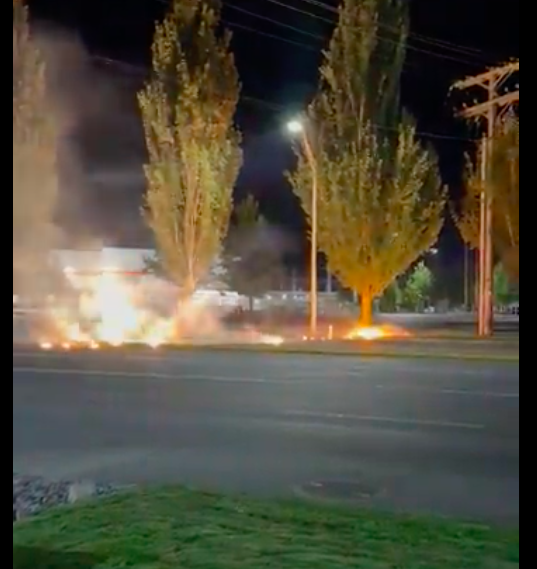
Power was out for 1200 customers in downtown Renton last night due to a fallen power line. The line also sparked a small landscape fire on South Grady Way. Renton Regional Fire Authority was dispatched at 10:36 PM, and by about 1:00 AM power was restored to most affected customers. Fortunately I have not heard of any injuries.
Downed power lines are obviously extremely dangerous, and can electrocute people in close proximity even through dry ground. Eight years ago PSE released an informative video showing how to protect yourself if you ever find yourself stalled in a car near a fallen powerline. The video recommends staying in your car until officials come if you can. It also shows if you must exit (if the car is on fire for example) a special jump is the only way you can get out without assistance. The video further illustrates how you should then shuffle your feet instead of taking normal foot steps to avoid getting electrocuted by differential ground voltages as you make your way to safety. Bystanders need to stay away, to a recommended safe distance of at least 35 feet (and I’m sure even further in wet conditions). I’ve included this valuable video below, and recommend everyone watch it.
Image of line down on South Grady Way near new Home Depot. The line can be seen sparking and smoking where it is touching the pavement and landscape. This is a screenshot from a video posted by Luis Ortega to the Renton Crime and Safety Page.
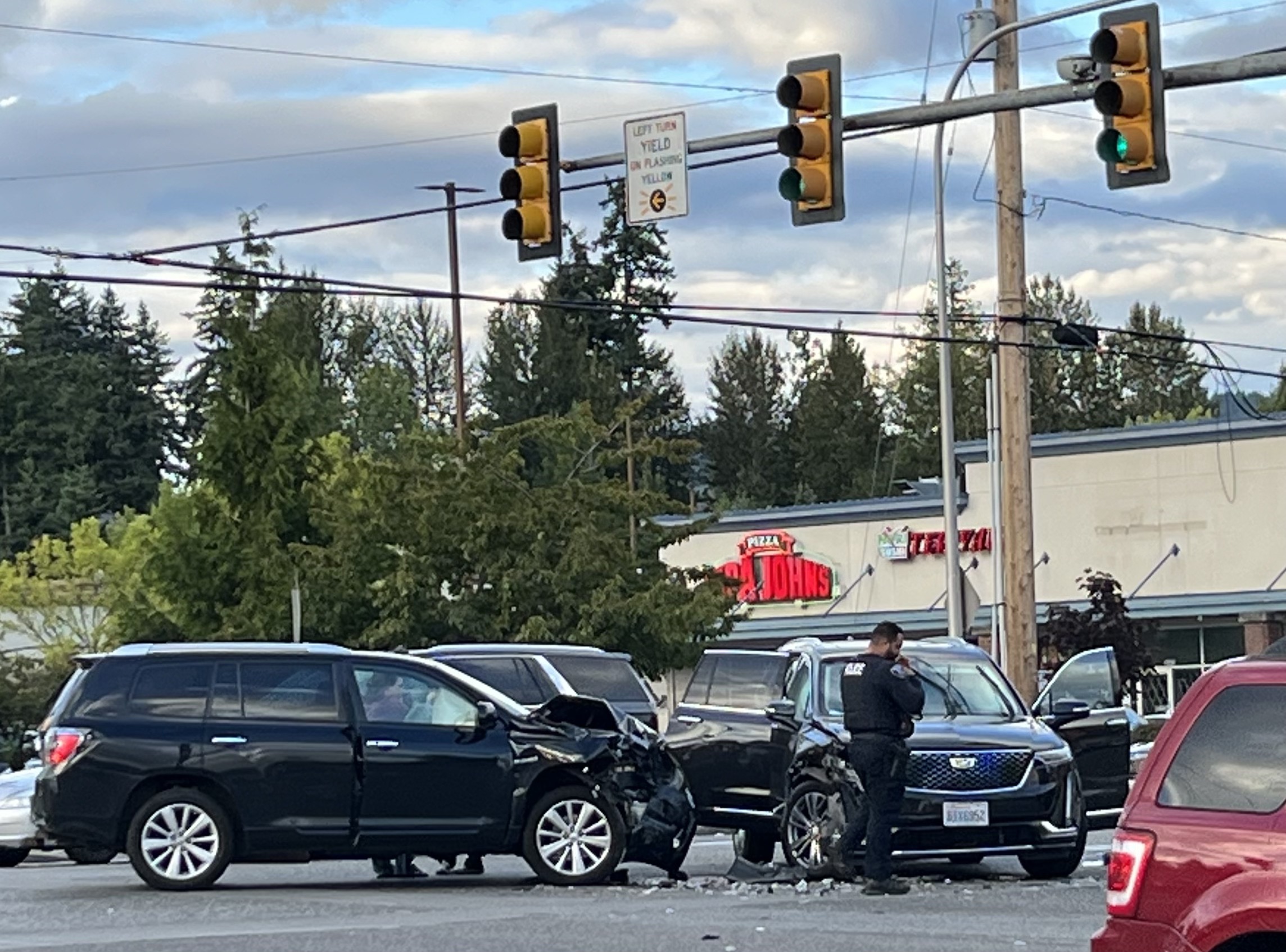
A collision September 6th at NE 4th Street and Duvall continues a frustrating pattern of frequent recent accidents at this intersection. Thankfully, drivers and passengers appeared to be able to walk away from this one. (Cause of this accident unknown at time of writing. Photo by Randy Corman)
There have been a lot of accidents at NE 4th and Duvall recently. Every collision is unique, and there are many potential root causes for each of these accidents; high speed, distraction, inattention, and other common driving errors are typically to blame. Some residents have questioned whether the flashing yellow left-turn arrows might be contributing. This question was also raised numerous times in Bellevue, which has been switching over to these flashing lights for years, and the Bellevue reporter covered the question thoroughly in 2015 in this article here.
These flashing arrows improve intersection efficiency and are in compliance with state and federal manuals. For maximum safety it is important for motorists to thoroughly understand these newer signaling arrangements to avoid errors that contribute to accidents.
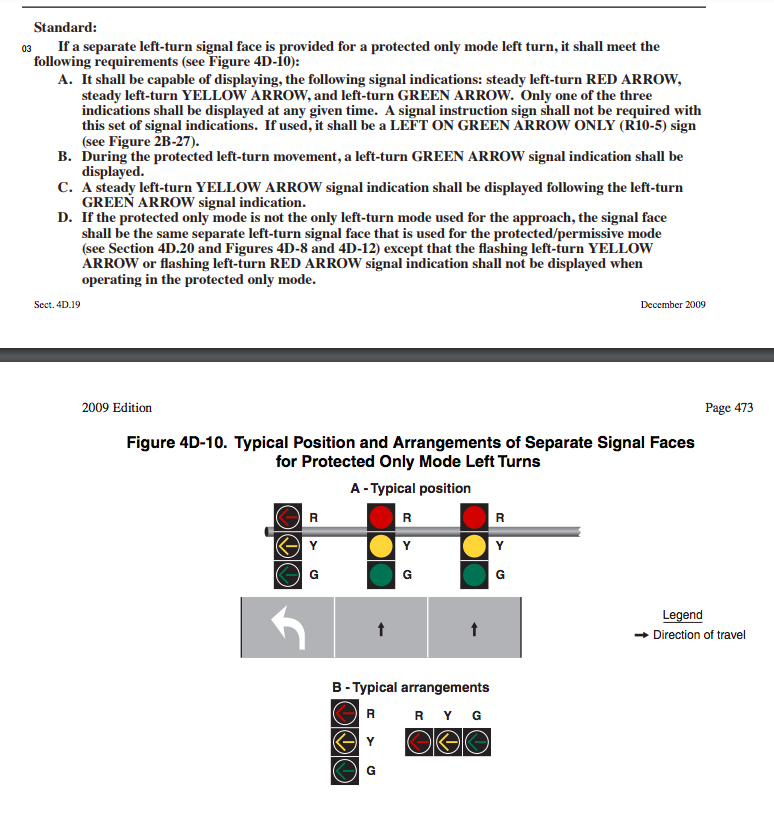
In 2009 the Federal Highway Administration updated their Manual on Uniform Traffic Control Devices to allow flashing yellow arrows to replace circular green lights over lanes where left turns are allowed when safe (called permissive turning conditions). Both a circular green light and flashing yellow arrow mean the same thing in this case, but the flashing yellow arrow was found to be more intuitive for drivers, by reminding them to use caution and yield to oncoming traffic. (Note that only a green arrow indicates a protected left turn in which the left turn has right of way.)
Under the 2009 manual, the flashing arrow will briefly switch to a solid yellow arrow to mark the end of the permissive left turns for each traffic cycle, and this requires driver attention.
Most drivers already associate a solid yellow arrow with the short period following a green arrow, when drivers typically complete protected left turns and clear the intersection. In solid yellow arrows after green arrows, red lights are stopping oncoming traffic for the duration of the yellow arrow.
In contrast, the solid yellow arrow following a flashing yellow is NOT a protected left turn period. When a flashing yellow arrow switches to solid yellow, oncoming drivers’ traffic signals may still be yellow, and oncoming motorists may still be entering the intersection. So left-turning drivers must concentrate, and NOT make a reflexive left-turn just because their flashing yellow arrow turns to a solid yellow arrow. Motorists are advised not to enter the intersection on the flashing yellow unless they have good indication that there are no conflicting cars or pedestrian movements that will prevent them from safely completing their turn; and they should definitely not enter the intersection on the solid yellow following the flashing yellow.
It can also be disastrous if a driver is speeding down the street, spots a solid yellow left-turn arrow, and quickly executes the left turn thinking they can do it in a few seconds– if it is the solid yellow arrow marking the end of a permissive turning period, they will not have right of way.
In summary, if a motorist is waiting for an opportunity to turn at a flashing yellow arrow, and it turns to a steady yellow arrow, they should NOT assume traffic will immediately yield for them to complete their turn. And hurried motorists should not speed up to catch the yellow left-turn arrow and execute a quick left turn– they could cause a collision. All drivers should observe speed limits, understand the signals, and pay extra-close attention at busy intersections.
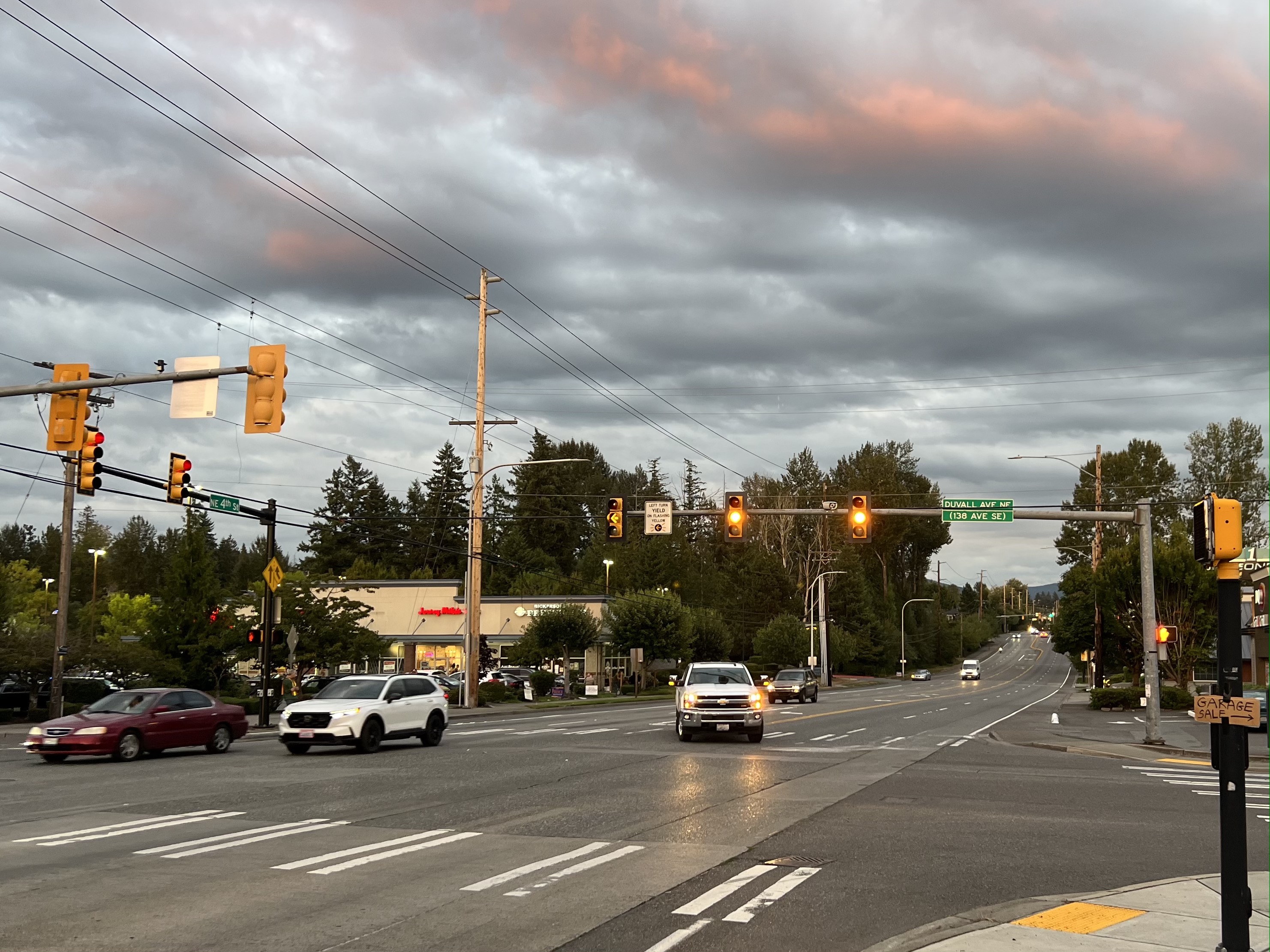
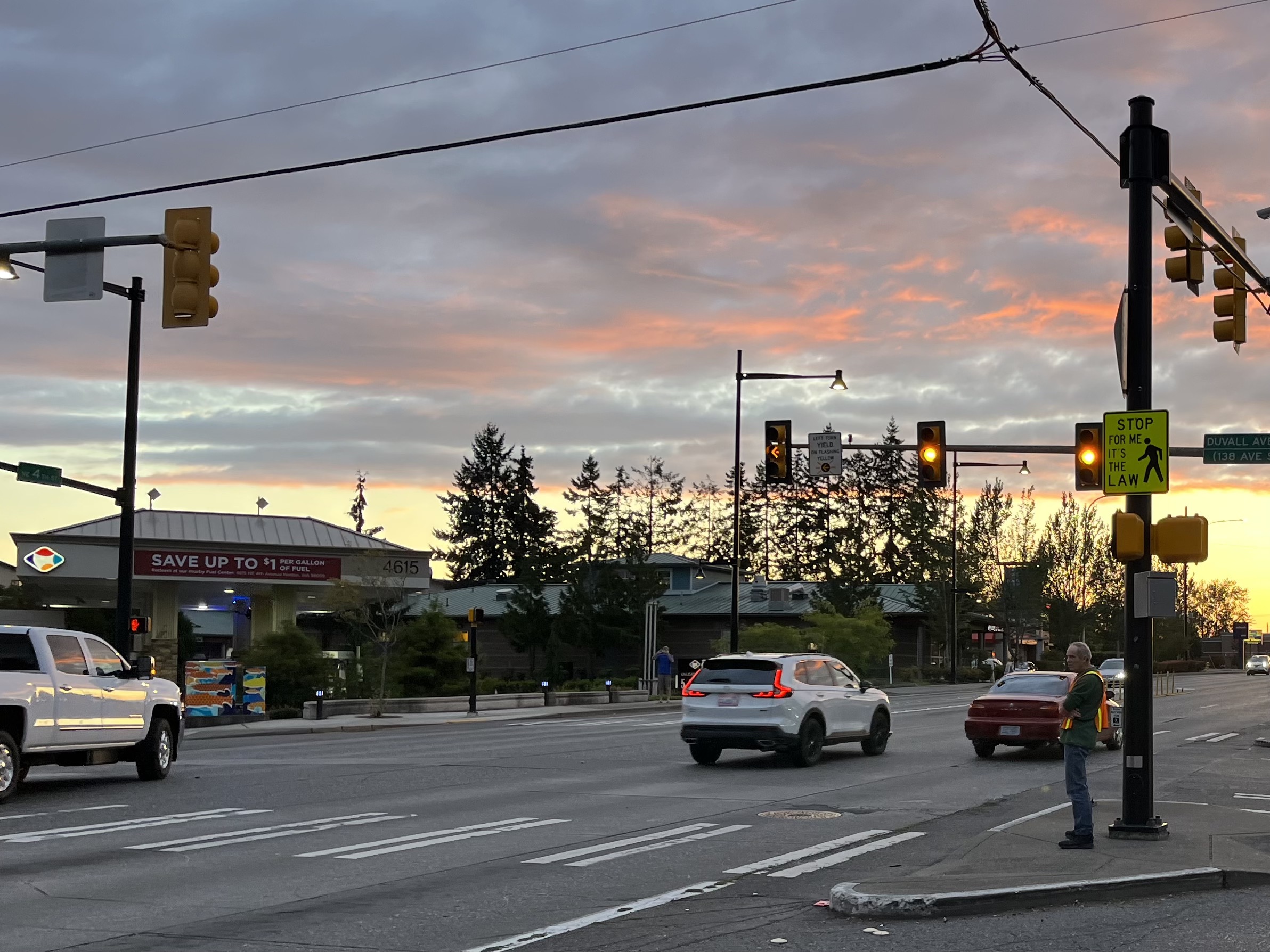
This photo, and the one below it, were taken at the exact same moment in time from opposite directions. Both directions of travel have solid circular yellow lights in the through lanes, and solid yellow arrows in the left turn lanes. If two motorists were speeding from opposite directions, trying to catch the yellow lights and not properly yielding, they could collide with each other if one is turning left and the other is going straight.This photo, and the one above it, were taken at the exact same moment in time from opposite directions. This one is looking west. The turn arrow and circular lights are all solid yellow. My wife took this photo, and I can be seen across the street taking the photo above. (The cars shown safely and legally entered the intersection on green or yellow lights.)
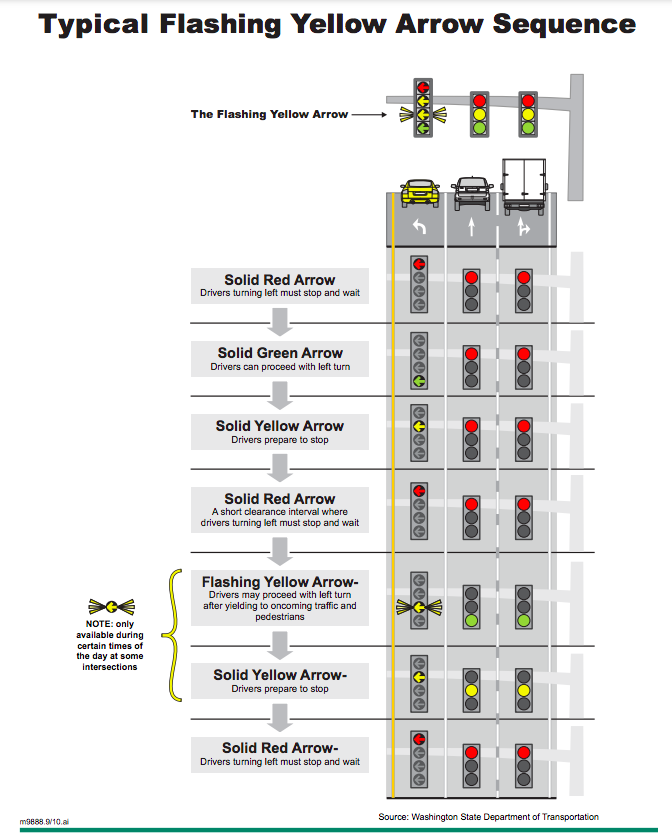
The chart below shows how the arrow sequences work, and shows compatible adjacent lane signals. Oncoming traffic lanes will typically have matching signals. Note the difference in the adjacent lanes’ signals for the two different solid-yellow arrow cases. (Cars in other lanes are stopped for red in one case, and rushing to get through the yellow in the other.)
This chart can be found on the City of Bellevue’s website here
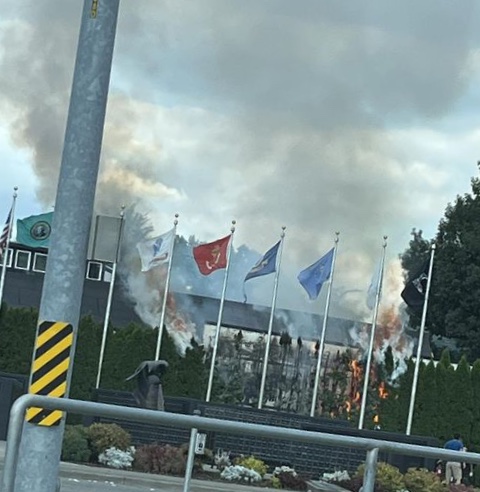
Photo of active fire posted by Ria Arias on Facebook Renton Crime and Safety
For the second time in less than four months a substantial fire occurred in Renton’s plaza containing the Veterans Memorial Park and the Renton History Museum. Today’s fire occurred around 3:00 PM, and damaged landscaping and flags at the Veterans Memorial Park while getting dangerously close to the nearby historic building that houses a bicycle shop. The May 15 fire occurred a short distance away, up against the Renton History Museum. (Businesses in the area report that there have been a few other smaller fires in the area during the past months, but these smaller fires have been successfully extinguished by concerned residents and business owners before growing to needing a professional fire response.)
My daughter Katie was a founding student and is now on staff in Renton’s H.O.M.E Program. Her three kids are all current students in the program. This is their 2023 orientation-day photo.
For 25 years Renton School District has been a state leader in outreach to homeschooling families. Their breakthrough H.O.M.E. program (Home-school Opportunities for Merging Education) was passionately spearheaded by former assistant-superintendent Vera Risdon in 1998. The program has been a model for partnership between a school district and families opting to homeschool. The program successfully blends the advantages and flexibility of homeschooling with the resources and teaching capabilities of the school district. Fully engaged HOME program students are considered district-enrolled students by Washington State, so the Renton District receives their per-student funding. This funding is used to cover classes, one-on-one time with teachers, and other expenses of the program.
My wife and I enrolled our daughter Katie in the program in 1998 along with two of her brothers, and eventually all five of our kids. Katie is now a Staff Member at the HOME program, and she helps teach classes while also participating as a parent with three kids of her own in the program.
Our five kids enjoyed the program, and they all received an excellent education. The HOME program helped them all enroll in running-start college classes during their final two years of high-school, which gave them a strong jump-start for their college degrees.
It’s exciting to see four (and soon five) of our grandchildren growing through the HOME program, and it’s fun to see Katie’s special role as an original-student turned staff member, as the program hits its silver anniversary.
Katie received this shirt at orientation today, which carries a special meaning for her since she was a student in the program in 1998 and is a staff member in 2023.
The back of the shirt shares the H.O.M.E. programs values (the school mascot is a panda)
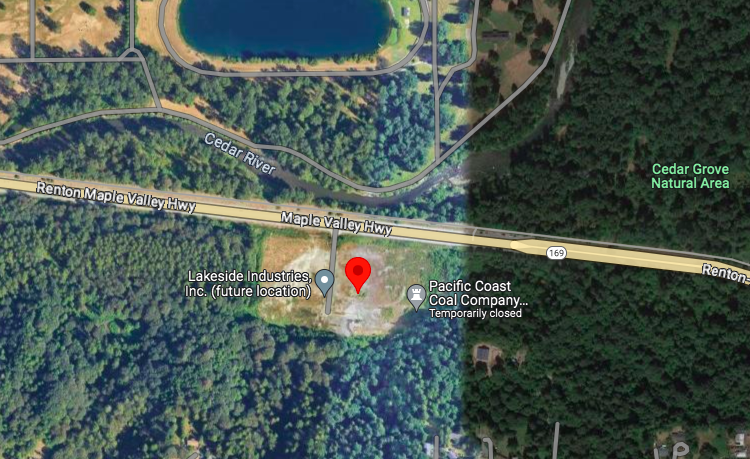
Lakeside Industries Asphalt plant proposed at 18825 Renton-Maple Valley Road
Most of us living in Renton have been adamantly opposed to the building of an asphalt plant along Renton-Maple Valley Road near the Cedar River. Renton’s elected officials are no exception. An organization named “Save the Cedar River” is helping to coordinate opposition to the asphalt plant, and their website documents the many concerns raised by the prospect of an asphalt plant at that location.
I’ve recently heard of false rumors that one of Renton’s elected officials is in favor of the Asphalt Plant. These erroneous rumors undermine Renton’s position on this issue, so it’s important to keep the record straight.
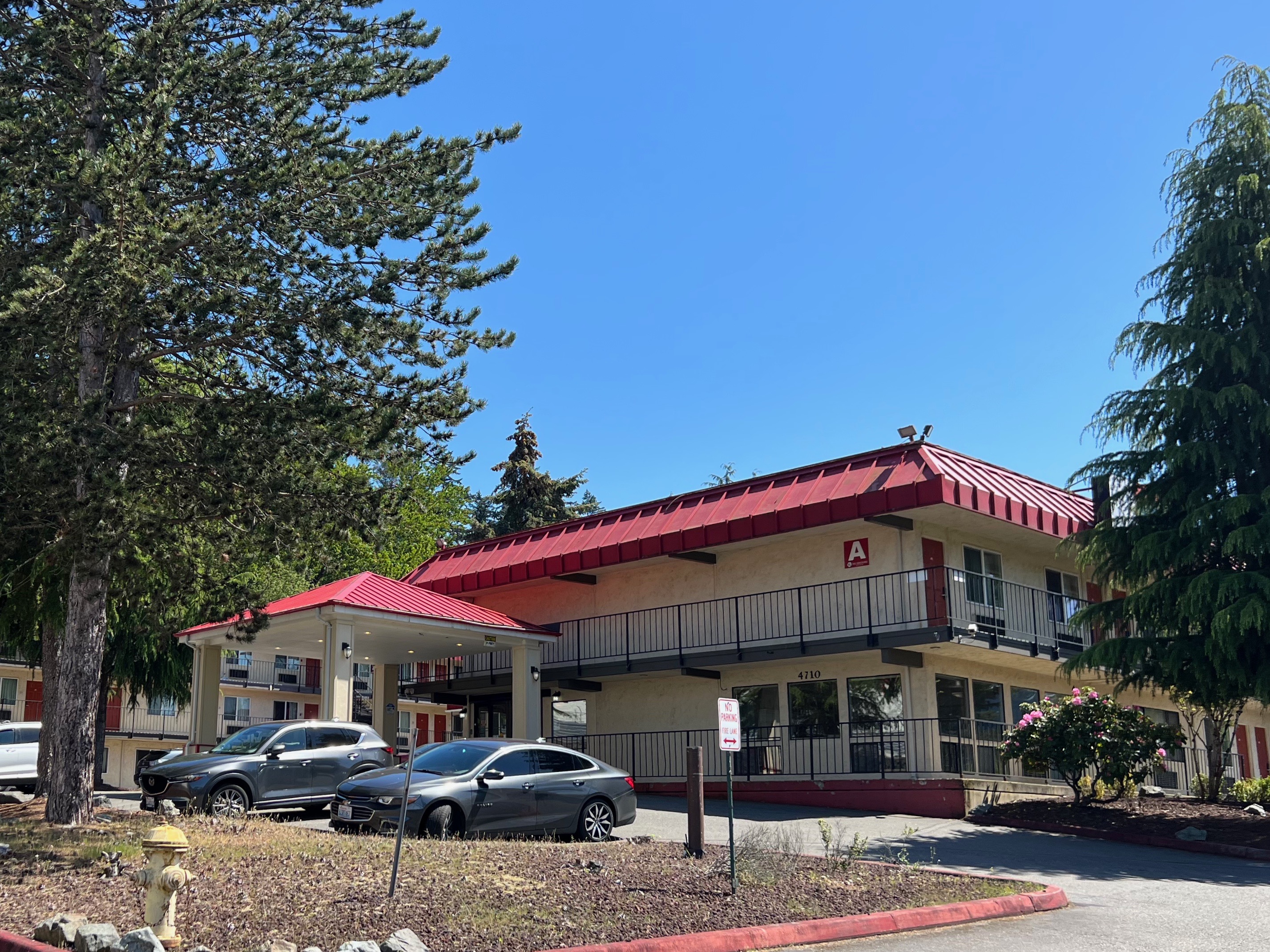
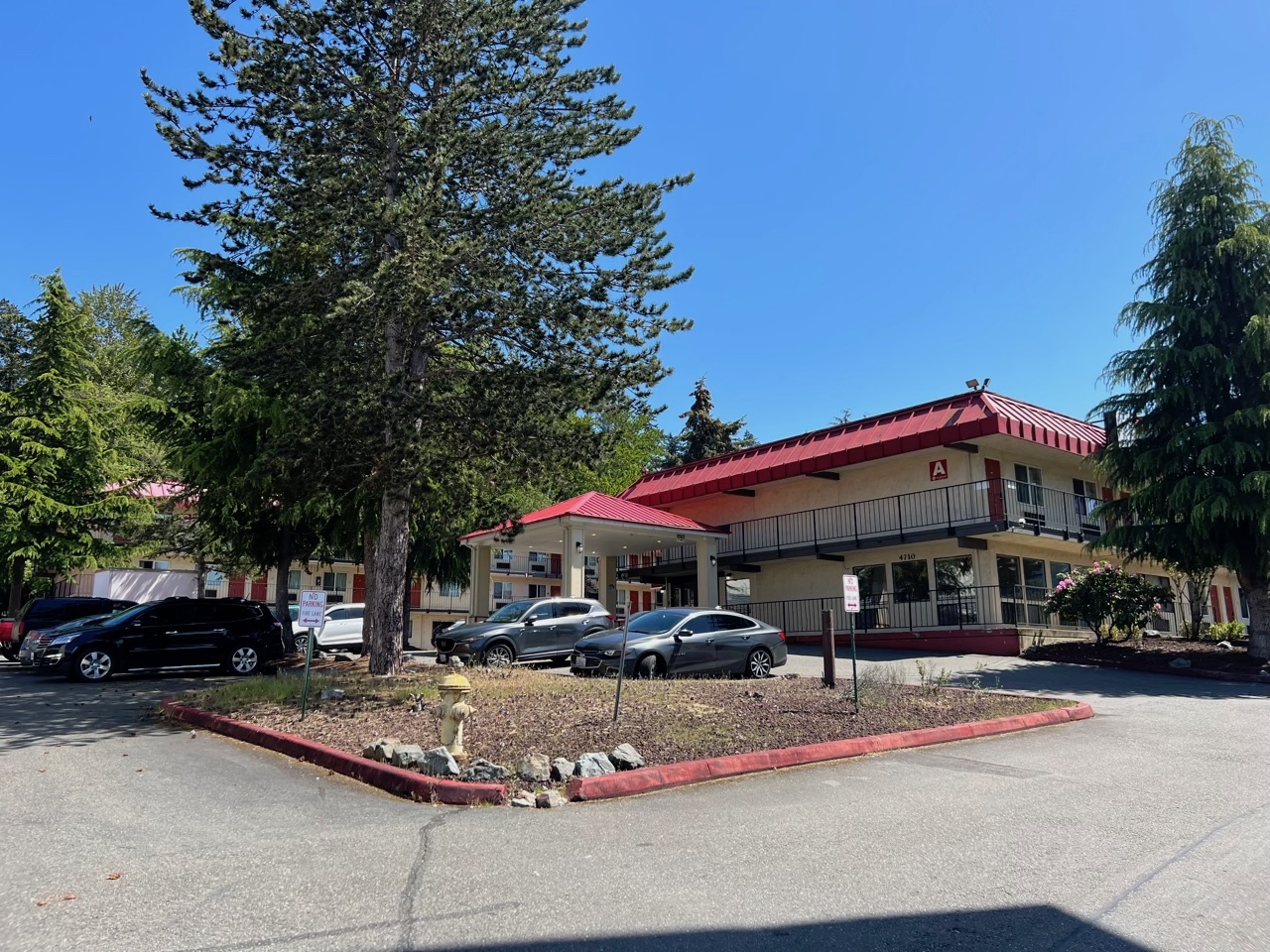
Renton’s former Econo Lodge, now “Inn at Lake Washington,” just off Exit 7 in Kennydale.
Note: Updated on 8/21 to include commentary by Mayor Pavone, who reinforced that he has been working to prevent this hotel from becoming a shelter for Burien’s use (new paragraph 4)
Burien City leaders have been in the news as they work to find shelter for residents experiencing homelessness who are camped in their downtown not far from city hall. A letter from King County Regional Homelessness Authority, along with blog sources, refers to discussion of Burien seeking shelter space in Renton for these residents.
In the City of Burien’s most recent public statement on this issue, they said “City personnel have identified several potential sites, including a facility operated by REBLX, a partner agency of KCRHA” Other documents make clear the REBLX site is a hotel in Renton. As a result, I’ve had several Renton residents ask me “are they talking about Renton’s Extended Stay, Clarion Inn, Red Lion, or what?”
The answer is they are discussing the former Econo Lodge, now called the “Inn at Lake Washington”, at Exit 7, in Kennydale. When I did an analysis in April of Renton Hotels being used for King County Homeless shelters, the Econo Lodge was not on the shelter list. At that time, I pointed out that 22 percent of Renton’s hotel rooms had been converted from traveler use to shelter use, while county-wide (including 38 other cities) only 4% of hotel rooms have been converted to shelter use. With the Econo Lodge, Renton’s percentage of converted hotels would reach 29%.
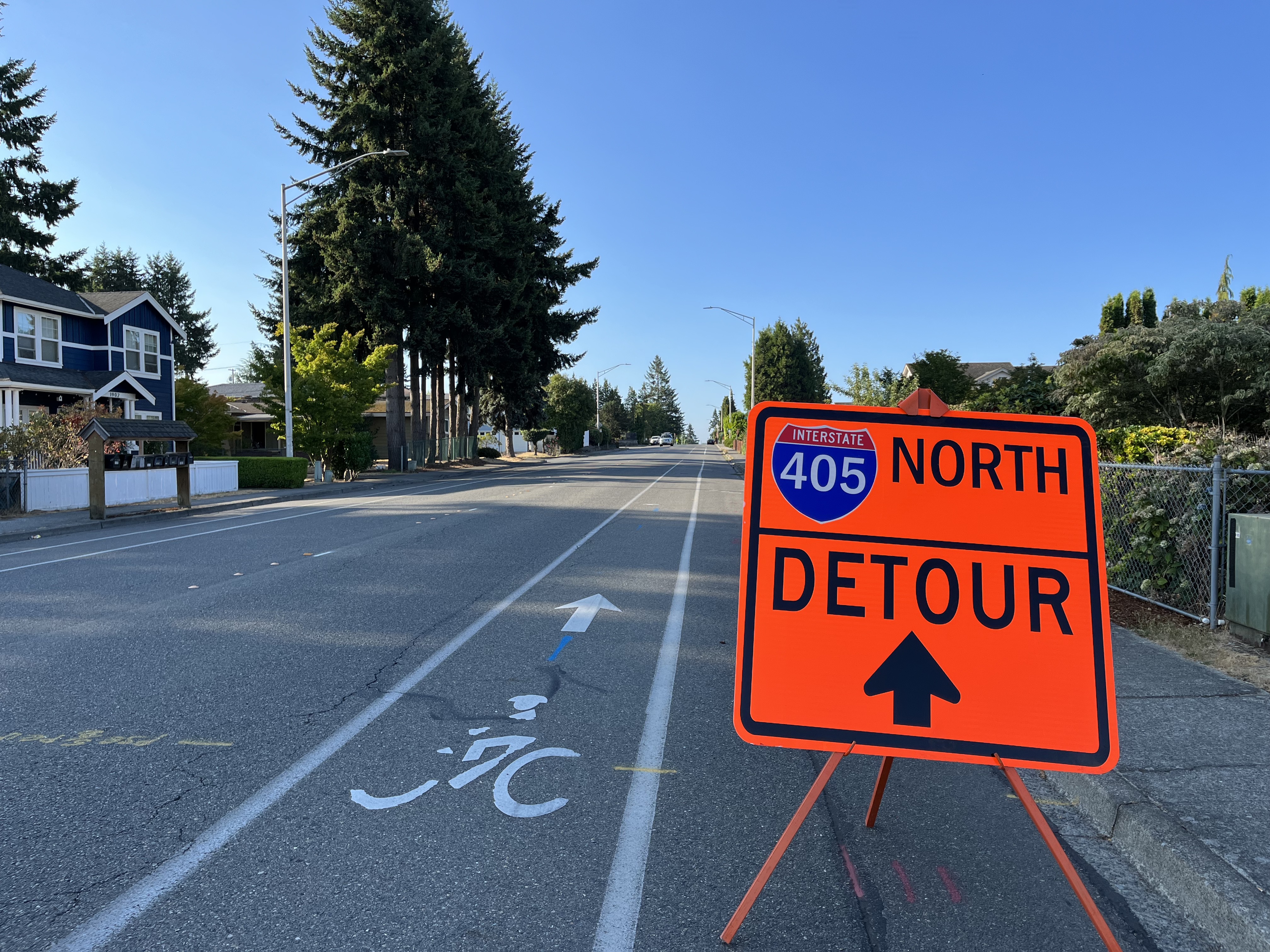
Traffic in this section of Edmonds Ave NE in North Renton Highlands (near McKnight Middle School) was extremely light this morning. This detour sign points southward, directing traffic toward Sunset Blvd, where Northbound travelers will be detoured to Coal Creek Parkway. This road often carries heavy volumes of highlands traffic onto Exit 6, which is temporarily closed.
If you live in Renton Highlands or Kennydale, you might want to step outside for a moment (before the wildfire smoke blows in) and notice the unusual quiet. Some residents have noticed how peaceful it sounds with the ubiquitous roar of I-405 quieted for 60 hours by the freeway’s complete closure from Exit 5 to Exit 10.
But don’t get too used to the quiet. The freeway is scheduled to be reopened by Monday Morning.
While we can’t expect traffic to go away on this corridor, perhaps 10 years in the future increased electric vehicles sporting better aerodynamics may quiet it down a little bit for us.
My wife Cathy and I also noticed something else. The section of Edmonds Avenue NE that runs through North Renton Highlands, a normally high-volume arterial, seemed all but empty this morning. While it’s typically not as busy on Saturdays, it was nearly deserted this morning. It makes it really clear to me how much this arterial is used to carry traffic between Renton Highlands and Exits 5 and 6. During traffic jams on I-405 this section of Edmonds Ave may even be used as a freeway bypass by some commuters.
I realize it’s possible people have just cut out most of their driving this weekend, so they don’t get stuck in a traffic jam anywhere.
I’ll be interested in hearing other people’s observations about traffic in our city during this I-405 closure. We may learn lessons about cut-through traffic that help us with future traffic planning.
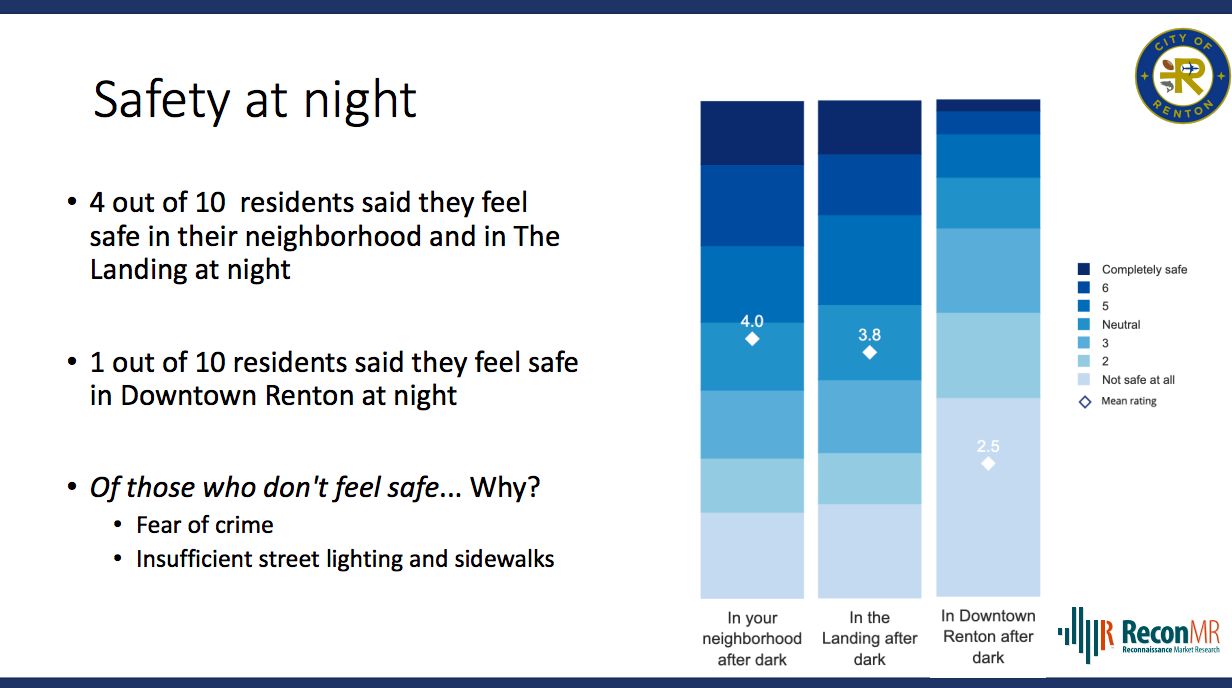
Renton’s latest official survey results are in, and concerns about crime are the highest I’ve ever seen– after decades of reviewing Renton survey results. The results were officially presented to Renton Council’s Committee of the Whole at their August 7 meeting.
Only one out of ten residents feels safe in downtown Renton after dark. Only four out of ten feel safe in their own neighborhood after dark. This is completely unacceptable, especially for our northwest city where wintertime sunsets happen as early as 4:25 PM.
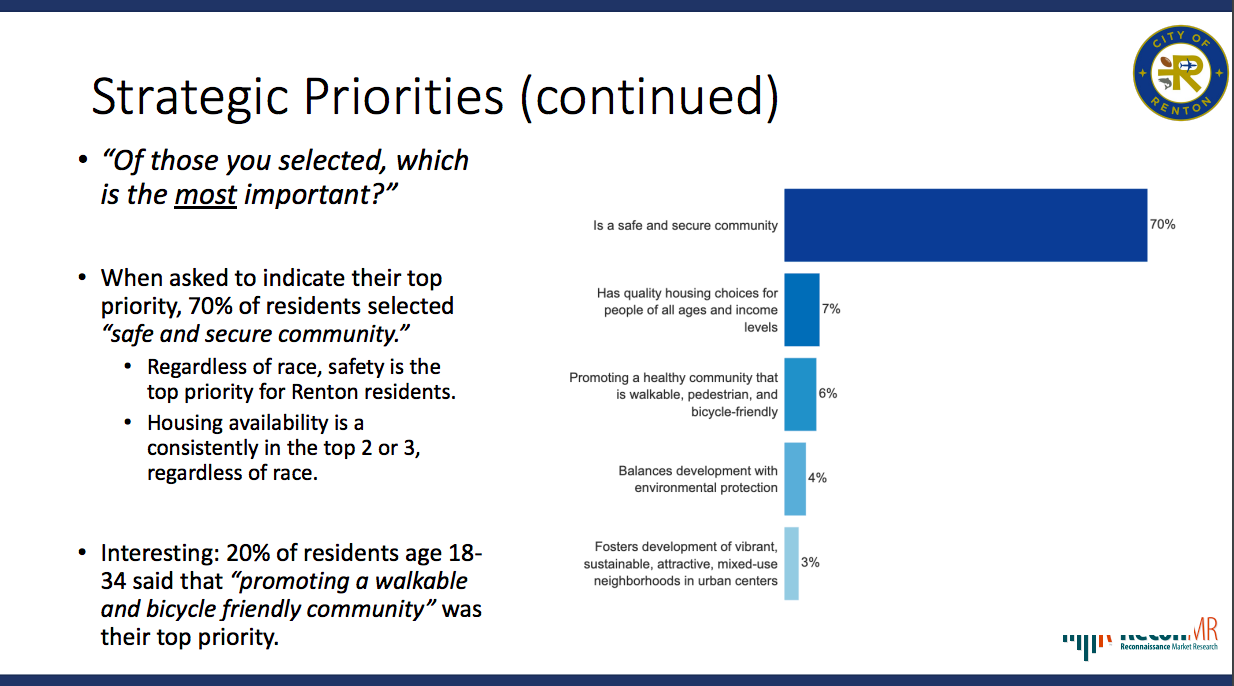
When residents were asked to rate the MOST important thing the city should be working on out of fifteen choices, “safe and secure community” far-and-away topped the list, with 70% saying it was most important. The next highest category came in only one-tenth as high, with 7% saying “quality housing choices” was the most important.
As I covered in a May blog entry, Renton needs to refocus on Priority 1 police response times (for the most urgent threats), and add the officers needed to get these response times back to 60-90 seconds. We must not go the way of Seattle, which now has ten-minute priority one response times. We also must insist the legislature give more authority back to our police officers, so they may once again reasonably pursue burglars, drug dealers, stolen cars, and dangerous reckless drivers when conditions allow for it.
We also need additional detectives to help work down the backlog of unsolved crimes. We can’t let some council members’ fears of police, and fear of “over-policing,” prevent us from hiring the officers and detectives needed to make residents feel safe again in their neighborhoods. And we need to have a safe downtown, that generates commerce in the evening and makes us feel like visiting our businesses there. Our downtown not only entertains and serves us, but it also generates the tax revenues needed to fund vital city services. Downtown is like our living room, and 9 out of 10 of us are afraid to go there.
Beyond adding the officers needed to maintain lightning fast response times, there’s other steps we need to take as a community; I’ll cover them in future blog entries.
Survey results showed that Renton residents still find much to love about Renton, so the results are not all bad. Many of the positives, like our parks, amenities, and overall sense of community, have been an important focus for our city for decades. But the crime trends must be brought under control to preserve those qualities we like so much about our city. The full survey results can be found here.