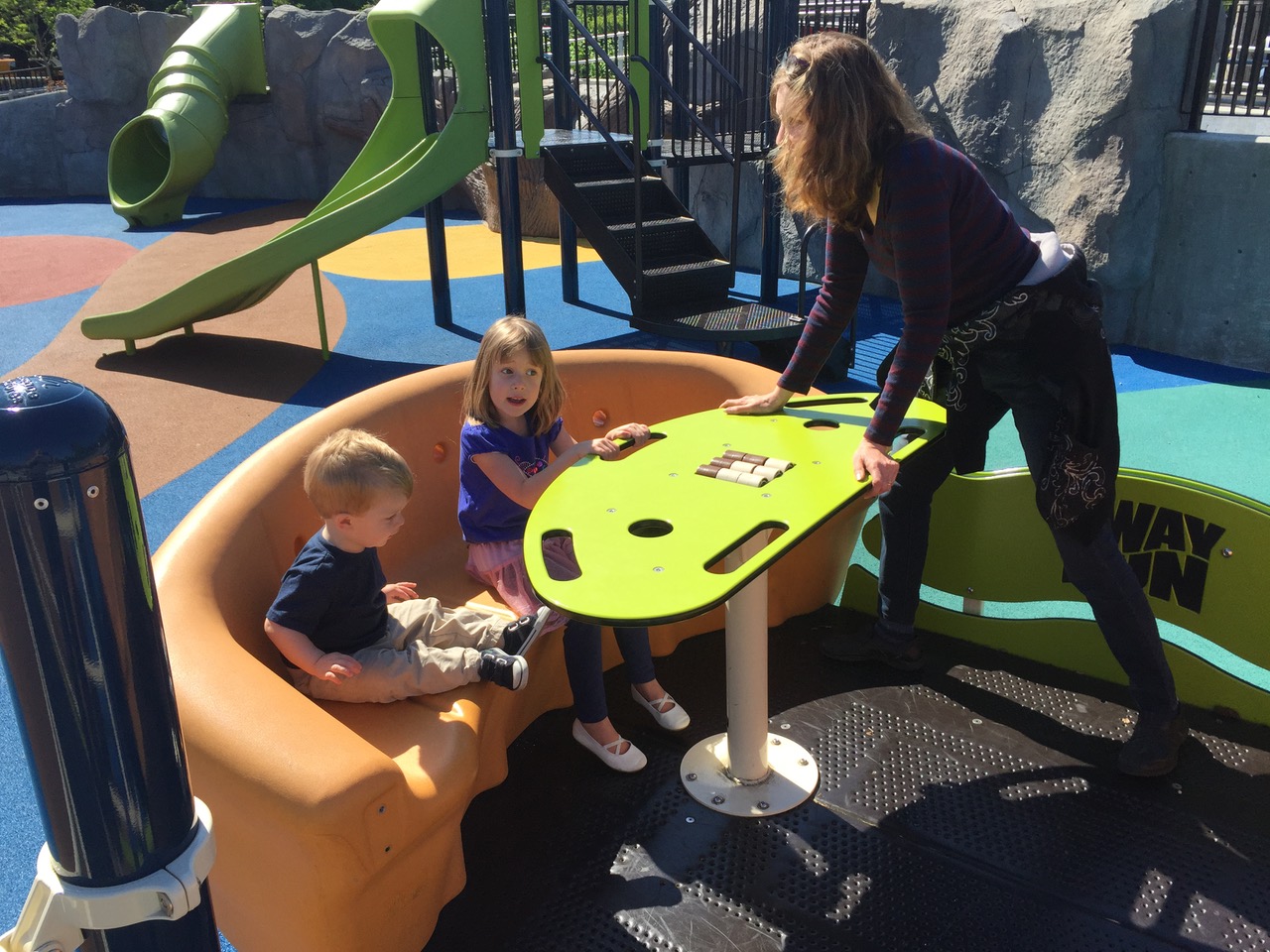
My wife Cathy playing with two of our grandkids at Meadow Crest Playground
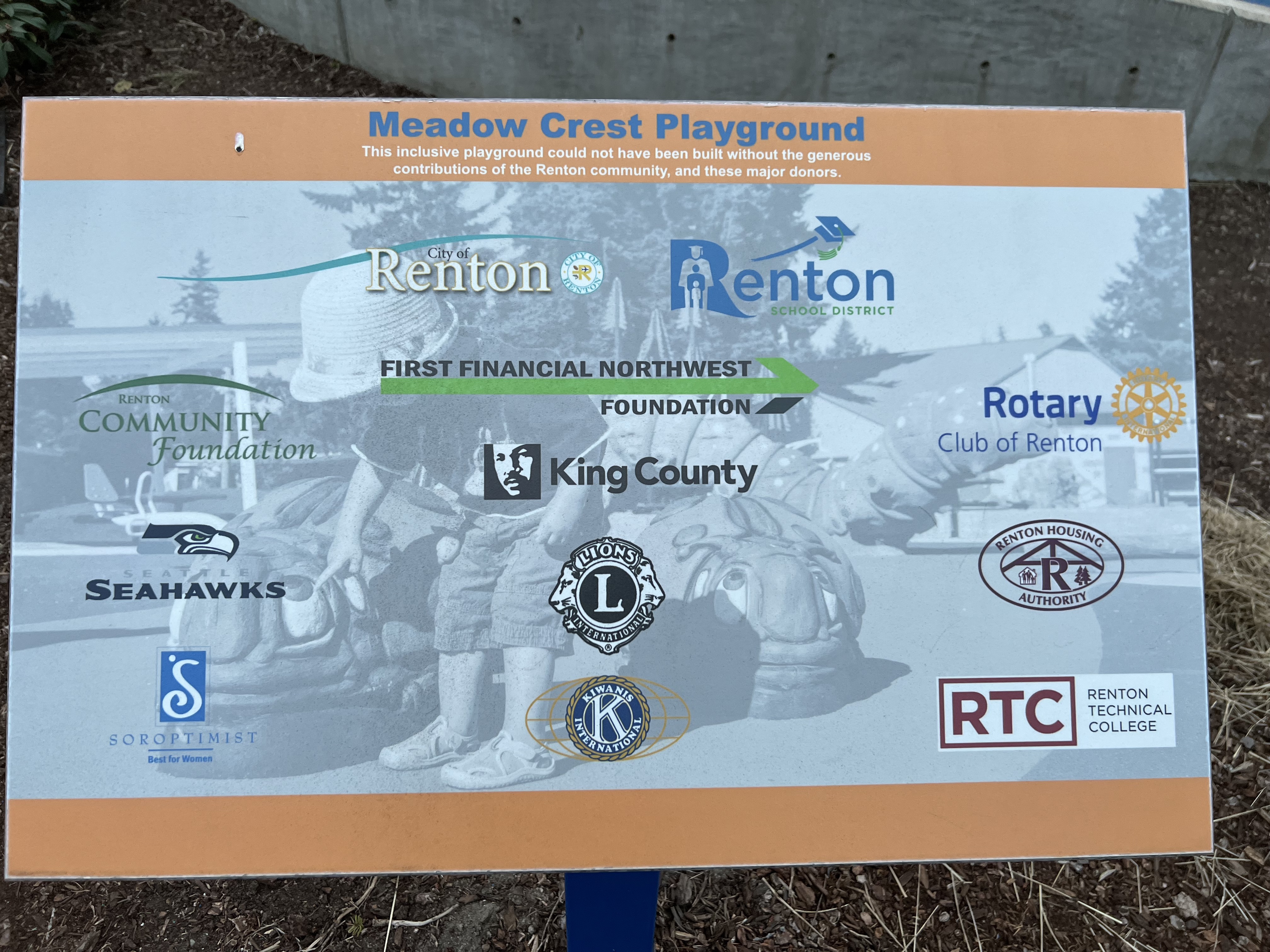
Almost exactly ten years ago, Renton City Council approved a partnership with Renton School District to build an inclusive playground that all children (and the people who love them) could happily enjoy regardless of their abilities or mobility challenges. If you have not seen this playground, it’s wonderful, and my grandchildren love it. It’s won numerous awards since its completion including a Governor’s Smart Community Award.
Generous Renton organizations came together to fund an inclusive playground for children
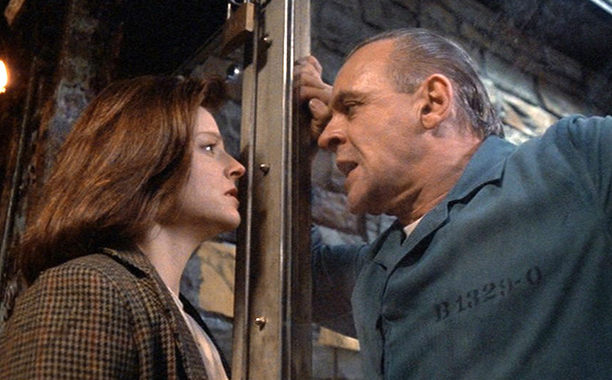
The fictional serial killer “Hannibal Lecter” could request a parole hearing under Washington House Bill 1189. He would have to show remorse and that he has changed, which unfortunately psychopaths are very good at faking, in order to be released.
Currently forty-nine U.S. states have a “life without parole,” option for the most heinous offences in society. The only state without one is Alaska, which has a total population less than Pierce County.
Like most states, Washington has treated life without parole as a more-humane alternative to the death penalty in aggravated murder cases, and our state’s residents have largely adjusted to this change even while the capital punishment debate continues. After “Green River Killer” Gary Ridgway, received life without parole for the unthinkable cold-blooded rapes and murders of dozens of girls and young women, no criminal has yet been found to have committed worse crimes, so life without parole became a new standard for Washington’s most heinous. The ACLU was an advocate of this change, making the case that Life Without Parole gives victims closure faster than the Death Penalty because it is set following conviction, and survivors can move on without participating in endless appeals. Per the ACLU in the link above: “For these reasons, the survivors of murder victims often feel that the death penalty system only prolongs their pain and does not provide the resolution they need, while the finality of LWOP (life without parole) sentences allows them to move on, knowing justice is being served.”
Life without parole is considered such a definitive sentence in our state that the usual “risk assessment report” often required for other sentences by RCW 9.94A.500 is waived for life without parole cases, and therefore no risk report is part of the court record.
But now the Legislature is embarking on eliminating life without parole in House Bill 1189, and it’s not very well known. It’s rolled into the creation of a new parole system for lesser sentences, which might be appropriate for lower level crimes, but the two issues should each be considered separately for the benefit of the legislature and the public. i.e Legislators should be able to vote on whether to create a parole system, and vote separately on whether those who have been sentenced to life without parole should become eligible for parole. The two issues are entirely different. There is even a third issue, life without parole in the case of three-strikes offenders who did not murder but committed three serious crimes; this group should be discussed in a specific debate.
In recent weeks I’ve posted numerous entries about state laws making it harder for our outstanding Renton Police officers to do their jobs. Even with the state actions that have worsened crime, our officers have delivered extraordinary performance, going above and beyond to protect Renton’s residents and visitors. The post below is copied from the Renton Police Department public facebook page.
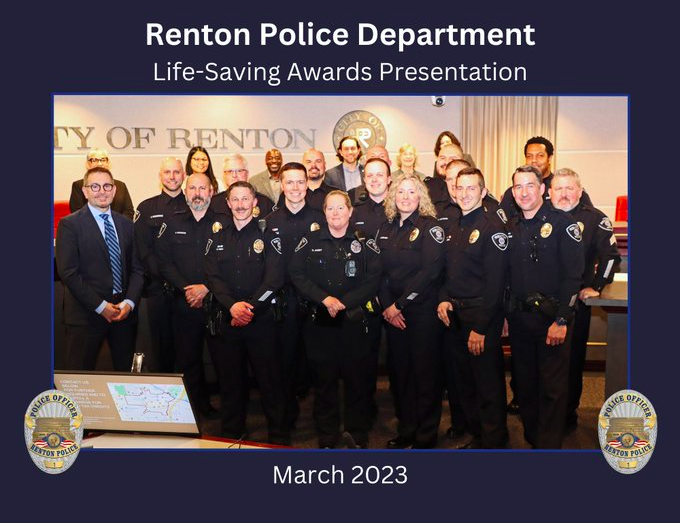
We appreciate the support of our community and want to share with you several life-saving awards that were handed out recently to many of our personnel. And although a little delayed, these courageous and resilient public servants deserved to be recognized for going above and beyond the call of duty, and these awards deserved to be provided to them in-person when they and their families and loved ones could all be present.
**CONTENT WARNING: The information posted below contains descriptors of violence and/or suicide that some may find disturbing. Please engage in self-care if you choose to continue reading this post.**
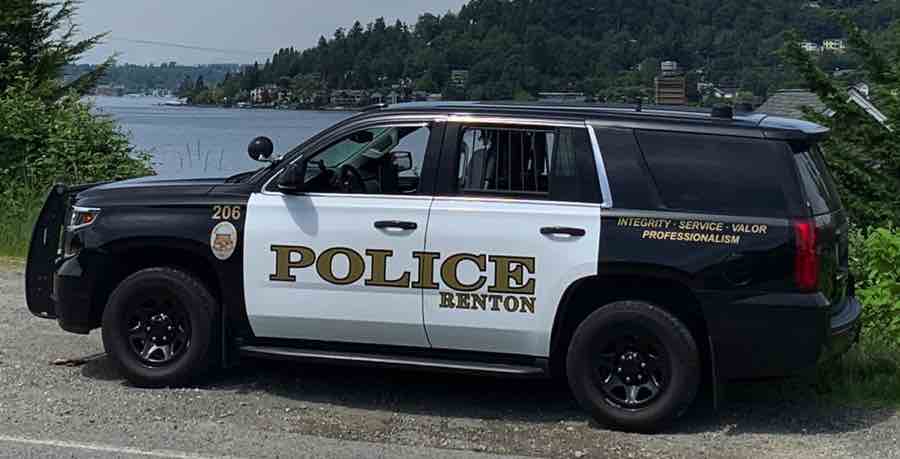
Renton Police next to Lake Washington Blvd; Renton Police Photo
I was recently asked whether Renton already had a vehicle pursuit policy before the state implemented the 2021 Pursuit law. The answer is an emphatic YES! I realized others may have the same question so I’m providing some background and the policy here.
Renton has had a very well-designed and validated police pursuit policy in place for many decades. We discussed the policy as a Renton Council occasionally, sometimes routinely, and sometimes in the context of insurance claims when property was damaged or in the rare cases where someone was injured by a police pursuit. (If my memory serves, we had one or two police pursuit bystander injuries serious enough to require focussed council discussion in the 28 years I was on council, and we had occasional property damage.) While the legal issues can be complicated when a reckless suspect hits a bystander with police in pursuit, our council generally considered it a city responsibility to help innocent injured parties if they got caught in the middle of a police chase, or if their property was damaged.
Immaculee Goldade was hit and killed by a stolen landscape truck, and her friend was also left for dead at the accident site. Immaculee’s parents are sharing that police would have gotten the driver off the road before the accident and saved their daughter’s life if it had not been for the 2021 police pursuit law.
Heart wrenching stories like this one are becoming increasingly more common as I’ve covered in multiple blog entries like this one here. A few weeks ago two children died as a direct result of this law as explained here.
Immaculee’s Mother Amber wrote a letter to the editor of the Lynnwood Times with the tragic details.
In October south King County mayors wrote an open letter asking County and State officials for specific assistance managing crime; the American Civil Liberties Union (ACLU) along with other signatories sent a rebuttal that minimized and sidestepped the concerns identified by the mayors. These letters are highly relevant today as the issues of the “Blake Decision” and police pursuit are currently before the legislature
I’ve supported the ACLU in past decades for their devotion to protecting our most basic civil liberties. But I have a few significant disagreements with their wording and their logic in this letter exchange with the mayors.
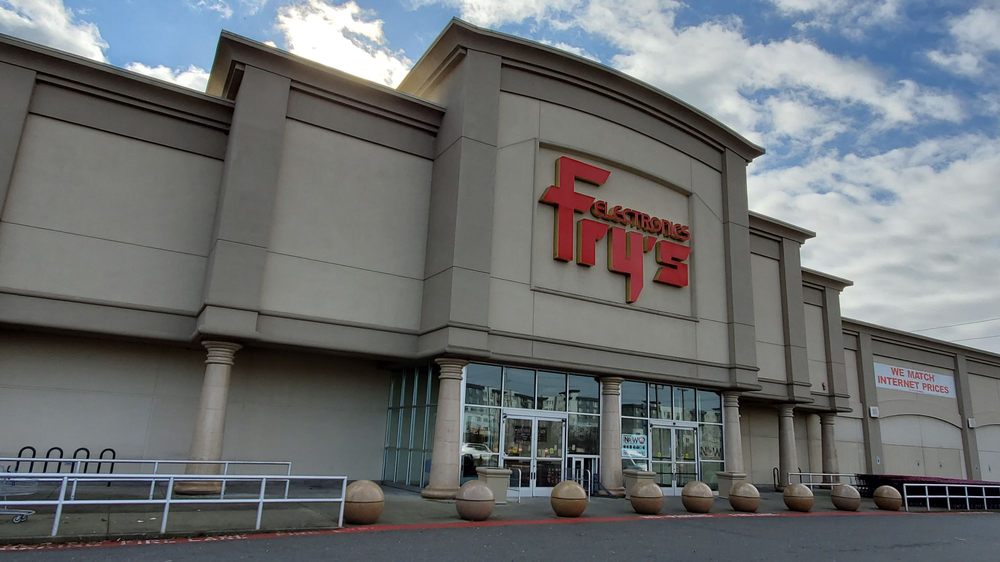
Spherical bollards protected the now-closed Fry’s building from smash-and-grab burglaries throughout its life as an electronics store
Renton police are recommending businesses consider installing bollards after seeing a growing number of burglaries in which cars are purposely smashed through windows and walls of buildings. The number of incidences has been growing exponentially since the legislature prohibited police from pursuing these burglars after they steal cars and after they crash into stores. There were a dozen incidences of this type of crime in Renton last year, and in 2023 we’ve already had three, putting us on the discouraging track to break last year’s record.
This recommendation makes sense under today’s circumstances, but it’s too bad we’ve come to this point where this is a significant concern. While bollards can be decorative and come in many architectural designs, they can also be pedestrian or bike hazards themselves, and they can limit legitimate vehicle access to storefronts when performing certain maintenance. When bollards are installed they should be substantial and tall enough to be easily seen, to prevent people from running into them or tripping over them. And some stores may want to consider them at more than just the front door– burglars have been known to drive stolen cars through walls as well as doors and windows.
Perhaps one of the best reasons to add storefront bollards is for the protection of personnel inside the store. It’s only a matter of time before one of these late-night smash-and-grabs in Renton kills or injures an employee doing inventory or restocking work.
This kind of security measure is unfortunately another large expense added on top of losses many businesses have sustained due to the pandemic, increased crime, and in the case of downtown businesses, a long period of road construction.
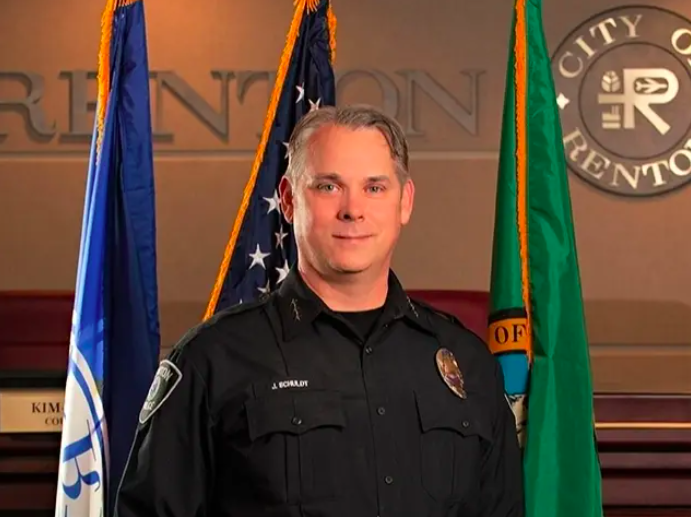
Renton Police Chief Jon Schuldt (Photo: City of Renton)
Last month I described how legislative inaction after the “Blake Decision” has been tragically killing more King County residents every day, as the rate of fentanyl overdoses grows exponentially, and drug trafficking has become harder to control. This week Renton Police Chief Jon Schuldt made an appeal to Renton residents to encourage our legislators to take action on this life-and-death issue.
Below is Chief Schuldt’s statement:
A police department’s purpose is to ensure the safety and health of our community. Seems like an easy enough objective, but the reality is that we are struggling, not as a police department, but as a community to reach this goal. Our opposition: current legislation and the negative effect it has had on our ability to disrupt the cycle of drug addiction.
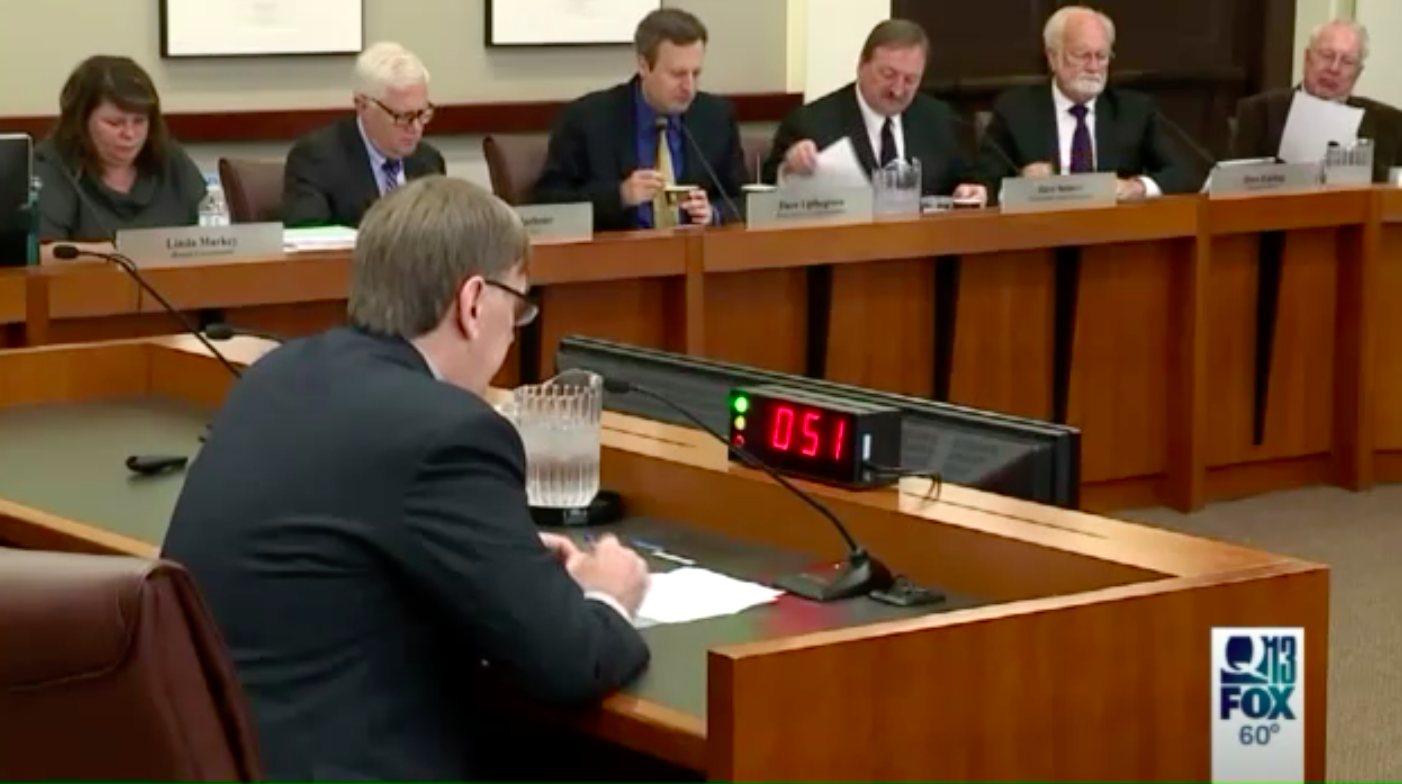
Renton Council President Randy Corman makes a case to Sound Transit Board to increase Renton’s share of service in ST3. Photo Q13 Fox
Note: This is the third installment of a three part series about Renton seeking equitable service in Sound Transit 1, Sound Transit 2, and (this entry) Sound Transit 3.
As Sound Transit 3 was being formed, it became ever more apparent that the structure of Sound Transit was repeatedly leaving Renton out of a fair share of service.
Sound Transit is its own taxing district with its own governance board. It was structured by the legislature to have four “sub-areas” that are each supposed to receive as much benefit as they pay in. The legislature placed Renton in the Eastside sub-area, along with Bellevue, Redmond, Issaquah and other eastside cities. Under the legislative structure, certain current city elected officials were appointed by the County Executive to represent these subareas. This structure unfortunately has a built-in conflict for those appointed; do they represent the sub-area overall, or give preference to the city that elected them? The County Executive picked elected officials from Redmond, Issaquah, and Bellevue to represent our eastside subarea. These three cities will receive Sound Transit light rail service in the coming years. Renton has been left out of rail service, and will only receive two Bus Rapid Transit (BRT) stations.
Guest Author Marcie Palmer, community caretaker and 12-year former Renton Council Member, fills us in on Renton’s planned use of speed “cushions” for slowing down traffic. Thanks Marcie!
________________________________________________
By Marcie Palmer:
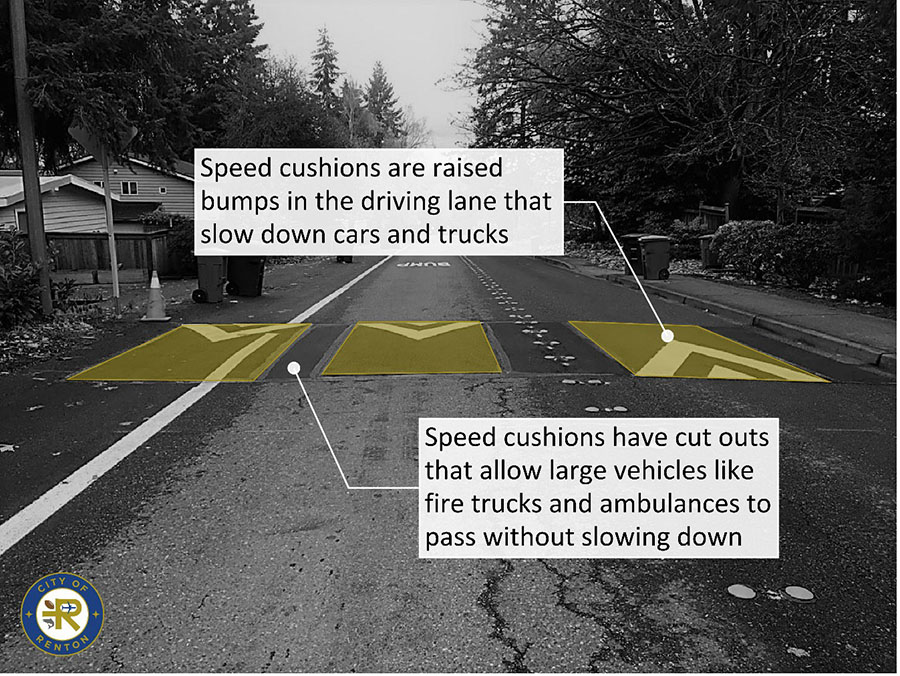
Can it be???? Speed “cushions” for traffic calming in Renton?!
Duringmy3 terms on Renton City Council, I was Chair of the Transportation/Aviation Committee 11 years (1 year as Council President).The most asked question from neighbors across the City was “How do we get speed bumps to slow traffic?”And all those 12 years, the answer was “NO, speed bumps ARE NOT ALLOWED IN RENTON.”Concern by Public Safety officials, particularly the Fire Department, was that it slowed down their vehicles too much.
And what to my wondering eyes do I see?…..Lake Washington Blvd N Speed Cushions, between Burnett Ave N and Houser Way N.
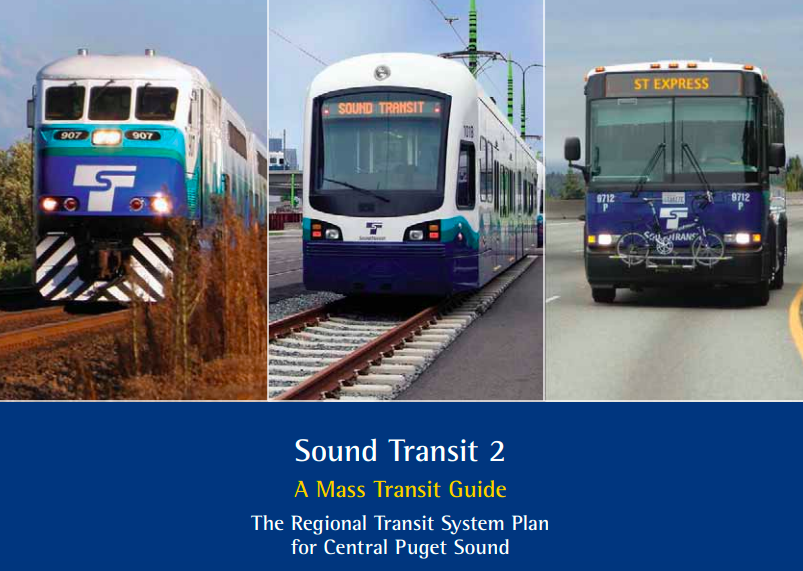
My previous blog entry covered Sound Move, and how we in Renton passionately worked to get our promised share of funding. Today I’m providing some history of Sound Transit 2, in my own words at the time. Renton officials were working hard to get a fair treatment for Renton commuters and taxpayers.
Here is my blog entry four months in advance of the election, when Sound Transit was again offering us less ridership opportunity than other cities for our money.
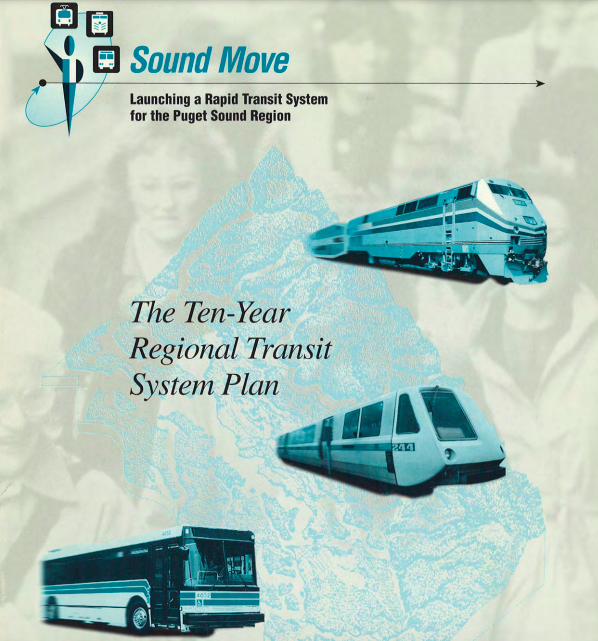
The original Sound Move plan, as presented to voters would collect about $100 million from Renton taxpayers and spend about $100 million in Renton on HOV direct access ramps and express bus service on and off I-405. The spending didn’t happen.
In recent blog entries I’ve discussed the high cost of Sound Transit service to Renton residents, around $1000 per year per family. Renton taxpayers have paid about a BILLION dollars so far for just five stops by two bus lines in our city and about $20 million in capital improvements to Rainier Ave. Other cities have received multiple Link light rail stations, Sounder heavy rail service, parking garages, and even expensive artwork paid for in part with Renton’s money. This topic is important now because Sound Transit is breaking commitments to Renton again, and we need to act to fix it. Over the next week I intend to go deep into the history of how we got to this point.
It’s a 26 year history that takes us from the original Sound Move, to Sound Transit 2, to Sound Transit 3, and all the discussions and promises that went with each. It may get a little complex as there were countless discussions over many decades, and it is important that Renton residents understand as much as possible about the background and details.
For my introduction into the topic, I’ll ask you to read my first post on this topic in 2007, where as a 14-year council member at the time I recounted the work Renton had done to maintain our promised fair-share of Sound Transit funding, and the ways that had been taken from us. In entries later this week I’ll pick up the story from 2007 until the present, using letters and exhibits that many people have never seen before.
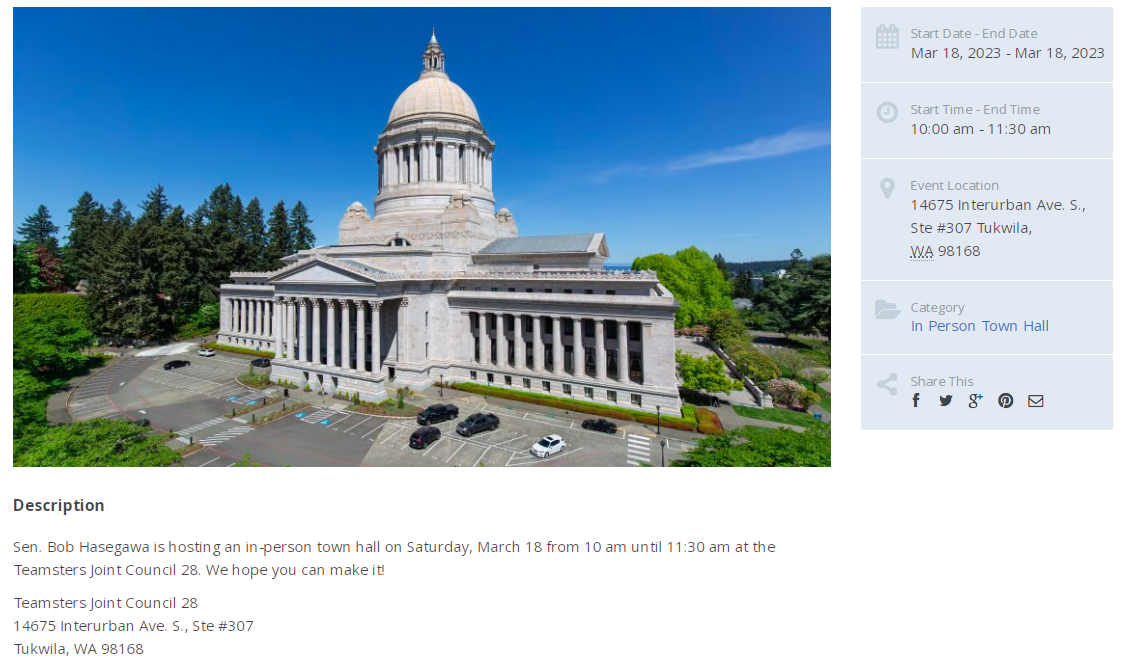
Senator Bob Hasegawa will hold an in-person town hall on Saturday March 18, from 10:00- 11:30 AM, at the Teamsters Hall at 14675 Interurban Ave South, Suite #307, Tukwila, WA. The official announcement can be found here.
It’s a little unusual for our 11th district to separate the house and senate town halls, as most of our neighboring districts appear to be combining them, especially when house and senate colleagues all represent the same party. I encourage Renton residents who are concerned about public safety issues to attend both town halls as there is enough time for a trip from Tukwila to Renton and a quick lunch between them, particularly if you book a later appointment at the afternoon town hall.
It is very important that your legislators hear from you first-hand, in-person about your public safety concerns. Legislators typically will be most responsive to in-person conversations, then to your emails, and probably last to your social media posts (if they see them).So please try to make time for these town hall events!
Yesterday I covered a recent vote by Renton City Council regarding the best way to provide reasonable financial protections for renters to help keep them in their homes when possible. Today’s story serves as a reminder that not all evictions are about rent payments.
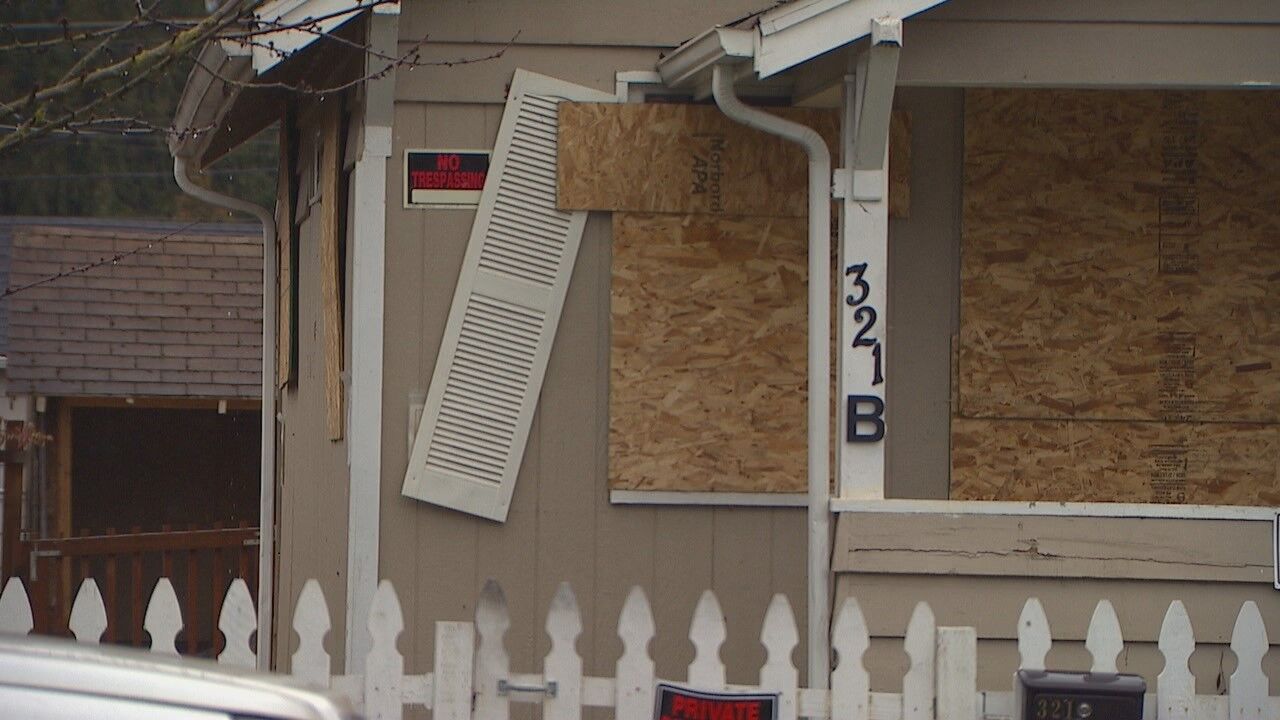
A Renton landlord with a home on Wells Ave in North Renton explained to KOMO news that he was trying to evict a tenant for a year and half who was generating complaints in his neighborhood. After months of King County Superior Court and Sheriff’s delays, gunfire at the home killed one man and wounded another. The murder led the Sheriff’s office to finally complete the eviction, but then fire destroyed the home.
Just like tenants sometimes need protection from predatory landlords, landlords also need to be able to reasonably evict challenging tenants before a dysfunctional rental situation spirals into bloodshed. It’s important to keep this in mind as local Council Members for jurisdictions like Renton and King County blunder into the complex minefield of writing their own landlord-tenant laws.
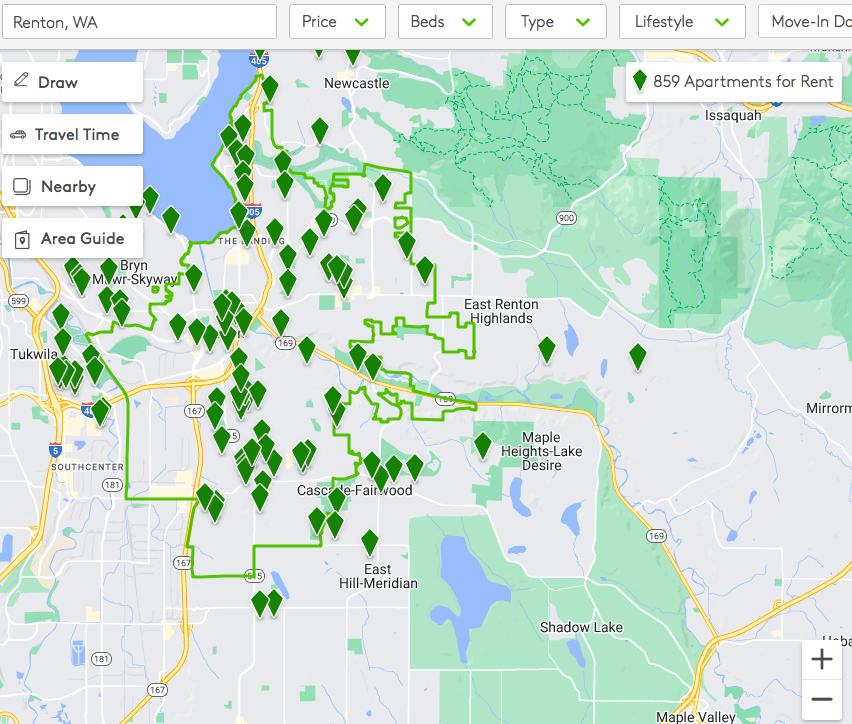
Photo from apartments.com showing current apartments available; Renton officials have been criticized for Renton having the same number of evictions within the city as in the larger unincorporated, mostly single-family, neighborhoods east of Renton. However, this is probably because there are more apartments, and therefore more renters, in the city.
The subject of renter protections has been on many people’s minds lately as the region works to solve the ever-worsening homeless crisis. Anything that can be done to help renters keep their homes is worth discussing. Preventing jolting rent increases, unfair landlord practices, and unjustified evictions certainly deserves discussion. Part of keeping tenants in their homes is keeping landlords from quitting the business, which has happened 3000 times in Seattle in the last few years, adding about 6000-9000 new renters to the displaced tenant pool. An increasing number of landlords have found there is not enough profit in offering rentals any more, particularly Mom-and-Pop landlords who are used to operating on very little cash-flow margin, or none at all, as they’ve worked to keep rents low for tenants while taxes, utilities, insurance, and now interest rates climb rapidly. As landlords drop out, their rental houses sell to owner occupants, reducing the number of new homes built for this market, and lowering construction in the region overall. The reduced construction raises prices for everyone. Because of this necessary market balancing, it’s important to use accurate data and get thorough public input before making any significant changes to the rules covering landlord and tenant relationships.
The State of Washington has several bills working their way through committees that attempt to address these issues, and the legislature has been taking public testimony and gathering data on these bills for months. The state process will not likely be completed in this legislative session, but there is a good chance it will be completed later this year.
At the February 27 council meeting a representative from the Housing Justice Project asked the Renton City Council to consider adopting new tenant protection laws ahead of any state action; rules that some other jurisdictions have adopted, including unincorporated King County.
The council was split on how to proceed, with four members (Rivera, Prince, McIrvin, and O’Holloran) choosing to give the issue to the city administration for study and a recommendation, and three members (Alberson, Perez, and Van) suggesting that since the state is already doing the work and is ultimately in charge of statewide landlord-tenant law (which could supercede any work done by the city), it would make sense to simply let the state finish the job. The group wanting to leave the job to the state pointed out that Renton planning staff time is a scarce resource that could be better spent on many other urgent Renton issues that the state is not trying to solve for us.
If I was still on council I probably would have voted with the second group, as our city staff and even our City Council have a number of other very important activities they should be dedicating time to. For instance, they need to devote resources to other ways to help solve Renton’s homelessness challenges, rein in the burgeoning drug overdose problem, and remedy the increasingly dangerous streets. And we should be dedicating Renton staff time and Council focus to trying to getting Sound Transit to give our residents a fair share of future transit opportunities. Housing is not as good if people can’t get to work or access services from it. It’s possible the administration could come back with a recommendation to leave it to the state for these same reasons.
“Tran-Larson (from Housing Justice Project) said Renton makes up 4.7% of the total population of King County, while the unincorporated areas around Renton make up more than double at 10.8%, yet their number of evictions are nearly the same. She said this means that renters inside the city limits of Renton are nearly twice as likely to be evicted.
Tran-Larson suggested that this difference is due to the regulatory environment for tenants in Renton, as she cited that unincorporated King County saw a “significant decrease” in eviction filings from 2021 to 2022, a year after they passed their tenant protections in the county.”
I personally got sidetracked at this speech opening as I watched the testimony, as it is an apples-to-orange comparison. While I accept that the unincorporated areas primarily to Renton’s east may have twice as many residents as in incorporated Renton, these areas, per state growth management, are much less dense and far more likely to be single-family homes than the residential areas of Renton. On a population basis, one would expect to see far fewer evictions from single family neighborhoods, where maybe 19 out of 20 own their homes, than in apartment neighborhoods where everybody rents. So unless Tran-Larson had accidentally abbreviated her comment, or else we all heard it wrong, she appeared to base her testimony on a questionable statistic. Finding the truly relevant data, like “when comparing a significant number of like-rentals in the county compared to the city, do eviction rates differ?” will take time and resources.
The Renton Reporter reached out to a landlord-tenant attorney, Devin Glaser, who emphasised the difficult financial climate many tenants are in, and I tend to agree with everything he said in the story.
One comment of his I found interesting was after mentioning different minimum notice periods different cities have adopted for rent increases, he said “Ironically, this means that someone could have very different protections than their neighbor living across the street depending on which city they live in and whether or not it has officially been incorporated as a city or is unincorporated county land.”
To me, this is exactly why we should encourage the state to come up with harmonious, consistent protections for tenants statewide, and not spend precious Renton resources further adding to the disparate, confusing rules that both tenants and landlords are continually sorting out.