 Written by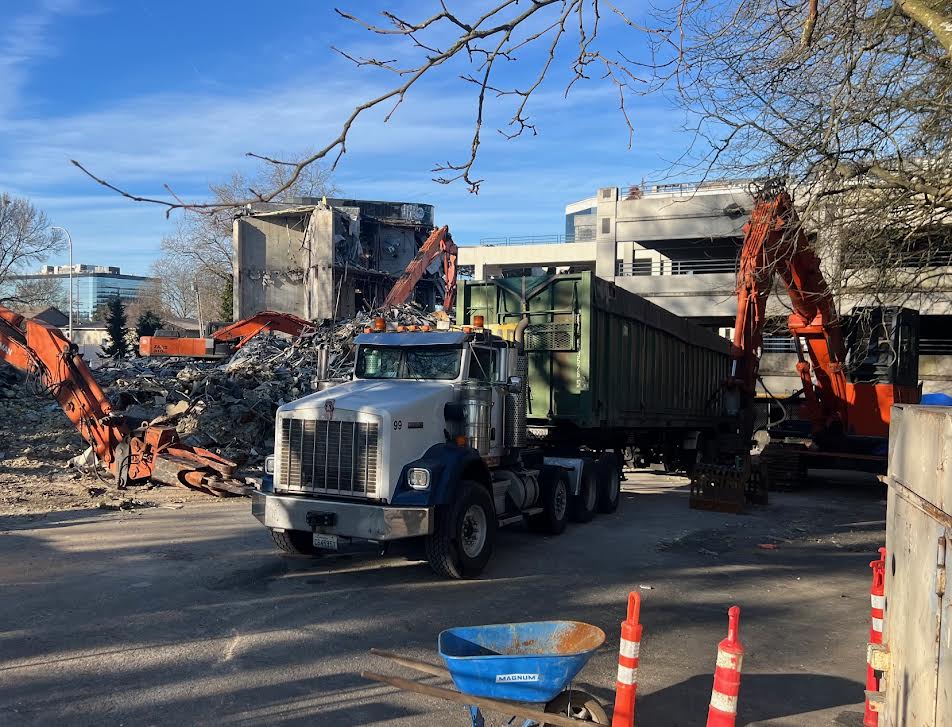
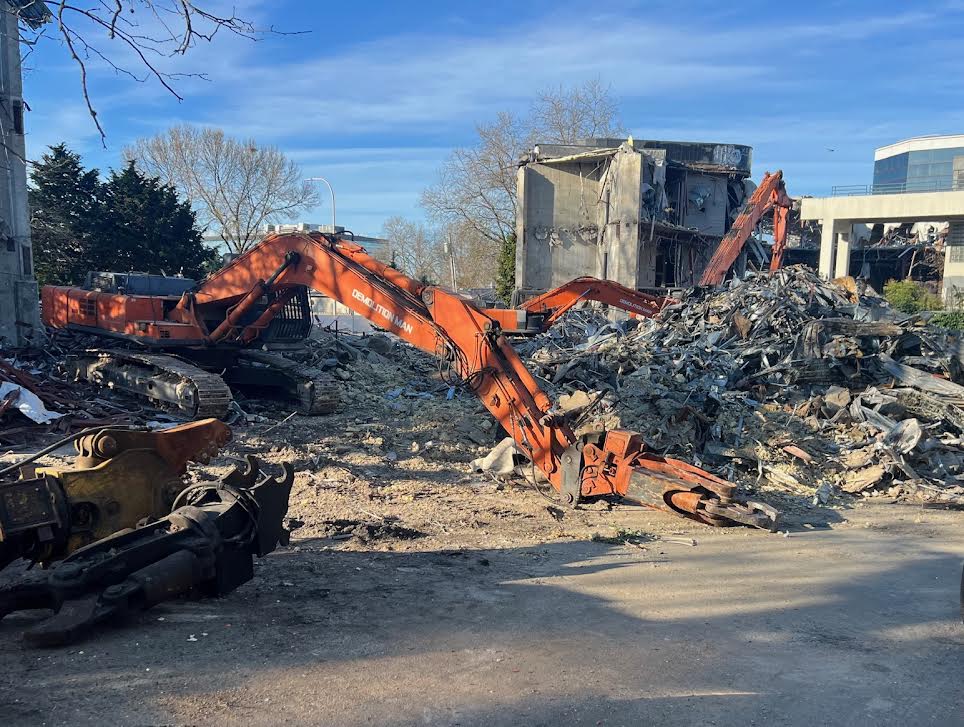
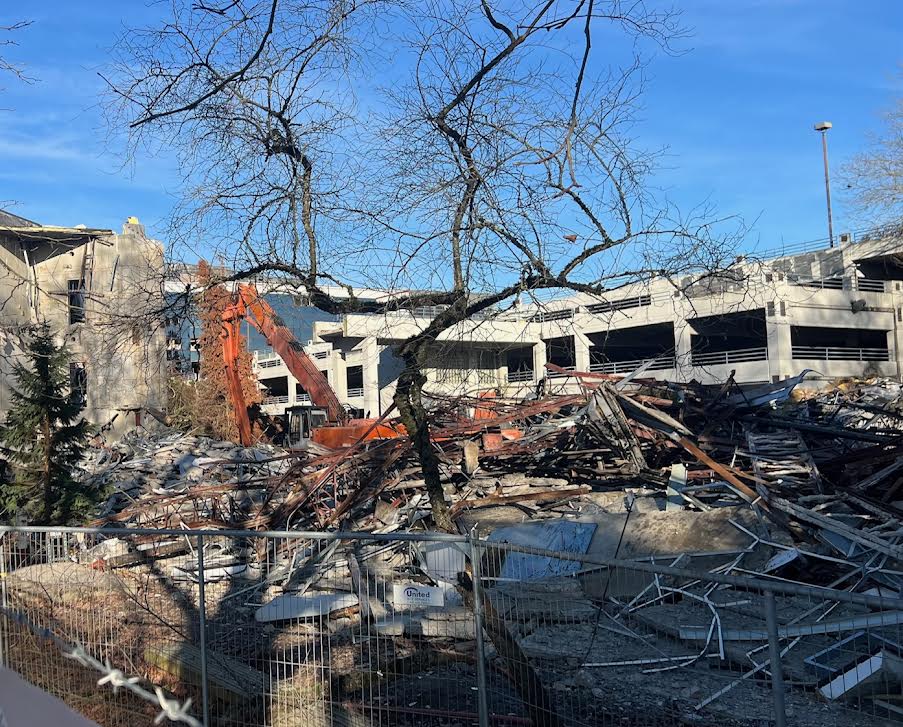
High-reach excavators have turned parts of the former 10-13 building into a 12-foot high (and growing) pile of rubble, as truckers work to try to keep up with the debris.
Demolition is well underway on the smaller of the two derelict Garden Plaza buildings on Park Avenue. This building, sold by Boeing to ION Renton in 2021, was once known as the 10-13 building. I used to enjoy having a bright, convenient office in this building and I was sad to see it unnecessarily fall into ruin.
Major demolition has not yet begun on the seven story building. It’s height and reinforced concrete structure will make it significantly more difficult to bring down.
There are no approved plans for new construction on this site. Ecological concerns will complicate construction of any future use, particularly residential uses.
For further background on these buildings click here.
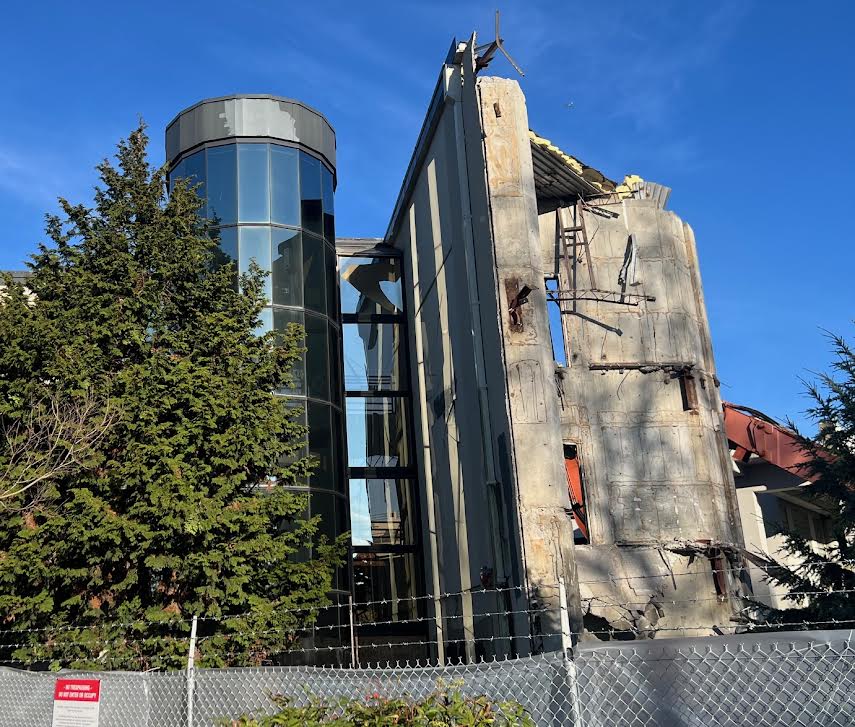
The circular glass columns were the sunny staircases for the building. I always liked that this building invited people to use the beautiful and prominent staircases. Many other office buildings hide the stairs and make the elevators the centerpiece.
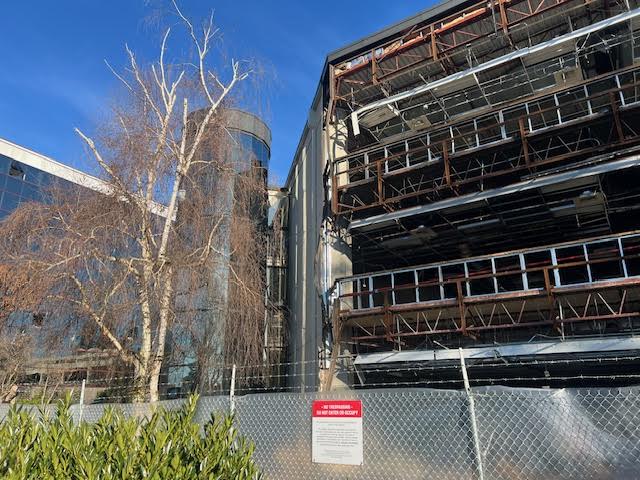
I used to have an office on the second floor of this building, above the red sign in this photo. I liked the office for it’s sunny exposure, flexible open layout, convenient parking, close proximity to other Boeing facilities, pretty landscaping, and easy access to local restaurants and shopping.
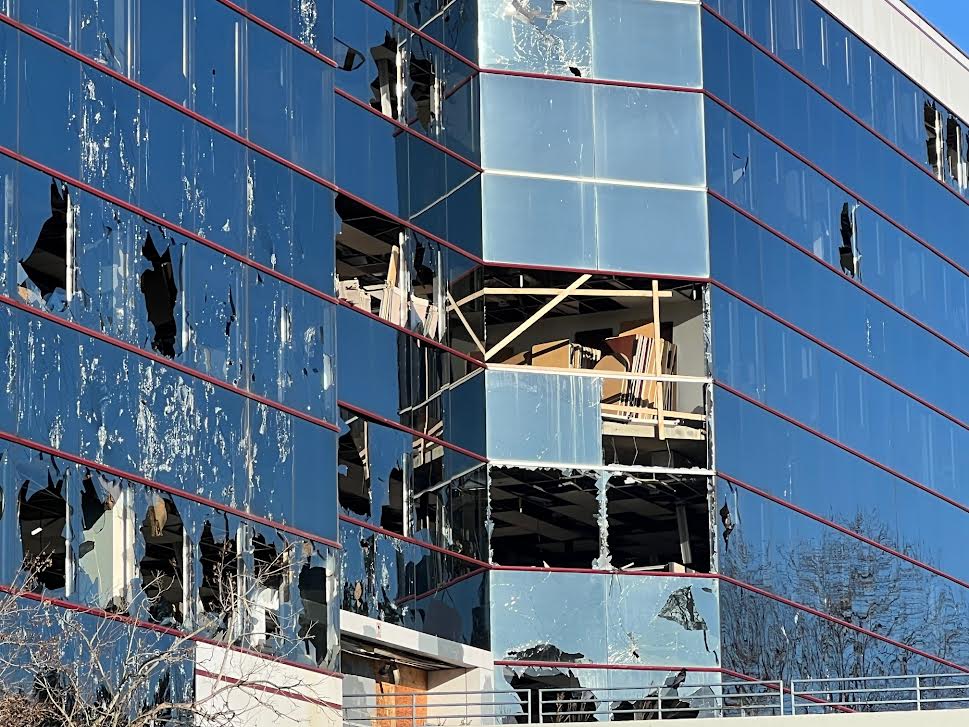
The seven-story 10-16 building seems to be getting even more broken windows, possibly from debris impacts from the 10-13 building demolition.
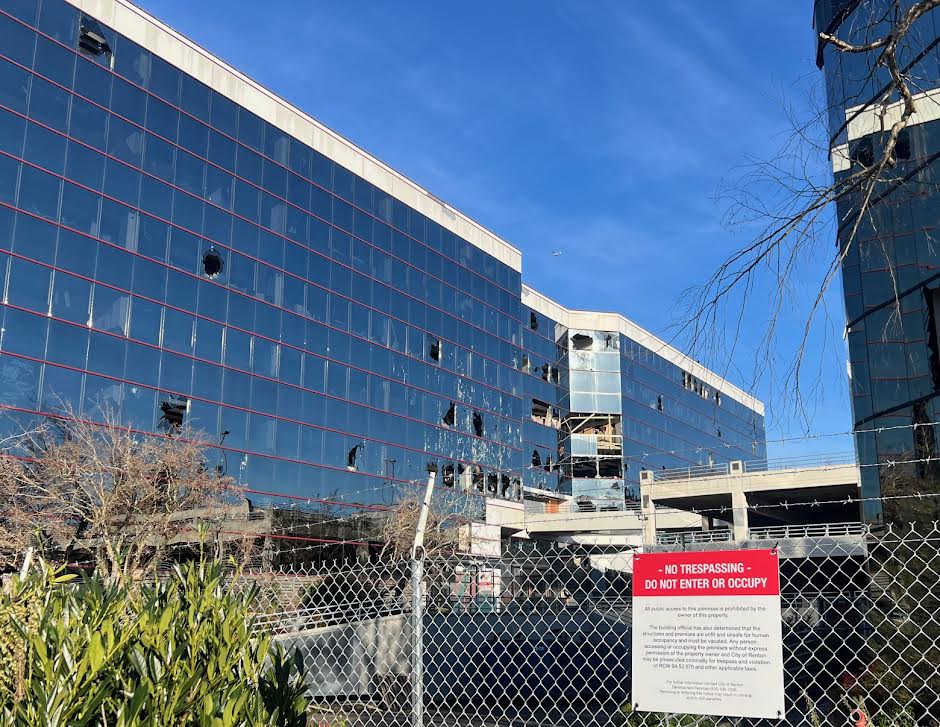
The seven-story former 10-16 building still awaits demolition.

I also had an office above the red sign. 🙂 I think we both worked in Ed Towe’s group (under Dean Rogers) when we were in that building. That was a lifetime (and a couple careers) ago! Good times, for sure.
I very rarely make it to that part of Renton anymore, but it is shocking to see how much the Renton plant has shrunk in the last 30 years.
That was sort of a golden era. I’m surprised Boeing is even manufacturing here. Our legislators are doing their best to drive them out.
Yep, that $9B tax break is a killer.
I agree that was a golden era for Renton and Boeing. We not only had the ever-increasing factory output from the 737 line, but we were also manufacturing 757 airplanes which were extraordinarily safe and had the highest seat-mile fuel efficiency of any airliner flying. We also had Boeing’s commercial airplane headquarters and international flight-training center in our city. And, we had Boeing’s Certification office and the Norwest regional FAA office in our city. On top of all this, we were engineering the 777 in Renton, in the building that eventually became Renton City Hall.
The real benefit to our city was not the amount of taxes paid, but the thousands of living-wage jobs supported by airplane sales all over the world. Every business in Renton (home builders, restaurants, stores, manufacturers, entertainment) benefits from the money coming into our community from international sources, as Boeing is our nation’s largest exporter. Boeing payroll is better than Starbucks or Amazon payroll, because it comes from other nations buying US products instead of other Americans buying products. These Boeing revenues help fund all the local commerce created by us buying and selling services to each other.
Most of the Boeing 8.7 billion dollar tax break was rolled back in 2000 to settle a trade dispute with Europe. Boeing pays the state about $200 million a year in B & O taxes, which would be about $85 million per year higher without some long-standing aerospace incentives built into our state’s tax code.
The City of Renton effectively tripled their B&O taxes on Boeing in 2022, the year after I retired from Council. The taxes are climbing from $5 million per year to $15 million or more over a five year period. I’m concerned that this tax increase, along with committing the Renton Airport to non-Boeing long-term jet uses, will eventually push Boeing out of our city all-together.
Many of our legislators and even some councilmembers talk as if the only thing businesses bring into our community is taxes, and they overlook the jobs that feed our families and fund everything else in our lives. The tax code should keep a focus on making our city and our region attractive for business, so that we have the money to build the society we are all looking for.
Just because the soil may be contaminated does not mean it can’t be developed into housing. Recall the old Barbee Mill site on Lake Washington, just south of the Seahawks practice stadium. That was a Superfund site that was cleaned-up, and now there are million dollar homes that have been occupied for years.
https://www.djc.com/news/re/12106697.html
https://apps.ecology.wa.gov/cleanupsearch/site/2368
In fact, Bosa Development is seeking to create even more housing on the Quendall Terminals Superfund site that sits between the Barbee Mill development and the Seahawks practice stadium. So yes, Superfunds can be cleaned up and used for housing.
https://edocs.rentonwa.gov/Documents/DocView.aspx?id=10835309&dbid=0&repo=CityofRenton&cr=1
So you’re saying that all we have to do is get our representatives to make it a federal superfund site and wait thirty years for our turn?
I agree with SB that this soil could eventually be cleaned up for housing, and I also agree with the Anonymous commenter that such a cleanup could take decades. The owners of the Quendall Terminal site (in lower Kennydale near the Seahawks) have been working diligently for the past 25 years to create an EPA cleanup and reuse plan for their site, and they’re still a ways from getting started with any physical cleanup. The last I heard the cleanup effort was expected to exceed 100 million dollars, and was still growing.
The EPAs standards for residential are higher than for office, and the Garden Plaza project that is being torn down only met the EPA’s office standards of the 1980s. Achieving residential standards of 2026 is possible, as SB says, but would take many, many years in my experience.
I’ve seen the Mayor quoted in the paper a couple times saying that the cleanup on the Garden Plaza (Park Avenue) site could go as high as 100 million dollars, and I don’t doubt it. Such a high cost for cleanup makes this site unprofitable for housing in today’s market. There have been other multifamily projects approved in our city that have been suspended because they were not profitable enough for investors, and none of them had a 100-million-dollar cleanup involved. A few examples are housing at the Fry’s/Winco site, housing at Renton Village (the Via I-405 project), and housing at the old City Hall property near the library.
Hence, I don’t expect to see a viable housing project on this site for many, many years. Park Avenue is an important arterial in the North Renton neighborhood and a gateway to our downtown, and I’m eager to see this site looking pretty and attractive again. At this point the city should be working on a landscape plan following demolition that looks nice for the years of waiting for the next use, including hiding and protecting the unusable parking garage if it is left standing as currently planned.
Here is an EPA fact sheet about cleanup sites. Note their example at the bottom that says a Site might be safe for business but not for housing unless additional cleanup happens. This can be found here on the EPA site.