 Written by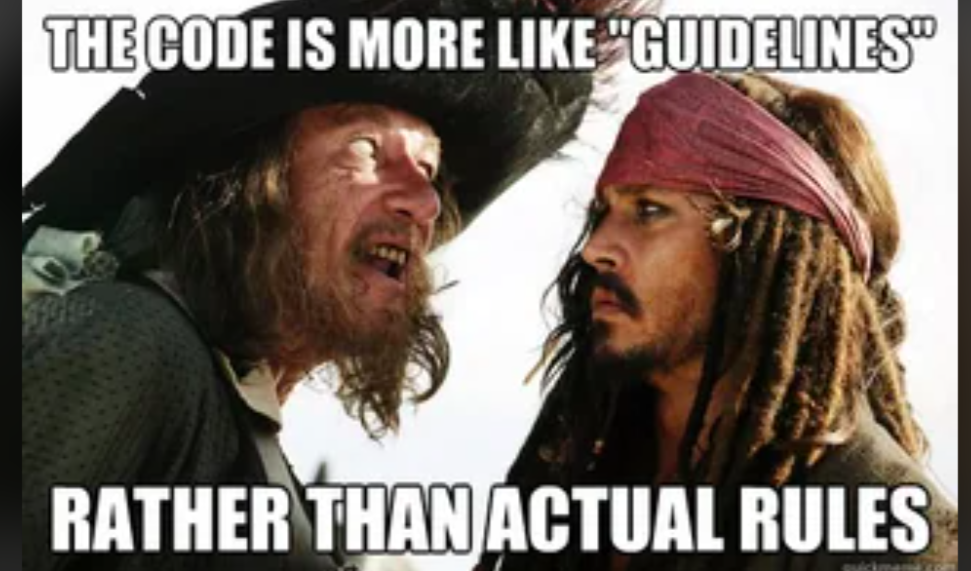
Renton Municipal Code:
“301.3.11.1 Abatement: A building or structure accessory thereto that remains vacant and open to entry after the required compliance date is found and declared to be a public nuisance. The code official is hereby authorized to summarily abate the violation by closing the building to unauthorized entry. The costs of abatement shall be a lien against the real property and may be collected from the owner in the manner provided by law.”
I wish Renton’s top officials would read the Renton Municipal Code. It may take them a few weeks, but it will dramatically help them better understand their options when faced with problems.
This week’s Renton Reporter quotes our Mayor as saying (incorrectly) that the city had two choices for dealing with the abandoned Park Avenue buildings; buying the buildings, or just waiting years for the owners to do something.
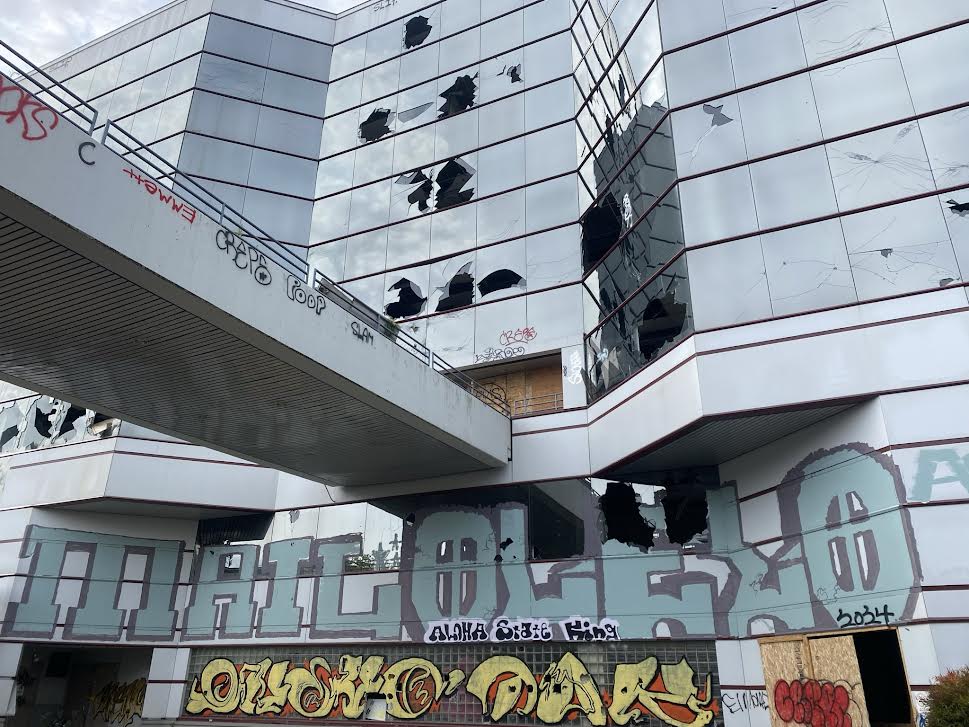
Renton “Garden Plaza” buildings on Park Avenue have fallen into ruin
But there was always a third option, the best one, that is perfectly clear in Renton’s Code: correcting the nuisance and billing the owner. I’ve been advocating for this option all along. This option would have saved these buildings, giving the owners an asset worth about $30 million dollars in today’s market, and saving North Renton from years of blight and crime.
By ignoring this preferred option, Renton achieved the following outcomes: the buildings are now in ruin; threats from fire, falling and other hazards grow worse by the day; the demolition permit, if it’s ever used, will leave a hazardous and unusable parking garage in place; barbed wire will soon frame the blighted site; the building ownership appears to be in a state of stalled foreclosure; and the process to get back to a healthy occupancy of this space might require environmental cleanup costs (per the Mayor’s estimate) in the hundreds of millions of dollars. Since the land value is assessed at $7 million, no one will want to spend $100 million cleaning it.
The Mayor is also quoted in the Renton Reporter as holding back on fines, even though the city regularly threatens residents with prompt $100-per-day fines for minor issues like not mowing grass or not scrubbing someone else’s graffiti off their fence. Regarding the Southern California firm that owns the deathtrap Park Avenue buildings, the Mayor is quoted as saying the city was “not fining them because we don’t normally fine businesses that in good faith are going to be building in Renton.”
If reading through Renton’s code was too hard, Renton’s leaders could have done a 30-second google search to get the advice from an organization that Renton helps fund just for such guidance, the Municipal Research Service Center. The MRSC suggests immediate repair of hazards by the city followed by billing the owner, and does not discuss buying the offending building as the Mayor suggested.
The City should still act to abate the hazards in this building before someone gets seriously injured or killed, although the City has already squandered the opportunity to save stakeholders tens or even hundreds of millions of dollars. And the next time one of these buildings goes vacant, Renton leaders should treat our ordinances as the law, and not a “pirate code” that can be arbitrarily altered at will.
_________________________________________________
The MRSC guidance, Mayor’s full quotes, and the City’s Property Maintenance Code are all shown below, for reference. (Background on these buildings can be found here.)
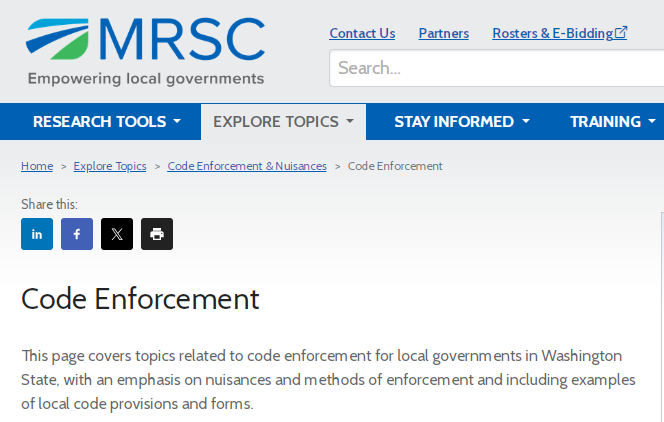
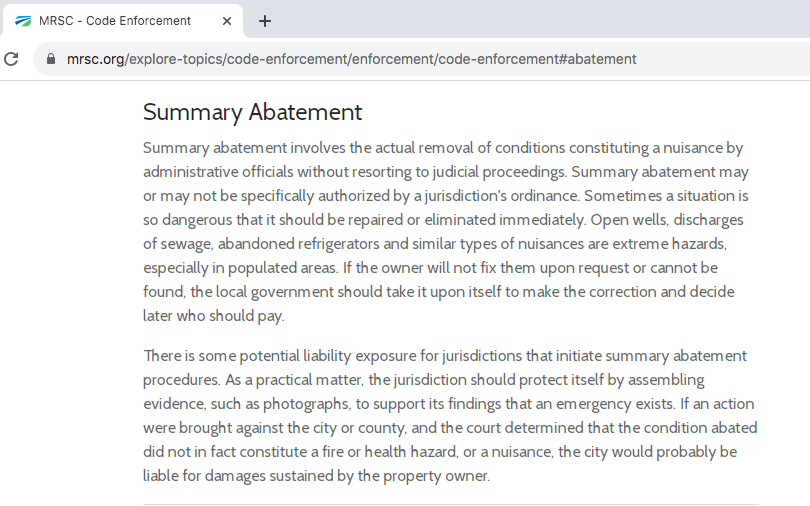
MRSC reminds cities they can use “summary abatement” to make repairs to dangerous conditions immediately if their ordinances allows (as Renton’s do).
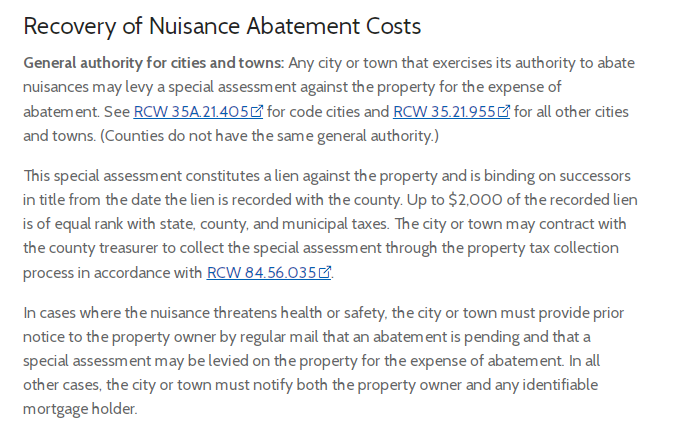
The MSRC page shows the costs of abatement can be billed to the building owner, per state law
Here is an excerpt from this week’s Renton Reporter, with some quotes from the Mayor:
Pavone responded to a question about the building by explaining two choices the city had to deal with the building. One option was to take the owner of the building, ION Renton LLC, to court to take possession of the property. Pavone said, at first, he was willing to spend the money to acquire the building and tear it down.
“The brakes got pumped when we found out there is actually contaminated soil underneath it,” Pavone said. “So the problem is, without knowing what level that contamination is, if we take responsibility of that, even through legal action, we are now partially responsible for cleanup.”
Pavone said site cleanup had the potential to cost the city hundreds of millions of dollars and he wasn’t willing to risk tax dollars. Instead they took the path to try to come to an agreement with the owners to demolish the building….
“For over a year, this company was in the process of getting a permit to demo it and so we were, in good faith, not fining them because we don’t normally fine businesses that in good faith are going to be building in Renton,” Pavone said.
Here is the Renton Municipal Code:
Renton Municipal Code:
4-5-130 …
A. INTERNATIONAL PROPERTY MAINTENANCE CODE ADOPTED:….
B. AMENDMENTS:
The following amendments to the Code are hereby adopted:
1. Section 301.2…
Responsibility: The owner of the premises shall maintain the structures and exterior property in compliance with these requirements, except as otherwise provided for in this code. A person shall not occupy as owner-occupant or permit another person to occupy premises which are not in a sanitary and safe condition and which do not comply with the requirements of this section….
301.3 Vacant buildings: All vacant buildings and premises thereof must comply with this Code. Vacant buildings shall be maintained in a clean, safe, secure and sanitary condition provided herein so as not to cause a blighting problem or otherwise adversely affect the public health, safety, or quality of life.
301.3.1 Appearance: All vacant buildings must appear to be occupied, or appear able to be occupied with little or no repairs.
301.3.2 Security: All vacant buildings must be secured against outside entry at all times. Security shall be by the normal building amenities such as windows and doors having adequate strength to resist intrusion. All doors and windows must remain locked. There shall be at least one operable door into every building and into each housing unit. Exterior walls and roofs must remain intact without holes.
301.3.2.1 Architectural (cosmetic) structural panels: Architectural structural panels may be used to secure windows, doors, and other openings provided they are cut to fit the opening and match the characteristics of the building. Architectural panels may be of exterior grade finished plywood or Medium Density Overlaid plywood (MDO) that is painted to match the building exterior or covered with a reflective material such as plexi-glass.
Exception: Untreated plywood or similar structural panels may be used to secure windows, doors and other openings for a maximum period of thirty (30) days.
301.3.2.2 Security fences: Temporary construction fencing may be used for a maximum period of thirty (30) days as a method to secure a building from entry.
301.3.3 Weather protection: The exterior roofing and siding shall be maintained as required in section 304.
301.3.4 Fire Safety:
301.3.4.1 Fire protection systems: All fire suppression and alarms systems shall be maintained in a working condition and inspected as required by the Fire Department.
301.3.4.2 Flammable liquids: No vacant building or premises or portion thereof shall be used for the storage of flammable liquids or other materials that constitute a safety or fire hazard.
301.3.4.3 Combustible materials: All debris, combustible materials, litter and garbage shall be removed from vacant buildings, their accessory buildings and adjoining yard areas. The building and premises shall be maintained free from such items.
301.3.4.4 Fire inspections: Periodic Fire Department inspections may be required at intervals set forth by the Fire Chief.
301.3.5 Plumbing fixtures: Plumbing fixtures connected to an approved water system, an approved sewage system, or an approved natural gas utility system shall be installed in accordance with applicable codes and be maintained in sound condition and good repair or removed and the service terminated in the manner prescribed by applicable codes.
301.3.5.1 Freeze protection: The building’s water systems shall be protected from freezing.
301.3.6 Electrical: Electrical service lines, wiring, outlets or fixtures not installed or maintained in accordance with applicable codes shall be repaired, removed or the electrical services terminated to the building in accordance with applicable codes.
301.3.7 Heating: Heating facilities or heating equipment in vacant buildings shall be removed, rendered inoperable, or maintained in accordance with applicable codes.
301.3.8 Interior floors: If a hole in a floor presents a hazard, the hole shall be covered and secured with three-quarter inch (3/4″) plywood, or a material of equivalent strength, cut to overlap the hole on all sides by at least six inches (6″).
301.3.9 Termination of utilities: The code official may, by written notice to the owner and to the appropriate water, electricity or gas utility, request that water, electricity, or gas service to a vacant building be terminated or disconnected.
301.3.9.1 Restoration of service: If water, electricity, or gas service has been terminated or disconnected pursuant to section 301.3.9, no one except the utility may take any action to restore the service, including an owner or other private party requesting restoration of service until written notification is given by the code official that service may be restored.
301.3.10 Notice to person responsible: The code official may inspect the building and premises whenever the code official has reason to believe that a building is vacant, if there is a present danger, to exercise the City’s community caretaking function, or where otherwise authorized by law. If the code official determines that a vacant building violates any provision of this section, the code official shall notify in writing the owner of the building or real property upon which the building is located, or other person responsible, of the violations and required corrections and shall be given a time frame to comply.
301.3.10.1 Alternate requirements: The requirements and time frames of this section may be modified under an approved Plan of Action. Within thirty (30) days of notification that a building or real property upon which the building is located is in violation of this section, an owner may submit a written Plan of Action for the code official to review and approve if found acceptable. A Plan of Action may allow:
1) Extended use of non-architectural panels.
2) Extended use of temporary security fencing.
3) Extended time before the demolition of a building is required.
4) For substandard conditions to exist for a specific period of time, provided the building is secured in an approved manner. When considering a Plan of Action, the code official shall take into consideration the magnitude of the violation and the impact to the neighborhood.
301.3.11 Enforcement: Violations of this section shall be enforced according to the provisions and procedures of Chapter 1-10 RMC and subject to the monetary penalties contained therein.
301.3.11.1 Abatement: A building or structure accessory thereto that remains vacant and open to entry after the required compliance date is found and declared to be a public nuisance. The code official is hereby authorized to summarily abate the violation by closing the building to unauthorized entry. The costs of abatement shall be a lien against the real property and may be collected from the owner in the manner provided by law.
301.3.11.2 Unsafe buildings and equipment: Any vacant building or equipment therein declared unsafe is subject to the provisions of RMC 4-5-060 and the demolition provisions of RMC 4-5-060. (Ord. 6034, 11-15-2021)

The mayor also said that the owner had been given 2 weeks and 3 options 1. demolish 2. put up a fence no one can get over 3. Add 24/7 security The two weeks is almost up, I see no movement.
Last night on my way home about 10:15 PM I drove by the Park bldg. There were 3 people (they looked young) coming out of a break in the fencing. Renton responds was notified. Its so dangerous in there, I am glad the 3 coming out looked uninjured, but where is security? Where is fence? Where is the City of Renton and the Mayor?
Someone in an all-black outfit with a drone told kids to leave. He claimed to be a security guard.
If this truly was security, I’m glad to hear a report that the owner is doing something. I’m not fond of a guard being dressed in all-black without obvious “security” identification; one of the golden rules of guard duty is to remain visible to serve as a deterrent.
Yesterday I was emailed a report by a local business that they saw six young people going into the building off of Garden near the garage, and they informed the city. They also sent me a photo of a young adult outside the building wearing a backpack, and said that the person had just come from the building. There obviously are a lot of people in and out of there.
If workcrews ever do show up with heavy-duty fence materials and barbed wire and enclose the site, as they say will happen, they will need to either have a guaranteed way to completely clear the buildings, or install a one-way roto-gate that people can get out of, or have someone watching 24/7 to let people out during the following days. All the reports I’ve seen suggest that people are always in these dangerous buildings. One of the many problems with letting so many people into such a dangerous place (there were four fence openings when I last checked) is that you must have safe exits for them to get out in a fire or get to medical care in an emergency if they need it. The open elevator shafts, lack of lighting, and debris everywhere already impede exiting, and a barbed-wire topped fence will make it worse if anyone is trapped inside.
The City Council and the Mayor will be on the 7th floor in the Renton City Council Chambers at1055 South Grady Way, Renton, WA, 98055 to hear our comments on Monday September 15th at 7PM.
Pavone made the comment about the 2 week deadline on 9/2 during a Talk on Block event. The time will be up tomorrow. Let’s see what happens.
FYI regarding what I saw on 9/13 I also saw a silver SUV parked across from Mugs coffee stop but it had no security logo. Those coming out of the bldg came out of a fence break on Garden.
Probably through this disconnected fence section, one of the four easy pass-throughs we spotted by simply walking around the perimeter of the site on the public sidewalk a week ago. Security should walk the perimeter like we did, and either fix these gaps themselves or hire a contractor to do so. Waiting for some new super-fence is not acceptable, since it may never come.
The city comes down hard if you have some vegetation growing they don’t like.
But if you’re a business owner you’re allowed to pile up dozens of junkers near airport way, have a tower of doom, pile gallons of used oil in the alleyway (highlands) and you get extra immunity if your a drug dealer. Won’t even visit.
Yes, Anonymous, I see that too. In fact, this is going to have an impact on Renton High School as well, as the school becomes surrounded on all sides by commercial properties. With the destruction of the residential neighborhood, the student’s view from the school is going to change for the worse. Instead of being across the street from pretty, historic homes, the school will be across the street from the bumper-to-bumper cars on Airport Way. Here’s a before and after photo.
City of Renton likes to say that that is legal and non-conforming, but I don’t think a car repair shop is the same thing as a junkyard.