You are their boss! How to influence city leaders

You pay taxes for city representation, and your elected officials need to be focused on your needs.  You have hired them to fulfill your agenda, not some third-party’s agenda in Seattle or elsewhere. You are their boss, and your needs are important.

So how do you remind your officials what your needs are, and make sure your officials remain focused on them during the four years between elections?

You speak to the Council and Mayor, send letters and emails to the Council and Mayor, phone the Council and Mayor, contact the media, and stage rallies and protests if necessary.

And you don’t do it just once.  You do it as many times as it takes to get your message across.  Summon the same conviction you would if you paid someone to fix your car, and they took your money but didn’t fix your car.
Speak to the Council and Mayor: 

Speaking at a Council meeting is the best way to ensure that the Council and Mayor get your message without interference or miscommunication.  Renton Council Meetings are generally held the first four Mondays of every month, and each regular meeting typically has an audience comment section near the beginning of the meeting.  You need to sign up to speak in advance of the meeting.

You can find out when the next meeting is, and follow the links to sign up, by clicking the Council Webpage here.

You’ll typically only be given three minutes to speak to the Council, so it’s a good idea to have your comments prepared and possibly even written out in advance.


Continue reading →

Renton Airport leadership dodges maintenance responsibility, causing drama at Boeing Field

Rainier Flight Services aircraft, previously flown by Renton flight school students, are now based at Boeing Field. A hundred other pilots were in line for these aircraft tie-down spaces near the Museum of Flight.

In a previous article I described how Renton lost a popular flight school that was teaching Renton’s  aspiring aviators to fly because Renton’s Airport Management (their landlord) didn’t want the bother of doing maintenance anymore.  Renton Airport Management would prefer that a wealthy private jet owner come replace the still-usable building, even though more jet use could trigger a runway extension right into Renton High School.

Flying Magazine is now reporting on how this in turn triggered turmoil at Boeing Field.

Continue reading →

Does Public Works Director have imaginary “top men” assisting him?

At a coffeehouse meeting on Wednesday, Public Works Director Martin Pastucha was reportedly not forthcoming about where he was getting the information that seems to disagree with Renton’s 1988 and 2020 scientific wellhead protection studies (such as the extent of Renton’s aquifer).  At one point he said only that it was his “hydrologist.”  My wife who was in attendance specifically questioned Mr. Pastucha about his assertion that there was minimal risk to our water system because monitoring wells would let the City know of problems before people drank the contaminated water.  “Yes, but how would you then clean it out?” she asked, according to the accounts of her and two friends. “You can’t just stick a sponge down there and pull the contaminants out” my wife said.

Mr. Pastucha assertively replied that yes you can indeed clean it out (as if it is routine).

He never offered a name, report, or company that was giving him his information, beyond saying a hydrologist.  When I heard about this conversation, it reminded me of the “top men” scene from “Raiders of the Lost Ark” that I have linked above.

I wasn’t born yesterday, and I realize Mr. Pastucha might be able to find a subordinate employee who submits to telling him what he wants to hear, and it’s not my intent to throw such an employee under the bus.  But if we are going to put Renton’s wellfield at risk, after all the time and money we’ve put into them, I would like to see published technical reports, with data similar to the wellhead studies, instead of stories and memos from Martin Pastucha.  Mr. Pastucha has Business and Public Administration degrees, but not the engineering degree held by his predecessor when the wellhead studies were commissioned.

For those who have never seen the results of contamination in a wellfield, suffice it to say getting the toxins out of a wellfield is like trying to get pee out of a pool.   It’s not going to happen overnight.  Some asphalt toxins like benzene are dangerous at six parts per billion, and are not able to be filtered out.

Cleaning will typically rely on flushing, often for months or years, and this obviously only works if the source of the pollution has been removed.  I remember a time on Council when this happened in a downtown well due to a dry cleaning chemical, and it took months to get the source eliminated and the well back on line.

Fumbled! Renton amicus brief would have saved Cedar Valley Aquifer from asphalt plant

Bob Baker, who has dedicated years to organizing the “save the Cedar River campaign,” became wistful when I asked him about Renton’s vanishing “amicus brief” that would have protected the Cedar River Valley.  Hearing Bob report on the difference this would have made in the Court of Appeals trial is like listening to a die-hard Seahawks fan discuss the fateful decision to try a pass instead of giving the ball to Marshawn Lynch on the one yard line at the Super Bowl.  Like Marshawn reports about his teammates at the Superbowl, the reaction of everyone close to the “Save the Cedar River effort” was  “What the f….?

Mr. Baker had spent years raising the tens of thousands of dollars required for the Court of Appeals to hear the case, and Bob reports that at the trial two out of the three judges said that if Renton had submitted an amicus (friend-of-the-court) brief expressing municipal concerns about the plant, they would have found in favor of “Save the Cedar River.”

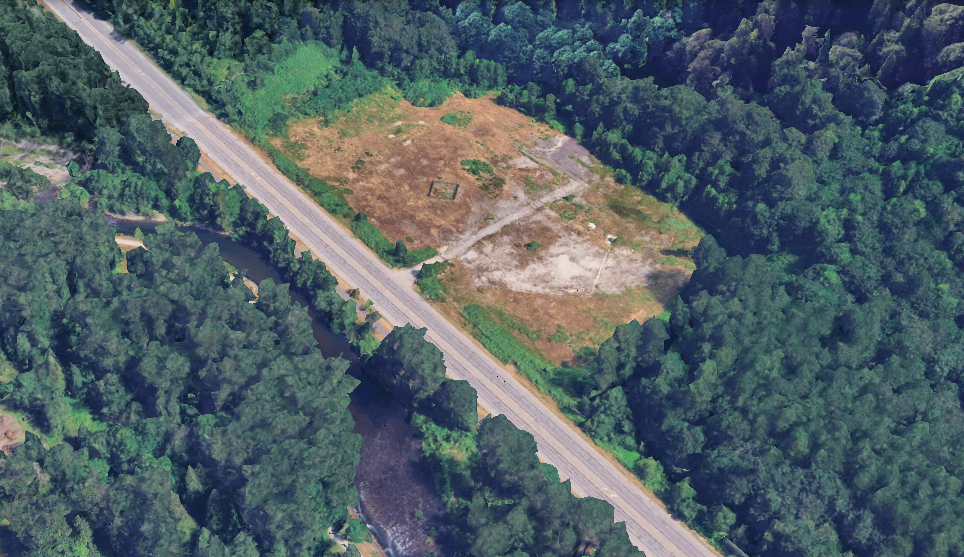
The Court record has several references to County work to direct the (partially) treated water into Renton’s sole-source aquifer because they judged the runoff too dangerous to put into the river.  Renton should have availed the court that the requirements for purity in our sole-source aquifer exceed those of the Cedar River, and that there are coal mine tunnels leading into the aquifer on the site.

Why was there no amicus brief, for an asphalt plant that Renton Council and Renton Regional Fire Authority were so clearly against?

Continue reading →

Where does our drinking water actually come from? Don’t ask our Public Works Director

This blog post looks a little like a picture book, but is actually an important and easy-to-understand scientific description of where our drinking water comes from.

Renton’s newish Public Works Director, Martin Pastucha, is in over his head when it comes to understanding Renton’s aquifer.  The aquifer was extensively studied in 1987, five years prior to my 28-year service on Renton Council, and then again in 2020 (when I was Council President pro-tem), in a 400-page study that built on the 1987 work.

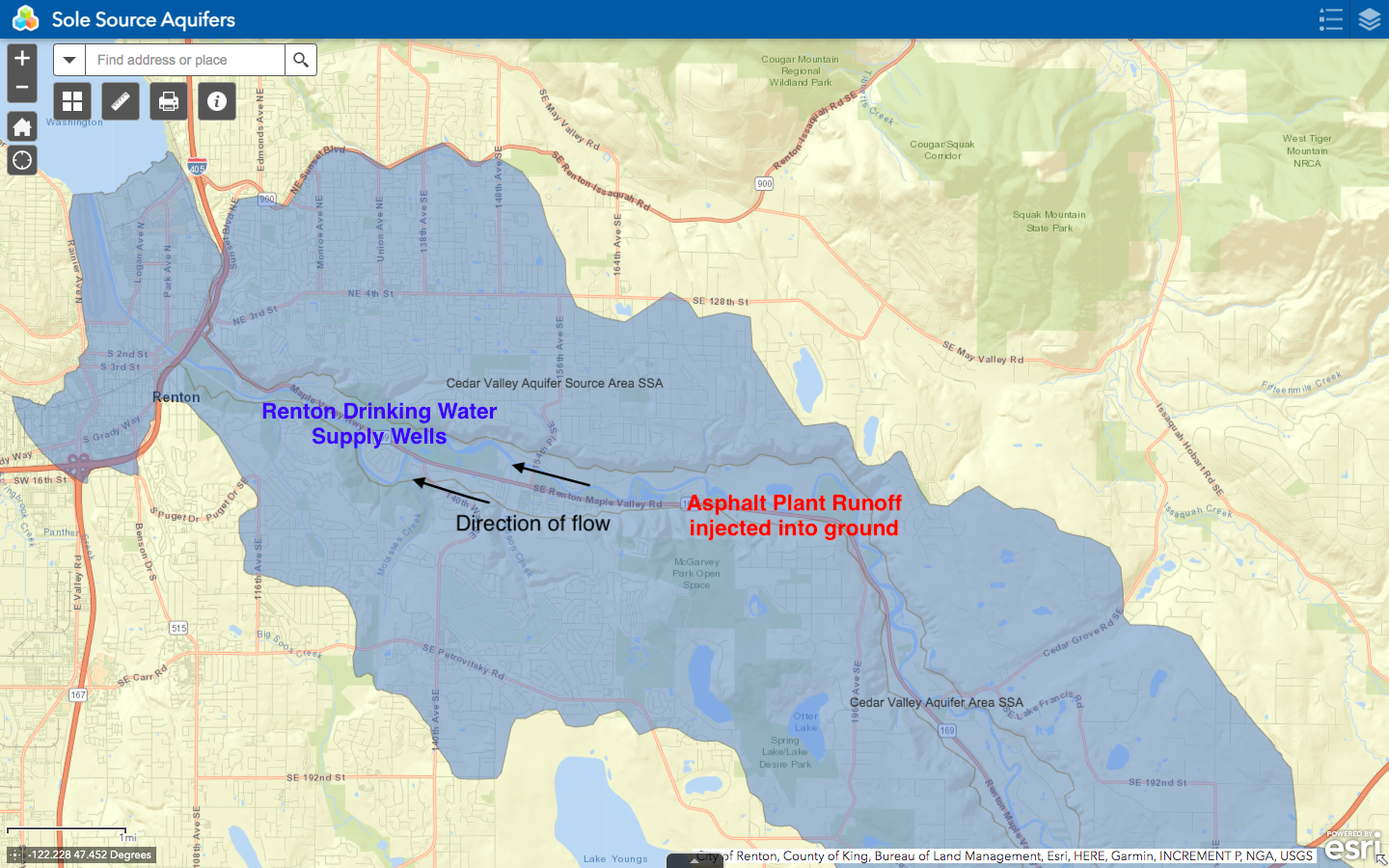
Both of these studies confirm that much of our drinking water comes from many miles up the Cedar River Valley, and that this water can travel half a mile per day in an underground river.

Instead of accepting this reality, Mr. Pastucha has engaged in trying to convince our Mayor, our Council, and the public that it would be impossible for water in our aquifer to travel as far as three miles underground, and therefore asserts that the proposed asphalt plant could never affect our wells.

To help Mr. Pastucha understand our aquifer better, and for all those interested in where our water comes from, I’ve prepared a simple high-level overview using scientific sources.

A fun and easy lesson about where Renton’s water comes from:

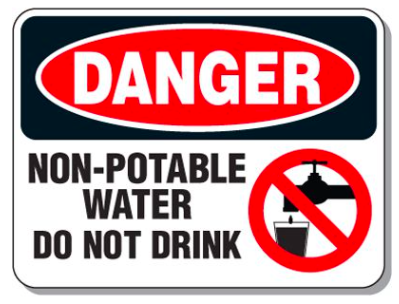
Cedar River water is not drinkable in Renton


First, we need to know that the water in the Cedar River unfortunately contains street and agriculture runoff in Renton.  It is not drinkable, and we work to keep it’s clay bed from being punctured so that it does not spill into the deep aquifer.  For instance, we’ve ensured pilings for I-405 are not driven through the river bottom and into the aquifer.  We work hard to keep it clean enough for wildlife, but not for human consumption.

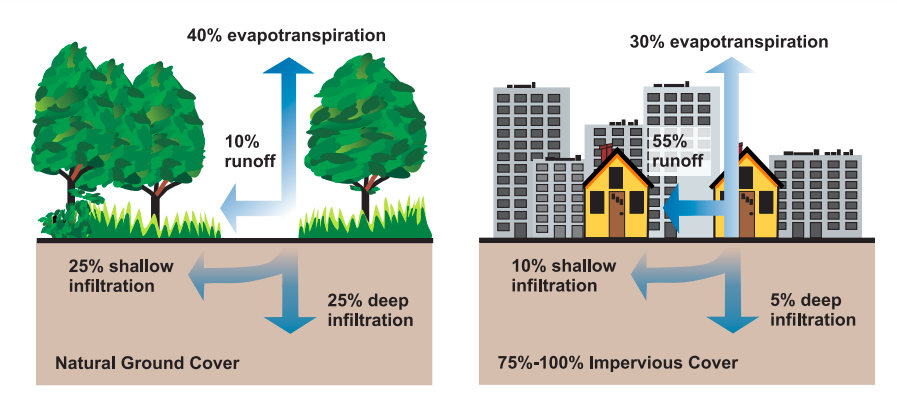
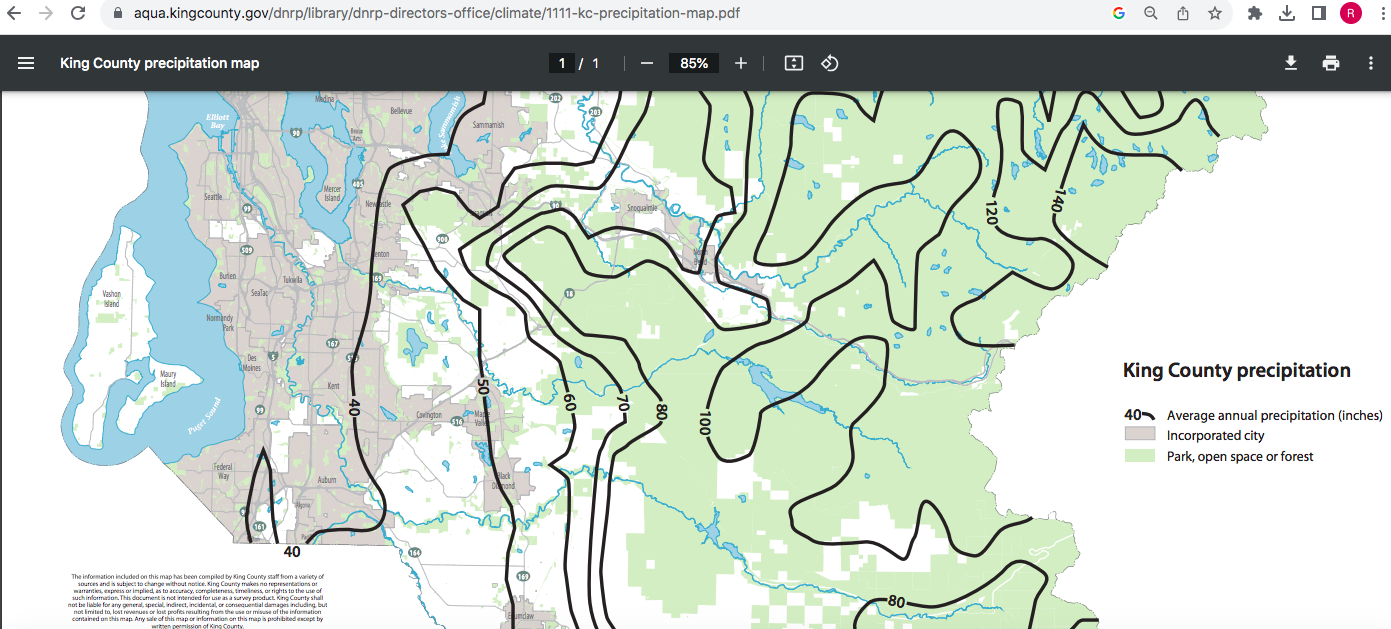
Renton’s drinking water comes from rain, which falls in our aquifer recharge areas and percolates into our underground aquifer. Renton gets about 40 inches of rain per year.

Continue reading →

North Renton neighborhood holds protests after Council rejects their request to review projects

North Renton residents were protesting on Logan Ave yesterday. They’ll be doing it again today, starting at 3:30 PM.


North Renton residents have taken the unusual step of organizing protests after being denied an opportunity to work with Renton City Council on their concerns over two years.

Because of Renton City Council’s last minute change to their Hearing Appeals process, residents feel like they’ve never had a proper opportunity to discuss their concerns with the council, and may never get one.  The residents consequently asked the Council this past Monday night to implement a moratorium to buy some time for Council and the community to work together on the North Renton concerns, but the Council rejected the motion in a 5 to 1 vote.

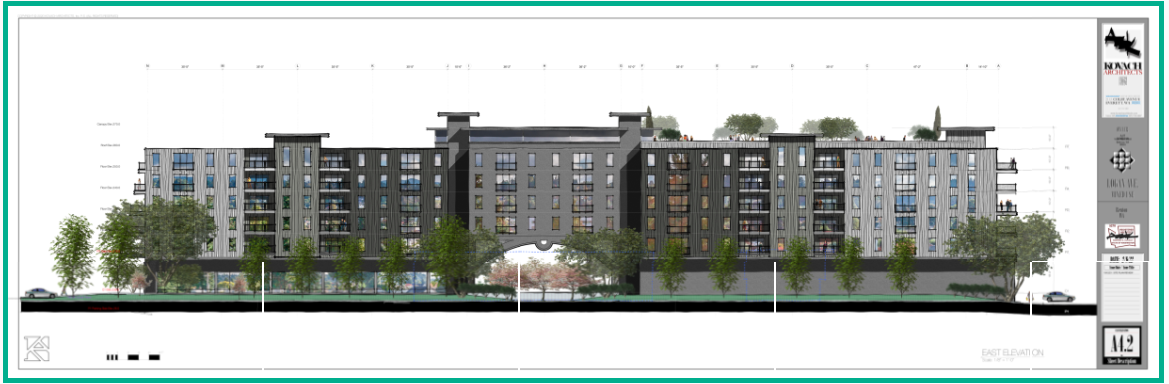
Residents feel the planned 100-unit Logan Six apartment project is oversized for its site, has inadequate parking, and should be using the Logan Ave arterial for access as opposed to residential side streets.   For over two years City Council had said they were going to review the project on appeal if the residents had concerns following the Hearing Examiner’s review, but then the Council changed their minds on the eve of the Hearing Examiner’s review.

Everyone is currently awaiting the Hearing Examiner’s decision, due for release any day.

Residents are also concerned about parking standards for future projects in this neighborhood.  Parking requirements have been sharply reduced in recent years to encourage more people to ride transit, but transit options keep getting delayed, often by years at a time.


Renton city officials cannot duck responsibility in School District plan to evict residents

Sarah Becker asks for Council assistance regarding the taking of property near Renton High School

Many long-time residents are being forcibly evicted from their homes by a new ballfield being built with the rebuild of Renton High School.  These residents have been seeking assistance from Renton’s Council and Mayor in recent City Council meetings.  City officials keep ducking the spotlight, either saying nothing or insisting it’s the School District’s jurisdiction.  This is a shirking of their responsibility, for half a dozen reasons.

Continue reading →

Renton High neighborhood property takings; we did not vote to condemn all these homes

Many Renton School supporters feel they are being “Gaslighted” when  told by district leaders that they voted to expand Renton High School into the neighborhood, taking 40 homes and businesses

Summary: Renton voters were not told before the election that homes and businesses would be taken if the 2022 Renton High School bond issue passed.  And the District has attempted to confuse the public about this by changing the description of the bond issue on their website after the election.

Like the majority of Renton voters, I’ve always voted “YES” when asked for more funding by the Renton School District.  Our children are our future, and they deserve the best start in life that we can give them.

But about a year ago I had an unexpected online disagreement with the husband of a School Board member, when I learned about the neighborhood that is being forcibly taken and destroyed to support the school expansion.  He seemed to think it was common knowledge that the mass condemnations were going to happen, and I said I was not in favor of it.  I had thought the school was going to move if we approved the bond issue.  His comments sent me to the School District’s website to get my facts straight.

Well, it turns out, the School District CHANGED the details of what we voted for, after the election.

Continue reading →

Bob Baker’s comments to Renton City Council regarding the Asphalt Plant

Bob Baker has been working to Save the Cedar River. His organization can be found here


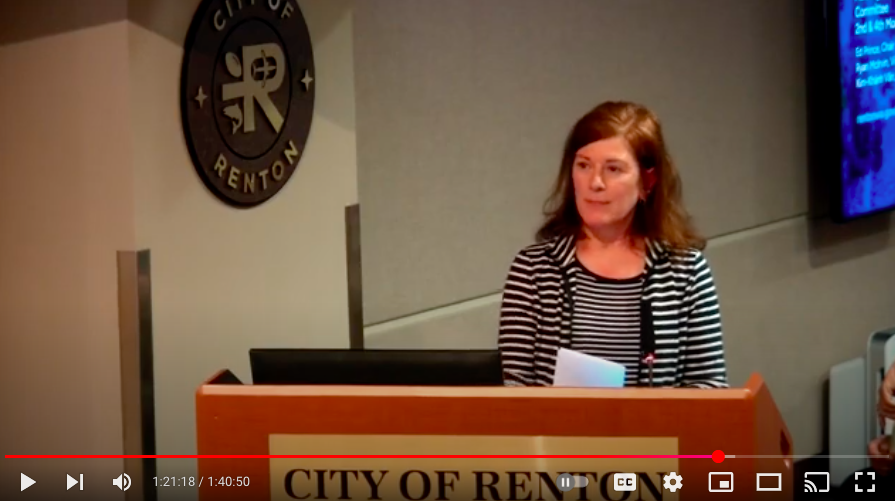
Bob Baker, who manages the Save the Cedar River effort,  gave testimony in last night’s Council Meeting.  The meeting can be viewed here.  Mr. Baker’s testimony begins at about one hour and 25 minutes into the meeting.

_________________________________________________________

“Thank You for this opportunity to address the council and Mayor.

Eight years ago I joined a group of concerned citizens to stop a hot asphalt plant with RAP (recycled asphalt) from destroying the Cedar River, and ruining the Quality of life for thousands of citizens. The more I learned about the effects this facility would have on not only my community, but those from Maple Valley, through Renton and into Skyway I vowed to make this my lifes priority.

I sought Experts who specialize in the immediate and lasting effects of Ashalt Plants, especially RAP. The results were staggering. We talked to experts throughout the US, OSHA and even the UK to get the proper training on how These plants effect Air, Ground, Water, Human Quality of Life, Fish and Wildlife, Traffic, even plant life. We sought help from elected officials, including each of you. In fact I have a video of at least four of you giving a thumbs up to support this issue, including the use of city funds to stop the possibility of an Environmental Disaster. 

But, after your re-election when we sought your assistance, you turned your back on us, even after you saw scientific evidence and a letter from your water district 90 asking the County to stop the plant due to the damage it will cause to their Aquafer. But why I am here is the fact that last Monday Councilman James Albertson made the comment that the scientific evidence was being considered “misinformation”. Now we may never know why Council has turned their backs on their own citizens an myself, but I take it personally that you would publicly label this evidence Misinformation.  May I ask who has given you this misguided information? I have a list of my experts that I will share with you if needed. Please feel free to contact them.

Thank You  ”         

Here’s the data; my rebuttal to the Renton Council President’s letter on the Asphalt Plant

The Council President seemed to be defending the placement of an asphalt plant in this sensitive natural area next to the Cedar River and over Renton’s sole-source aquifer

A reader wrote to me and said their friend wrote to City Council about the asphalt plant. Their friend got a lengthy response from the Council President, and they asked for my thoughts on this letter.  I said it had some similarities to the message that the Public Works Director had put out a few days earlier, but no longer had the sections that I had easily debunked in this blog post.  This letter offered a new set of arguments, probably also promulgated by Renton’s Public Works Director.  These argument are equally wrong.

The note the reader sent from the Council President is shown in sections in red below, and my responses are in green.  My responses are not copyrighted so, please feel free to send them back in response to his letter.

Council President: As part of the internal environmental review, the Public Works Department evaluated the potential contamination risk to the city’s drinking water sources by the proposed site activities and determined the risk should not cause concern for the following reasons:

The city’s Maplewood Wells do not pump from the shallow Cedar Valley Aquifer. The Maplewood Wellfield is drilled into the deep production aquifer (confined aquifer) that is encountered from approximately 135 to 345 feet below ground surface. The Maplewood Wells are located approximately 3.2 miles from the proposed Asphalt Plant .

Randy’s response:  Renton’s wellfield monitoring study makes it clear that the aquifer is an underground river that  flows from Cedar Valley recharge areas (including near the Asphalt plant) to the Maplewood Golf Course wellfield area, and then to the areas near our downtown wells.  Water can easily move underground, and the dissolved contaminants like benzene and heavy metals will not be completely filtered out.

We’re not pumping fossil water out of our aquifer.  We’re pumping water that has accumulated in the aquifer recharge zone during the last decade or so.  The water is not sealed off from the surface, or else the aquifer would be empty.  Renton is pumping billions of gallons per year from the aquifer.  We don’t need to intentionally introduce heavy metals and other contaminants from new and recycled asphalt into it. We should remain assertive about protecting our recharge zones with whatever means we have available.

Continue reading →

Where’s the poison? Renton’s Public Works Director should read Renton’s well field study

“Where’s the Poison? The battle of wits has begun.” A memorable scene from “Princess Bride”

I found a city response about the asphalt plant online, but it has not yet been spread very broadly.  I’m refraining from linking it at this time, because I’m not sure it deserves the high exposure it would get from my blog.  (I think it should be rescinded.)  But in case anyone has found it, here is my rebuttal. 

In a recent memo on the Asphalt Plant, Renton’s Public Works Director,  Martin Pastucha, addressed the existential risk of the Asphalt Plant poisoning Renton’s sole source aquifer, calling the risk “relatively low.”   Relative to what?  Is this the kind of confidence we should be basing the future of our city and  the health of our children and grandchildren on?

But it’s worse than that.  The Public Works Director based his vague non-assurance on a map of our “ten-year wellhead protection zone”, and relied on it being 1.75 miles away from the proposed asphalt plant. He implies, contrary to the data, that the water could never travel 9,200 feet through porous sand and gravel underground, even though Renton’s Maplewood Wells are downhill and sucking hundreds of millions of gallons of water per year– like giant drinking straws.

If Mr. Pastucha had ever bothered to read the report that formed the foundation of Renton’s “ten-year wellfield protection zone” he would have read this important statement:

“It is important to recognize that the aquifer limits shown in Figure 2-5 do not necessarily represent distinct boundaries that separate geologic materials containing groundwater. ”  This is followed by the explanation that “the aquifer appears to extend several miles upgradiant of the bedrock narrows (near Renton’s wells)”

Continue reading →

When is condemnation appropriate? My personal experience with eminent domain

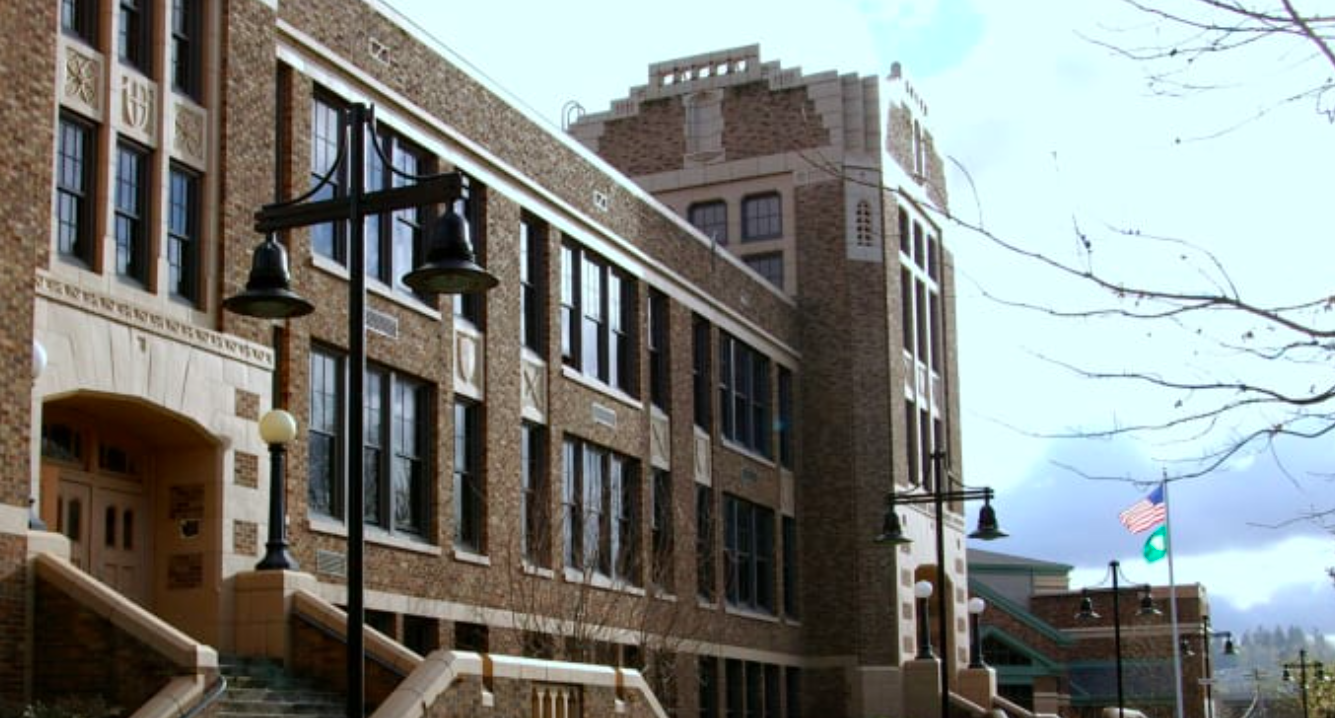
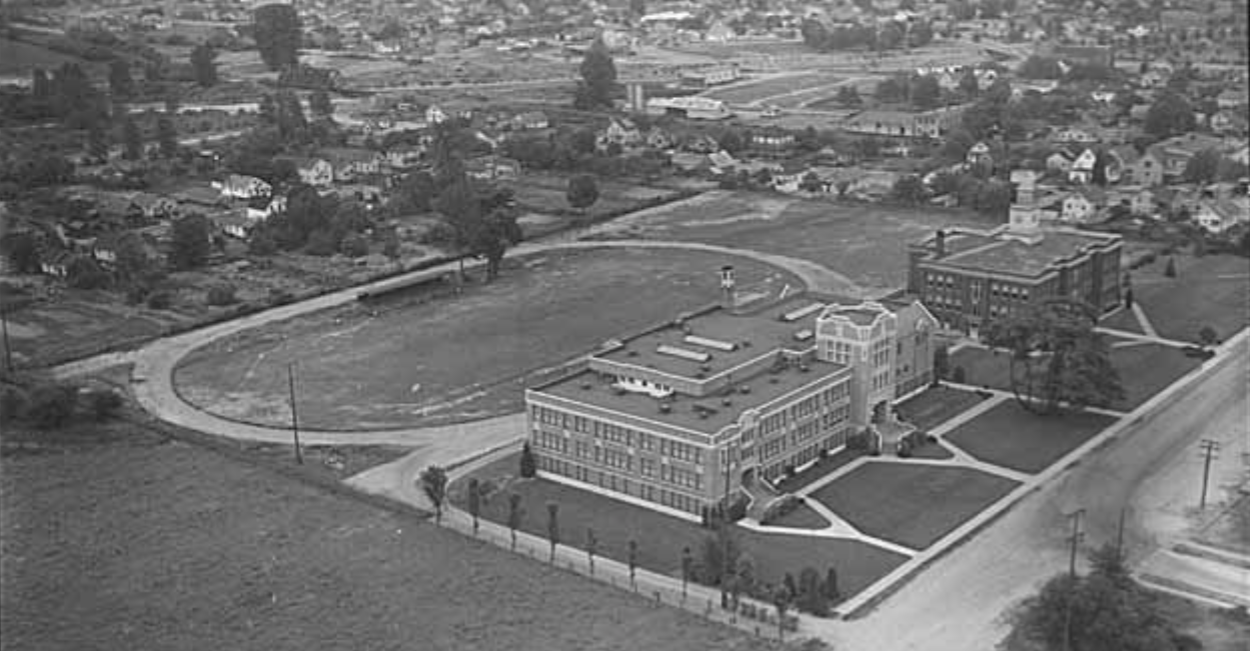
Renton High, 1938. Ten years later Renton Memorial Stadium was built on 17 acres nearby, to provide the high school with a football and track stadium. The School Board voted this week to use eminent domain to enlarge this school site into the neighborhood around it.

I’ve been writing about eminent domain on two topics, the Renton School District  and the proposed Asphalt Plant.  In this post I share some of my personal background being on both sides of eminent domain actions, and discuss a little about when I think it is an appropriate tool.

Being on the receiving end:

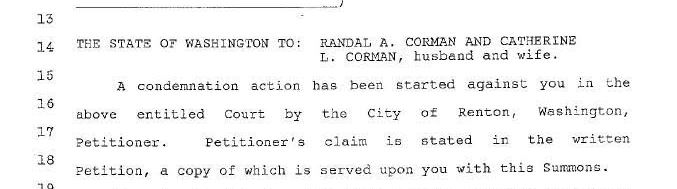
My wife Cathy and I were on the receiving end of a condemnation action in 1988. We challenged the “public necessity” in Superior Court and won, but that does not always happen. The experience led to my 28-year service on Renton City Council.

I have been impacted by an eminent domain action directed at me and my wife in the past. That experience helps me understand what it is like being the subject of an eminent domain taking.  Our trial also helped set a judicial precedent on the definition of “necessity,” that, according to my attorney, was cited in many later cases.

Continue reading →