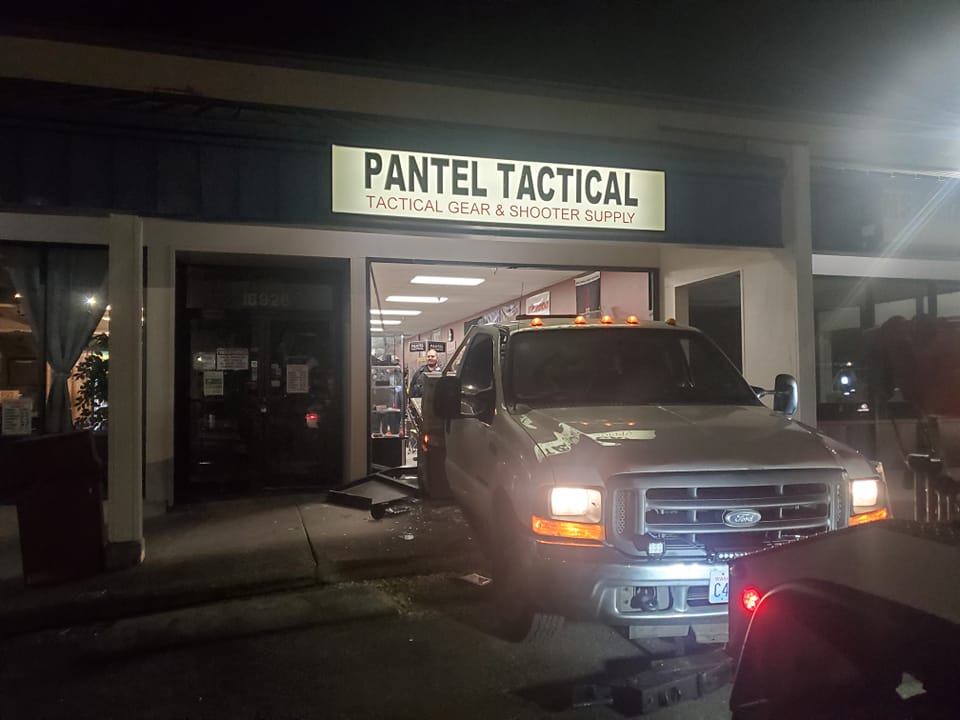
While the legislature debates tough new gun background checks, smash-and-grab burglars break into gun stores with impunity thanks their other legislative changes.
We must be at rock bottom, right?
Gun violence is increasing fast. But while the State Legislature actively debates tough new gun purchase safety laws that include a ten-day waiting period for purchases, stronger background checks, and mandatory safety training, the same Legislature has made it easier than ever to simply steal guns from stores. The legislature appears to be struggling with a cognitive dissonance that is impacting their decisions and endangering the public.
Renton Council President Valerie O’Halloran itemizes City Council concerns about proposed new asphalt plant east of Renton
For those not familiar with this issue, King County is in the process of permitting an Asphalt Plant just east of Renton, along Maple Valley Highway, 150 feet from the Cedar River. While almost everyone agrees asphalt is an important commodity and must be made somewhere, nearby residents and some of their elected officials have raised numerous issues about this choice of sites and the proposed design of the plant. This site was chosen in part for its “Industrial” zoning, which was awarded to the site (I would say in error) back when the site was the home of a long-time nursery/landscape business that had sprung up in the rural area along the highway. That business was not of concern to neighbors, and the owner wanted to be “conforming”, so he requested industrial zoning from the county as part of a county zoning update. Ideally, his business should have instead been treated as a non-conforming but grandfathered use, and this issue would not be here today.
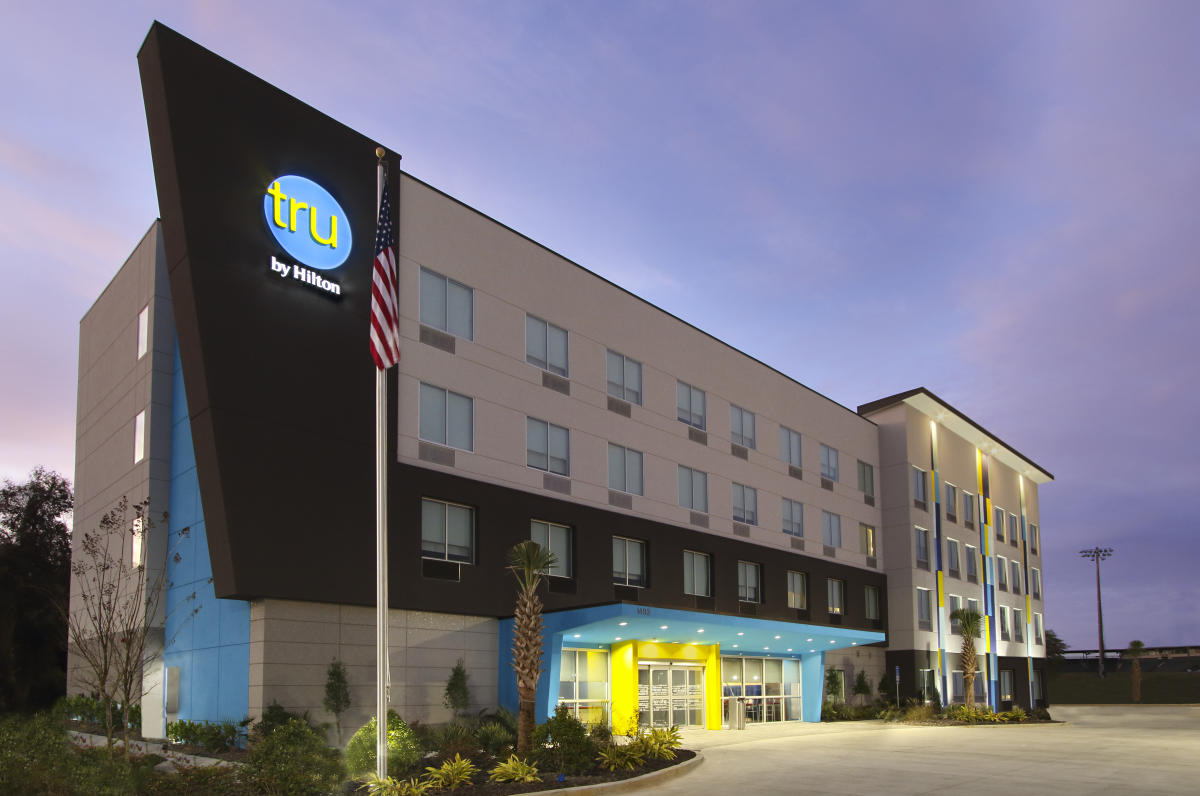
Kennydale residents are likely to be asked whether they support rezoning that would allow a hotel at Exit 6. This blog entry is taking no position on this zoning decision.
In evaluating this zoning decision, Renton residents deserve to be knowledgeable about new state law that was passed in 2021 and expands on city hotel zoning.
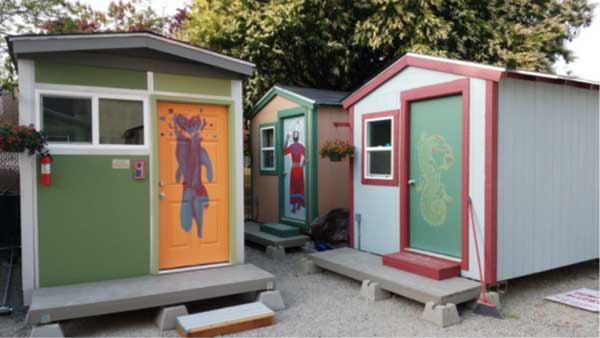
Photo Courtesy City of Seattle. Even after $25 billion is spent on homelessness in King County, the plan is that some residents will still be living in tiny houses, safe RV parking, and safe vehicle parks. Permanent housing will cost extra.
There’s been a lot of media and public commentary on the King County Regional Homelessness Authority’s (KCRHA) proposed 5-year plan, currently out for public comment. The main reaction has been shock and dismay at the high price tag. It runs roughly around 8 billion in capital costs and 17 billion in 5-year operating costs.
But one aspect of this plan is still not widely known, and deserves explanation. The KCRHA plan is a $25 Billion dollar 5-year plan to provide “Temporary Housing.” Permanent housing for the 23,000 homeless covered by the plan is still up to Cities, Counties, and local housing authorities. You read that right: when the $25 billion dollar plan is fully implemented, people will still be living in a conglomeration of shelters, safe vehicle parking spots, tiny houses, skilled nursing facilities, converted hotels, supportive apartments, and emergency shelters. Once individuals are healthy and independent enough to safely move to a proper long-term home, that will cost extra. Per item 2 on page 26 of the plan, “…responsibility for permanent housing capital financing and development remains with the federal, state, King County, and city/local jurisdictions..”
During the past year, I’ve heard from dozens of people with heartbreaking stories about how crime has adversely affected them. Policy makers often dismiss “property crimes” as simple financial inconveniences. I’m going to run some stories to illustrate the actual impact and fallout of these crimes. This is the first.
Melyza, a young single Mom whose close friends call her Mely, moved to Renton thirteen months ago. She was determined to find a great location to raise her daughter who has some special needs. Renton was appealing to Melyza for it’s services, relative affordability, and quality of life.
She found an apartment she liked at Regency Woods, in Renton. A hard worker, Melyza picked up two jobs to cover her rent, car expenses, and the many other costs of supporting her small family. Between her two jobs, she was even able to save a little money each month to put away for emergencies and for her future.
The State Patrol is reporting a planned DUI emphasis on Super Bowl Sunday, a worthwhile effort to get dangerous drivers off the road and save lives. I thank our troopers for this effort.
Unfortunately, this year Washington State may need to run a companion “Pull Over Pretty Please” campaign, since State Patrol is not authorized to pursue anyone just because their driving is sloppy. Officers can flash their lights and sound their siren at them, but they can’t chase them down under the 2021 pursuit law— unless they have somehow already interviewed them and determined reasonable suspicion that they are intoxicated. Interviewing them before pulling them over is a paradox the legislature apparently expects someone else to resolve.
Some DUI motorists will pull over on game day, but probably not the most dangerous ones. Read more about this problem in my earlier journal entry here.
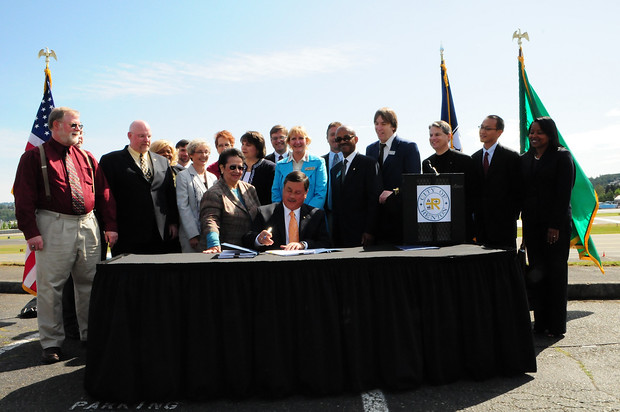
May 2010, Councilmembers Palmer and Corman join Mayor Denis Law and Boeing officials in extending Boeing’s Renton airport lease for another 40 years. Union leaders and state officials are in attendance.
Here’s a recipe for more noise in our community. Standby while Boeing begins pulling out of our Renton airport. Then watch idly as the FAA enforces federal policy at our airport, and begins pressing for relocation of freight and business jet activity from Boeing Field to Renton. Any talk of airport closure will be met by FAA reminding Renton the airport is “Federally Obligated” and was paid for by the federal government; Renton reaffirmed its obligation with every grant that was accepted. FAA would point to their 700-page FAA Order 5190 6 b, which is summarized in bold italics on page 1-4 “Airports should be permanent with assurance that they will remain open for aeronautical use over the long term.”
Regardless of how you currently feel about Renton’s airport, this issue is important to you.
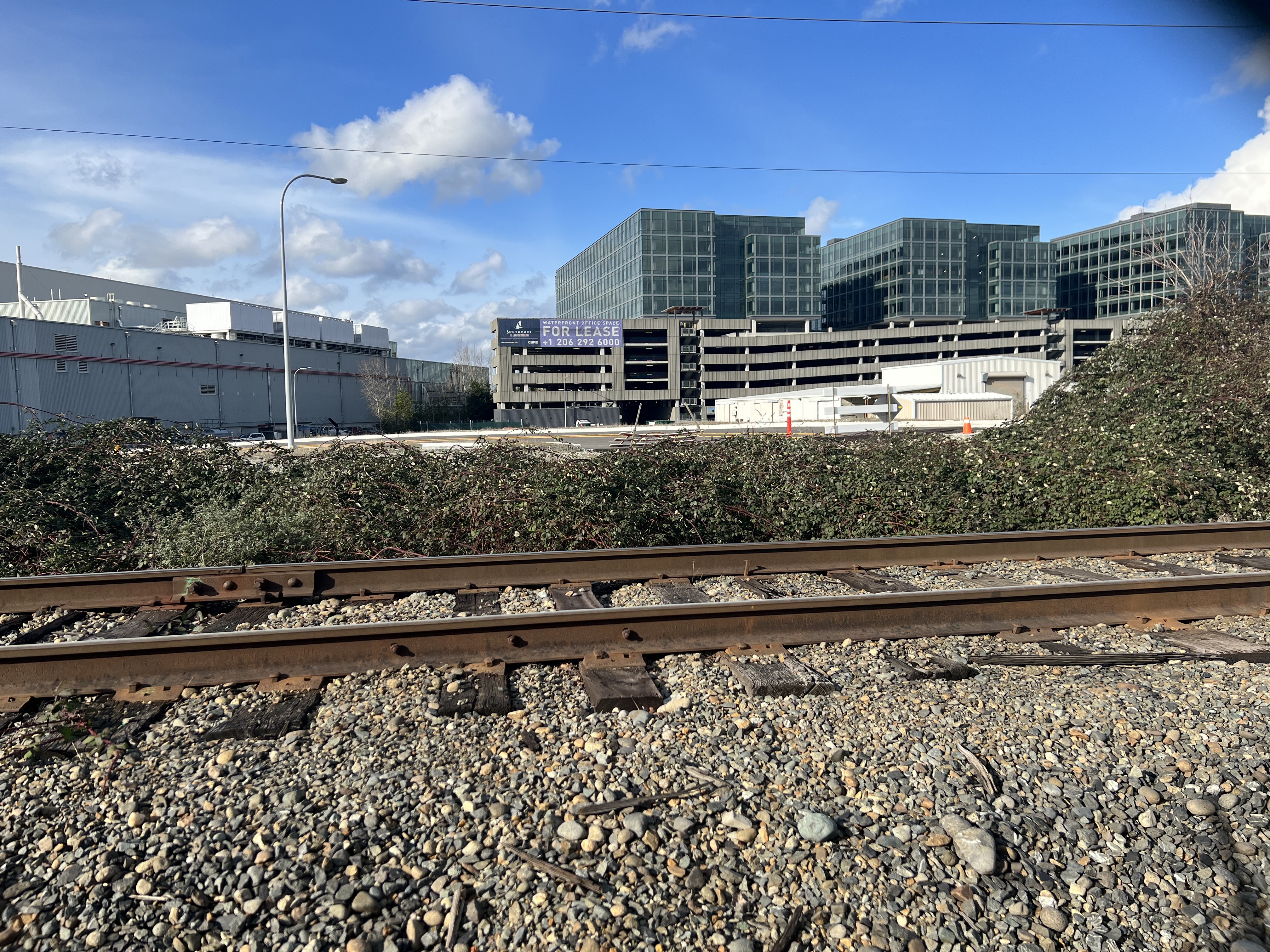
Park Avenue will soon extend over this railroad track to connect the Landing to Southport’s office campus (in distance), Hyatt Hotel, and Bristol apartments. This improvement will also reduce congestion at Coulon Park’s south entrance.
After 20 years in planning and negotiations, physical construction can finally begin on the much-needed extension of Park Avenue to Southport. The final necessary document, an easement with BNSF Railroad, was approved by Renton City Council at the December 5 council meeting.
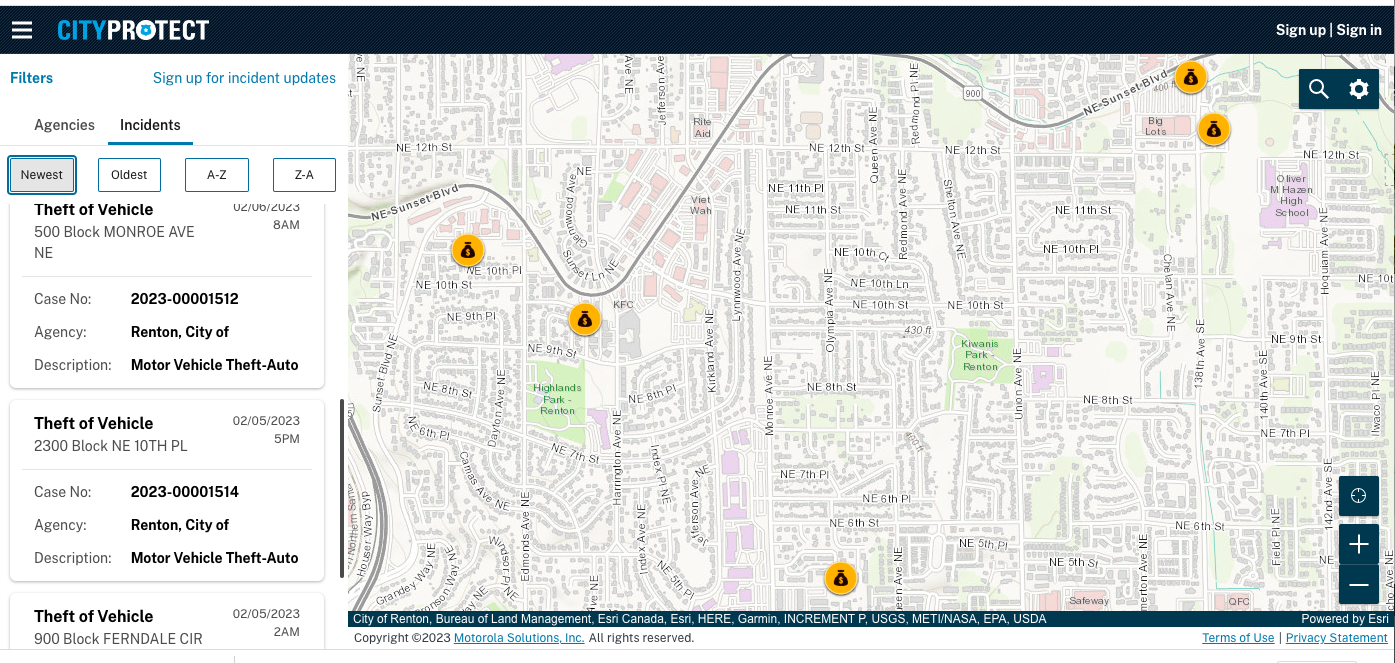
The above map is a snapshot from cityprotect.com for the past three days, Feb 5 to Feb 7, showing five car thefts in the Renton Highlands Sunset neighborhood. If this rate of theft somehow continued in this neighborhood, 608 cars would be stolen from this small area in a year; about one car theft for every two homes.
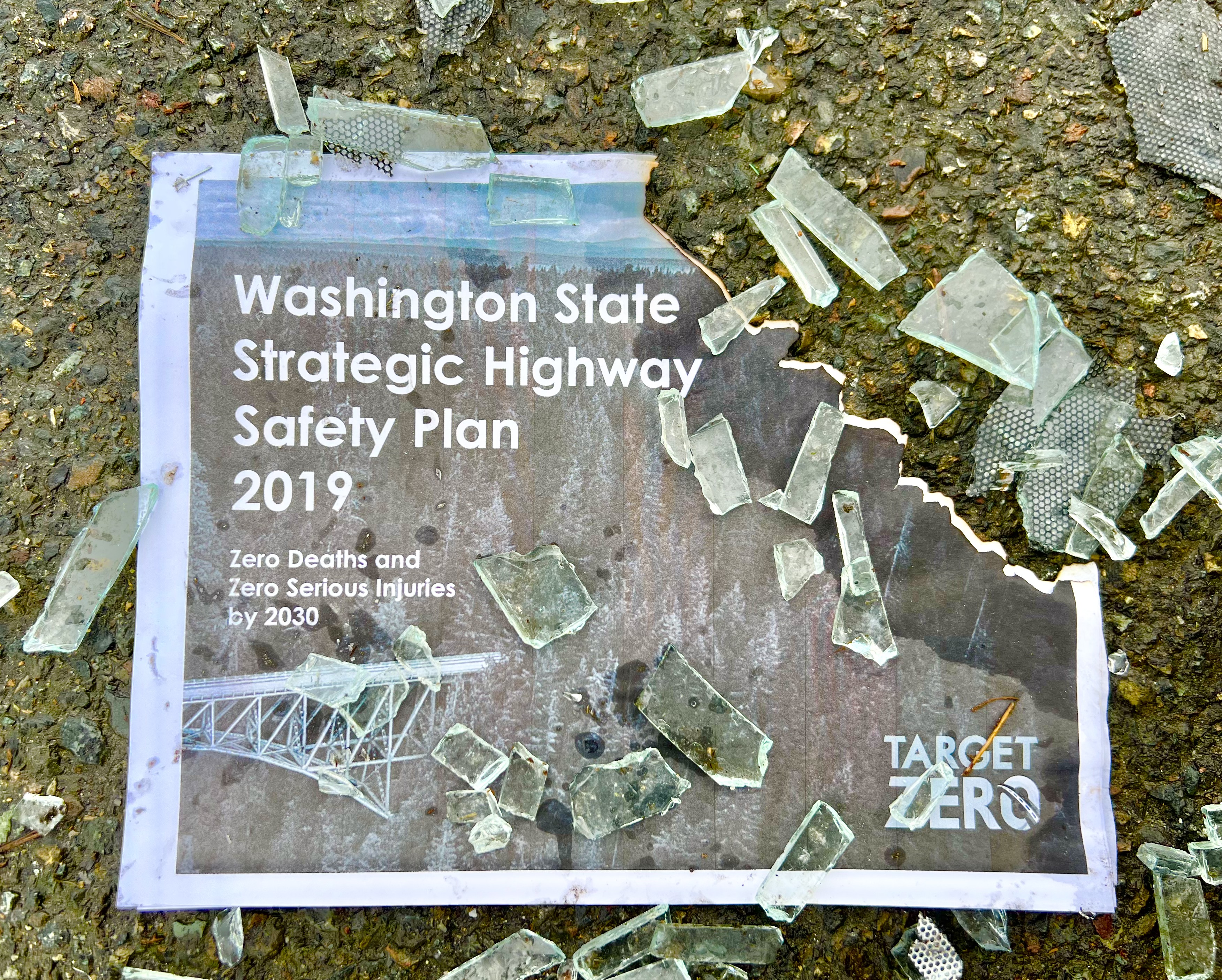
The plan was to reduce highway deaths to zero by 2030. Instead, we’re on path to triple the number of fatalities, producing EIGHT THOUSAND avoidable deaths of Washingtonians by 2030. BIPOC residents will be hit the hardest.
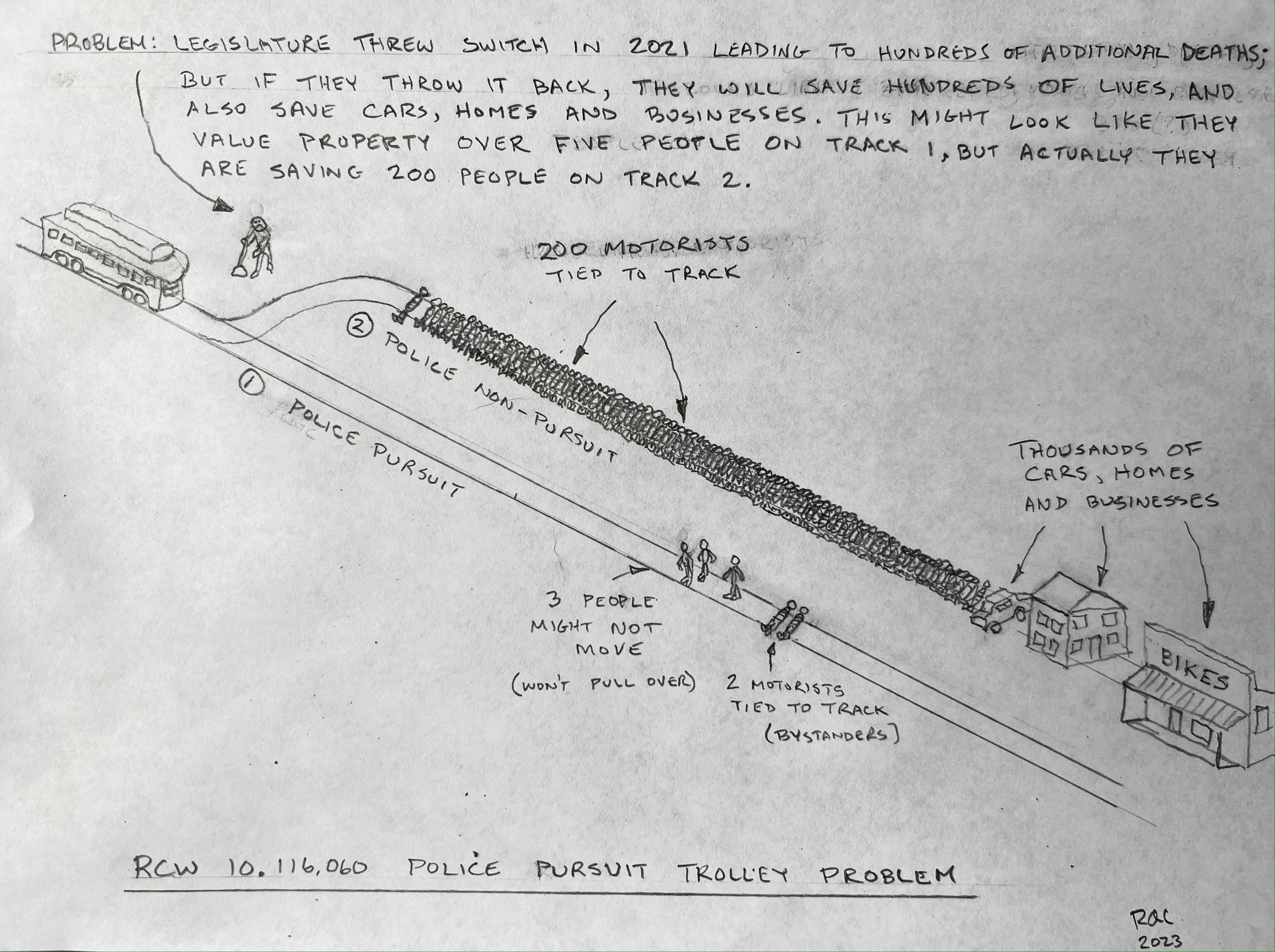
In 2018 our state lawmakers asked our Washington Transportation Highway Commission to create an ambitious plan to further improve road and highway safety. The Commission’s resulting comprehensive 296-page plan boldly set a stretch goal of eliminating ALL fatalities by 2030. They made progress at first. But then the legislature passed the non-pursuit law, RCW 10.116.060, that put us on path to instead nearly TRIPLE fatalities by 2030. If nothing changes, eight thousand Washingtonians are projected to be killed in car crashes by this ill-conceived law by the year 2030. Tens of thousands more will needlessly suffer head injuries, lose limbs, or sustain other life-altering maimings.
When the city or state completes a new major road or highway, the road’s final maximum speed limit will typically not be known until you have your say. Engineers have a speed in mind during design and construction, but they will want your assessment before they can finalize and post the maximum speed limit. No need to go online or fill out a survey– you merely drive on the road to cast your vote.
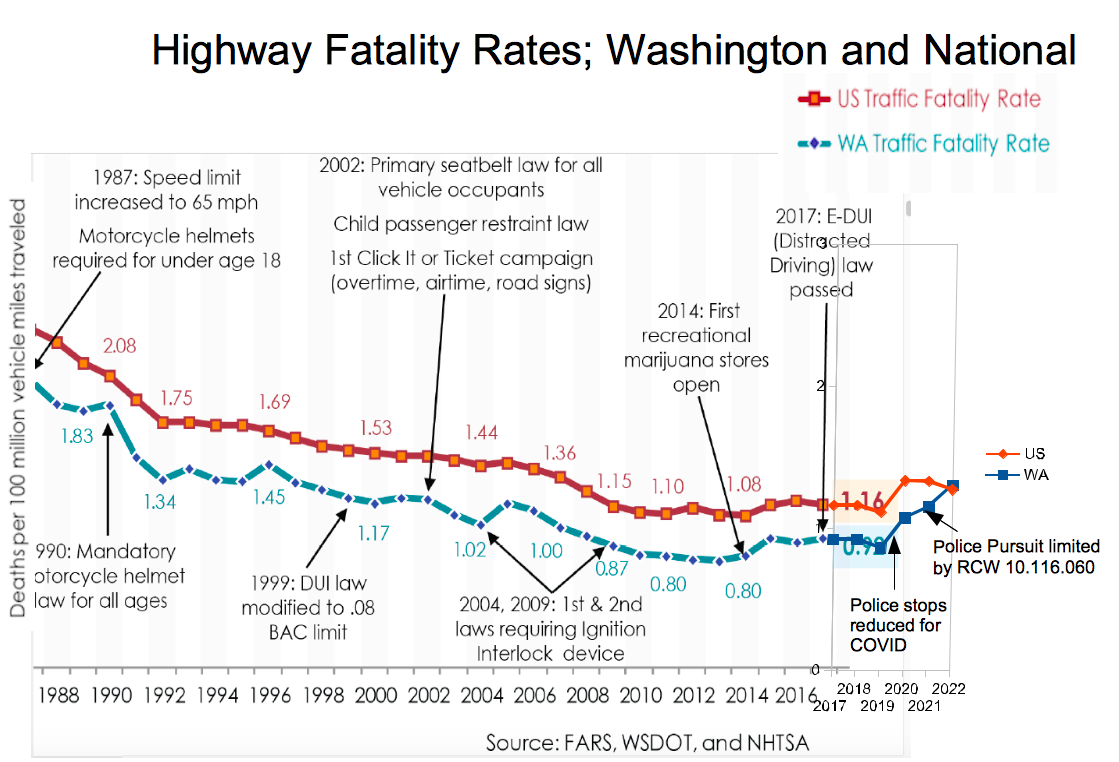
Washington fatal accident rates have been spiking since enforcement rolled back. Chart created by using state and federal official accident data from 2020, 2021, and 2022 to update a chart from”Target Zero, Washington State Strategic Highway Safety Plan 2019.” Details in article.
When Washington State legislators implemented RCW 10.116.060 regarding police pursuit in 2021, they doomed hundreds of Washington motorists to early deaths in 2022. In two brief years, our enviable record of being one of the safest states for motorists has flip-flopped to where we are on track to be the worst. Twenty years of safety gains in such areas as drunk driving standards, airbags, car seats, and billions in safer highway design have been been negated with one poorly thought-out new law that lets traffic offenders flee the police with impunity. The trend is getting worse fast, as reckless car thieves and drunk drivers are quickly figuring out there is no real consequence for simply stepping on the accelerator and going ten MPH over the speed limit to avoid a traffic stop. In a few short years we’ll all be regularly losing friends and loved ones to traffic accidents, the way some of us remember from our youth. Even worse, for every death there are three to four serious maimings that will affect someone’s quality of life forever.
In my previous three entries I covered the catastrophic additional loss of life on Washington’s roads and highways since the pandemic reduced traffic enforcement, and then just when things were getting better a new Police non-pursuit law curtailed traffic enforcement of our state’s deadliest drivers.
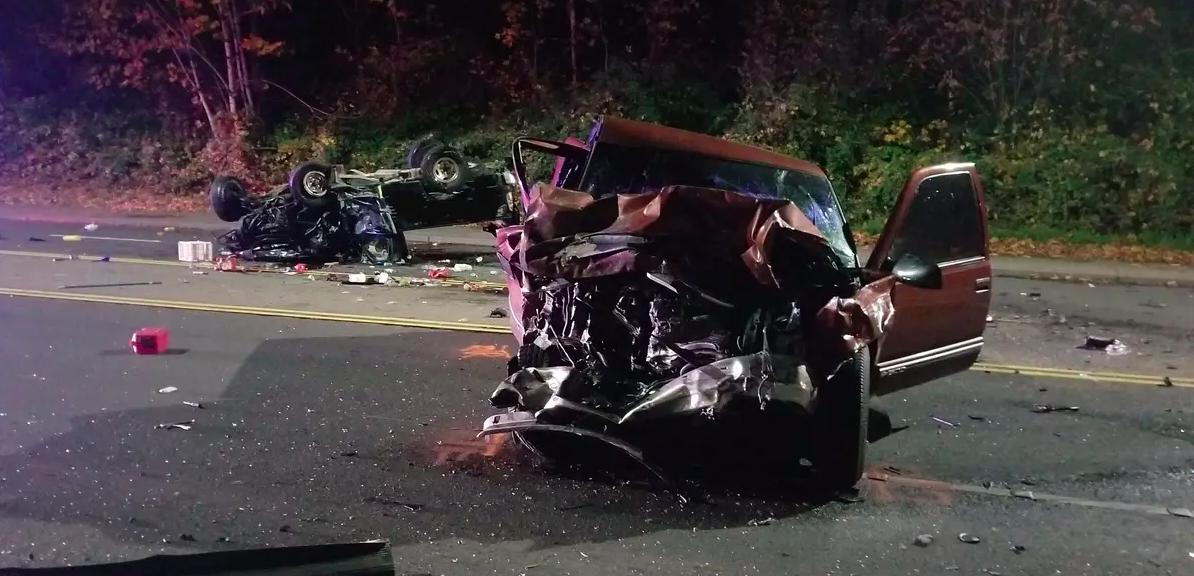
Renton police photo. (Info about this accident available in Renton Patch. Link below.)
As someone in Washington State with both a lifetime career as a transportation safety engineer (33 years), and a city councilmember (28 years), I see the importance of this analysis for the safety of motorists and pedestrians in our state. I have not seen this analysis done by anyone else. Please share this post widely, including with media. For questions I can be reached at 425-271-6913 (please leave a detailed message).
This is the second post of a four-part series covering the ongoing damage from the 2021 police pursuit law. Part one covered skyrocketing highway deaths. Part three will cover the catastrophic crime wave, and part four will cover environmental setbacks from this law.
In my previous post I showed that our state’s traffic fatalities are up dramatically since Washington’s police non-pursuit law was implemented. Highway fatality rates which had been getting better for decades went up across the US in 2020 due in large part to police choosing not to pull people over for unsafe driving during the pandemic. As Covid concerns diminished, other states began rigorously enforcing driving laws again, and road safety started trending back to baseline. But Washington State implemented a new non-pursuit law, and our highway fatality rates are climbing faster than ever. Deaths on our roads and highways are 37 percent higher than pre-pandemic, and climbing fast, representing a current excess death toll of 207 lives lost per year over the baseline.
Thank you to all of you who left comments on my blog post. I also received many great comments and questions in a private facebook forum where I shared this post. I’ll respect others’ privacy by paraphrasing and bundling their questions, but because others may have the same questions, I will share my answers here. Continue reading →