This blog post looks a little like a picture book, but is actually an important and easy-to-understand scientific description of where our drinking water comes from.
Renton’s newish Public Works Director, Martin Pastucha, is in over his head when it comes to understanding Renton’s aquifer. The aquifer was extensively studied in 1987, five years prior to my 28-year service on Renton Council, and then again in 2020 (when I was Council President pro-tem), in a 400-page study that built on the 1987 work.
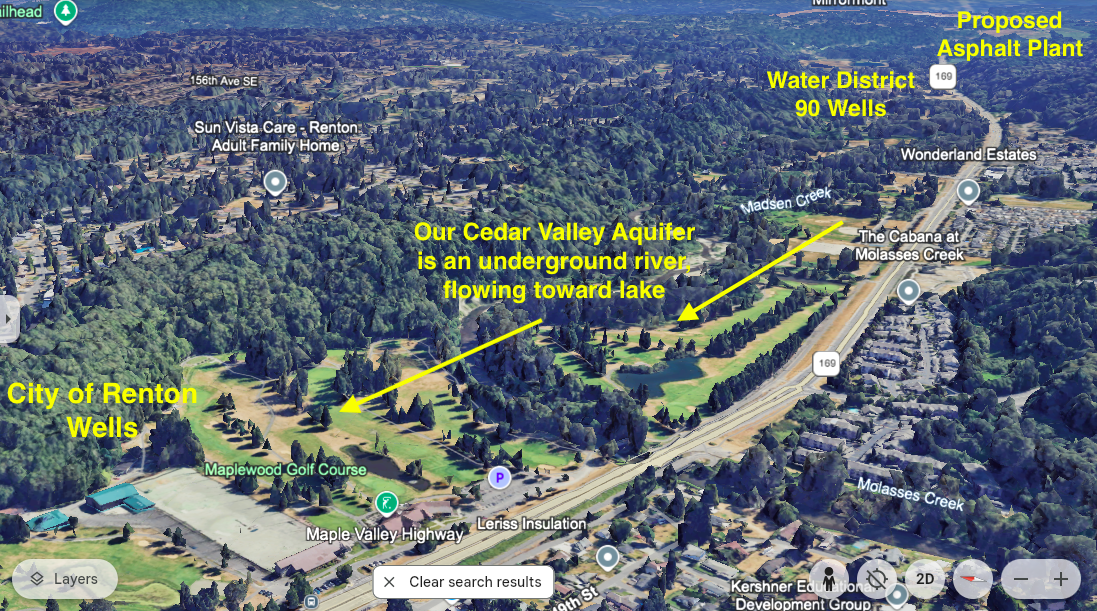
Both of these studies confirm that much of our drinking water comes from many miles up the Cedar River Valley, and that this water can travel half a mile per day in an underground river.
Instead of accepting this reality, Mr. Pastucha has engaged in trying to convince our Mayor, our Council, and the public that it would be impossible for water in our aquifer to travel as far as three miles underground, and therefore asserts that the proposed asphalt plant could never affect our wells.
To help Mr. Pastucha understand our aquifer better, and for all those interested in where our water comes from, I’ve prepared a simple high-level overview using scientific sources.
A fun and easy lesson about where Renton’s water comes from:
Cedar River water is not drinkable in Renton
First, we need to know that the water in the Cedar River unfortunately contains street and agriculture runoff in Renton. It is not drinkable, and we work to keep it’s clay bed from being punctured so that it does not spill into the deep aquifer. For instance, we’ve ensured pilings for I-405 are not driven through the river bottom and into the aquifer. We work hard to keep it clean enough for wildlife, but not for human consumption.
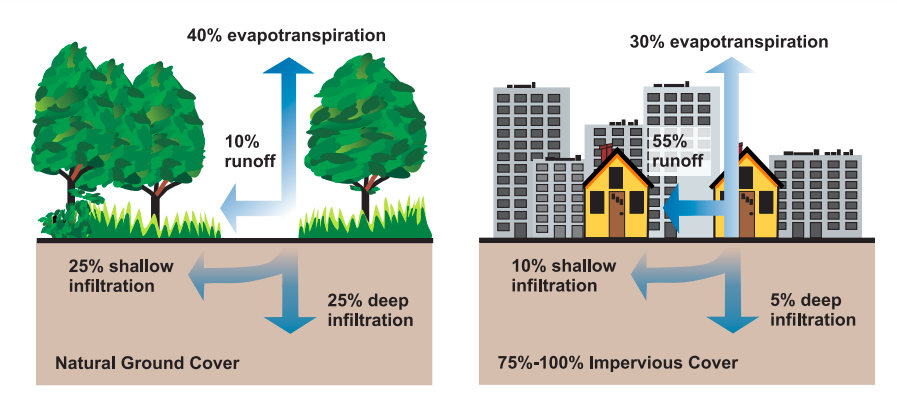
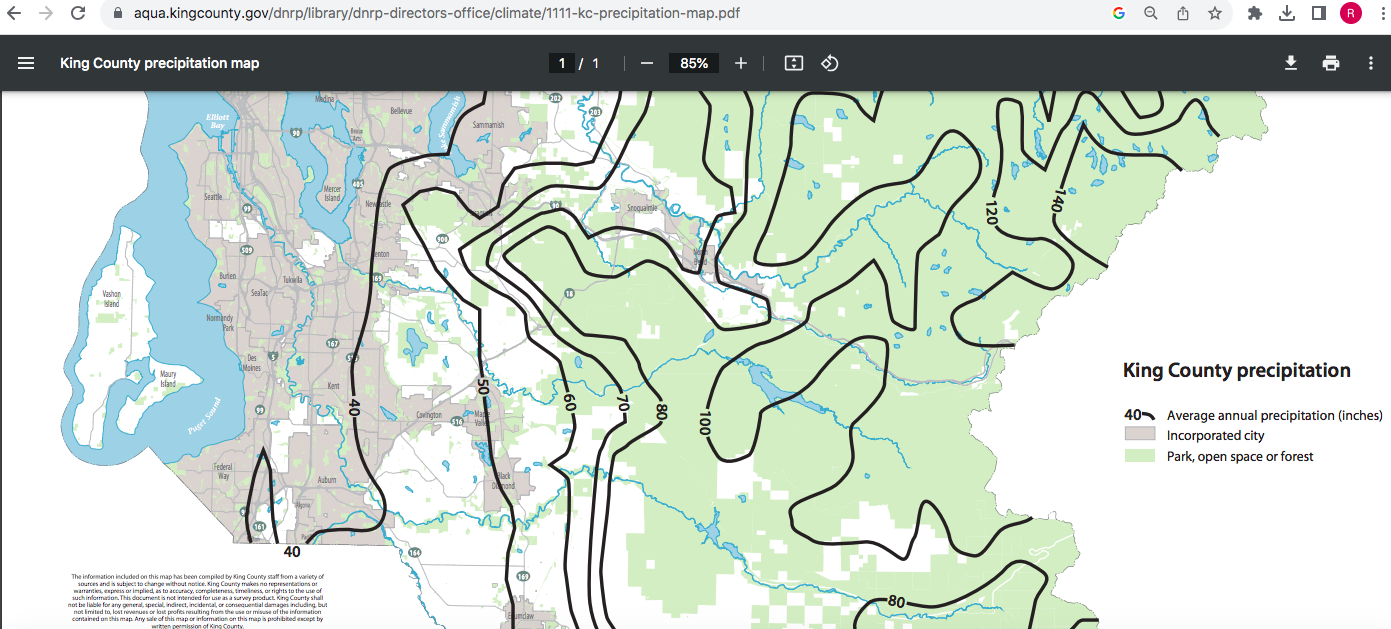
Renton’s drinking water comes from rain, which falls in our aquifer recharge areas and percolates into our underground aquifer. Renton gets about 40 inches of rain per year.
“Where’s the Poison? The battle of wits has begun.” A memorable scene from “Princess Bride”
I found a city response about the asphalt plant online, but it has not yet been spread very broadly. I’m refraining from linking it at this time, because I’m not sure it deserves the high exposure it would get from my blog. (I think it should be rescinded.) But in case anyone has found it, here is my rebuttal.
In a recent memo on the Asphalt Plant, Renton’s Public Works Director, Martin Pastucha, addressed the existential risk of the Asphalt Plant poisoning Renton’s sole source aquifer, calling the risk “relatively low.” Relative to what? Is this the kind of confidence we should be basing the future of our city and the health of our children and grandchildren on?
But it’s worse than that. The Public Works Director based his vague non-assurance on a map of our “ten-year wellhead protection zone”, and relied on it being 1.75 miles away from the proposed asphalt plant. He implies, contrary to the data, that the water could never travel 9,200 feet through porous sand and gravel underground, even though Renton’s Maplewood Wells are downhill and sucking hundreds of millions of gallons of water per year– like giant drinking straws.
If Mr. Pastucha had ever bothered to read the report that formed the foundation of Renton’s “ten-year wellfield protection zone” he would have read this important statement:
“It is important to recognize that the aquifer limits shown in Figure 2-5 do not necessarily represent distinct boundaries that separate geologic materials containing groundwater. ” This is followed by the explanation that “the aquifer appears to extend several miles upgradiant of the bedrock narrows (near Renton’s wells)”
At Monday’s council meeting, a Council member essentially characterized this data as misinformation, and said that an Administrative press release would be issued by the Mayor’s office with more details about why this scientific data was misinformation.
I’m looking forward to critiquing this issue paper, if it ever comes out. I have doubts about whether it will, because I don’t believe the City of Renton will be able to find an engineer who values their reputation and license and is willing to guarantee that Renton’s water will never incur pollution threats from the asphalt plant. The city may be able to find “story tellers,” willing to say the plant is going to always be safe, but the scientific reports will prevent conscientious engineers from doing it. Partially treated runoff being injected into our aquifer recharge zone is bad enough. But add in the additional risks, from landslide,fire, floods, earthquakes, and coal mining sinkholes, all familiar events in this area, and the asphalt plant is an obvious poor engineering fit on this aquifer recharge zone.
RCW 8.12.030. Every city and town …within the state of Washington, is hereby authorized … to condemn land or property… either within or without the limits of such city …for the purpose of protecting such supply of fresh water from pollution.
But on the other hand, I strongly recommend the City reconsider issuing such a press release. At the end of the day, residents need their Council to step up and purchase this site to protect our water supply. Every day the Mayor’s communication specialists spend writing a fictional story about why the plant is not a bad thing, it costs the city more money that could be spent on purchasing the site. Furthermore, by creating such a document, it will become a lobbying tool for the applicants of the asphalt plant, regardless of how much of a scientific farce it is.
Citizens to Save the Cedar River, an organization that has spent $300,000 opposing this plant, report that the plant would have already been stopped if Renton had provided an amicus brief (a friend-of-the court statement) opposing the plant. They say Renton would not do it, and I don’t know if this was the decision of the Mayor, or someone whispering into his ear. If the Administration now issues a press release which pretends their hands are tied, I hope this press release includes an explanation of why they passed on this very clear opportunity to protect our aquifer for future generations. Such an explanation will take a while as it requires some very creative storytelling.
And this time, please include the author of the press release. Residents and our City Council deserve to know specifically who is misleading them.
The US Environmental Protection Agency’s Hot Mix Asphalt Plant Emission Assessment Report provides the pounds-per-year of pollutants expected from typical asphalt plants.
In our toxic world, the only safe drinking water is that which evaporates from the ocean, condenses in a cloud, and drops as rain or snow in a clean, natural environment. This is what Seattle drinks, and it is what Renton residents deserve as well.
Treated industrial runoff will never be healthy drinking water. Industrial runoff is treated to a level that will minimize harm to wildlife as the water returns to the ocean. It’s not treated to a standard that makes it safe enough for human consumption. Only evaporation and condensation will make treated industrial runoff safe to drink again.
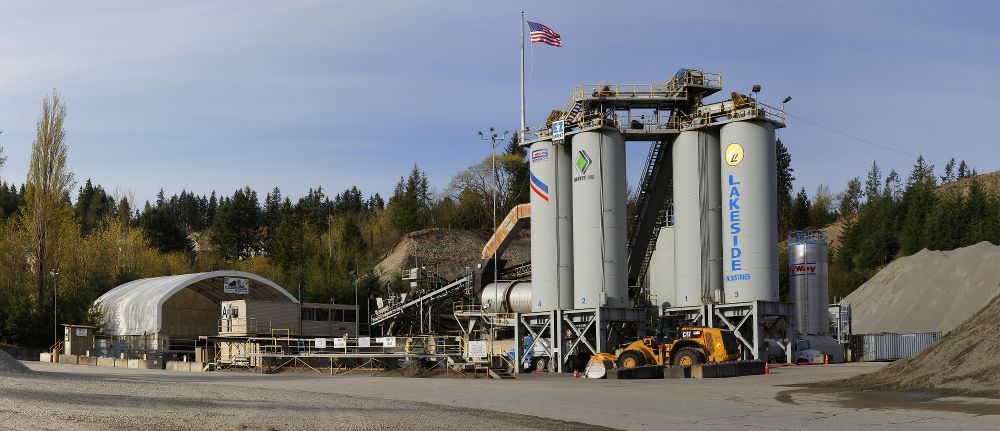
With their proposed new Asphalt plant, Lakeside Industries is planning to remove about 30-60% of the contaminants from their runoff using onsite treatment. They will then inject the remaining waste-water, still containing 40-70% of some of the worst pollutants, into Renton’s sole source aquifer. This is per poor instructions from the County, in a flawed approval process that has acknowledged the responsibility to protect salmon but not Renton’s residents.
Airborne contaminants from asphalt production will settle on equipment and pavement throughout Lakeside’s industrial site. Rainstorms will flush the poisons into a central catch basin, along with waste water from hosing down equipment and pavement. Contaminants will include toxins like benzene, arsenic, lead, and mercury, along with dangerous PAHs that can cause cancer and autoimmune diseases, including fatal blood diseases. Approximately half of the deadliest contaminates, those that are fully dissolved into the drinking water, will pass right through the “Enhanced basic” on-site filtration system–by design.
King County has required Lakeside to meet an “enhanced basic” standard in treating their runoff, which lets 30-60% of heavy metals pass right through. The partial-treatment comprises an oil separator, a sand vault, and a small retention pond. The 50% or so of dangerous contaminants that flow right through these simple systems will be infiltrated into our aquifer recharge zone.
There’s widespread misunderstanding about the capability of the on-site system to clean the water. The treated water is considered too dirty to dump in the Cedar River. Renton should not allow water deemed too dirty for the Cedar River to be intentionally pumped into our sole source aquifer.
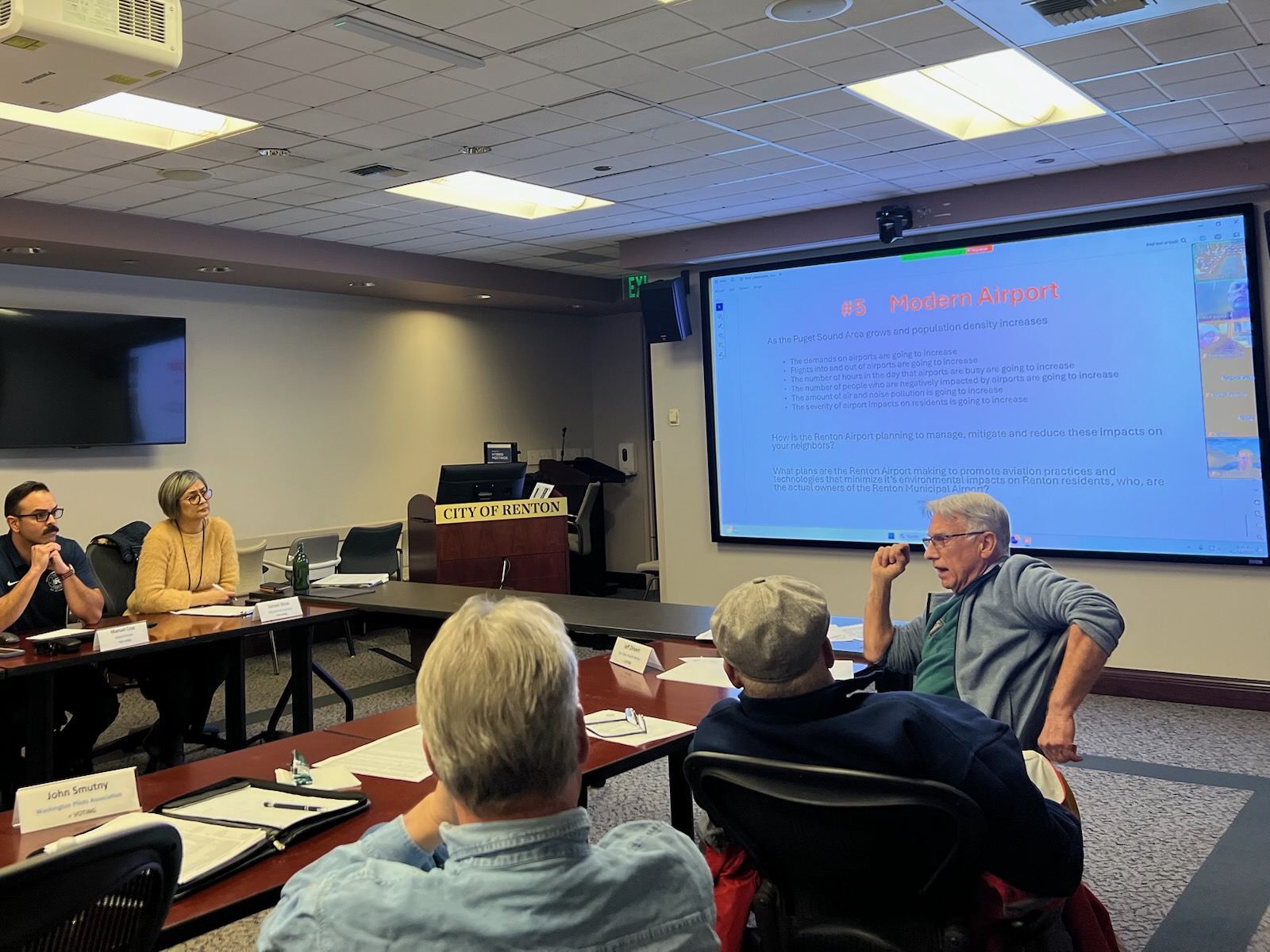
Members of the Renton Airport Advisory Committee (RAAC) and Airport leadership discuss the future plans for Renton’s airport at last Tuesday’s quarterly RAAC meeting. Some participants were on Zoom, visible on the right side of the meeting screen.
[Note: There was also some valuable information shared at the Tuesday meeting, including a thorough report from the South Renton neighborhood representative. I’ll cover this content in a separate article. ]
At the Tuesday meeting of the Renton Airport Advisory Committee, I was surprised and disappointed by the controlling, questionable guidance given by airport management to the Committee’s hard-working volunteer members.
Water District 90 is planning to take their wells offline due to contamination from the proposed asphalt plant, at a cost of $500,000 per year. Renton’s wells are just downstream and the cost to Renton would be $10,000,000 (ten million) per year. Renton Council could end the risk for both water districts by purchasing the proposed asphalt plant property for about $15 million, using state grant money.
Water District 90 has three wells in the Cedar Valley Aquifer, a short distance upstream of Renton’s wells. District engineers have determined that their wells are threatened by the proposed Lakeside Industries asphalt plant. In 2018, they determined the chemical poisoning risk would likely make their wells unusable within ten years. This was before it was established that the Asphalt plant would purposefully inject their runoff into the ground. If Water District 90 can’t replace the wells, they will begin paying Seattle $500,000 per year to supply the water to the equivalent of 6000 residents. (Water District 90 already buys 70% of their water from Seattle, and they are serving a total of 20,000 residents).
Water District 90 resolution opposed to asphalt plant due to poisoning of their wells
Renton’s wells serve 20 times as many people as Water District 90’s wells, so Renton customers would have to pay ten million dollars a year to Seattle to replace our poisoned water. Even worse, our wells are sized for our city’s future growth projections, capable of delivering water to 60 % more Renton population. And this water would also have to eventually be replaced by purchases from Seattle. Given past rationing during droughts, Seattle may not even have this excess capacity.
Tom and Ed Jones at their new Coal Mine in 1925, on the property now proposed as an Asphalt Plant. Abandoned tunnels will provide a shortcut for “forever” toxins from asphalt production to reach every layer of Renton’s drinking water aquifer. (Photo courtesy of Renton Historical Society)
Question: What is the one thing that would make it even more dangerous for an asphalt plant to inject toxic runoff into the ground on Renton’s sole source aquifer?
Answer: Man-made tunnels at the site to carry poison through every clay and sedimentary layer, so that no well is deep enough to be safe.
These 100-year-old photos were taken on the property that is now owned by Lakeside Industries, and proposed for the asphalt plant. The Coal Mine shown was alternatively known as the Jones Brother’s Mine, the Indian Coal Mine, and the New Black Diamond Coal Mine. (The “New Black Diamond” name reflects that it replaced what may have been the deepest coal mine in the world in Black Diamond.)
Perhaps the reason the ground percolated so well during the “infiltration test” at the proposed Asphalt Plant site is the miles of mining tunnels that descend from the property. We may unfortunately never know, as no Environmental Impact Statement was required for locating an asphalt plant here.
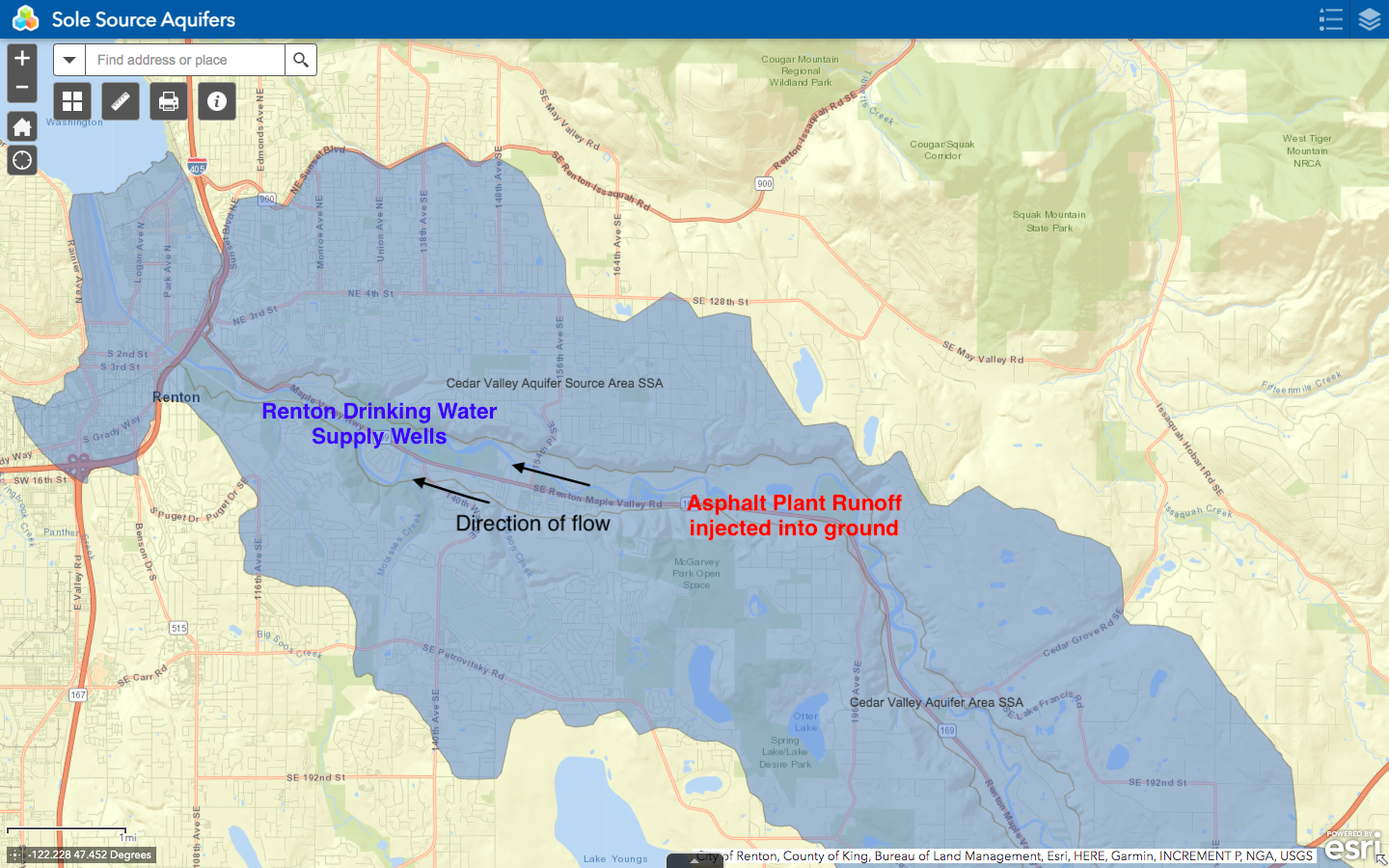
Screen capture from US government map showing sole-source drinking water aquifers. I’ve added labels showing approximate locations of some of Renton’s wells (in blue) and the planned Asphalt plant runoff “infiltration” facility (in red). (Link to map here)
Renton City Council’s Planning and Development Committee was recently briefed on a proposed update of Renton’s Critical Areas Ordinance. Per the language recommended by Washington State (slide 4, bullet point 5), critical areas include aquifer recharge areas: ” Critical aquifer recharge areas contribute to groundwater quality and in-stream flow. While critical aquifer recharge areas are designated and protected to ensure availability of potable water, the groundwater resource also interacts with streams.”
But a future Asphalt Plant could soon be injecting thousands of gallons per year of contaminated runoff water into the recharge soils of Renton’s pristine sole-source aquifer, a short distance upstream of our drinking wells, and Renton City Council has not used its state-granted authority to halt it.
A google image search of Rainier Flight Services in Renton looks like a college yearbook of happy graduates and their instructors, launching life-changing careers in aviation
Renton has suffered a very sad academic loss this week. Rainier Flight Services has been training our aspiring aviators in Renton for decades, launching many of our residents into lifetime careers as professional pilots. Their prices were affordable, and Renton’s youth could earn a pilot’s license for the price of a semester or two of college. Formerly (until last week) headquartered in Renton, they are the biggest and most successful flight school in the Northwest, with major satellite schools in Everett, Tacoma, and Auburn.
Their social media pages look like college yearbooks, replete with photos of happy graduates and their instructors at this key moment in their lives. They take pride in keeping their airplanes up-to-date and well maintained, and they fly them to low-population regions to get their time in, producing minimal negative impacts to Renton. The business added to our job and tax base along with training our youth; dozens of instructors and support staff were employed at their headquarters in Renton.
I was recently copied on an email that Landing Gear Works President Tom Anderson wrote to the Renton City Attorney’s office.
In the email Mr. Anderson explains he just received a formal 3-day notice to pay or vacate on leases that cover two of his small airplane hangers. (He has also received a separate notice for another lease that covers his two other buildings, and one of those buildings is the subject of the ongoing roof-repair dispute).
Since his small hanger leases are not in dispute, he went to the Airport Management office and made payment in full for these leases, per the three-day notice. He said he had been trying to pay on these particular hangers since November of 2023, but the city kept lumping his payments together with his other leased building, and this 3-day notice finally separated the payments on the distinct leases. His payments were marked “received” by Airport Office personnel.
But following receipt, the Airport Manager was contacted by his staff via phone, and he directed his staff to return the payments to Mr. Anderson. This prompted the email to the Renton City Attorney.
This morning Mr. Anderson met the Airport manager at the Renton Municipal Airport office, shown here. The Airport manager keeps the office locked, and insists on appointments to meet with tenants. Tom had an appointment this morning.
Update 4/16/2024: A few hours after I posted this blog entry, Mr. Anderson was notified his employees’ credentials would be reinstated. Their passes worked this morning.
I received a phone call from Tom Anderson, President of Landing Gear Works, explaining that his employees have been locked out of accessing his east and west hangars. Their electronic credentials will no longer give them access.
Mr. Anderson has been working all day to get the credentials restored. According to Mr. Anderson, the Airport manager gave Mr. Anderson the brush-off this morning, saying the manager needed to talk to the city attorney and would get back to him in a couple of hours. Then he dodged Mr. Anderson’s calls until mid-afternoon. At that point he said the credentials would not be forthcoming.
Yesterday the Renton Mayor released an Airport statement explaining that council felt compelled to evict The Landing Gear Works (TLGW). He put sole blame on TLGW for falling behind in rent without mentioning the serious billing errors by his administration that plunged TLGW into rent arrears. I’m describing these errors here for the first time. (The Mayor also didn’t mention the failure of the airport manager to extend a long enough lease to make building repairs, per airport lease policy, and I’ve covered that here.)
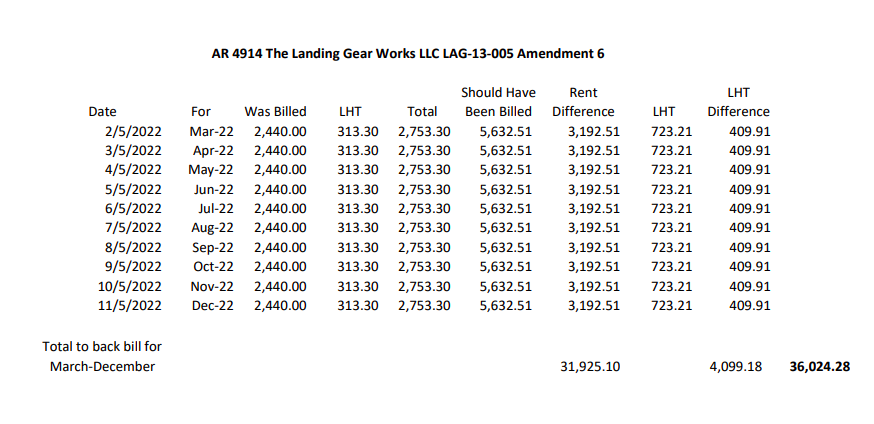
In November 2022 the Renton Airport Business Manager realized he had a serious problem. He had been underbilling The Landing Gear Works (TLGW) for months for their hangars, workshops and offices on Renton airport. The lease rate had increased and the new amount was NOT reflected in the bills. The accounting error added up to five months of lease payments. The Airport’s error would be bad news for TLGW and would negatively impact their business, especially on the heels of the pandemic. It would have been courteous to call or visit TLGW to break the news, apologize for the mistake, and work out a plan. But instead, the Airport Manager just directed his accountant to send a bill for the corrected amounts.
His efforts to downplay the error resulted in predictable confusion in the offices of Landing Gear Works and Renton City Accounting.
When the bill for the error showed up in the accountant’s office at Landing Gear Works, she wrote back to the City “Is there a way to fix this statement to reflect the actual balance of $14709.22? In the meantime I will get another payment asap.” When she received a response from the city, she immediately forwarded it to President Tom Anderson with this email message: “I asked for a current statement from the City of Renton for the rent. This is what she sent.”
Tom Anderson’s shock is apparent in his email reply: ” This says we owe 50K !!!!!!!!! ”
The Airport Manager and his boss, the Public Works Administrator, obviously knew it looked bad. Whenever they told this story, they referred to it, unfairly, as the Landing Gear Works falling behind on rent, never mentioning the city’s own accounting mistakes that contributed to it. To this day I have not seen them publicly explain it to City Council or the Renton Community.
As Mr. Anderson was working to catch up from the city’s billing error, his roof began to leak. That is where I picked up the story in my first post on The Landing Gear Works.
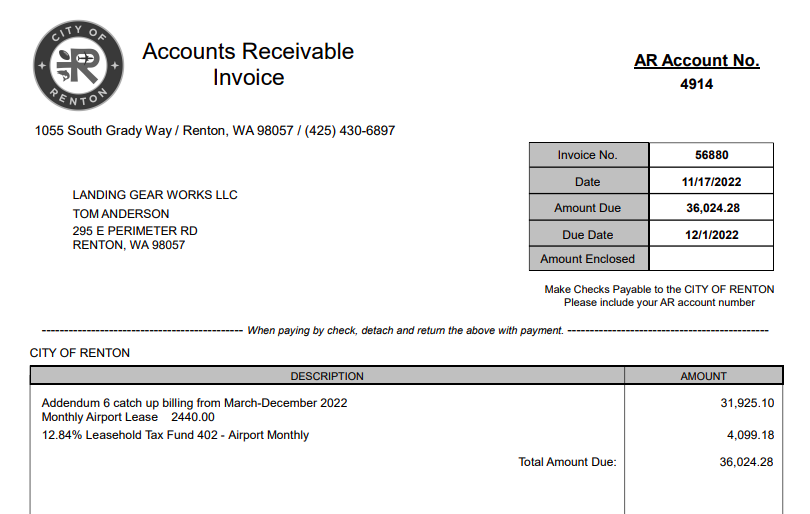
Here is the statement from the city that started it all. The text in the first image reads as follows:
———- Forwarded message ———
From: <City of Renton Accounting>
Date: Thu, Nov 17, 2022 at 12:16 PM
Subject: RE: Airport Invoice
To: Accounting TLGW <accounting@thelandinggearworks.com>
Hello,
Please see attached statement. The statement was inadvertently generated from 2019-current. I’ve highlighted the outstanding balances on the statement, and below is a screenshot of your open items for ease of reading. It was brought to my attention under addendum 6 to LAG-13-005 there was a rent increase that was to take affect in March 2022. I have issued an invoice for the difference from March-December (attached), and your billing amount will reflect this increase on your monthly invoices moving forward. Invoices issued for September-November are due in full ASAP, but we can work out a payment plan for the back billing invoice. Please feel free to email or call with any questions or concerns. Thanks!
Mr. Anderson met with the Airport staff and they agreed on a plan. TLGW would pay the previously unbilled amounts over time. But the airport’s normal bills do not contain a lot of information, and the catch-up accounting proved confusing and time-consuming. The City made more errors along the way. Accountants at Landing Gear Works and the City struggled to coordinate how to apply payments to current rent vs back rent. The Airport Leadership, not TLGW, had created the billing confusion and abundance of overdue rent.
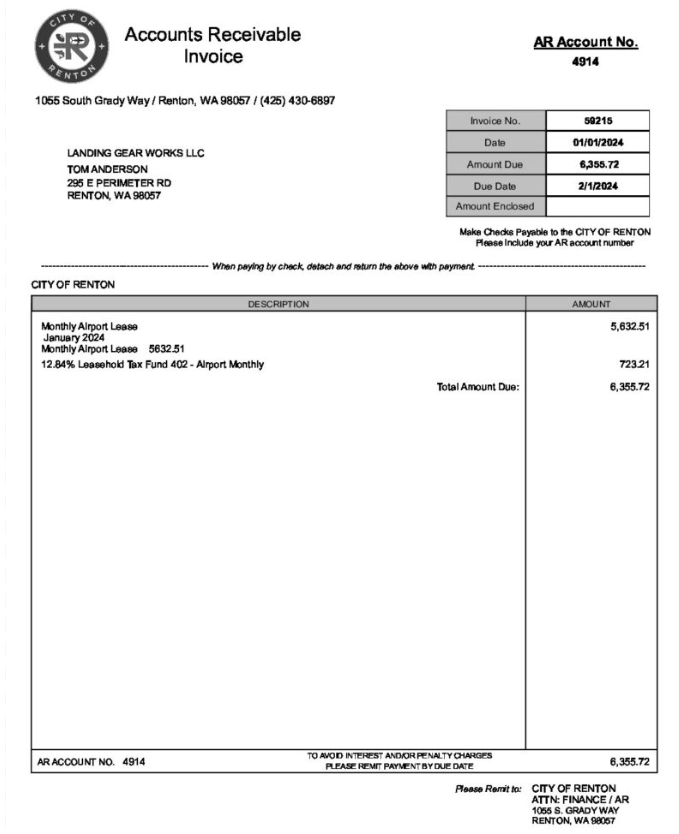
Typical bill received by Landing Gear Works. The Company paid these bills throughout 2022, only to be told they had fallen behind. This bill from February 2024 does not give any clue as to past due amounts.
The remainder of this article is a tiny sample of the actual back and forth emails between their offices. I’ve removed the names and email addresses of personnel.
In last night’s meeting, The Landing Gear Works president Tom Anderson said he welcomed the forthcoming discussion with the Transportation Committee, as recommended in the agenda bill 3532 attached to the consent agenda. Today Mr. Anderson learned that Council had approved the eviction without making the recommended referral.
The council voted unanimously last night, but due to an error in the printed agenda, the vote left observers uncertain whether Council had voted to evict Landing Gear Works or send the matter to Council Transportation Committee.
The confusion arose because the consent agenda action said “Council Concur” paired with the attorney request regarding Landing Gear Works, but the formal Agenda Bill 3532 that was attached to the item (and recycled from two-weeks ago) explicitly recommended Council refer the item to Transportation Committee.
I emailed the City Clerk to clarify whether Council had concurred with the Agenda Bill or the attorney’s recommendation, and was informed that it was the attorney’s recommendation. In other words, the Renton Council has voted to evict Landing Gear Works. Unlike the approach in past decades, the Council never discussed the issues with the tenant.
Since the Council acted unanimously without any public discussion, it is a reasonable assumption that the Executive Session last Monday concerned this topic. If so, it means that “public knowledge regarding the discussion is likely to result in an adverse legal or financial consequence to the agency,” which is a requirement for holding such an executive session regarding an enforcement action per RCW 42.30.110 1(i) .
It’s never a good look for the city to admit they would probably lose if they were forced to discuss an issue in public. Such a move should only be taken in extraordinary situations, not to get out of discussions with a tenant about how to deal with a leaky roof. I think the Council should study all sides of how they arrived in this circumstance, and make any necessary changes, so that they aren’t afraid to discuss their lease-related decisions in public next time.
Mr. Anderson spoke last night about his repeated requests to lease a different space, and said the requests had been lost by the city. If the eviction goes through, eight living-wage jobs, a world-renowned high-tech Renton-made product, and tax revenues will also be lost by our city.
City Council item 6(c) references agenda bill 3532, and recommends council concurrence
Agenda Bill 3532 recommends the item be referred by council to Transportation Committee for discussion. But this is not what will happen.
Full background on The Landing Gear Works conflict with Renton Airport Management can be found here
The Gweduck (pronounced “gooey duck” ) is a Renton-built, Renton-designed amphibious, highly-advanced composite plane that burns a fraction of the fuel and is much quieter than earlier generations of similar planes. Building such a plane in Renton fit perfectly in our FAA-sponsored Sustainability Management plan. But a few years ago Renton Airport Management rejected a proposal to manufacture the plane here, and today Airport Management is evicting the Gweduck/Landing Gear Works engineering offices. The space appears to be targeted to even more private jets, dramatically out of step with our Airport Sustainability Management plan. Council is enabling it.
Twelve years ago Renton proudly stepped up to being one of the first airports in the country to create an FAA-sponsored Sustainability Management Plan. We were eager to demonstrate leadership in environmental sustainability, livability, and aviation innovation, and we requested and received a $150,000 FAA grant to create the sustainability plan– one of the first ten cities in the country to do so.
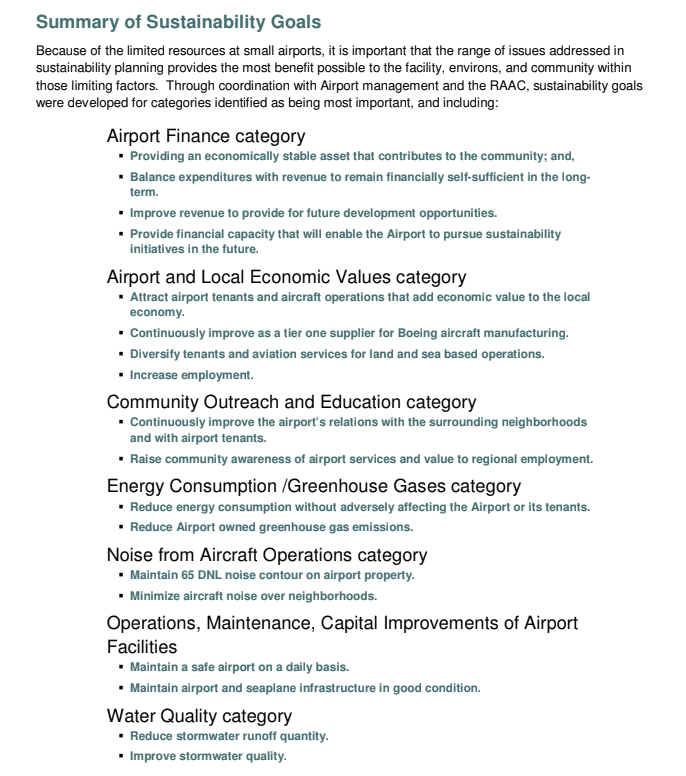
Creating the plan took hard work and coordination with many stakeholders. It’s a detailed and thoughtful 41-page plan, that shows Renton’s early and enduring commitment to protecting our climate, our natural environment, and our community’s livability– the issues our leaders claim they embrace right now.
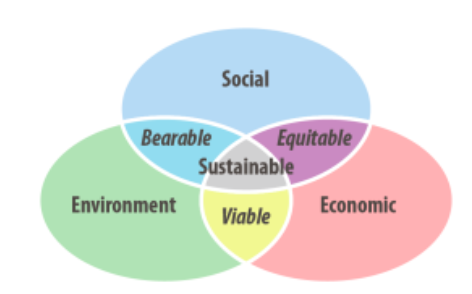
Graphic from Airport Sustainability Management Plan
The problem is, I’m left wondering if our current leaders even know the Airport Sustainability Plan exists. They should know, since long-standing airport tenants, residents, and RAAC members keep bringing it up. And Airport Management should be showing how their decisions fit within it. Committing to this plan was a promise to both the community and the FAA.
Our Airport Management Team is currently bringing private jets to Renton and ejecting companies that improve efficiency of small planes. They seem eager to demolish the historic tower building, possibly to clear enough space for large private jets on the south-east corner of the airport, after leasing to a jet center on the west side a couple months ago. Private jets create ten times as much carbon as airline seats and other forms of travel, pay 2% of FAA expenses while generating 16 % of the flights, and are noisier than propeller driven aircraft.
Our City Council has not publicly questioned this unexpected heading. The Council appears to be boarding a rudderless plane, piloted by a crew that doesn’t know the approved flight plan.
The Renton Airport Advisory Committee (RAAC), our FAA-supported Community Roundtable, is supposed to be meeting at least quarterly, and far more often when there are issues like these. But Airport Management is responsible for scheduling RAAC meetings, and they have held just a handful of RAAC meetings within the last few years; and these meetings have been hindered by zoom technical issues. By ignoring our sustainability plan and not regularly scheduling and supporting RAAC meetings, our leaders have rejected our best tools for ensuring we have a sustainable airport, and a livable environment, into the future.
I’m asking city leaders to study this plan, discuss it, and recommit to it. This will include reinstating regular RAAC meetings, as called for in the plan.
The Airport Sustainability Plan is available here in the most recent form I could obtain by publication of this article. The Plan is mentioned on the Renton City Website, but I could not find a link to the plan on the city’s website at the time of this writing. So I’ve uploaded the final version as approved by RAAC in 2012, and it is available here. If/when I acquire a different later version, I’ll add it to this blog entry.
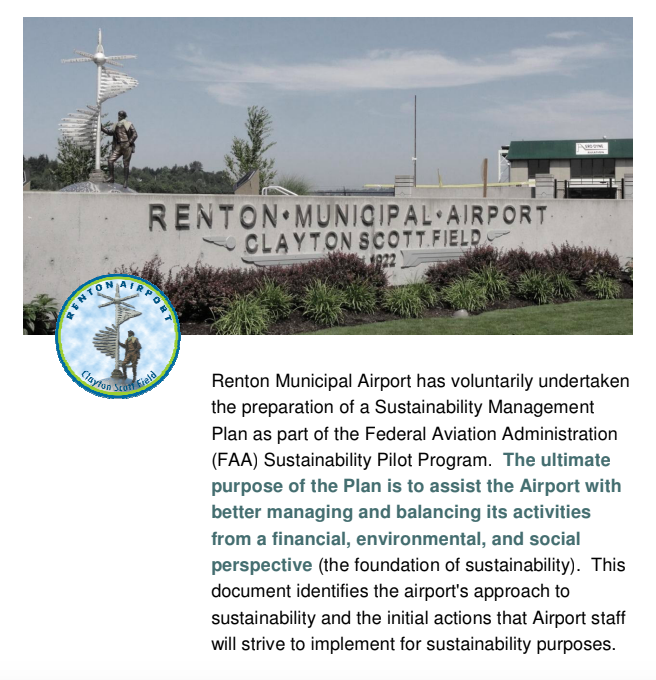
Introductory page from Sustainability Management Plan
Goal summary from Airport Sustainability Management Plan
Renton’s long-time general aviation service provider, Pro-Flight, has been sold to a company with an express plan to transition it to servicing Jet Aircraft, to relieve Boeing Field. An enhanced fueling station (a gas station for jets) appears to be part of their plan.
I’m not referring to new Boeing jets, which are the latest technology, and take-off lightly-loaded over the lake once or twice per day. I’m talking about 30-year-old Learjets price-shopping for fuel, and landing at all hours of day and night.
Excerpt from Dark Horse business plan
Industry pressure to cater to jets in Renton has existed for decades, but we resisted this pressure during the 28 years I was on Renton City Council. Jets are typically 2-3 times louder than the propeller-driven counterparts, and Renton neighborhoods are already barely tolerating airport noise as it is.
In addition, private jets are not as available to residents. With smaller propellor planes, a Renton resident wishing to learn how to fly can go to Renton airport and take lessons. Similarly, a Renton photographer can charter a plane for a photo-shoot. Other Renton residents have joined flight clubs at our airport, or even keep their private airplane here.
Our airport is currently a Renton Community Airport (that also launches new Boeing aircraft once or twice per day). If we’re going to switch the airport’s focus to relieving Boeing Field Jet traffic, this was worthy of a discussion by our Renton Airport Advisory Committee. The greater Renton community also should have been notified. While few noticed as the city extended this lease, everyone will notice when jets begin refueling regularly in Renton in the future.
Our community had a heated episode with a proposed Jet Center seventeen years ago, when our Council was presented with a proposal, and residents living from Benson Hill to Mercer Island formed an organized opposition. The “NoJets.org” group used every bit of leverage they could to defeat the proposal. This was not easy because FAA does not give cities any real say in what airplanes use our airport. Our city can only partially manage the airport activity by the choice of tenants we lease to, and by the length of our runway.
I do not blame the new Leaseholder, Dark Horse Aviation LLC, as they have been completely up-front with their intentions. They sent a letter to Renton’s Public Works Administrator back in November spelling out exactly how they would use the property if a lease was extended. I just wish our RAAC and Renton community had been notified.
The letter of introduction. The words “Renton’s outstanding future to be the legitimate first-class corporate reliever for light and midsize jets in the region,” ideally would have prompted airport management to consult RAAC and the greater Renton community for advice.
Renton airport may become a gas station for jets. Noisier older model jets, that burn more fuel and have owners that are more price-sensitive, may be Renton’s likely customer base.
This excerpt from the business plan shows the new lease will extend Pro-Flight’s current daytime prop-plane operation to 24/7 jet landings and takeoffs. This will be of interest to residents living within a few thousand feet of the airport. The RAAC has representatives from every neighborhood specifically to advise on topics like this.
This noise comparison published by Purdue University includes a Jet Airplane flyover at 1000 feet at 103 dB, and a propeller flyover at 1000 feet at 88 dB. Because of the logarithmic scale, the Jet is 2-3 times louder. This is due primarily to the greater flow of air at higher speed in a jet engine.