Renton’s long-time general aviation service provider, Pro-Flight, has been sold to a company with an express plan to transition it to servicing Jet Aircraft, to relieve Boeing Field. An enhanced fueling station (a gas station for jets) appears to be part of their plan.
I’m not referring to new Boeing jets, which are the latest technology, and take-off lightly-loaded over the lake once or twice per day. I’m talking about 30-year-old Learjets price-shopping for fuel, and landing at all hours of day and night.
Excerpt from Dark Horse business plan
Industry pressure to cater to jets in Renton has existed for decades, but we resisted this pressure during the 28 years I was on Renton City Council. Jets are typically 2-3 times louder than the propeller-driven counterparts, and Renton neighborhoods are already barely tolerating airport noise as it is.
In addition, private jets are not as available to residents. With smaller propellor planes, a Renton resident wishing to learn how to fly can go to Renton airport and take lessons. Similarly, a Renton photographer can charter a plane for a photo-shoot. Other Renton residents have joined flight clubs at our airport, or even keep their private airplane here.
Our airport is currently a Renton Community Airport (that also launches new Boeing aircraft once or twice per day). If we’re going to switch the airport’s focus to relieving Boeing Field Jet traffic, this was worthy of a discussion by our Renton Airport Advisory Committee. The greater Renton community also should have been notified. While few noticed as the city extended this lease, everyone will notice when jets begin refueling regularly in Renton in the future.
Our community had a heated episode with a proposed Jet Center seventeen years ago, when our Council was presented with a proposal, and residents living from Benson Hill to Mercer Island formed an organized opposition. The “NoJets.org” group used every bit of leverage they could to defeat the proposal. This was not easy because FAA does not give cities any real say in what airplanes use our airport. Our city can only partially manage the airport activity by the choice of tenants we lease to, and by the length of our runway.
I do not blame the new Leaseholder, Dark Horse Aviation LLC, as they have been completely up-front with their intentions. They sent a letter to Renton’s Public Works Administrator back in November spelling out exactly how they would use the property if a lease was extended. I just wish our RAAC and Renton community had been notified.
The letter of introduction. The words “Renton’s outstanding future to be the legitimate first-class corporate reliever for light and midsize jets in the region,” ideally would have prompted airport management to consult RAAC and the greater Renton community for advice.
Renton airport may become a gas station for jets. Noisier older model jets, that burn more fuel and have owners that are more price-sensitive, may be Renton’s likely customer base.
This excerpt from the business plan shows the new lease will extend Pro-Flight’s current daytime prop-plane operation to 24/7 jet landings and takeoffs. This will be of interest to residents living within a few thousand feet of the airport. The RAAC has representatives from every neighborhood specifically to advise on topics like this.
This noise comparison published by Purdue University includes a Jet Airplane flyover at 1000 feet at 103 dB, and a propeller flyover at 1000 feet at 88 dB. Because of the logarithmic scale, the Jet is 2-3 times louder. This is due primarily to the greater flow of air at higher speed in a jet engine.
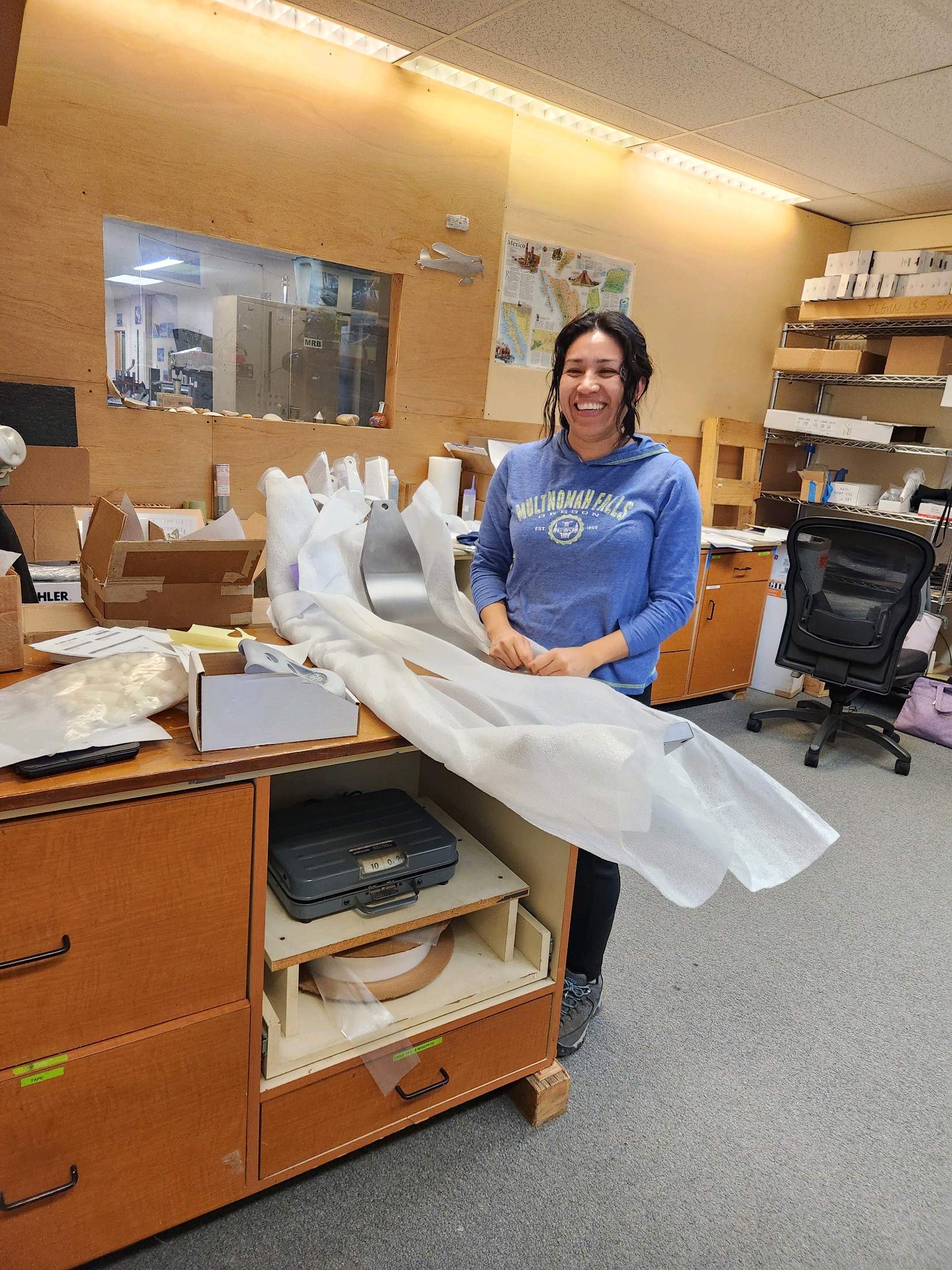
Sofia Farret carefully prepares landing gear kits for shipping to customers. She also performs other critical aviation roles at Landing Gear Works. Ms. Farret has spoken to Renton City Council twice, including this past Monday night, asking for help in settling the lease issue.
Renton Airport management and The Landing Gear Works are engaged in a landlord-tenant dispute that’s made its way up to the Renton Council, dominating Monday’s audience comment period. Eight aerospace workers could lose their jobs, and they were asking for Council help. Council Members seemed to want to help, but have been reluctant to engage directly with Landing Gear Works.
Renton airport management is frustrated with Landing Gear Work’s claim that the company repaired their roof in lieu of rent payments. Airport management asserts the roof was Landing Gear Works’ responsibility under the lease.
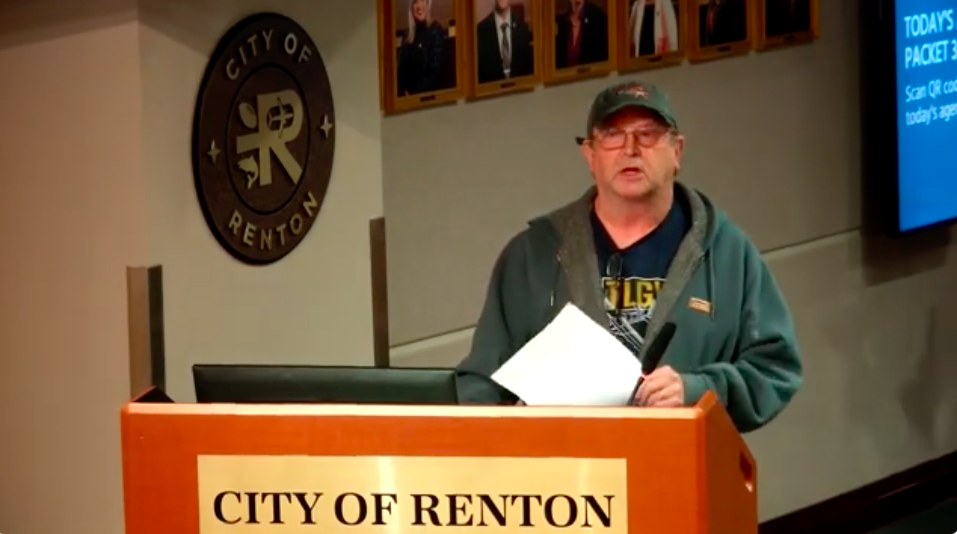
Landing Gear Works company founder Tom Anderson asked Council for help in settling the lease disagreement at Monday’s council meeting. He said his offer included his providing “good faith funds.”
The president of Landing Gear Works, Tom Anderson, said the city only made the roof his responsibility a few years ago through unfair pressure, and he doesn’t understand how the city would expect him to install a new roof and make other long-term upgrades to a building when he can only get a one or two year lease. He says he’s been trying to settle these issues for months, including making payments if they won’t accept his repair receipts, but the airport office has been uncommunicative. He points out the Renton airport is on their third airport director in three years, and recently had no director for several months after the previous director attempted to manage our airport from his home in Utah.
My opinion is that Council Transportation Committee should meet face-to-face with Landing Gear Works and see if an agreement can be worked out before going down the expensive path of litigation. Under RCW 35A.11.020, Renton City Council has ultimate leasing responsibility for Renton Airport, and past councils have engaged in these discussions with tenants when necessary. I recommend Council not go down the eviction path until they’ve personally tried to work this out.
Recent councils have not experienced many landlord-tenant disputes at Renton airport, thanks primarily to the long, productive tenure of a former Renton airport manager who worked closely with all airport tenants, and ensured there were regular monthly meetings of an empowered Renton Airport Advisory Committee (RAAC). The RAAC combined the perspectives of airport users and representatives from Renton’s neighborhoods to build a thriving, compatible airport community, and they addressed tenant issues like roof maintenance productively and early. In my early days on council, Prior to formation of the RAAC, up to 25 percent of my council time was spent handling airport landlord-tenant disputes. Recently, frequent changes in airport management and infrequent RAAC meetings are bringing back landlord-tenant tensions at the airport.
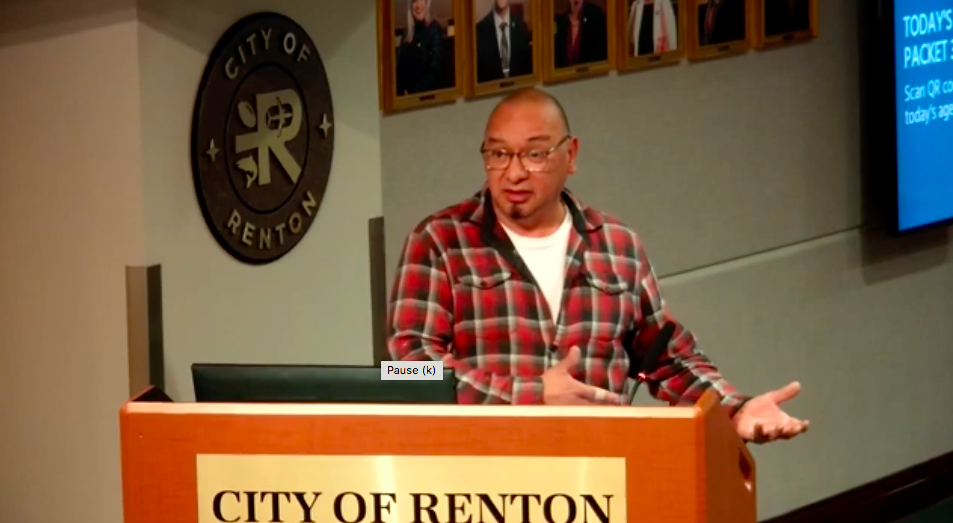
Sergio Nunez, a ten-year employee of Landing Gear Works, asks the Council to help save his company.
Background on Landing Gear Works:
For 11 years Mr. Anderson and his company “The Landing Gear Works” have designed and built specialized light plane landing gear at Renton Airport. Mr. Anderson pointed out at the Monday meeting that he has deep roots in Renton; his Dad ran a Machine shop in Renton dating back to 1947.
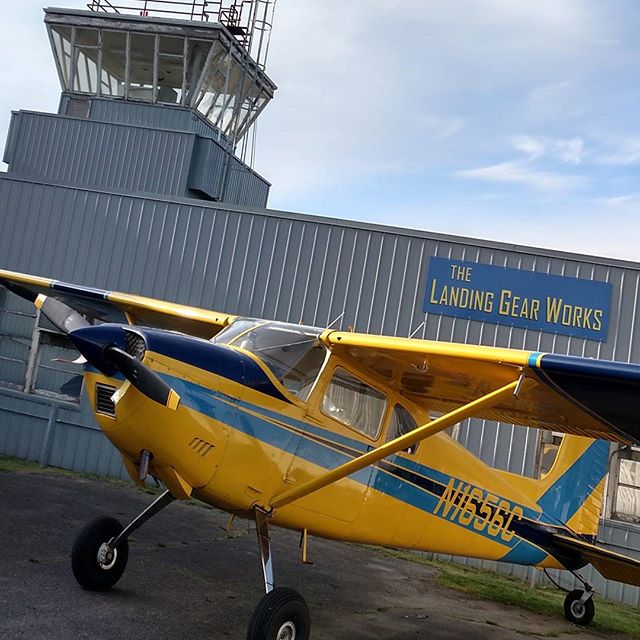
The Landing Gear Works’ most popular product is a titanium landing gear system for Cessna 180 and 185 aircraft. These specialized landing gear are lighter weight and less susceptible to corrosion than alternatives, and are sought after world-wide by Cessna owners seeking improved performance and durability. They are not available from anyone else.
On a typical day, the Landing Gear Works will have two or three customer aircraft on-site receiving new gear, and will ship out additional landing gear sets to repair stations around the globe.
The products are made entirely in Renton, with major components fabricated in their airport workshop and other components coming from machine shops throughout Renton.
The shiny Cessna 180 titanium landing gear strut in front, available only from Landing Gear Works, weighs half as much as the approved steel strut behind it, and it is less susceptible to corrosion. The titanium gear reduces an airplane’s weight by 23 pounds, extending it’s range, adding cargo capacity, and reducing its carbon footprint. These are made in Renton.
The Landing Gear Works must maintain key approvals from the FAA to sell these products. The FAA has issued Supplemental Type Certificates (STCs) approving the design, and Parts Manufacturer Approvals (PMAs) authorizing the manufacturing. Both of these approvals have to be rigorously maintained by Landing Gear Works, by showing they maintain high quality manufacturing processes and that their engineering team is responsive to in-service incidents involving their products. They have an FAA “continuing airworthiness” responsibility to care for the design, manufacture, and use of these products, as long as they are in service on airplanes.
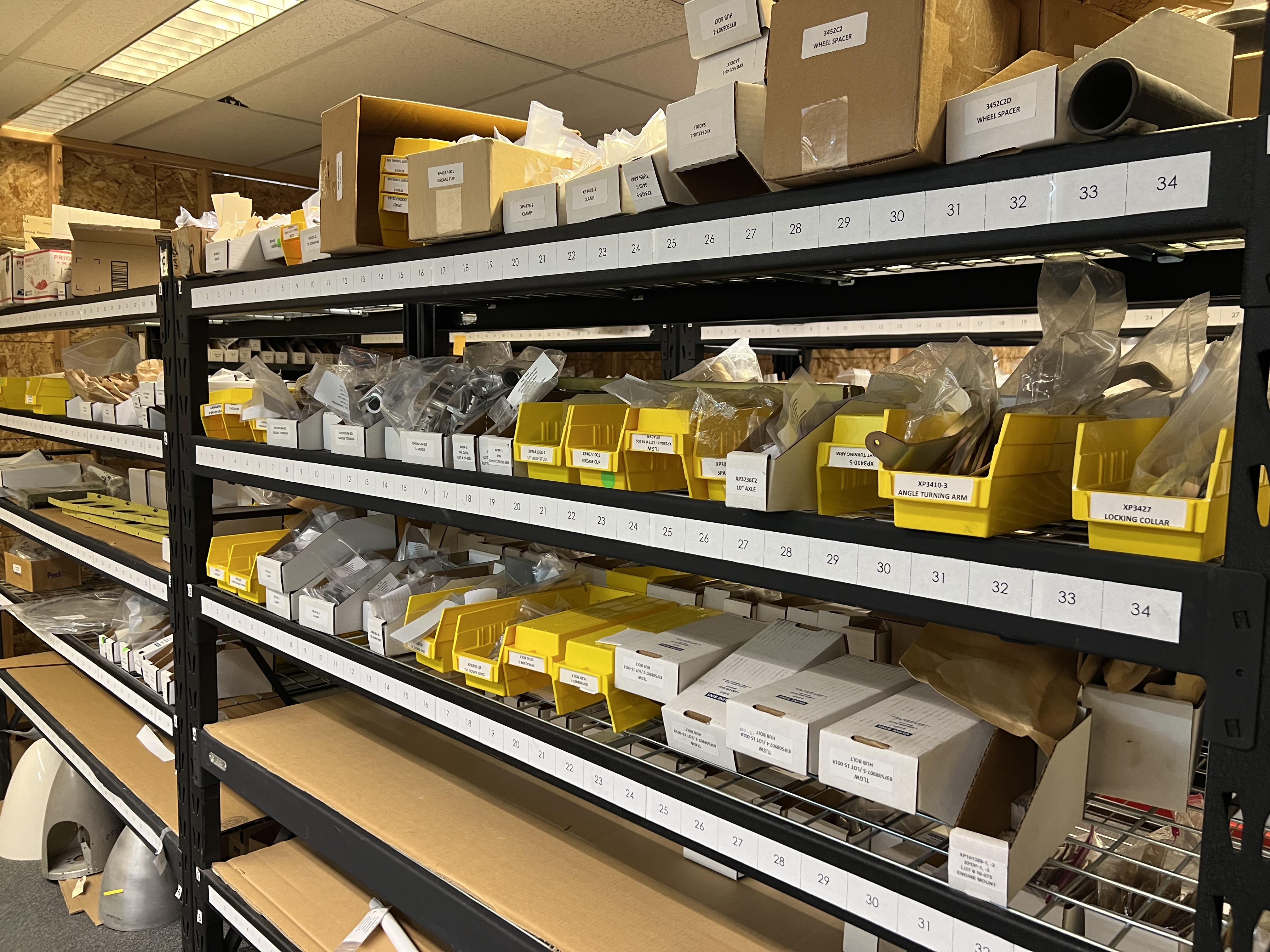
One continuing airworthiness obligation is maintaining an approved spare parts supply. Needed parts must be readily shipped to anyone with an airplane on ground. FAA enforces this requirement to keep the world’s aircraft flying safely, and eliminate any temptation to use unauthorized parts in repairs.
An eviction of an STC and PMA holder (such as Landing Gear Works) with a mere thirty days notice is incompatible with meeting these Federal regulations and expectations. Ninety days for a move should ordinarily be considered a bare minimum, and more time would be better.
The Landing Gear Works maintains FAA-approved spares, manufactured in Renton, that can be quickly exported around the world to meet their continuing airworthiness requirements.
The Historic Building:
Landing Gear Works’ engineering and manufacturing takes place in a historic building at Renton airport. The “Old Tower Building” was built in 1943, and provided air traffic control when Renton was building up to one hundred and sixty B-29 superfortresses per month during WWII. Later, the building served as the Engineering Liaison office for Boeing’s flight line.
The Landing Gear Works occupies the old Renton Control Tower building, built in 1943.The view from Renton’s historic old control tower, looking over the Boeing flight line today. The black and white photo shows the view when Renton was producing 160 B-29 Superfortresses each month during WWII.The Landing Gear Works building still contains reminders of it’s long service for the Boeing Company. While at Boeing I personally spent long days and some overnights in this building as I worked with flightline “Liaison” engineers making adjustments to airplanes prior to first flight.
When Boeing gave up their lease on the building and turned it back to Renton, we searched for an appropriate aviation use that could occupy the building. The building does not have any hangar space and is designated in the FAA approved airport layout plan as “Aircraft Manufacturing.”
I remember when our long-serving airport manager enthusiastically announced he found the right company, with Renton roots and a high-end product. Landing Gear Works was to occupy most of the building, with the exception of the historic tower and some of the offices below the tower. At that time the city maintained the exterior of the building, including cutting the grass, picking up debris, and keeping the roof repaired. The airport manager also helped Landing Gear Works sublease three hangar spaces to install their equipment on aircraft.
Renton’s 2017 FAA-approved Airport Layout Plan available here, showed Building 36 (the old tower building) approved for for Aircraft Manufacturing (in green), which Landing Gear Works uses it for. Non-manufacturing use, general aviation, or non-aviation use would not be per plan.
The Landing Gear Works operated in smooth partnership with Renton for many years. The recent dispute took root when a later airport manager condemned the hangars used by Landing Gear Works and scheduled them for demolition, and insisted that Landing Gear Works must agree to rent the entire old tower building under a one-to-two year lease if they desired replacement hangar space.
Mr. Anderson says the city then stopped doing any repairs or upgrades to the building, asserting it had become solely a tenant responsibility. The roof began to leak in several locations, and a rusted AC unit broke from a wall in a storm and let water damage an office. The roof appears to be one or two decades past its design life, and is now subsisting only from frequent patching.
Normally, if the city expects a tenant to pay for long-term upgrades to a building, such as a new roof or HVAC system, the city will extend a lease for a long enough period that the cost of the upgrades can be amortized over many years. As a Council Member, I often helped negotiate these time frames, to ensure our tenants could amortize their improvements. That was apparently not done in this case. Landing Gear Works began to use a large percentage of their profits making short-term repairs to their building, not able to fund major upgrades without a long-term lease.
One of many manufacturing rooms. The large building comprises a compact factory, filled with carefully calibrated mills, presses, lathes and other machine tools that are used in manufacturing landing gear. Thirty days notice to move the FAA-approved operation is not respectful of the rigorous care and planning required for such a move.
The future for the historic Old Tower Building:
The Airport Layout Plan was updated in 2022. While the latest version is not yet on the City Website, I have included it below. The new layout plan shows that the historic old tower building along with several other buildings may eventually be demolished, and replaced with new hangars and offices. Ideally, new airport buildings would front the perimeter fence, so customers could visit a building without going onto the air side of the security fence. The layout plan shows such a configuration.
In the 2022 Airport Layout Plan, purple cross-hatched buildings including old tower building are designated for possible future removal, to be replaced by new hangar/workshop/office buildings shown in red along perimeter fence. Light blue area would get a revised taxiway.
Implementing this plan will require extensive coordination with leaseholders and other stakeholders to protect everyone’s interests. It will require a request for proposals, public review of options, planning, permitting, and FAA approval. Hopefully this plan will also include coordination with the Renton Historical Society and building architects, who should consider saving the historic tower cab and incorporating it into one of the new replacement hangars.
Finding an aviation tenant for a leaking office building that is planned for demolition will be difficult, and it’s possible the city could go months or years without income from this building. We can look a half mile east to the former Boeing Buildings on Park Avenue to see how poorly buildings can fare after a period without tenants. Unfortunately a recent airport break-in shows that the even the airport perimeter fence is not enough to stop intrusions on the airport.
I think Council and Landing Gear Works should sit down together and attempt to sort this out. If a settlement can be reached for Landing Gear Works to catch up on rent, with a possible allowance for continuing to nurse-along the aging roof, it would make sense to keep them in the building until demolition is near. If demolition will not happen for ten or more years, then a long-term lease that allows Landing Gear Works to install and amortize a new roof would make sense.
New titanium gear installed. (This photo is from The Landing Gear Works website)
From 4:00-7:00 PM today I’ll be meeting people out at Renton airport for a BBQ fundraiser. I would like you all to come and the details are here! Here’s some background on our historic and vital airport, and some of my involvement with it.
Our Airport is also an important part of history. In 1922 it was a small turf runway called Bryn Mawr Airport. In 1935, two American icons, humorist Will Rogers and famed-aviator Wiley Post left the continental United States for the last time from Renton on their ill-fated trip to the Alaska frontier, Our Seaplane base now bears their names. In 1943 Renton airfield was expanded and modernized by the US government to build the Boeing B-29 Superfortress. In 1954, our airport ushered in the jet age in commercial passenger transportation by launching the Boeing Dash 80 followed by the 707. Also in 1954 local aviation pioneer Clayton Scott opened a business at Renton Airport alongside many other important businesses at the field. ” Scotty” had flown out of Renton in 1928, served as Boeing founder William Boeing’s personal pilot, was the first pilot to land at Boeing Field, and ultimately became chief test pilot for the Boeing Company. In 2006 Scotty flew himself to the Museum of Flight for a ceremony in which Marcie Palmer and I presented him with a banner naming the field after him. From 1965 until now Clayton Scott Field has been the home of the 737, the best selling airliner in history.
The 2019 Master Plan Challenge
In 2019 the Renton Airport was undergoing a Master Planning process in order to maintain its safety, viability, and eligibility for Federal funding. The project was running into serious political challenges, and I helped work with the Airport Community, the Mayor, and the City Council to find a way through these challenges.
Our consultants on the project had identified an updated designation and new safety zones and clearances consistent with the most recent FAA Advisory Circulars for new airport design. Unfortunately, these safety zones required us to extend the length of the airport by nearly 2000 feet, which either pushed it into the lake or right into downtown Renton. The added airport length had already created great concern in the community, as we would have had to acquire anywhere from 40 to 100 new properties, including the sports field at Renton High School, and do work in the lake and Cedar River that may not be allowed due to environmental concerns. The airport could go all the way to Second Street. Comments from concerned citizens and businesses continued to come into city hall, and it was clear that the project was facing severe headwinds.
We ultimately worked through these issues with the FAA, and our airport has maintained its classification and it’s financial viability for now. But there are many more challenges on the horizon that will need elected leaders’ attention to keep our airport working for our community in the future.